




Patinated Metal Table Lamps
Patinated metal table lamps bring character to a room through aged surfaces and historic forms.
Patinated Metal Table Lamps
Patinated metal table lamps encompass lighting fixtures fashioned from bronze, brass, copper, and white metal, finished with distinct aged or dark surfaces. These pieces draw upon historical styles ranging from French Empire and Regency to Art Deco and Bauhaus.
Edwardian and Victorian examples sit alongside pieces from the 1920s and 1930s, reflecting diverse international designs from French Rococo Revival to Amsterdam School. Each lamp demonstrates the specific metalwork techniques and stylistic preferences of its period.
How they were made
Maker's workshops cast these lamps primarily in bronze, brass, and patinated white metal, often mounting the metal elements onto marble or wooden bases. Fabric components frequently complement the metal bodies in providing diffused light.
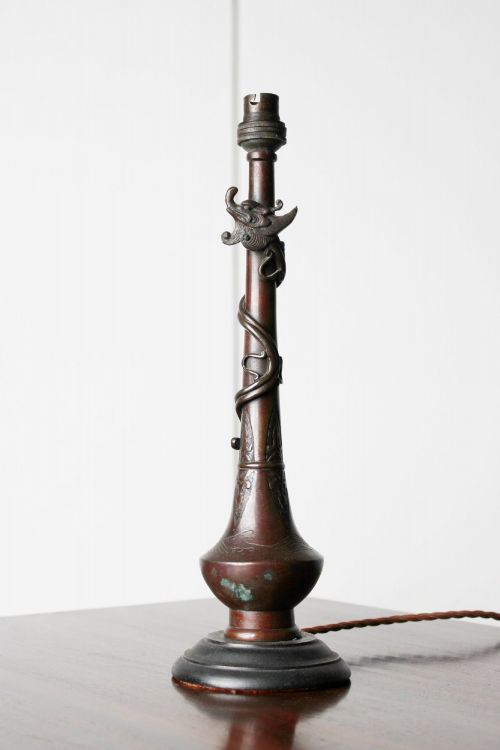
Surface patination was achieved through chemical treatments or natural ageing processes to darken and enrich the metal exterior. Artisans combined casting, chasing, and mounting techniques to produce detailed figural elements and classical architectural motifs.
The listings span the nineteenth century, Edwardian era, and the 1930s, utilising bronze, brass, patinated white metal, marble, and fabric.
What varies in quality
The refinement of the casting and the depth of the metal patination dictate the visual standard of these lamps. Finer examples display crisp detail in figural subjects such as cherubs or classical deities, whereas simpler pieces show softer definition.
Material combination also distinguishes the range, with solid bronze mounts and carved marble bases marking out more substantial works. The integrity of the original metal surface without harsh cleaning defines the better specimens.
Adrien Gaudez·P.Sega
The Patinated Metal Table Lamps Glossary
- Patination
- The natural or artificial ageing of a metal surface that produces a distinctive coloration and texture over time. This process enhances the visual depth of bronze and brass pieces.
- Ormolu
- Gilded bronze ornamentation applied to decorative objects and furniture, prominent in French Empire design. It provides a bright metallic contrast against dark patinated surfaces.
- Ewer
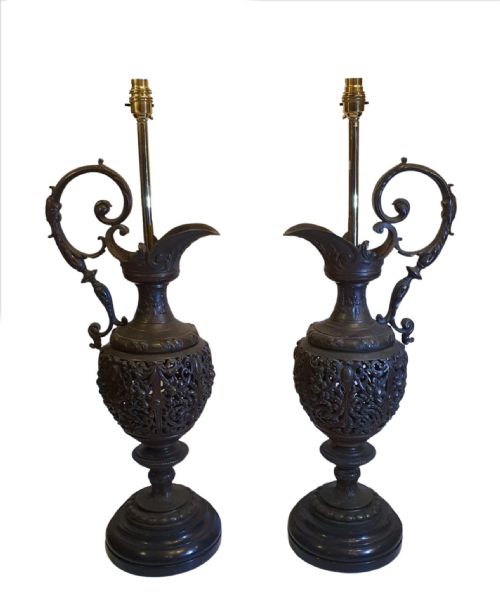
- A large jug with a wide spout traditionally used for water, which workshops later converted into table lamps. These repurposed vessels retain their classical sculptural handles and bodies.
- Torchère
- A tall ornamental stand or lamp designed to hold lights, often featuring figural supports like cherubs. In lighting, the term describes lamps modeled on these vertical torch-bearing structures.
- Amsterdam School
- An architectural and design movement from the early twentieth century characterised by expressive brickwork and dynamic metal forms. Pieces from this tradition utilise patinated copper and brass with distinct geometric emphasis.
Patinated Metal Table Lamps: Frequently Asked Questions
How do I identify a nineteenth-century bronze lamp?
Nineteenth-century bronze lamps typically exhibit heavy metal casting, classical proportions, and rich dark patination accumulated over decades of handling.
Closer inspection often reveals hand-chased details on figural motifs and traditional construction methods beneath the base.
Were all these lamps made for electricity?
Many older metal lamps started life as oil lamps, vases, ewers, or architectural torchères before being converted for electrical use later in their lifespan.
This conversion process preserves the historic metal body while adapting the internal fittings for modern table illumination.
What distinguishes Art Deco metal lamps?
Art Deco metal lamps from the 1920s and 1930s favour streamlined geometric forms, stylized figures such as dancers or nudes, and influences from the Bauhaus movement.
These pieces break away from nineteenth-century classical revivals in favour of modern industrial aesthetics and sleek metallic finishes.
How should I clean a patinated metal surface?
Patinated metal surfaces require minimal maintenance and should only be dusted gently with a dry cloth to preserve the historic finish.
Harsh chemical polishes must be avoided entirely, as they strip away the aged patina that defines the character of antique metalwork.