


Orientalist Desk Light
An orientalist desk light brings a dramatic glow and intricate global artistry to a room, captured in bronze, brass, and lacquer.
Orientalist Desk Light
When you search for an orientalist desk light, you enter a diverse field of decorative table illumination spanning the late nineteenth and early twentieth centuries. These pieces draw heavily on international aesthetics, encompassing Chinoiserie, Anglo-Indian craftsmanship, Japanese Meiji designs, and theatrical interpretations of the Near East.
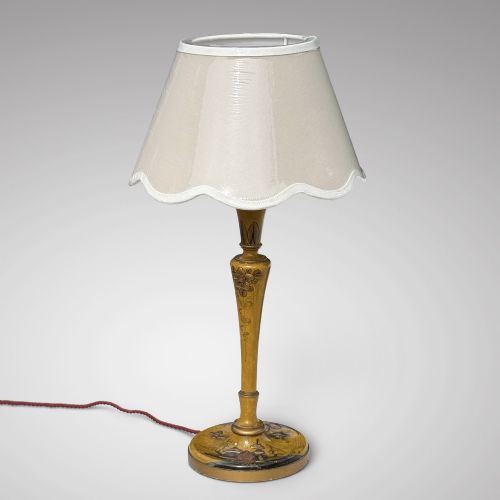
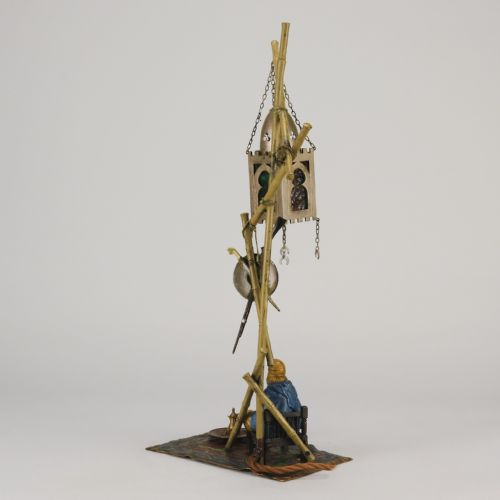
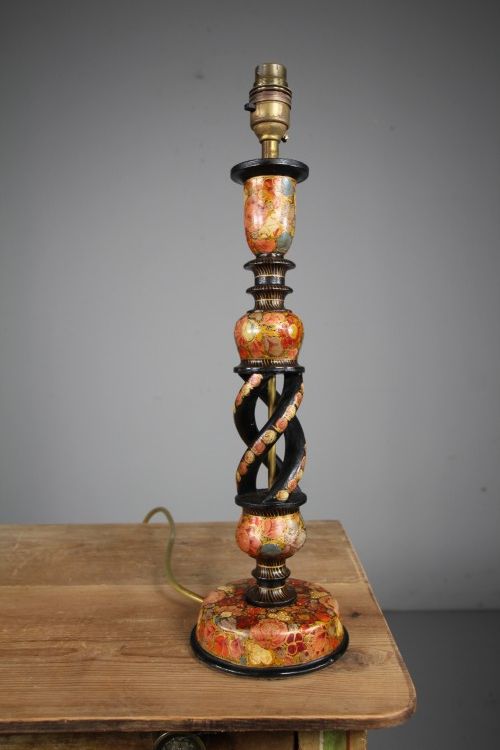
You are most likely to meet table lamps fashioned from lacquered timber, pressed brass, and patinated metals on this page. The forms range from Kashmiri tall columns and palm trees to cold-painted bronze figures.
The aesthetic vocabulary borrows freely from diverse cultures and historical periods, creating lighting that functions primarily as sculptural art. Each object reflects the intense fascination with Eastern and exotic design motifs that permeated European and American interiors during the 19th Century and early decades of the 20th Century.
How they were made
Makers utilised tactile materials such as brass, bronze, papier-mâché, and lacquered timber to construct these lamps. Metals were frequently pressed, cast, and patinated or cold-painted by hand to achieve rich surface textures and vibrant polychrome details.
Wood elements often received intricate lacquerwork or traditional Kashmiri surface ornamentation. Artisans applied textiles for shades and combined silver plating with structural metals to build durable yet ornate forms.
Palm trees made of silver plate and figures of seated Arabs illuminate the more theatrical corners of the collection.
What varies in quality
The nuance in quality rests upon the fidelity of the casting, the precision of the hand-applied cold-painting, and the depth of the lacquer finish. Pieces bearing the documented signatures of known bronze sculptors exhibit superior handling of human or figurative form.
Simpler pressed brass items rely entirely on the crispness of their stampings and the integrity of their patination. The sophistication of the cultural interpretation, whether an accurate Japanese cloisonné technique or a theatrical Hollywood Regency fantasy, dictates the piece's standing.
Franz Bergman·Bruno Zach
The Orientalist Desk Light Glossary
- Cold-painted
- A method where bronze or metal sculptures are painted with oil or enamel paints without being subjected to kiln firing. This technique allowed for vivid polychrome detailing on lamps.
- Cloisonné
- An ancient technique for decorating metal object surfaces, in which enamel is held in place by thin metal strips welded to the base. Japanese examples often display remarkable floral or geometric precision.
- Chinoiserie
- The European interpretation and imitation of Chinese and East Asian artistic traditions, particularly in decorative arts, lacquer, and garden design. It flourished during various periods from the seventeenth to the twentieth centuries.
- Patination
- The natural or chemical process that alters the surface appearance of bronze, brass, and metal over time. Artisans often replicate or enhance this finish deliberately to add visual depth.
- Anglo-Indian
- A descriptive term for furniture, decorative objects, and lighting produced in India under British rule. These items frequently combine traditional Indian materials with Western forms.
Orientalist Desk Light: Frequently Asked Questions
What is an orientalist desk light?
An orientalist desk light is a decorative table lamp drawing on Eastern, Middle Eastern, or Asian artistic traditions. These pieces date primarily from the late nineteenth and early twentieth centuries.
They use materials like bronze, brass, lacquer, and fabric to introduce sculptural form and ambient illumination to a desk or table.
How do I identify the period?
You determine the period by examining the materials, manufacturing techniques, and stylistic markers such as Art Deco geometry or Meiji ornamentation. Evidence from this selection spans the late nineteenth century through the 1930s.
Stylistic cues, including cold-painted bronze figures and pressed brasswork, align closely with the prevailing tastes of those decades.
Are these lamps rewired for modern use?
Many antique lamps require rewiring to meet modern safety standards and voltage requirements. Listings often specify if electrical updates have already been performed by a dealer.
Buyers should inspect the internal wiring or consult a professional electrician before connecting older lighting fixtures to a power source.
Where should I place a decorative lamp?
These lamps suit studies, libraries, and living spaces where their sculptural qualities can be appreciated up close. Their distinct silhouettes serve as focal points on desks, sideboards, or console tables.
Position them away from high-traffic edges to protect delicate materials like lacquer, cold-painted bronze, and cloisonné.