

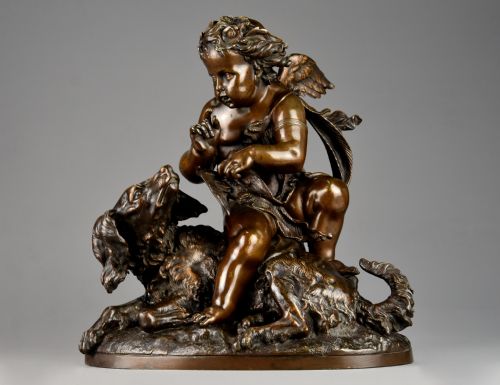


French Cherub Statue
A french cherub statue brings neoclassical and rococo elegance into a room through classical figures cast in bronze or carved from wood and marble.
French Cherub Statue
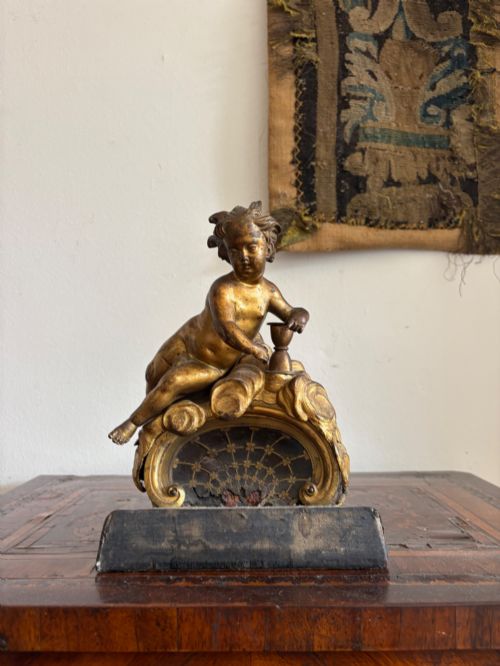
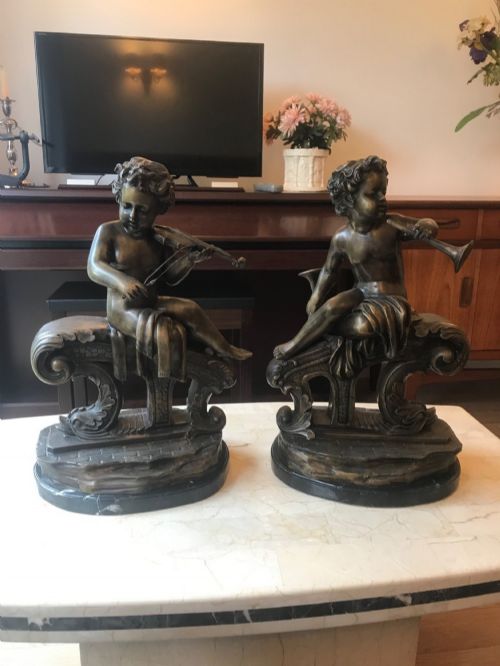
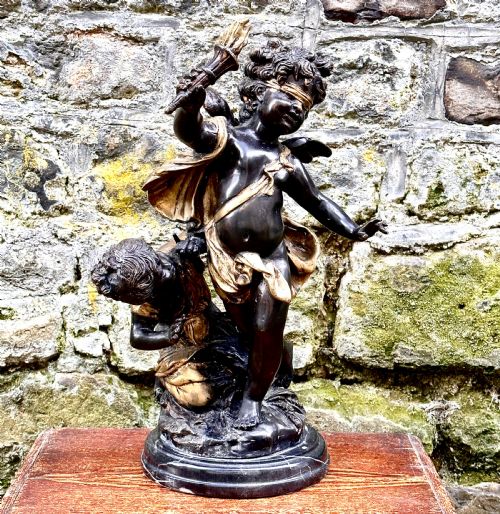
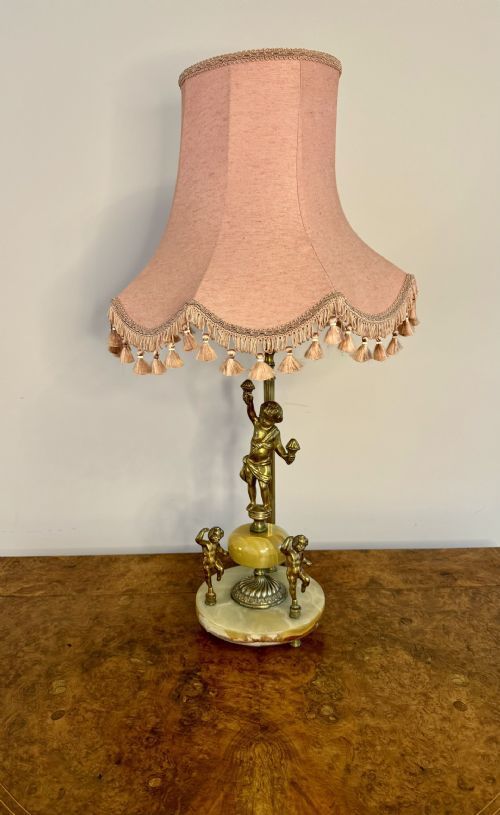
A french cherub statue search reveals a diverse range of sculptural forms depicting winged putti, cherubs, and classical figures engaged in musical, harvest, or mythological pursuits. You will frequently encounter nineteenth-century bronze castings, often paired with marble bases or integrated into functional objects such as mantel clocks and table lamps.
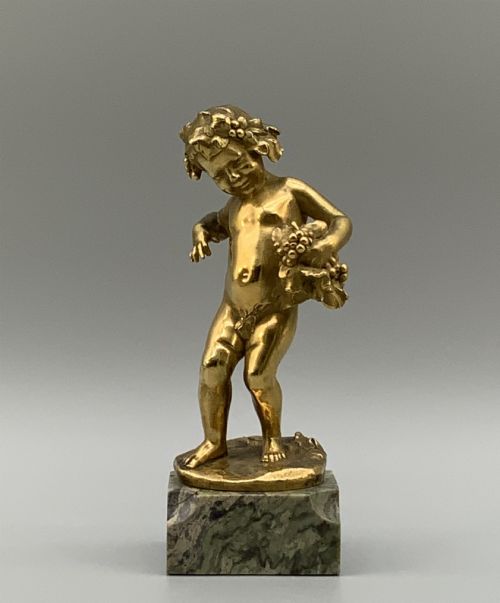
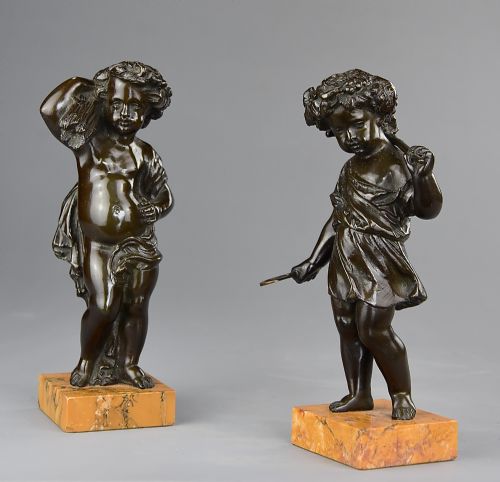
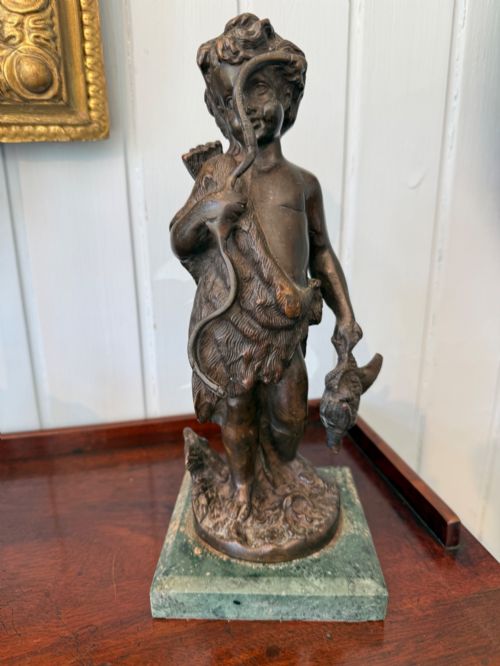
The objects span from small finial mounts and statuettes to grander allegorical groups modelled after classical sculptors. Pieces appear in various guises, including lone figures holding bows or musical triangles, paired groupings of children gathering grapes, and representations of Cupid or Bacchus.
Materials and production methods
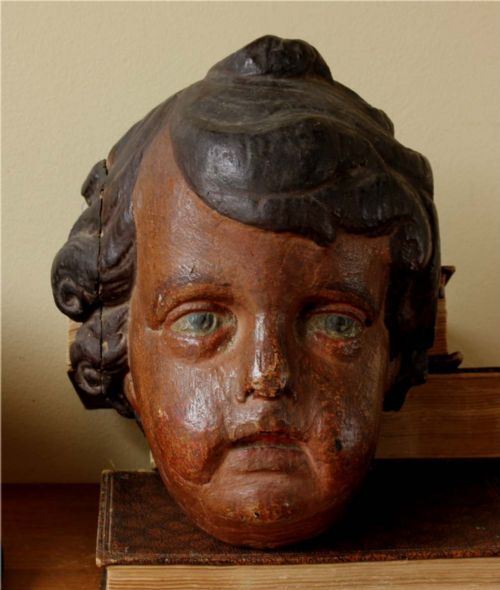
Foundries utilised bronze as the primary medium, applying patinated or gilt finishes to highlight the contours of the figures. Artisans also worked with carved wood, gesso, polychrome paint, terracotta, and marble, frequently mounting metal sculptures onto heavy marble plinths.
Listings feature works spanning the eighteenth, nineteenth, and twentieth centuries, utilising bronze, marble, carved wood, and terracotta.
Factors of craftsmanship
The integration of the figure with its base or functional mount also dictates standard; superior items display seamless casting joints, authentic signatures, and harmonious material pairings like veined marble or gilded bronze.
Charles Louis Malric·Susse Freres·Claude Michael Clodion·Louis Auguste Moreau·Auguste Moreau·Charles Cumberworth·Bellenot Paris·Denise Delavigne
The French Cherub Statue Glossary
- Putto
- A plump, often winged male child figure frequently found in classical art. These cherubic motifs stem from classical antiquity and feature prominently in Renaissance and nineteenth-century revivalist sculpture.
- Ormolu
- Gilded bronze, where finely ground high-carat gold is applied to a bronze base using mercury amalgamation or electrochemical techniques. This finish yields a warm, enduring lustre.
- Patination
- The surface coloration and texture developed through age or chemical treatment applied by a foundry. A rich patina enhances the perceived depth of bronze figures.
- Grand Tour
- A cultural journey undertaken by wealthy young Europeans through France and Italy to collect classical art and antiquities. Figures from this tradition often replicate classical or Renaissance sculpture.
French Cherub Statue: Frequently Asked Questions
What is the difference between a cherub and a putto?
Art historical convention separates theological cherubim from secular putti, though nineteenth-century makers used the terms interchangeably. Putti typically represent mischievous mythological attendants rather than celestial beings.
Sculptures carrying bows, musical instruments, or grapes usually depict classical putti or figures of Cupid and Eros rather than strict religious icons.
How can I tell the period of a bronze statue?
Dating relies on examining the foundry marks, casting quality, base construction, and patination style. Nineteenth-century French bronzes often feature foundry cachets or artist signatures cast directly into the metal plinth.
Material combinations, such as the use of onyx or specific marble types, also help narrow down the production era to particular decades of the nineteenth or early twentieth century.
Were these statues always used as standalone art?
Many figures were created as independent decorative sculptures, but founders frequently integrated putti into functional decorative arts. Examples include clock cases, table lamp bases, and architectural furniture mounts.
Later conversions, particularly of nineteenth-century statuettes into lamps, reflect how owners adapted these bronze figures for practical domestic lighting.
Where should I place a cherub statue in my home?
These pieces suit mantelpieces, side tables, and desks, where their detailed bronze or carved wood surfaces can be appreciated at close range. Pairings with marble bases allow them to sit securely on polished wooden furniture.
Matching pairs work well balanced on either side of a fireplace or flanking a central clock on a credenza.