




French Cherub Mantel Clock
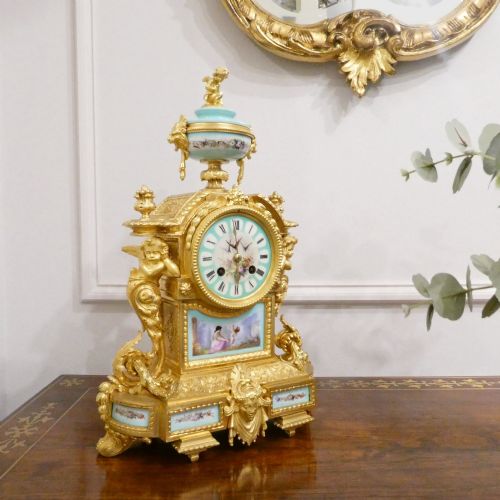
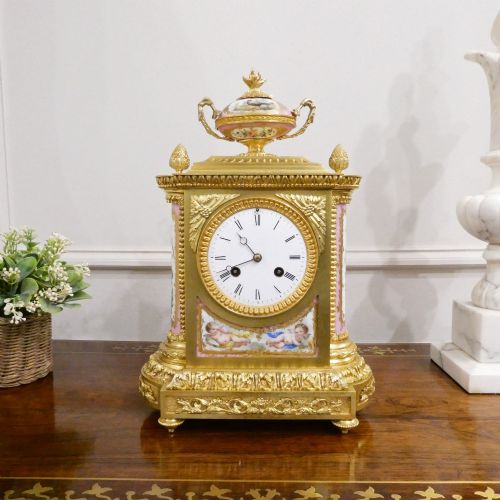
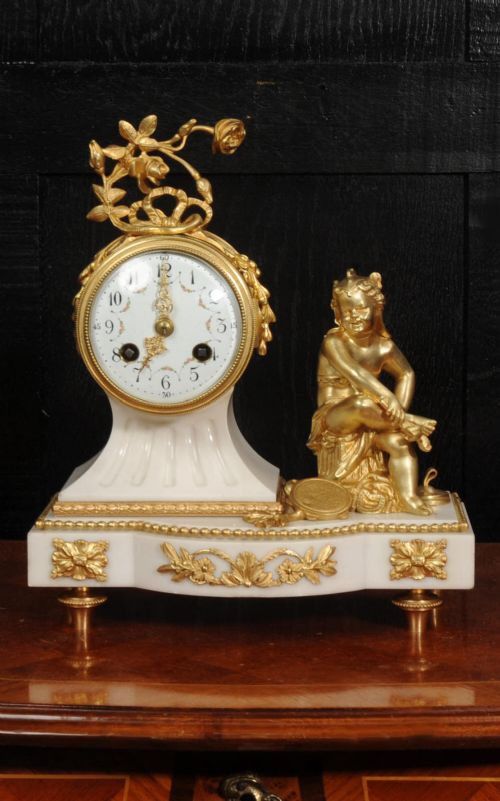
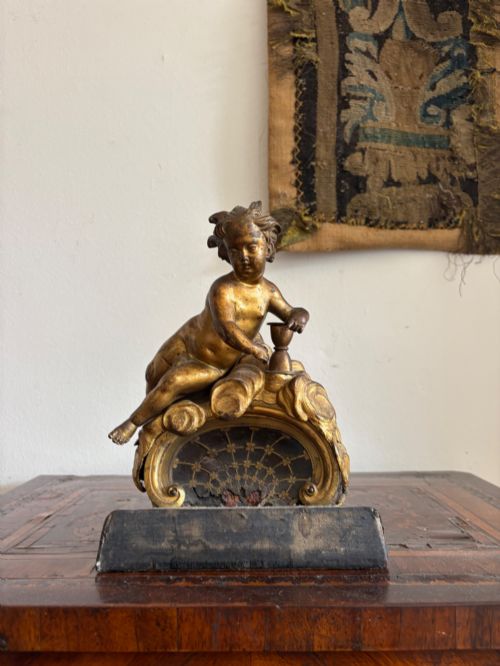
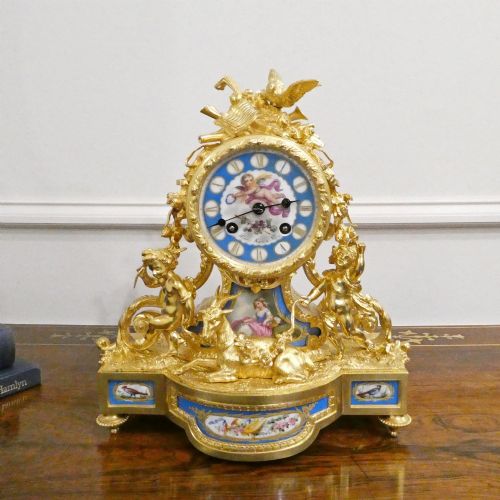
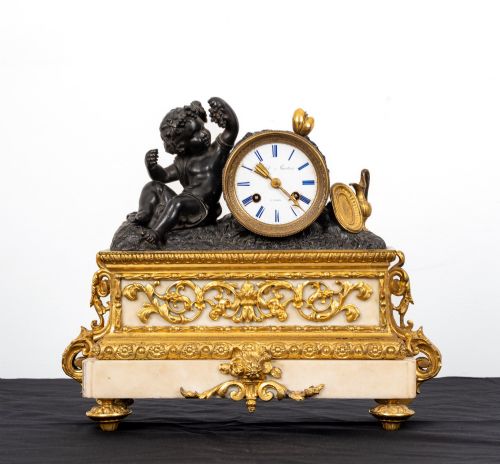
When you search for a french cherub mantel clock, you find heavy cast bronze timepieces dominated by cast putti figures and ornate revival styling.
French Cherub Mantel Clock
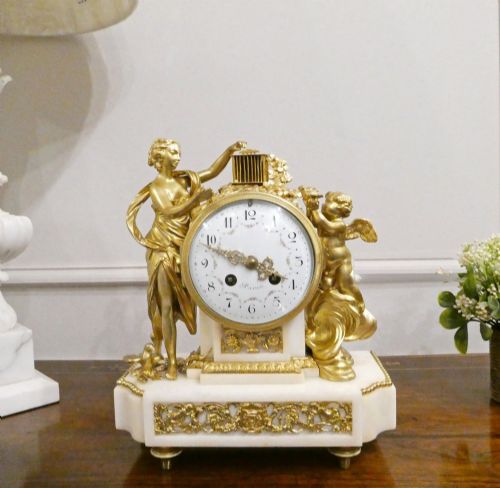
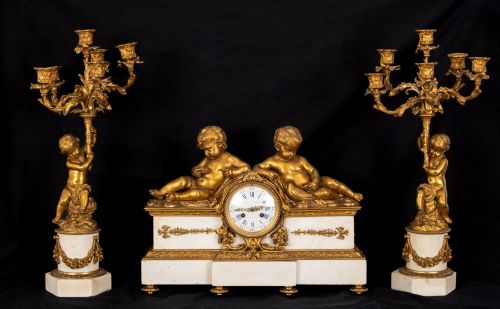
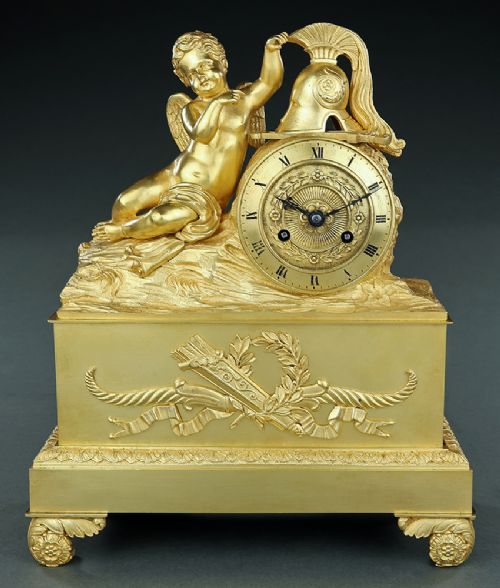
A french cherub mantel clock typically combines a central clock movement housed in marble, porcelain, or ormolu with cast figures of winged putti. These decorative objects date largely from the nineteenth century, spanning periods from the late eighteenth century through to nineteen hundred.
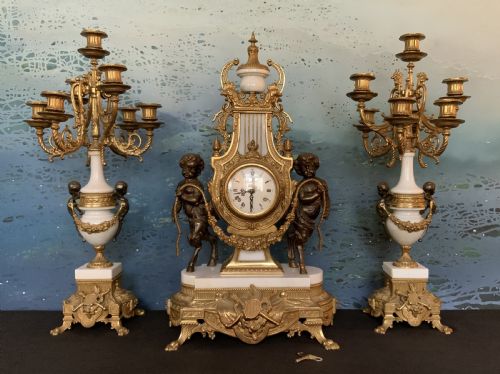
You will encounter various formats on this page, ranging from single mantel pieces to complete garniture sets that include matching candelabras. The architectural styles lean heavily towards French Rococo Revival, Louis XVI, and Second Empire aesthetics.
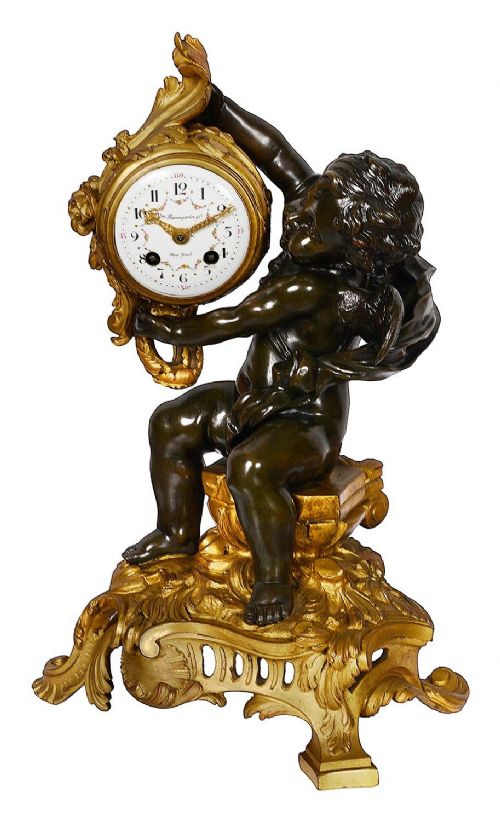
Makers and clockmakers of the period often integrated cherub motifs directly into the dial surrounds, atop the cases as finials, or standing beside the clock face. The scale varies from small table timepieces to large figural centrepieces.
Materials and construction
Foundries utilised gilt bronze and ormolu alongside white marble, onyx, and hand-painted porcelain panels to build these heavy structures. Cast brass and bronze components were intricately chased and gilded to achieve high surface reflection.
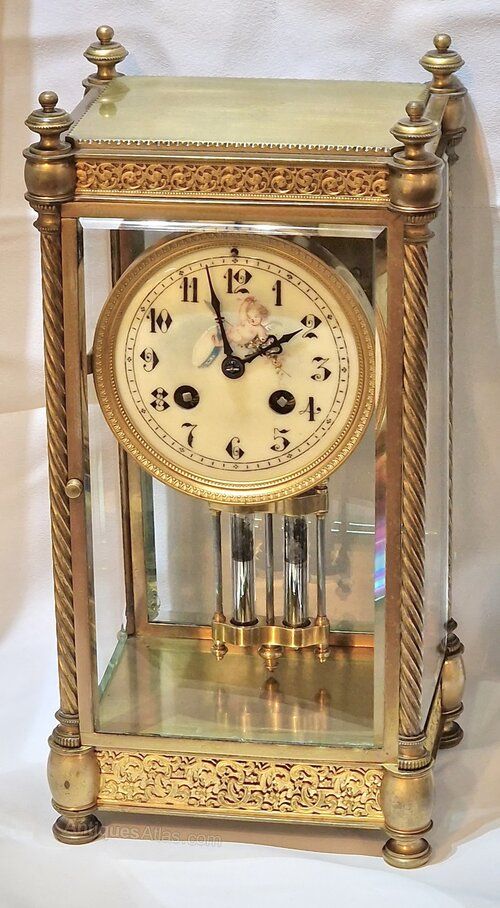
Clock dials frequently use white enamel painted with numerals, sometimes framed by glass panels in four-glass cases or mounted within solid marble plinths. The movements themselves are mechanical, often driven by eight-day striking mechanisms produced by prominent French workshops.
Assessing quality and craftsmanship
The standard of a piece rests heavily upon the crispness of the bronze casting and the depth of the hand-chasing on the ormolu. Superior examples display sharply defined feathers on the cherubs and clean, unbroken gilding rather than flat, machine-smoothed surfaces.
Integration of materials also dictates calibre, where matched marble housings and hand-painted porcelain panels by recognised makers elevate a clock above standard production models.
Jean-Baptiste Delettrez·Henry Marc·Siffel and Cartier·Henry Dasson·Le Roy Paris·Japy Freres·Leon Message·Jollet et Cie·Samuel Marti·Achille Brocot and Delettrez
The French Cherub Mantel Clock Glossary
- Ormolu
- Gilt bronze created by applying a mercury and gold amalgam to a bronze base. This technique produces a rich, golden finish characteristic of nineteenth-century decorative arts.
- Putto
- A figure of a small winged infant, frequently used interchangeably with cherub in nineteenth-century French clock design. These figures appear leaning against clock drums or holding garlands.
- Garniture
- A set of matched decorative objects designed to be displayed together on a mantelpiece. These typically consist of a central clock flanked by two matching candelabras or urns.
- Japy Freres
- A notable nineteenth-century French manufacturing firm producing clock movements. Their stamp on a backplate indicates industrial volume paired with reliable mechanical standards.
- Boulle
- A style of marquetry using brass and tortoiseshell inlay developed in France. It appears on select wooden mantel clock cases within this tradition.
French Cherub Mantel Clock: Frequently Asked Questions
How do I wind the clock?
These mechanical movements typically require a specialised winding key inserted into the dial holes to tension the mainsprings.
Care must be taken not to overwind the springs, as this can damage the internal gearing.
Are these clocks fully working?
Many examples are restored to working order, but functionality varies across individual listings depending on recent servicing.
Buyers should check specific item notes regarding whether the movement has been cleaned and tested.
What is a garniture set?
A garniture set includes the main mantel clock accompanied by matching side pieces such as candelabras or decorative vases.
These sets were designed to create a balanced symmetrical display across a fireplace mantle.
How do I date these clocks?
Dating relies on stylistic clues like Rococo Revival curves, maker stamps on the movement backplates, and the choice of materials.
Nineteenth-century production methods left specific foundry marks that help narrow down the decade of manufacture.