




Classical Cherub Table Clock
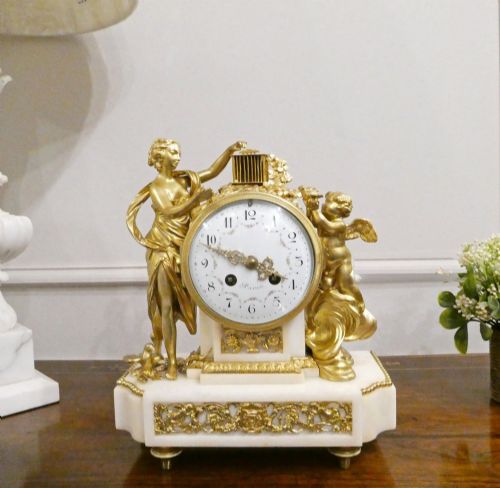
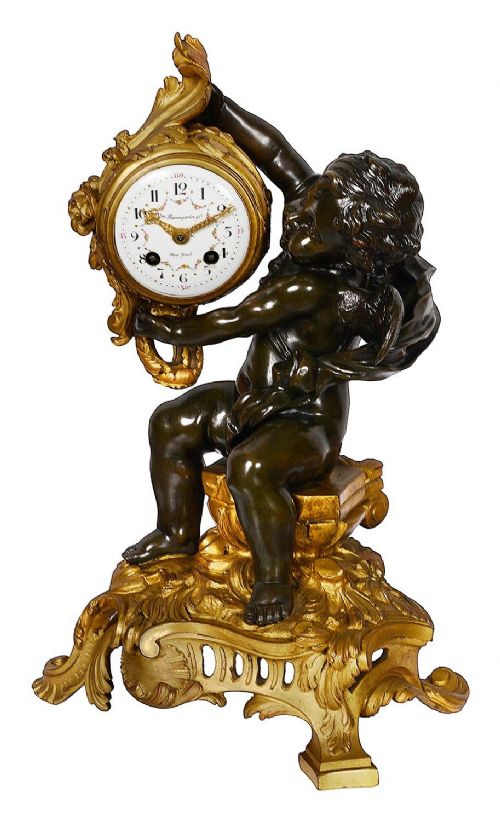
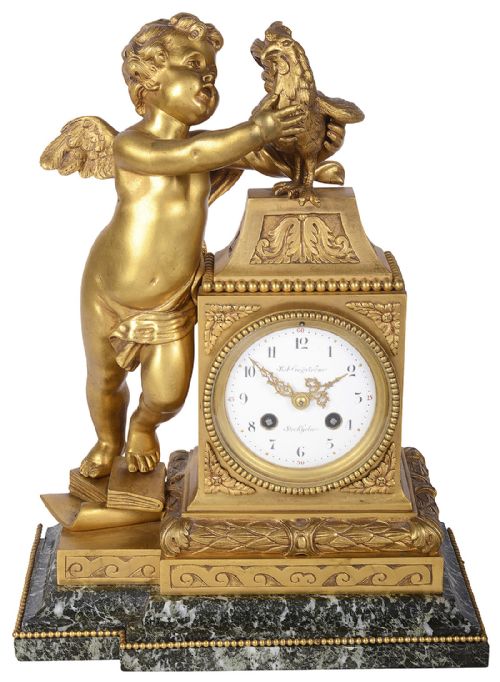
These classical cherub table clock pieces combine bronze and marble figures with precise French movement, offering striking decorative presence for any mantel.
Classical Cherub Table Clock
A classical cherub table clock brings together figural bronze sculpture and traditional timekeeping, commonly taking the form of a mantel clock or clock garniture set. These pieces originate predominantly from nineteenth century French makers working in styles such as Louis XVI, French Empire, and French Classical.
The version most frequently met on this page combines patinated or gilt bronze figures of cherubs with architectural marble bases and enamel dial faces. They emerge from periods including the Regency, Victorian era, and the late nineteenth century.
Makers housed these movements within robust cases featuring ormolu mounts, dark bronze finishes, and glass dial covers. The combination of heavy marble and cast metal creates a substantial decorative object designed for prominent display.
How they were made
Craftsmen shaped these bodies from dense natural marble combined with cast bronze and ormolu mounts, employing patinated bronze for figural cherubs and gilt metal for decorative trim. Enamel provided a smooth, legible surface for the clock dial faces.
Foundries cast the metal components in sections before applying mercury gilding or chemical patination to achieve the contrasting dark bronze and bright ormolu finishes seen across the styles.
Every cherub cast into these heavy bronze mounts spends its days frozen mid-flight above a ticking marble base.
What varies in quality
The sharpness of the bronze casting defines the upper tier of these pieces, where facial expressions on cherubs and crisp acanthus leaf details remain distinct rather than softened. Heavier marble plinths and finely painted enamel dials further separate superior examples from standard production.
Integration between the sculptural figures and the clock housing indicates workshop standard, with better specimens showing seamless alignment of bronze mounts and substantial eight day movements.
The Classical Cherub Table Clock Glossary
- Ormolu
- A technique of applying finely ground gold in a mercury amalgam to bronze, producing a bright golden finish. This coating protects the underlying bronze from oxidation while providing a rich decorative sheen.
- Garniture
- A set consisting of a central clock flanked by matching ornamental pieces such as urns or vases. These matched sets created a balanced arrangement for a mantelpiece or sideboard.
- Patinated Bronze
- Bronze treated with chemical solutions to produce a darkened, aged surface colour. This dark finish creates visual contrast against bright ormolu mounts and pale marble bases.
- Mantel Clock
- A portable domestic clock designed to sit on the shelf above a fireplace. These units utilised eight day mechanical movements requiring periodic winding.
Classical Cherub Table Clock: Frequently Asked Questions
What periods do these clocks date from?
The available pieces span the nineteenth century, with specific examples originating during the Regency and Victorian eras.
Maker styles heavily reflect French Empire, Louis XVI, and neoclassical design movements popular across those decades.
What materials make up the cases?
Cases combine natural marble with cast bronze, featuring both dark patinated finishes and bright ormolu gilding.
Enamel provides the white background for the clock face numerals, protected behind a glass cover.
How are the movements powered?
Most of these antique clocks rely on mechanical eight day movements driven by springs or weights.
Owners wind the mechanisms using a dedicated key to maintain accurate timekeeping.