


French Chateau Console
A french chateau console brings grandeur and architectural presence to a hallway, drawing the eye with carved timber and cool stone.
French Chateau Console
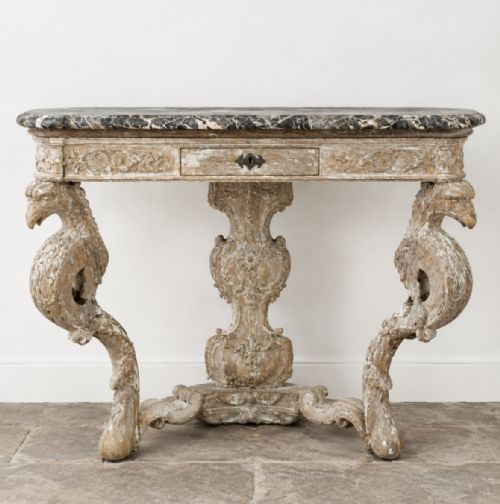
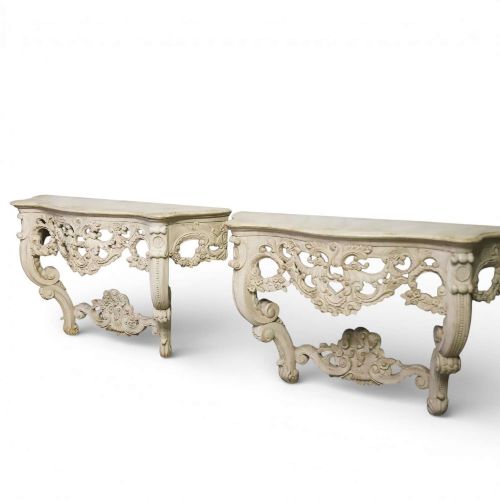
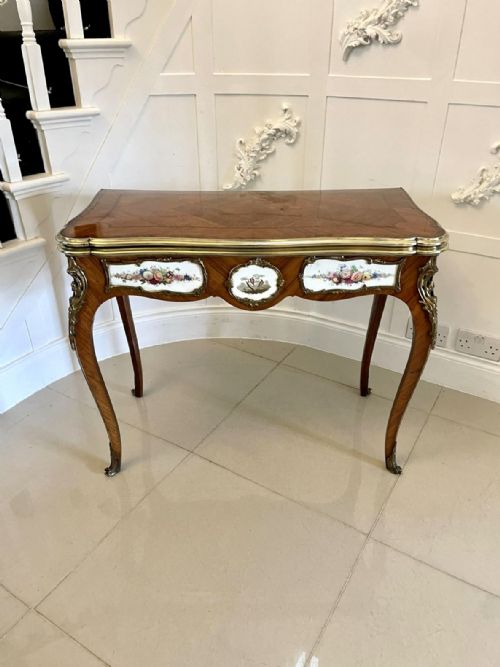
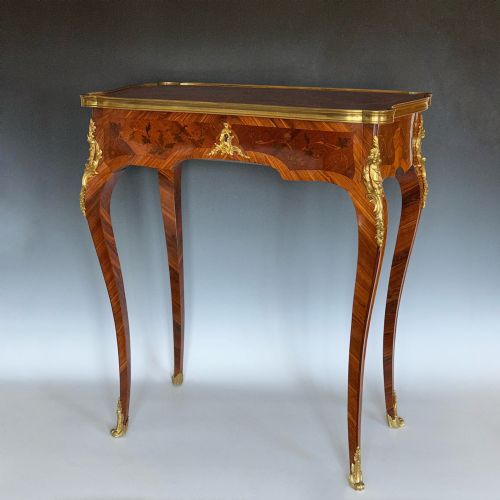
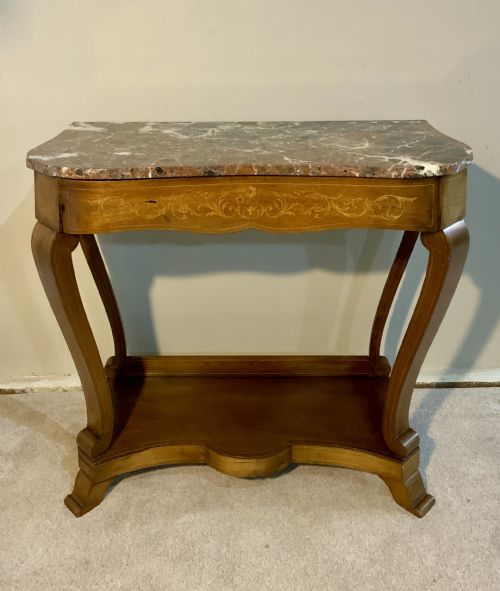
When you search for a french chateau console, you are looking at tables designed to stand against a wall, often paired with a matching wall mirror to complete a grand interior scheme. These pieces emerge in styles like French Rococo, Louis XV Revival, and French Provincial, carrying the ornamental weight of historic houses.
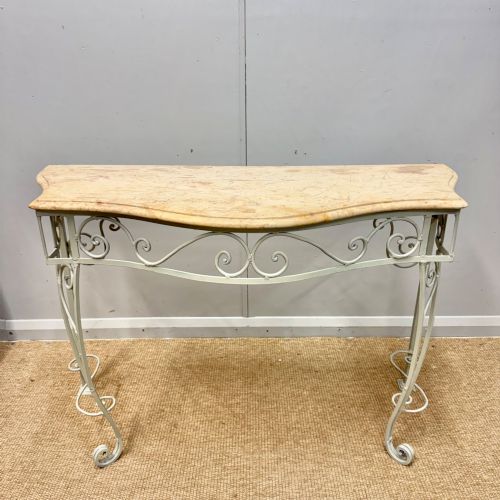
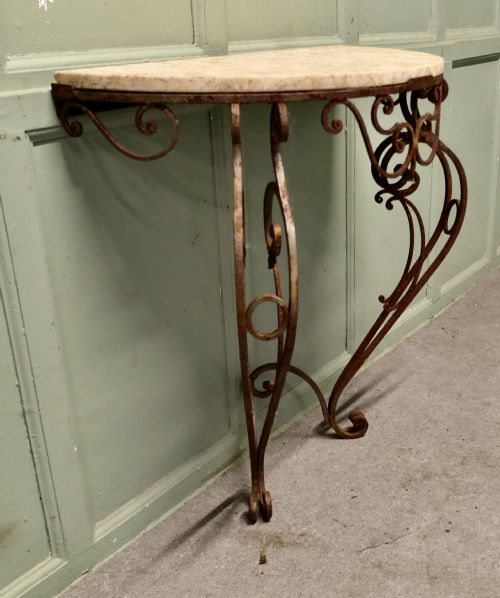
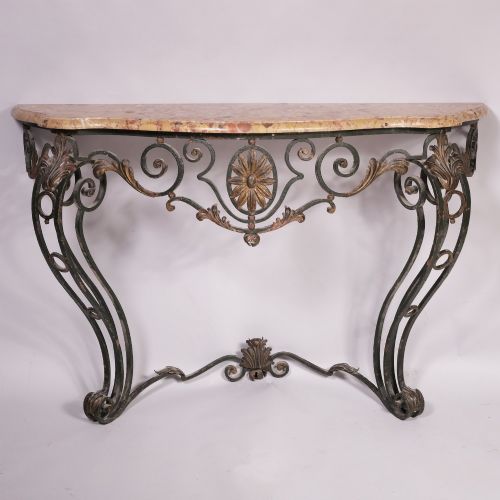
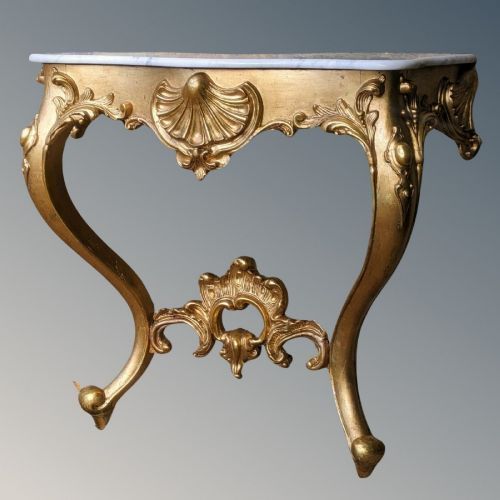
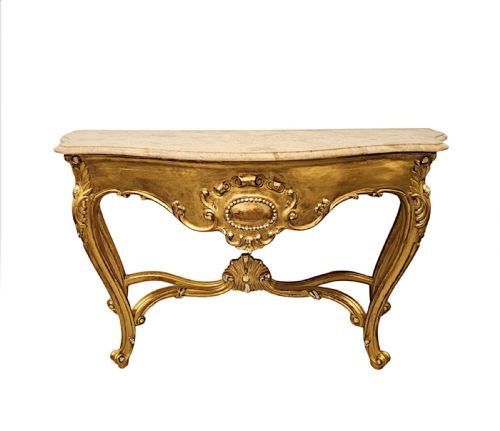
The selection ranges from restrained 18th-century painted timber pieces to decorative 19th-century giltwood examples with marble tops. You will also encounter wrought iron frames and mahogany side tables that adapt the form for varied domestic spaces.
Materials and construction
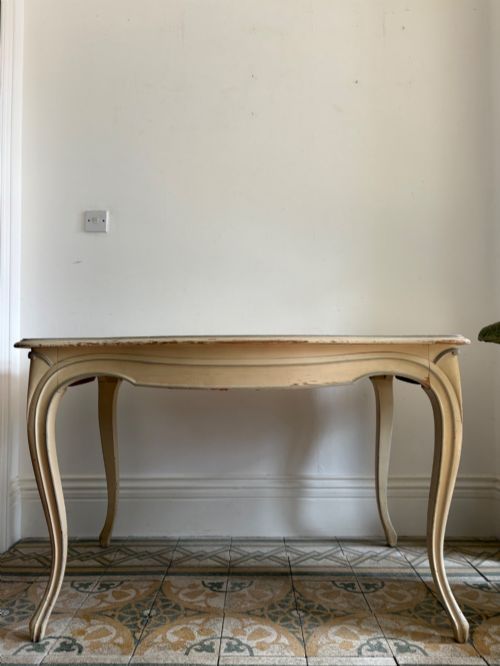
The primary structural material is wood, finished in paint, gesso, or rich giltwood, often accented with hand-carving. Craftsmen shaped these timbers into cabriole legs and serpentine fronts typical of revival periods.
Heavy marble slabs form the traditional tops, providing a cool, resilient surface that contrasts with the carved and gilded frames below. Wrought iron appears in alternative builds, offering a rustic or architectural edge.
French Chateau Console Retail Price Guide 2026
Typical asking prices for french chateau console among the pieces listed under this phrase on Sellingantiques today, from the lower quarter to the upper quarter. They describe what is for sale here now, not the wider market.
Swans appear carved into giltwood tables, reminding us that French designers loved turning everyday furniture into avian menageries.
Assessing quality and craftsmanship
The crispness of the hand-carved detail on the wooden frame distinguishes finer examples from simpler production. Deep, articulate carving in giltwood or gesso shows the hand of a skilled artisan rather than mass moulding.
The choice and thickness of the fitted marble top also signal quality, alongside the integration of secondary woods like kingwood and walnut. Coherence between the carved base and its original stone surface determines the overall integrity of the piece.
G T Morant·Millet·Holland + Son
The French Chateau Console Glossary
- Cabriole leg
- A furniture leg that curves outward and then tapers inward, mimicking the shape of an animal's leg. This form is common in Rococo and Louis XV revival pieces.
- Giltwood
- Timber coated with gold leaf or a gold-coloured finish. It provides a luminous surface that catches candlelight or natural daylight in a formal interior.
- Marble top
- A polished stone slab fitted to the surface of a table. It offers durability and a cool texture suited to hallway furniture.
- Serpentine front
- A furniture front characterised by a wavy outline, curving outward in the centre and inward at the sides. This shape adds dynamic movement to console tables.
- Wrought iron
- Iron beaten into shape by hand while hot. It provides sturdy, industrial support for rustic tables.
French Chateau Console: Frequently Asked Questions
Where should I place a console table?
These tables sit flush against a wall in hallways, reception rooms, or living spaces. They serve as a surface for lamps, vases, or decorative objects without taking up excessive floor space.
Because many feature narrow depths, they fit comfortably in transitional areas where wider furniture blocks movement.
How do I style a wall mirror above a console?
A matching wall mirror hangs directly above the console, creating a balanced focal point on the wall. The frame of the mirror often echoes the carving and finish of the table below.
Keep the items on the table surface minimal so the combined height of the console and mirror remains visually light.
Are marble tops original to these tables?
Many period consoles retain their original fitted marble slabs, which match the precise serpentine or demi-lune contours of the wooden frame. Stone and wood weathered together over generations.
Inspect the seating of the stone within the wooden rebate to understand its history.