

French Carved Wall Glass
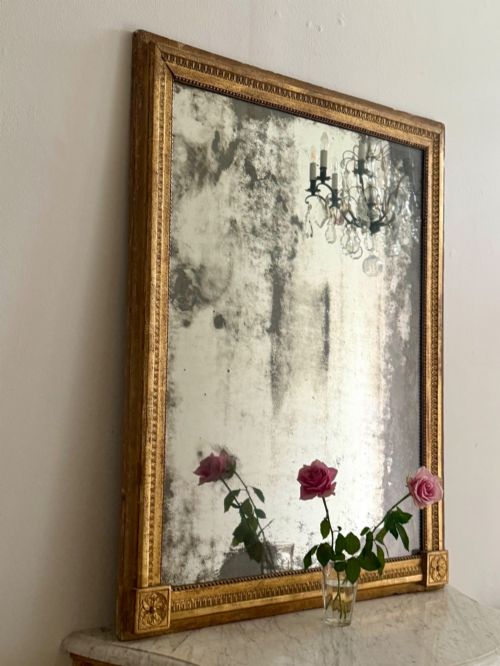
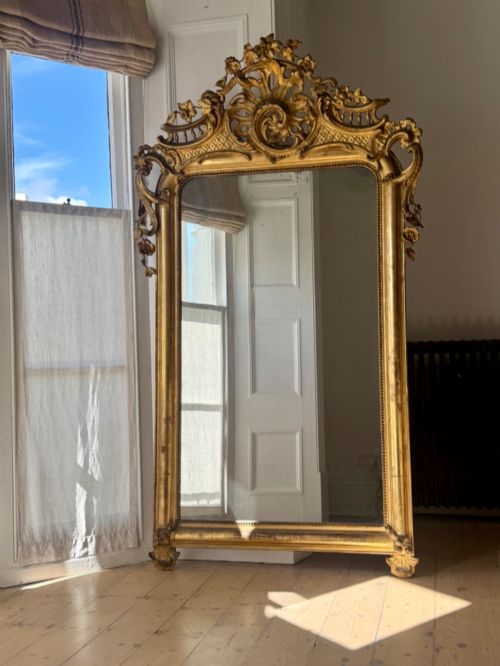
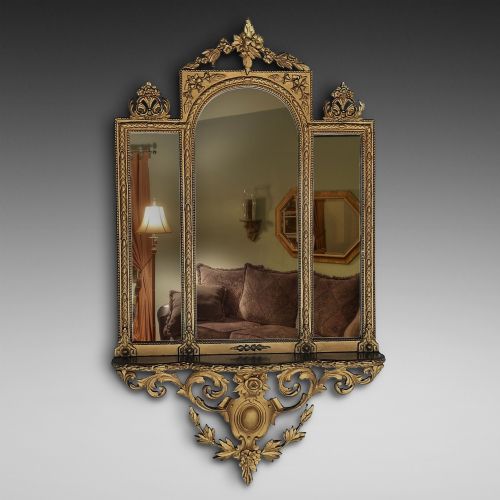
French carved wall glass comprises ornate gilded mirrors and decorative wall pieces from the eighteenth and nineteenth centuries designed to reflect light and ornament a room.
French Carved Wall Glass
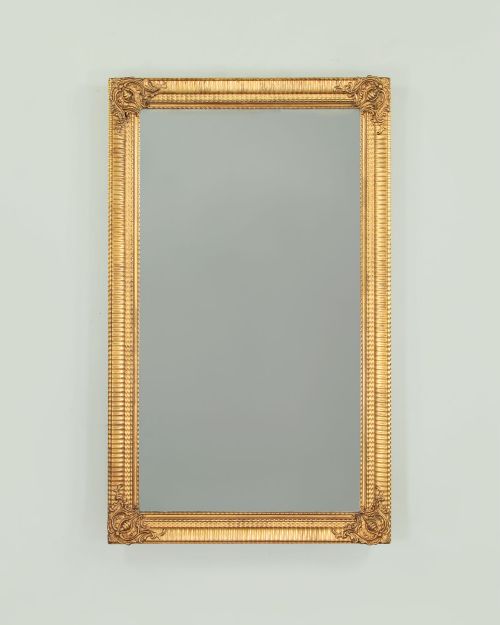
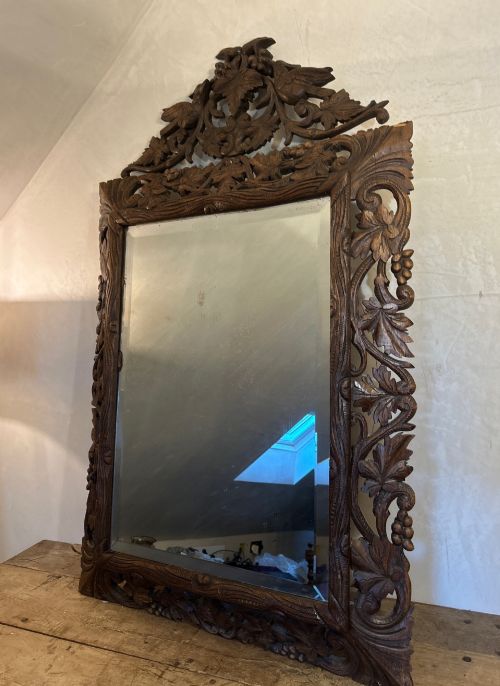
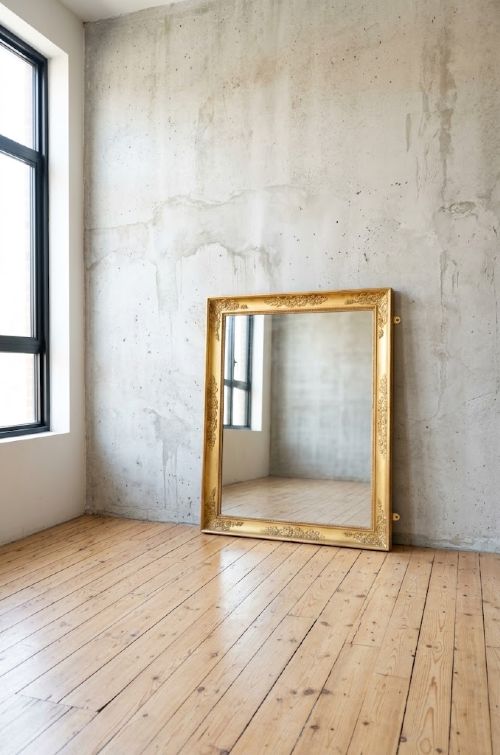
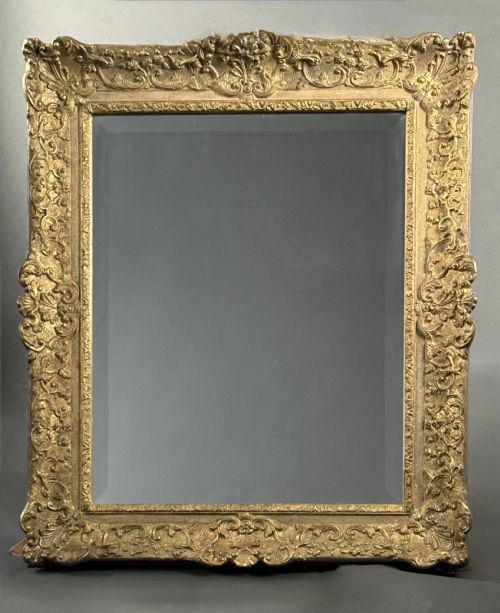
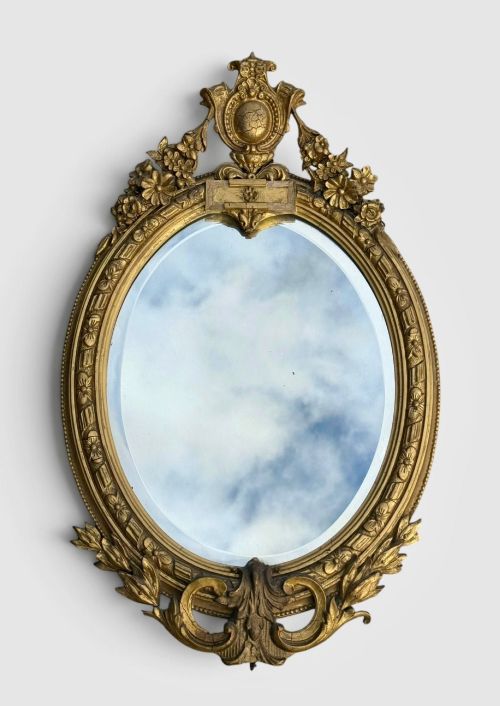
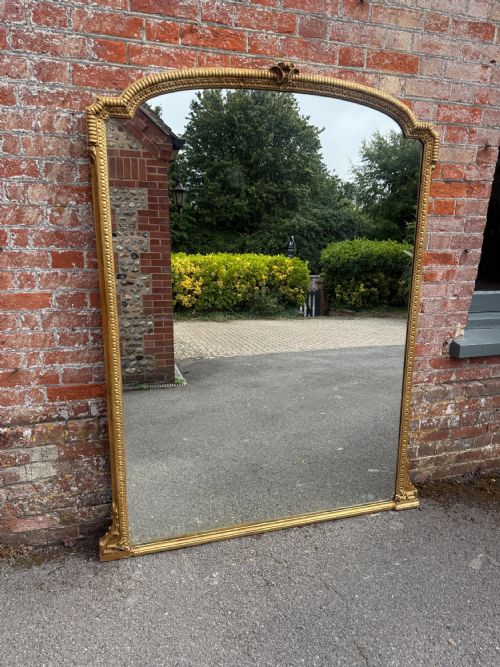
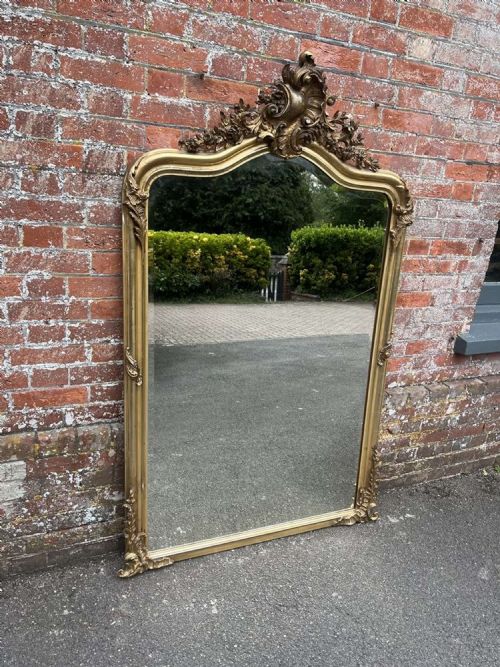
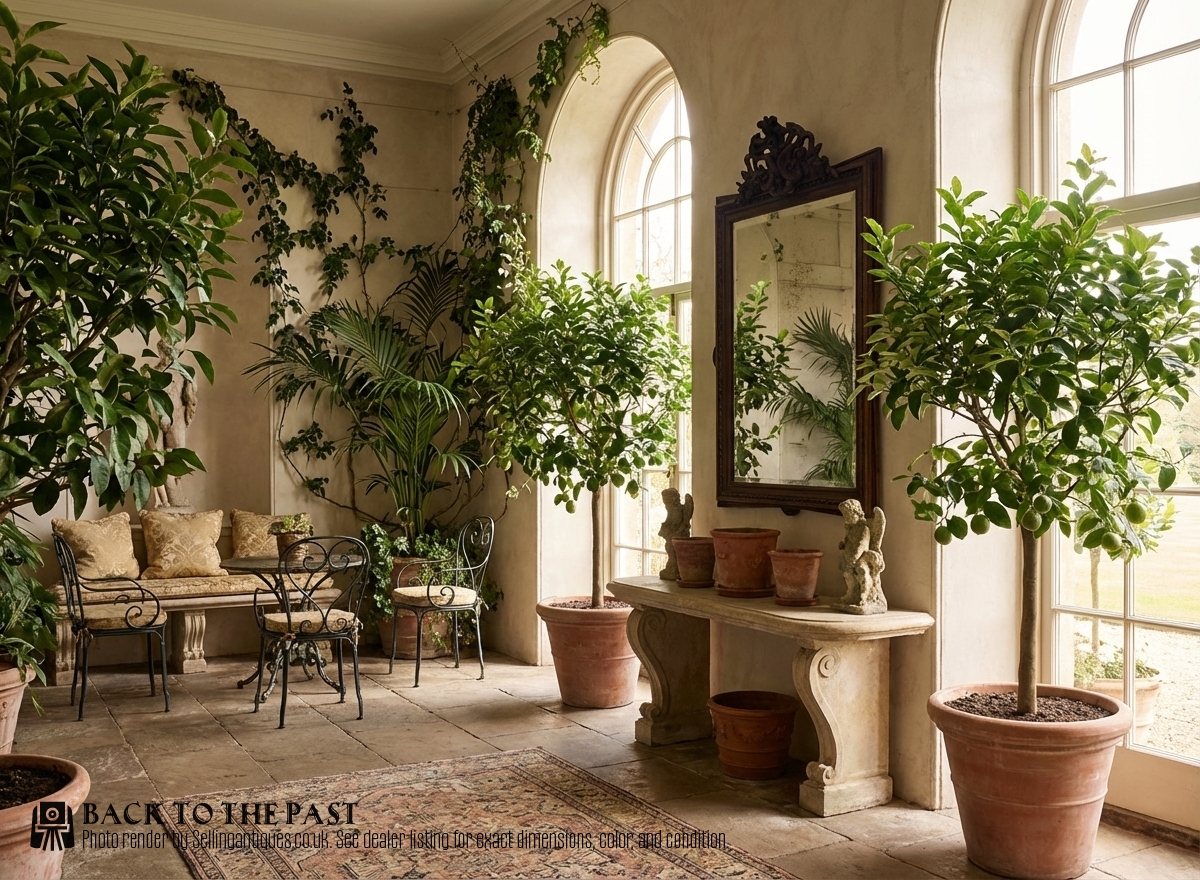
French carved wall glass encompasses decorative looking glasses and architectural mirrors designed for domestic interiors across the eighteenth and nineteenth centuries. The pieces on this page are predominantly nineteenth-century wall mirrors, pier glasses, and overmantel mirrors reflecting French regional styles.
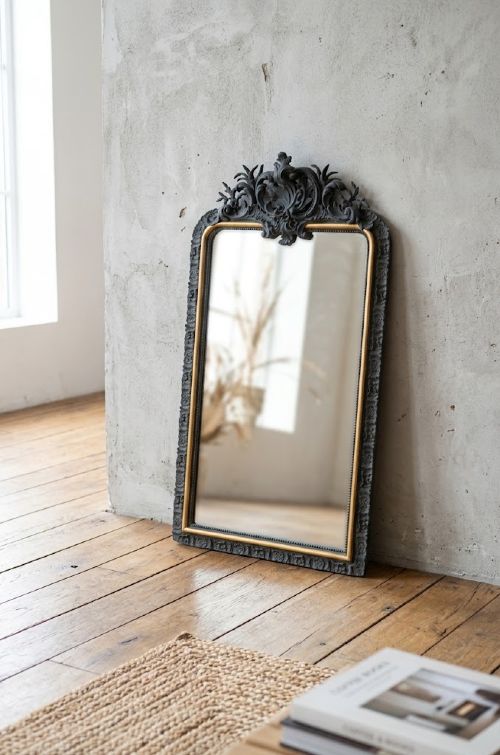
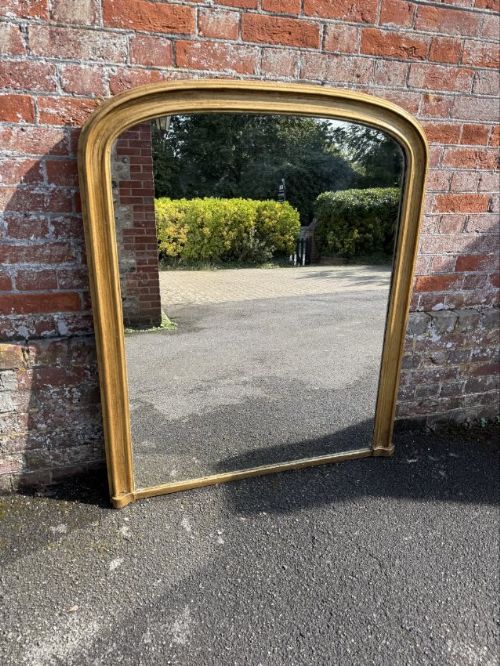
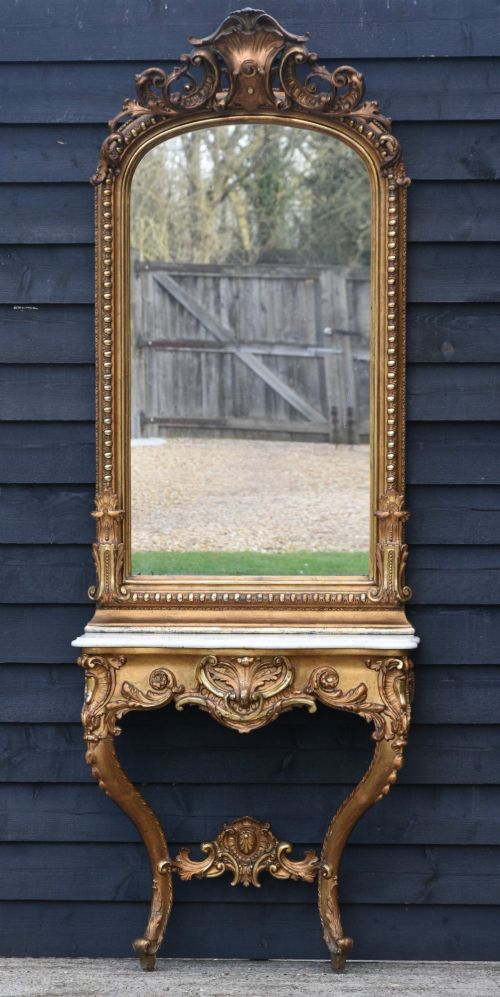
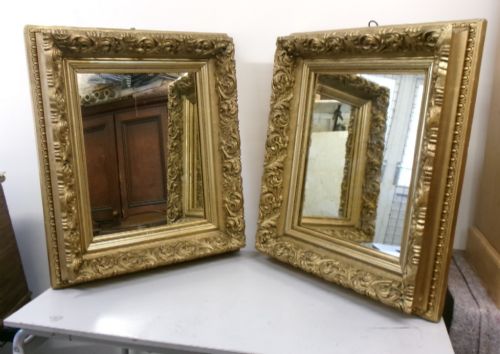
Buyers encounter substantial giltwood frames shaped with arched tops, carved floral motifs, and mythological details originating from periods such as the Napoleon III era and Rococo Revival. Alongside standard wall mirrors, the selection includes trumeau mirrors incorporating oil paintings, console tables with matching pier mirrors, and smaller marriage mirrors.
Originating largely from French chateaux and townhouses, these objects function as both functional looking glasses and sculptural wall art. The forms range from tall pier mirrors designed to stand between windows to wide overmantel pieces built for mantelshelves.
How they were made
Carved wooden substrates, typically oak, pine, or soft wood, form the structural foundation of these frames before receiving layers of gesso. Artisans then applied gold leaf, paint, or ebonised finishes over the moulded plaster and carved wooden surfaces.
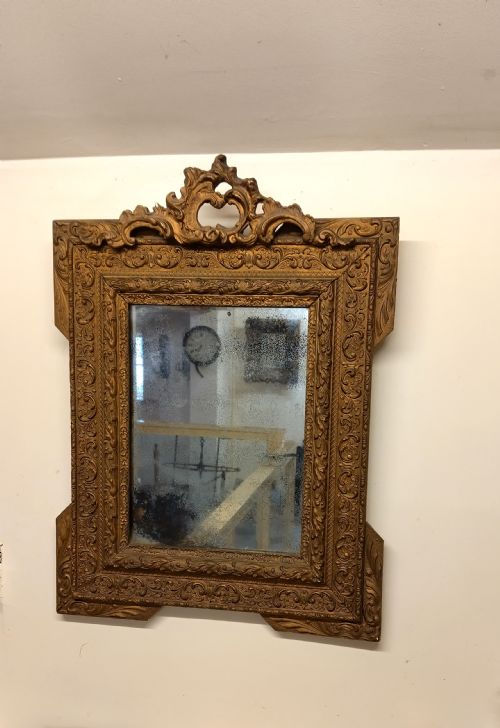
The glazing relies on traditional mirror glass, frequently featuring mercury backing or bevelled edges. Older examples display authentic foxed mercury glass plates with characteristic age spots and mottling behind the reflective surface.
The listings feature nineteenth-century French styles including Rococo Revival, Napoleon III, and Neoclassical designs executed in giltwood and gesso.
What varies in quality
The depth and crispness of the carved details dictate the artistic merit of each frame. Crisp mythological carvings, delicate floral elements, and substantial gilding distinguish superior examples from simpler moulded compositions.
The preservation of the original glass plate and the integrity of the giltwood or gesso surface heavily influence desirability. Original mercury glass plates with natural foxing hold distinct appeal compared to modern replacement mirror glass.
The French Carved Wall Glass Glossary
- Mercury glass
- A type of mirror glass produced by pouring a liquid mercury amalgam between double-walled blown glass before sealing the opening.
- Gesso
- A plaster mixture applied to wooden frame substrates to provide a smooth base for gilding and intricate carving.
- Giltwood
- Timber coated with gold leaf or gold paint to create a lustrous metallic finish across the carved frame.
- Trumeau mirror
- An architectural wall mirror paired with an oil painting or decorative panel within a single framed unit.
- Pier glass
- A tall mirror specifically designed to hang on the wall space between two windows.
French Carved Wall Glass: Frequently Asked Questions
What is a trumeau mirror?
A trumeau mirror combines a looking glass with an integrated decorative panel or oil painting, often featuring maritime scenes or pastoral subjects. These architectural pieces were designed to fit specific wall spaces between windows in period rooms.
They offer a dual decorative function as both a painting and a mirror within a single unified frame.
How do I identify mercury glass?
Mercury glass typically displays characteristic dark speckles, mottling, and foxing across the reflective surface caused by the breakdown of the backing over time. This aged appearance occurs naturally and differs from the uniform reflection of modern silvered glass.
Original plates often show subtle waviness in the glass itself due to nineteenth-century manufacturing methods.
Where should I hang a pier mirror?
Pier mirrors were originally constructed to hang on the narrow wall partition between two windows to maximise ambient light in a reception room. In modern interiors, they suit narrow wall spaces, hallways, or above low console tables.
Their vertical proportions help visually elevate ceiling heights in living spaces.
How do I care for antique giltwood?
Giltwood frames require gentle dusting with a soft, dry brush to protect the delicate gold leaf and gesso layers from damage. Moisture and harsh cleaning chemicals should be avoided entirely to preserve the historic surface finish.
Keeping the mirror away from direct sunlight and damp environments prevents the wooden substrate from warping.