
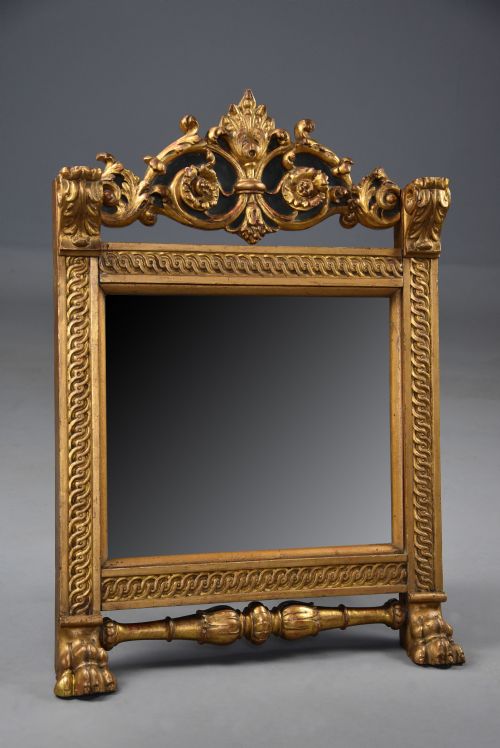

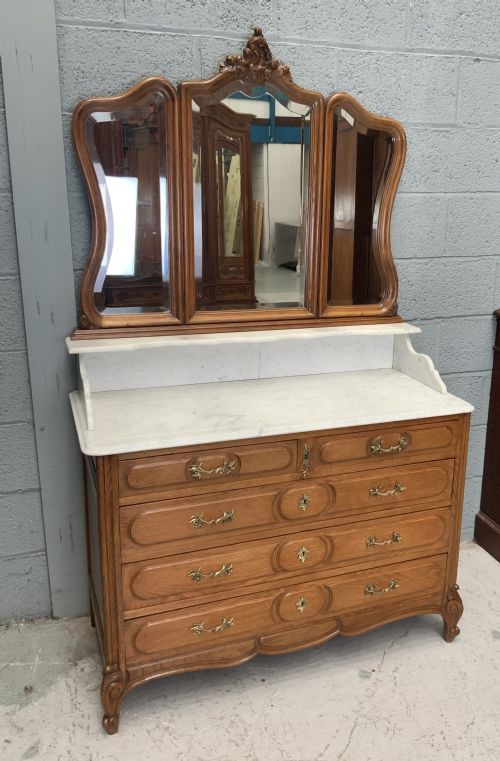


French Carved Vanity Table
A french carved vanity table brings continental elegance to a bedroom, offering a surface for morning routines surrounded by ornate woodwork.
French Carved Vanity Table
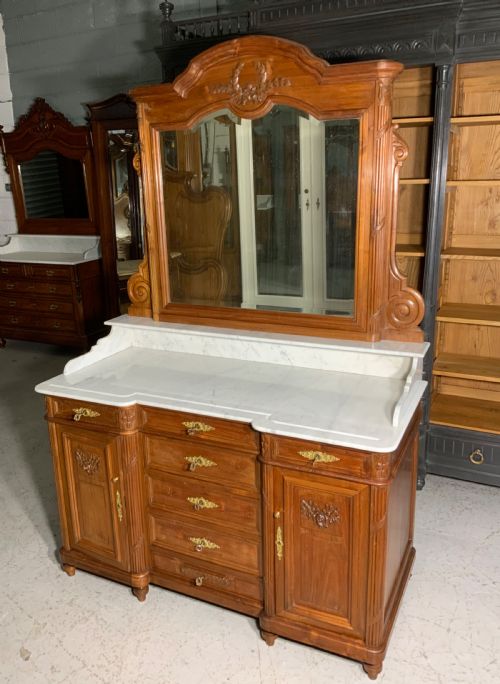
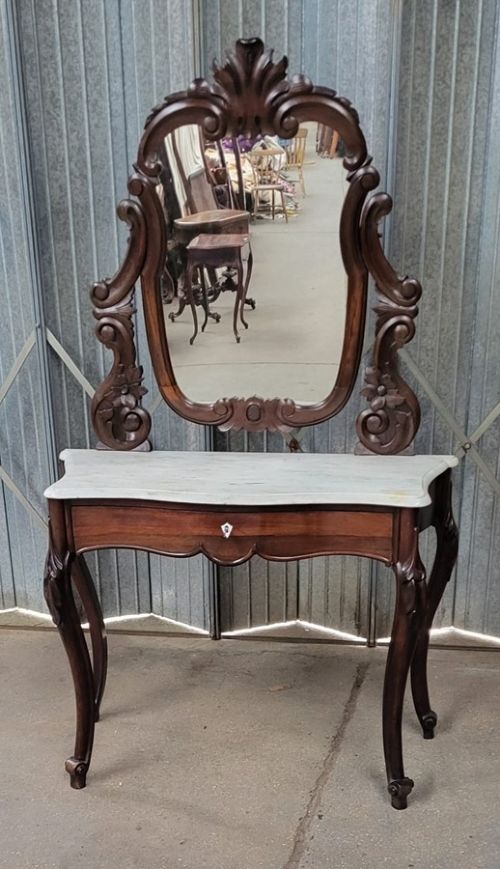
A french carved vanity table comprises dressing tables, washstands, and mirrored pieces designed for personal grooming. These items emerge from various periods including the nineteenth century, nineteen hundred, and the nineteen twenties.
Many examples incorporate marble tops, glass mirrors, and intricate carved detailing reflecting provincial or chateau influences. The selection balances functional dressing surfaces with decorative aesthetic appeal.
Materials and construction methods
Cabinet makers utilised hardwoods such as walnut, mahogany, oak, and maple to construct the foundational frames. These timbers provide the structural integrity required for heavy marble tops and hinged mirror assemblies.
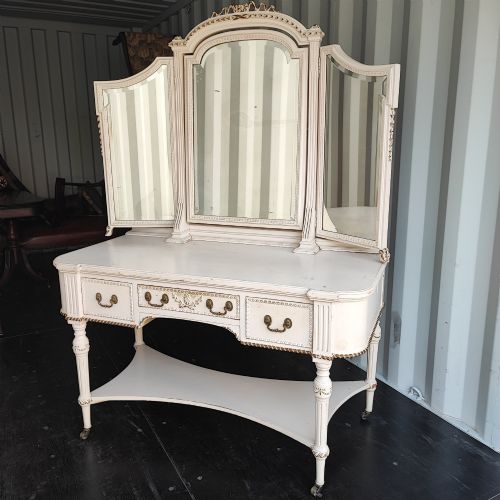
Surface decoration relies on traditional techniques including hand carving, giltwood application, and painted finishes. Glass and brass components complete the hardware and mirror elements.
Joinery methods of the period ensure stability, while specialised workshops applied gesso and marquetry details to enhance the visual texture.
Listings feature woods such as walnut, mahogany, oak, and maple, alongside marble, brass, and glass.
Distinctions in craftsmanship
The depth and crispness of the hand carving distinguish finer examples from simpler production pieces. Skilled artisans created fluid lines and intricate motifs that retain their definition across the wood grain.
Material selection plays a primary role, with figured veneers, solid marble slabs, and original gilding indicating higher workshop standards. Integrated elements like original glass mirrors and matching seating elevate the integrity of the piece.
The French Carved Vanity Table Glossary
- Rococo Revival
- A nineteenth-century design style characterised by asymmetrical scrolls, floral ornamentation, and curved lines. This aesthetic heavily influences continental vanity furniture.
- Louis XVI Revival
- A neoclassical style utilising straight structural lines, classical motifs, and restrained symmetry. Pieces in this manner often feature fluted legs and gilded highlights.
- Giltwood
- Timber treated with gold leaf or a gold-coloured finish for decorative effect. It appears frequently on carved mirrors and decorative frames.
- Poudreuse
- A type of French dressing table featuring folding lids or compartments designed for powder and cosmetics. These items combine writing and grooming functions.
- Marquetry
- The art of applying pieces of veneer to a structure to form decorative patterns. Artisans used contrasting timbers to create pictorial designs on tabletops.
French Carved Vanity Table: Frequently Asked Questions
What periods do these vanity tables come from?
The pieces originate predominantly from the nineteenth and early twentieth centuries, spanning the Victorian era through to the nineteen thirties.
Craftsmen during these decades drew inspiration from earlier French court styles such as Rococo and Louis XVI.
Are matching stools usually included?
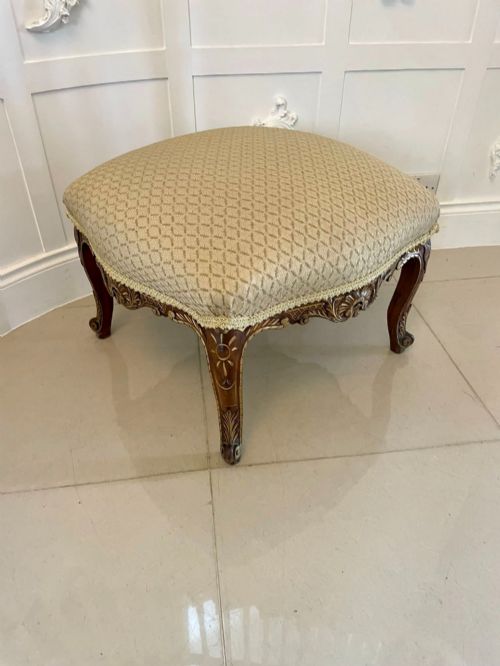
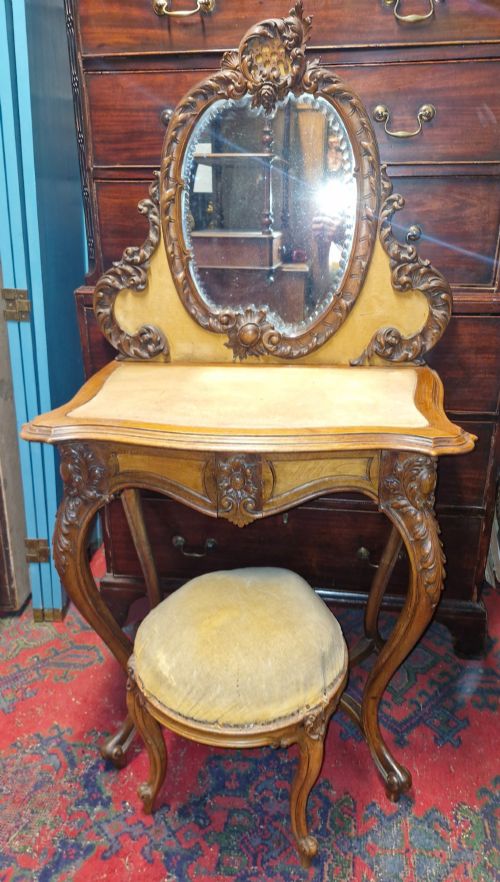
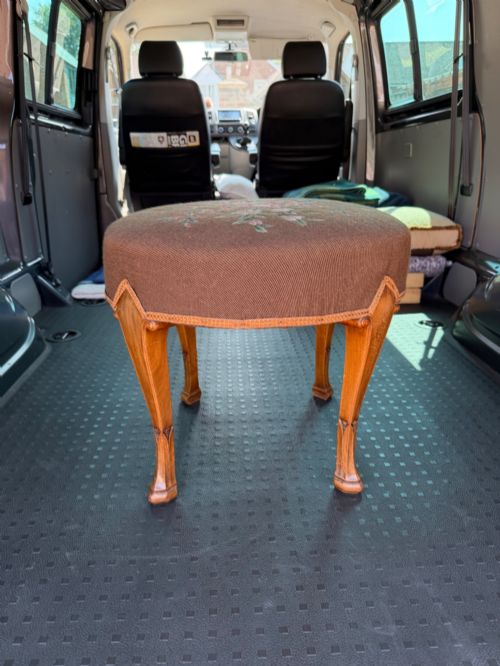
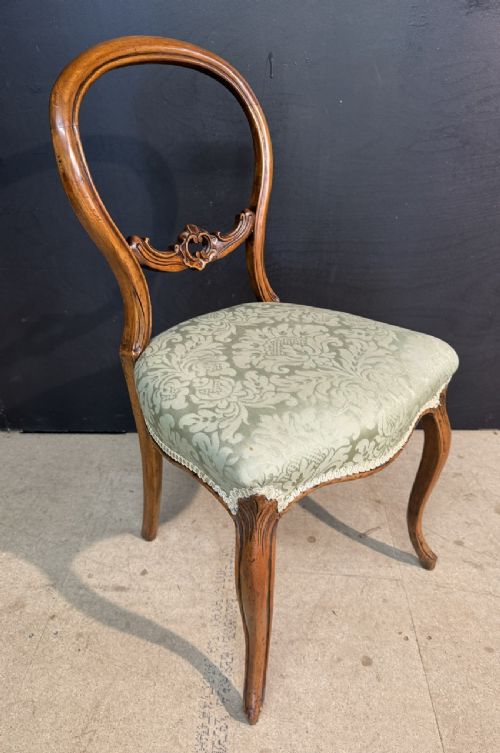
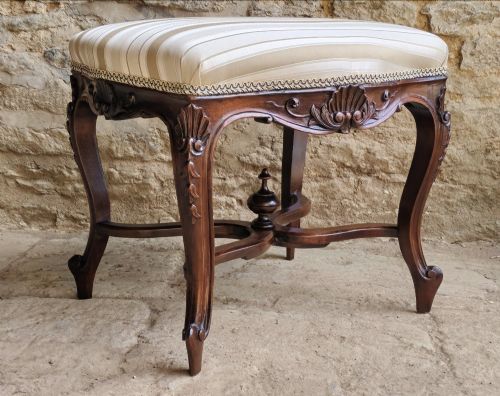
Many dressing tables are accompanied by matching stools, footstools, or boudoir benches finished in complementary woods and fabrics.
These seating options mirror the carved details and upholstery styles of the main vanity table.
How do I identify French Rococo style?
French Rococo pieces feature prominent asymmetric curves, C-scrolls, and naturalistic shell or floral motifs carved into the wood.
The overall silhouette avoids straight lines in favour of flowing, organic shapes.
What materials are most common?
Walnut, oak, and mahogany form the primary timber framework, often paired with marble tops and brass hardware.
Mirrors utilise bevelled glass, while decorative accents frequently incorporate giltwood and painted finishes.