
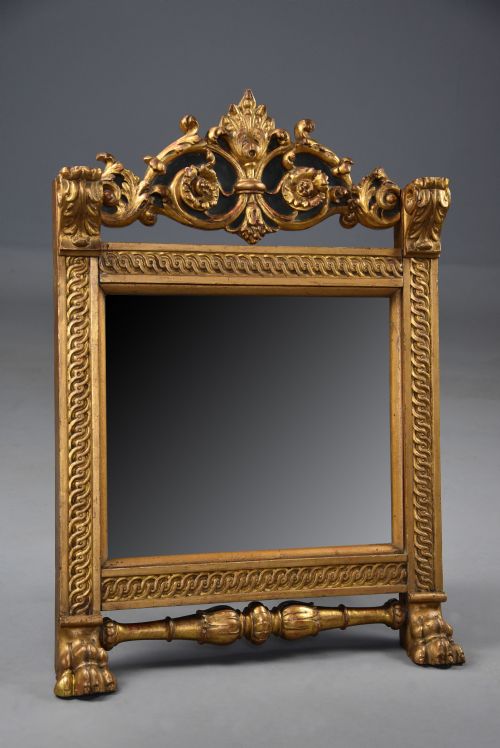

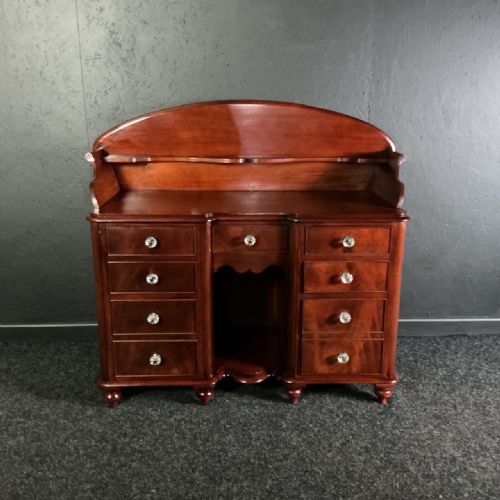


Carved Wooden Vanity Desk
A carved wooden vanity desk brings period craftsmanship into the modern bedroom, offering a dedicated surface for daily grooming.
Carved Wooden Vanity Desk
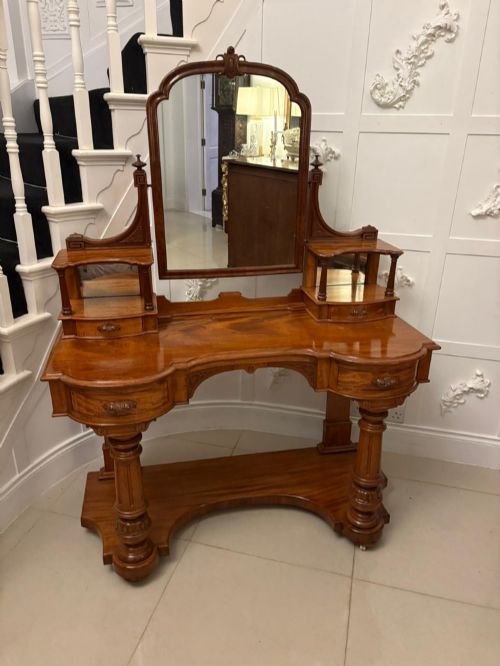
A carved wooden vanity desk serves as a functional dressing space, frequently appearing in Victorian and Edwardian iterations alongside earlier Georgian forms. These pieces often incorporate mirrors, drawers, and compartments designed specifically for personal care items.
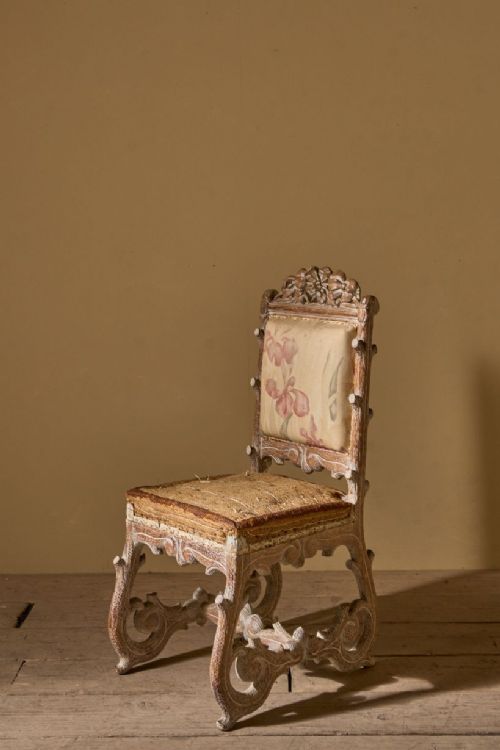
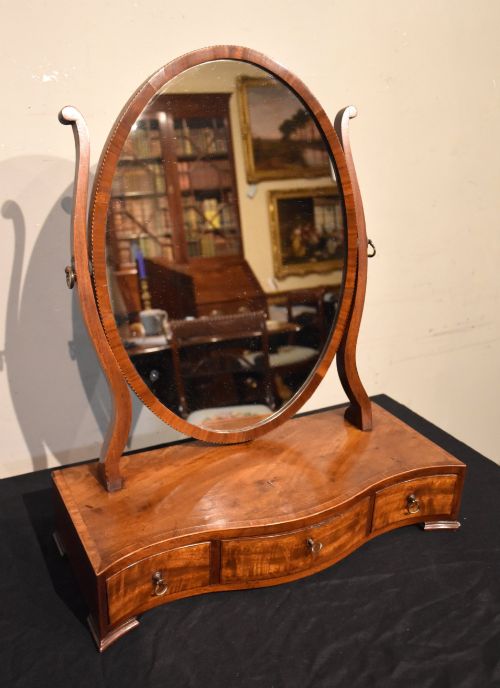
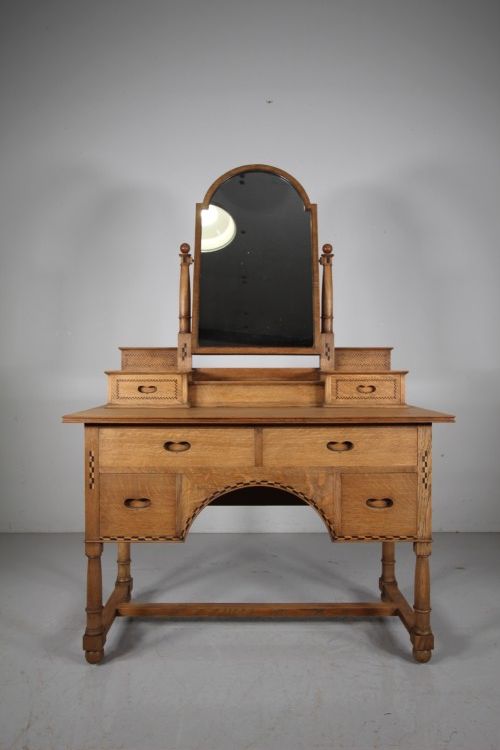
The selection ranges from elaborate mahogany and burr walnut dressing tables with carved details to simpler oak lowboys and writing desks adapted for the boudoir. Buyers also encounter related seating, washstands, and table mirrors that complete the dressing ensemble.
Origins span English workshops, French provincial studios, and Chinese export traditions, reflecting varied regional approaches to domestic furniture. Victorian examples dominate the selection, bringing substantial timber construction and ornate carving to the form.
Materials and construction methods
Construction relies heavily on dense hardwoods such as mahogany, oak, walnut, and satinwood, selected for their durability and grain. Timber is frequently carved by hand to create intricate relief work, particularly along drawer fronts, frames, and mirror supports.
Secondary materials including brass hardware, mirrored glass, and fabric upholstery appear across the pieces to add utility and decorative contrast. Marquetry inlay and faux bois finishes demonstrate specialised surface techniques employed by period makers.
Distinguishing quality in construction
The refinement of the hand-carving and the choice of primary timber distinguish exceptional examples from standard production. Dense, well-figured mahogany or burr walnut indicates a higher tier of craftsmanship than simpler utility pieces.
Structural integrity, the retention of original brass fittings, and intact mirror glass or fabric elements influence the overall standard. Pieces bearing maker labels or specific regional attributions demonstrate superior provenance and workshop origin.
Heals
The Carved Wooden Vanity Desk Glossary
- Lowboy
- A small oak or walnut table with drawers, commonly used as a dressing table or side table during the eighteenth century.
- Serpentine front
- A furniture front characterised by a convex central section flanked by concave curves, adding visual movement to the piece.
- Faux bois
- A decorative finish that imitates the appearance of natural wood grain, often applied to lesser timbers or metal.
- Kneehole desk
- A writing table featuring a central recess for the legs, flanked by pedestals of small drawers.
- Marquetry
- The art of applying pieces of veneer to a structure to form decorative patterns and pictorial designs.
Carved Wooden Vanity Desk: Frequently Asked Questions
What is a carved wooden vanity desk?
A carved wooden vanity desk is a period furniture piece designed for personal grooming and writing, typically featuring integrated drawers and sometimes a mirror.
These tables utilise timbers such as mahogany, oak, and walnut, often ornamented with hand-carved details characteristic of Victorian, Edwardian, and Georgian designs.
How do I date a vanity desk?
Dating relies on examining the timber species, construction methods, hardware, and stylistic indicators such as carved motifs and leg forms. Victorian pieces often display heavier proportions and rich mahogany, while Edwardian items tend to be lighter in execution.
Comparing the secondary woods inside drawers and the fastening techniques helps narrow down the manufacturing decade.
Where should I place a vanity desk?
These desks suit bedrooms, dressing rooms, or large hallways where natural light illuminates the mirror and surface. Pairing the desk with a matching side chair, armchair, or stool creates a cohesive functional area.
Positioning the piece away from direct heat sources protects the timber and veneer from cracking over time.
How do I care for antique wood?
Maintain the timber by dusting regularly with a soft, dry cloth and avoiding silicone-based polishes that build up residue. Period surfaces benefit from occasional applications of traditional beeswax to nourish the wood.
Keep the environment stable in humidity to prevent the carved elements and joints from shifting.