
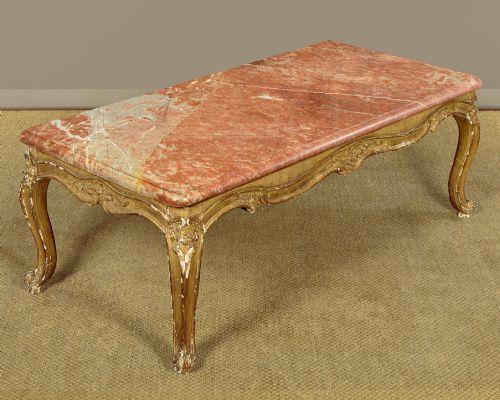
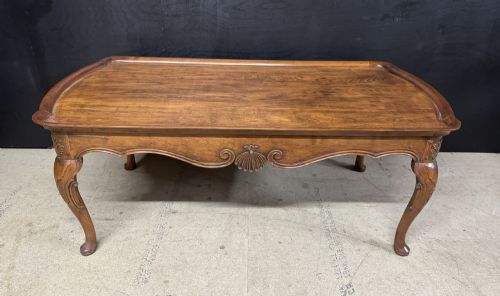
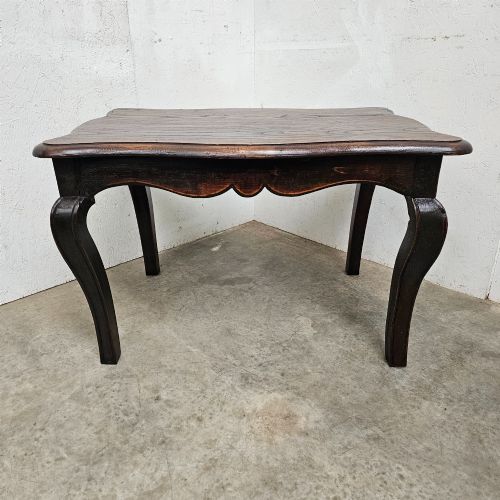
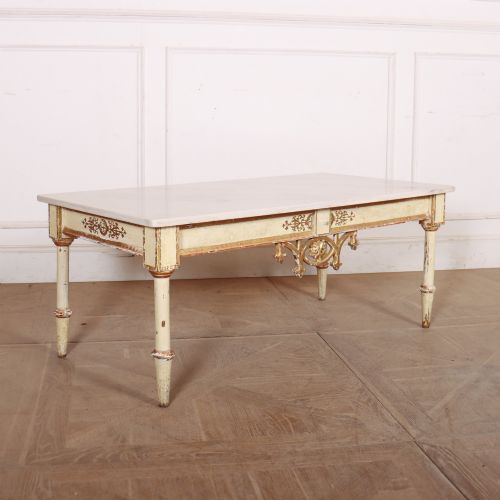



French Carved Tea Table
A french carved tea table brings continental polish to a room, offering a low surface for hospitality.
French Carved Tea Table
A french carved tea table encompasses low forms designed for drawing rooms and parlours, often appearing as coffee tables, centre tables, and occasional tables. Buyers seeking this phrase encounter examples ranging from eighteenth-century origins through nineteenth-century revivals up to twentieth-century interpretations.
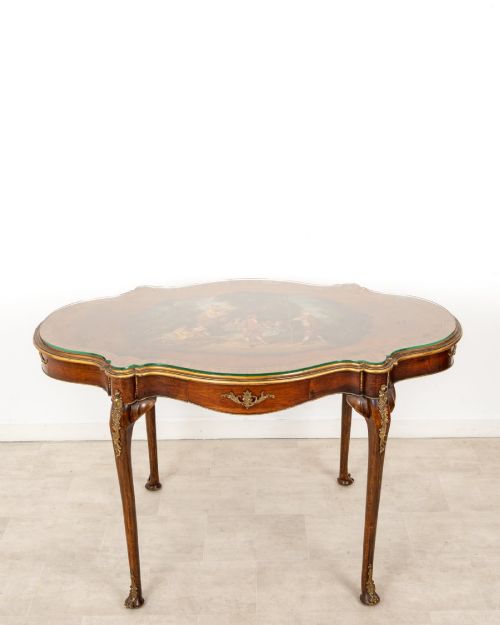
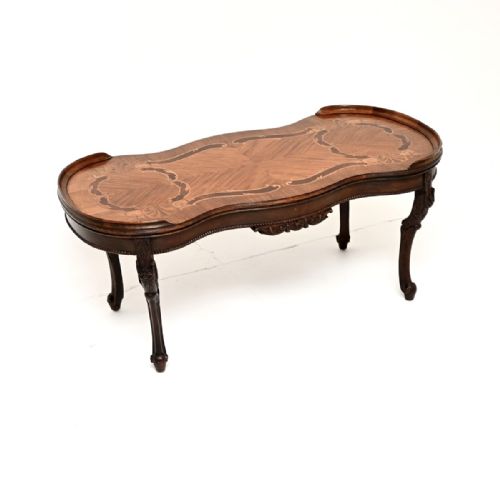
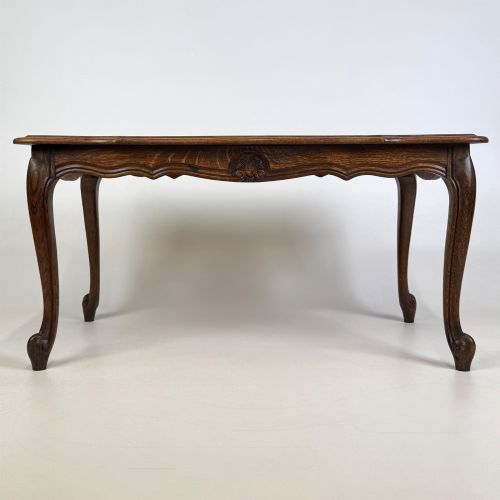
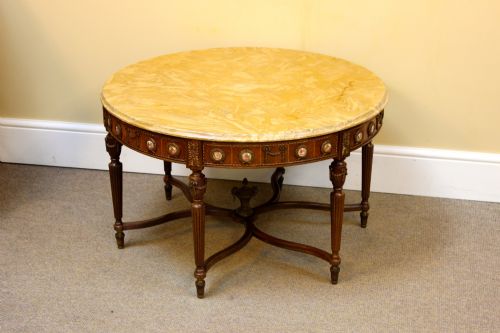
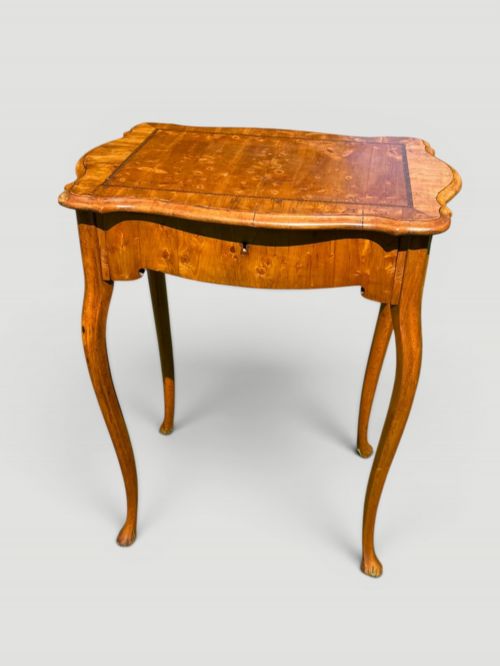
The selections span distinct stylistic revivals, notably Louis XV and Rococo variants, alongside provincial forms in oak and chestnut. Makers produced these pieces in walnut, burr walnut, mahogany, and rosewood, frequently incorporating marble tops or marquetry surfaces.
Object types stretch beyond standard tea use to include card tables, games tables, and two-tier designs. Formats vary from round and serpentine shapes to tray tables on stands and tilt-top tables.
How they were made
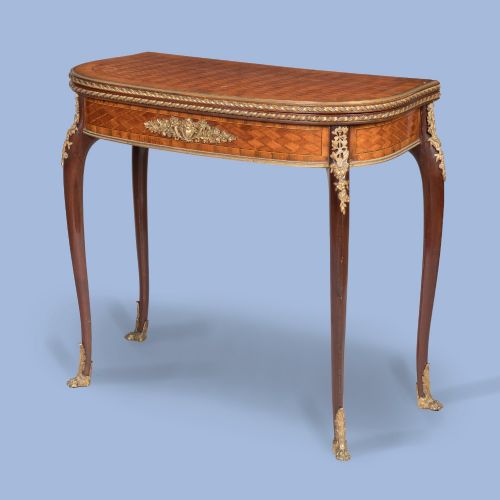
Cabinetmakers utilised hardwoods such as walnut, mahogany, oak, and rosewood, often applying burr walnut veneers or intricate marquetry patterns to table tops. Artisans employed giltwood and ormolu mounts to embellish frames, aligning with French revival tastes.
Marble inserts provided durable, decorative surfaces for coffee and centre tables, while brass hardware completed structural joints and drawers. Structural forms relied on turned legs, carved cabriole supports, and serpentine framing.
The selection includes pieces spanning from the eighteenth century to the 1930s, featuring walnut, mahogany, oak, and rosewood.
What varies in quality
The standard of carving and inlay separates standard production from finer output, where floral marquetry or hand-chased gilt bronze mounts show sharper definition. Timber selection dictates presence, with burr walnut and rosewood offering richer grain movement than plain structural timbers.
Integration of secondary materials dictates overall execution, seen in the precise fitting of marble tops and the crispness of ormolu mounts. Structural stability depends on the joinery within turned legs and shaped aprons.
François Linke·Gillows
The French Carved Tea Table Glossary
- Marquetry
- Decorative veneer work forming pictures or geometric patterns using various coloured woods. This technique adorns many tabletop surfaces across the selection.
- Ormolu
- Gilded bronze mounts applied to furniture for decorative effect. These metallic embellishments define nineteenth-century revival pieces.
- Giltwood
- Wood carved and coated with gold leaf. This finish appears frequently on frames designed in continental revival styles.
- Cabriole leg
- A furniture leg that curves outward and then tapers inward with a pad foot. This profile characterises Louis XV revival designs.
- Vernis Martin
- A type of simulated Japanese lacquer developed in France. It provides a glossy, decorative coating on specialised centre tables.
French Carved Tea Table: Frequently Asked Questions
What is a french carved tea table?
A french carved tea table is a low decorative furnishing designed for domestic hospitality, drawing upon continental aesthetic traditions.
These pieces encompass centre tables, occasional tables, and coffee tables produced across various revival periods.
How were these tables used?
These tables served primarily for serving tea or displaying decorative objects within nineteenth-century and twentieth-century reception rooms.
Certain variants incorporated folding leaves or adapted into card and games tables for evening entertainment.
How do I identify the period?
Dating relies upon timber choices, construction techniques, and stylistic markers associated with specific revival movements.
Nineteenth-century examples frequently feature elaborate ormolu mounts and marquetry, whereas provincial oak and chestnut versions often reflect simpler regional traditions.
How do I care for marble tops?
Marble surfaces require gentle cleaning with mild soap and water to preserve the polished stone finish.
Avoid acidic substances that can etch the surface over time.