
French Carved Side Tables
These French carved side tables bring provincial charm and gilded grandeur into a room, offering both decorative presence and practical surface space.
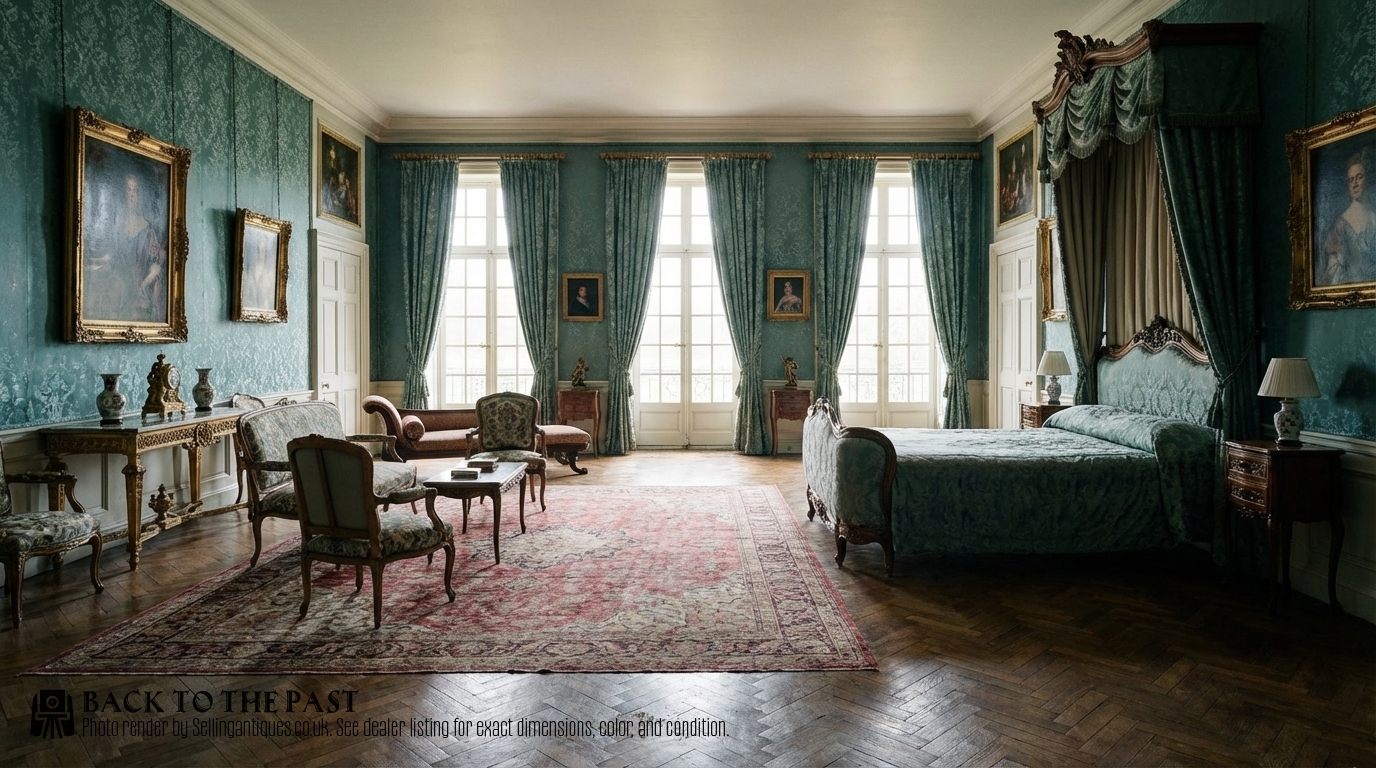
French Carved Side Tables
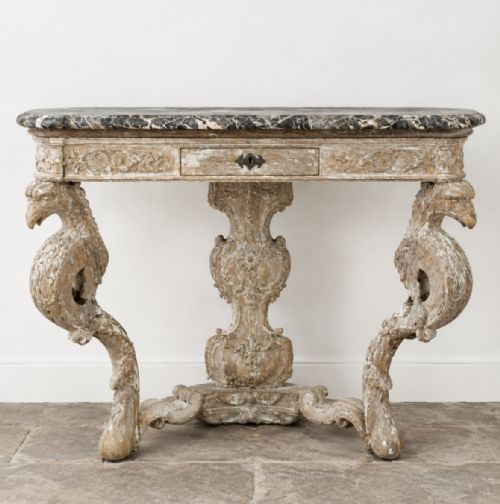
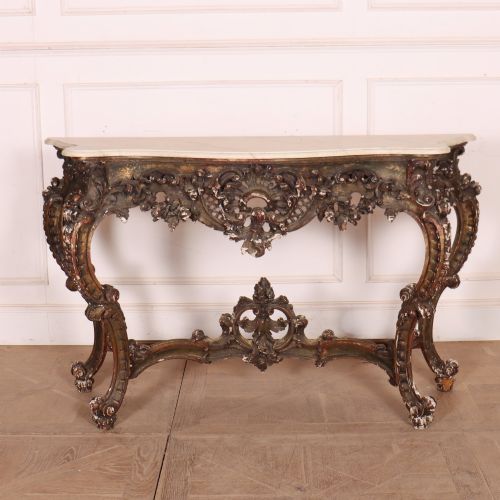
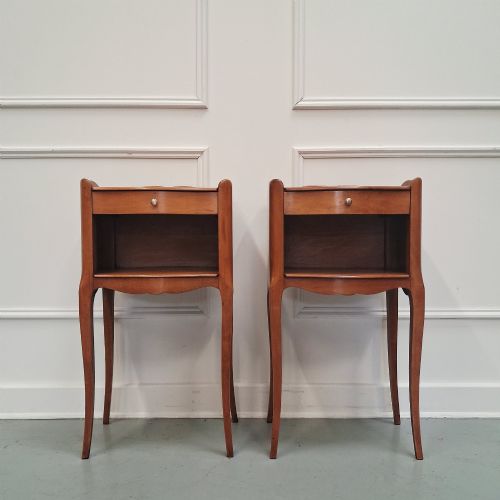
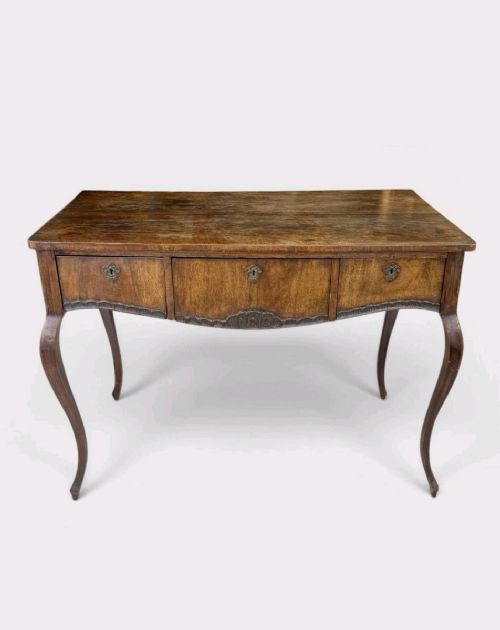
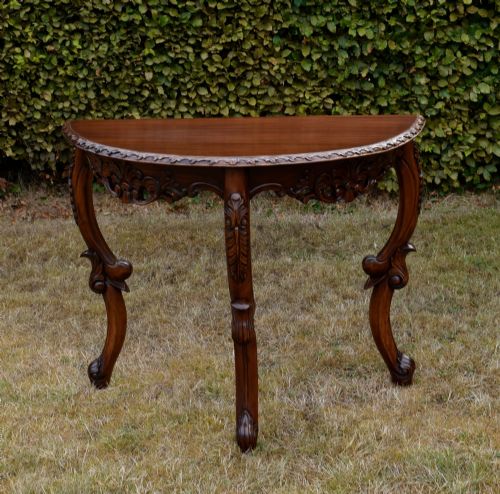
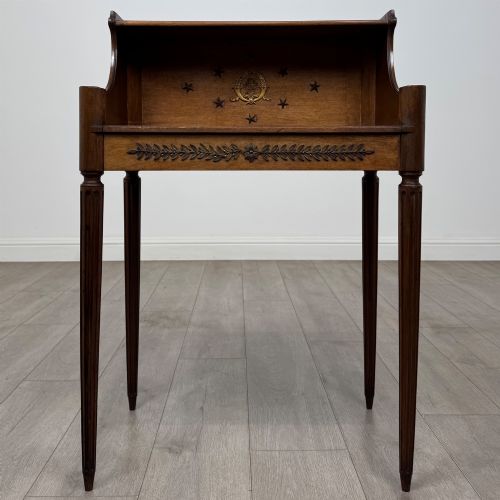
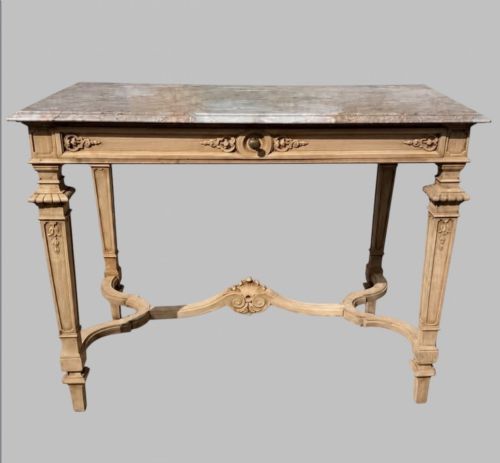
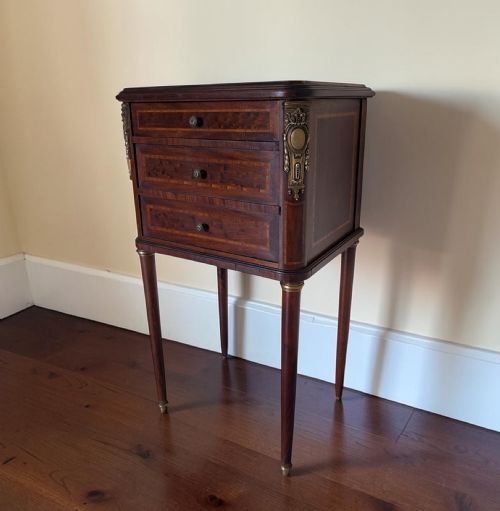
When you search for french carved side tables, you encounter an array of forms spanning console tables, gueridons, and bedside cabinets. These pieces originate predominantly from the nineteenth century, drawing upon design vocabularies like Louis XV, Louis XVI Revival, and French Rococo.
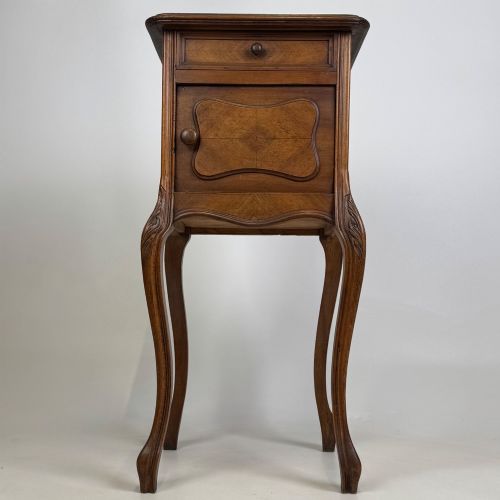
The versions most frequently met on this page include walnut and mahogany side tables, alongside marble-topped console tables supported by carved wooden frames. Cabinet makers of the period also utilised oak, chestnut, and giltwood to build occasional tables and bedside furniture.
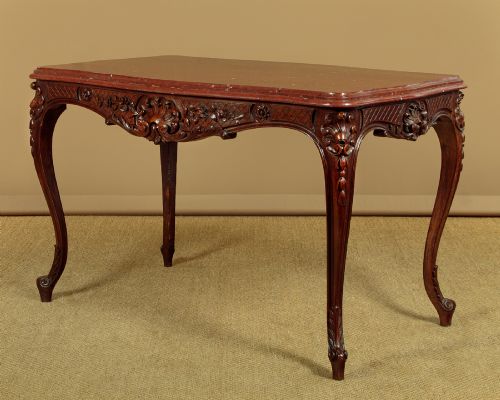
Makers shaped these items with serpentine fronts, cabriole legs, and turned supports characteristic of provincial and chateau workshops. Such variety ensures a table fits beside a bed or anchors a grand hallway.
Materials and Construction
Craftsmen shaped solid woods like walnut, mahogany, oak, and beech into structural frames, often applying hand-carving to legs, aprons, and friezes. Beech and pine provided sturdy internal framing, while walnut and mahogany served as primary display surfaces.
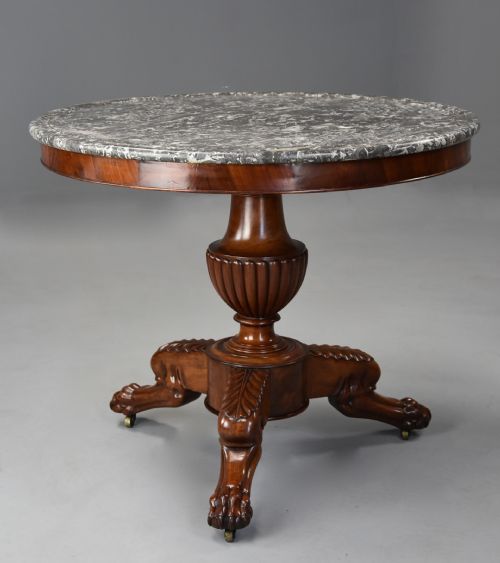
Many tables incorporate inset marble tops, utilising grey, white, or figured varieties such as rouge and breche d'alep marble. Giltwood pieces received layers of gold leaf or paint over carved wooden bases, achieving an ornate metallic finish.
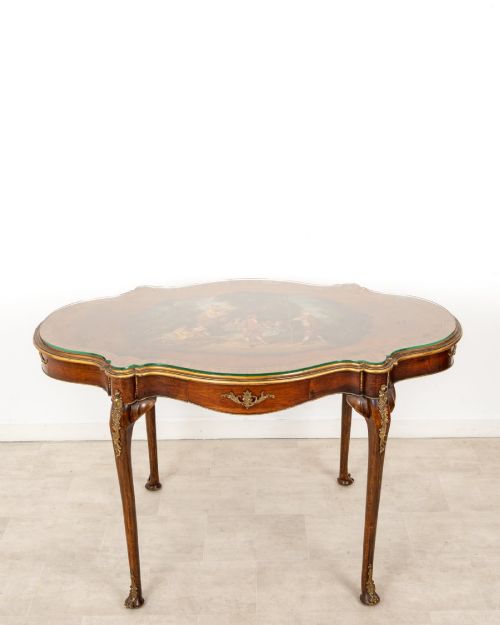
Joinery methods relied on traditional hand-cut joints, turning lathes for legs, and occasionally bronze mounts or vernis martin decoration to embellish the finished surface.
The listings feature pieces utilising marble, brass, walnut, mahogany, oak, and giltwood across periods from the eighteenth century to the 1930s.
Judging Quality
The division between standard and superior pieces rests upon the crispness of the hand-carving and the choice of materials. Finer examples display deeply undercut wooden foliage and robust structural timber rather than shallow moulding.
The selection of the top surface dictates quality, with heavy, well-figured marble slabs and original giltwood finishes elevating a piece. Tables retaining their original veined marble and integrated patination command greater appreciation among collectors.
The French Carved Side Tables Glossary
- Gueridon
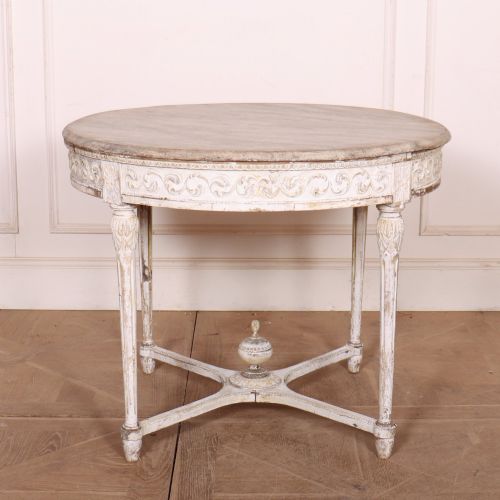
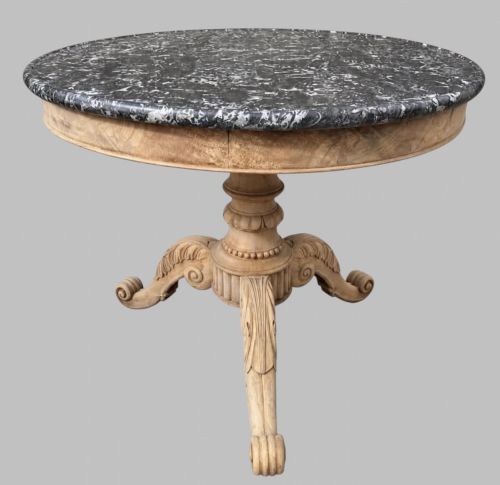
- A small circular table on a central pillar or tripod base, frequently topped with marble. These pieces originated in France and served various occasional functions.
- Console table
- A table designed to stand against a wall, often secured with brackets. They commonly feature elaborate front legs and marble tops.
- Cabriole leg
- A furniture leg that curves out and then in, resembling an animal's leg. This shape is characteristic of Rococo and Louis XV revival designs.
- Serpentine front
- A furniture front characterised by a wavy line, curving outward in the centre and inward at the sides. It requires skilled woodworking to shape.
- Giltwood
- Wood that has been coated with gold leaf or gold paint. It appears frequently on decorative mirrors and ornate tables.
French Carved Side Tables: Frequently Asked Questions
What is a gueridon table?
A gueridon is a small, round French table typically supported by a central pillar or three legs. These tables often feature marble tops and wood construction.
They function well as bedside stands or occasional surfaces for lamps and decorative objects.
How were console tables used?
Console tables stood against interior walls, frequently placed beneath mirrors in formal reception rooms. Their primary purpose was display rather than heavy dining.
Because they attached to walls or relied on front legs, they offered a narrow profile suitable for hallways.
Which woods appear most often?
Walnut and mahogany dominate the selection, bringing rich grain patterns to nineteenth-century tables. Oak and chestnut also appear in provincial pieces.
Giltwood and painted finishes provide alternative decorative surfaces.
Are marble tops original?
Many tables retain their original inset marble slabs, which include varieties like rouge and grey marble. These heavy tops were cut to fit the specific wooden frame.
Inspect the fit and edge profiling to understand the relationship between the marble and the base.