

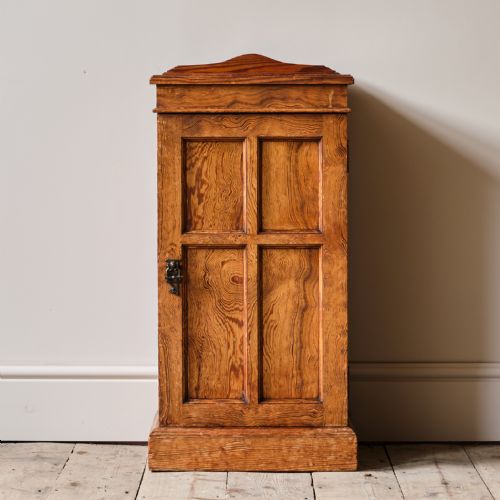

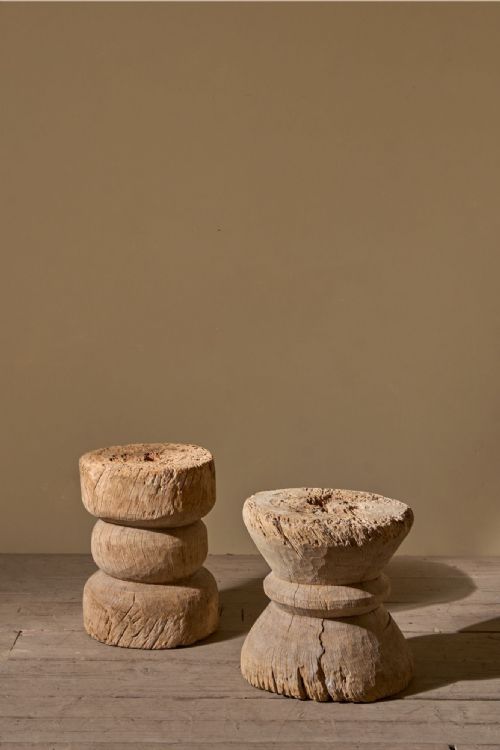
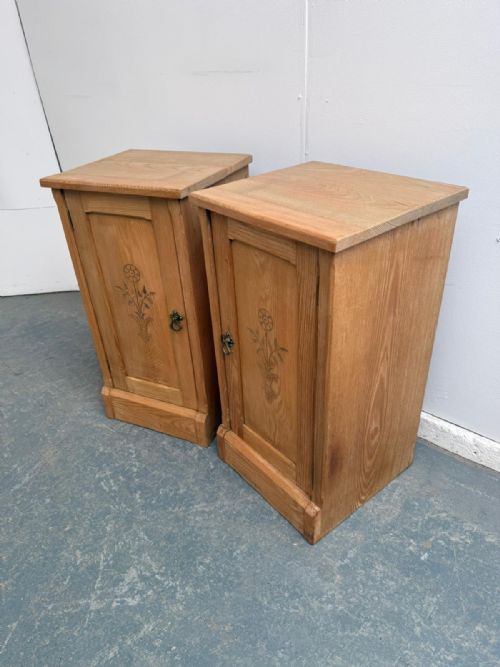


Carved Timber Bedside Tables
Carved timber bedside tables bring functional history into the bedroom, offering tactile surfaces and period character shaped from solid woods.
Carved Timber Bedside Tables
Carved timber bedside tables encompass practical bedroom furniture and companion pieces designed for daily use beside a bed. Buyers searching this phrase encounter practical bedside cabinets, night tables, and low storage chests intended to hold small items close at hand.
The selections span several historical periods, most frequently featuring Victorian and 19th-century constructions alongside early 20th-century examples. Forms range from compact pot cupboards to refined mahogany chests of drawers and rustic wood side tables.
Origins and styles vary widely across the inventory, touching upon Georgian proportions, Gothic Revival detailing, and Arts and Crafts simplicity. This variety ensures that pieces suit diverse interiors while retaining their distinct period identities.
How they were made
Construction relies heavily on durable hardwoods and softwoods such as mahogany, ash, oak, and Oregon pine, chosen for their structural integrity and grain. Workshops utilised solid timber alongside specialised joinery methods to build lasting carcasses and drawers.
Surface ornamentation is achieved through direct carving into the wood, waxed finishes, and painted treatments that highlight the natural material. Metal elements like brass and iron appear selectively on handles, hinges, and structural mountings.
Carved Timber Bedside Tables Retail Price Guide 2026
Typical asking prices for carved timber bedside tables among the pieces listed under this phrase on Sellingantiques today, from the lower quarter to the upper quarter. They describe what is for sale here now, not the wider market.
Listings feature woods such as mahogany, ash, oak, and Oregon pine across periods from the eighteenth century to the 1920s.
What varies in quality
Quality rests on the depth and crispness of the timber carving, distinguishing utilitarian items from masterworks. Superior examples display thoughtful proportions and harmonious integration of decorative motifs.
The choice of primary wood and the integrity of the original construction dictate longevity and visual weight. Untouched aged surfaces and carefully maintained waxed finishes elevate the overall merit of a piece.
The Carved Timber Bedside Tables Glossary
- Pot cupboard
- A small bedside cabinet originally designed to house a chamber pot behind a single door. These compact pieces now function as standard bedside storage.
- Arts and Crafts
- A design movement favouring honest construction, simple forms, and visible handcrafting over mass production. Pieces from this tradition often utilise ash and wax finishes.
- Gothic Revival
- An architectural and decorative style drawing on medieval forms, featuring pointed arches, heavy moulding, and robust timber construction. It is frequently seen in mid-nineteenth-century items.
- Night table
- A small table or enclosed cabinet placed beside a bed for holding personal belongings. They appear in Georgian and later nineteenth-century configurations.
Carved Timber Bedside Tables: Frequently Asked Questions
What is a pot cupboard?
A pot cupboard is a small enclosed bedside cabinet historically designed to contain a chamber pot. Today they serve as compact bedside tables with useful internal shelving.
Their enclosed doors keep personal items neatly hidden away while maintaining a modest footprint beside the bed.
How do I date these tables?
Dating relies on identifying timber types, construction methods, and stylistic cues unique to periods like the Georgian era or Victorian times. Secondary woods and fastener types also offer clues to age.
Examining the backboards and interior drawer joints helps confirm whether a piece belongs to the eighteenth, nineteenth, or early twentieth century.
Are these tables sturdy?
Most pieces are built from dense solid timbers like mahogany, oak, and ash, giving them inherent structural stability. Traditional joinery ensures they withstand daily use.
Regular care, such as gentle waxing, helps preserve the wood strength and keeps the joints secure over decades of service.
How do I clean waxed wood?
Waxed timber requires a soft, dry cloth to remove dust without harming the protective finish. Avoid harsh chemical sprays that strip the natural patina.
Applying a quality furniture wax occasionally replenishes the sheen and protects the carved details from moisture.