
French Carved Pier Table
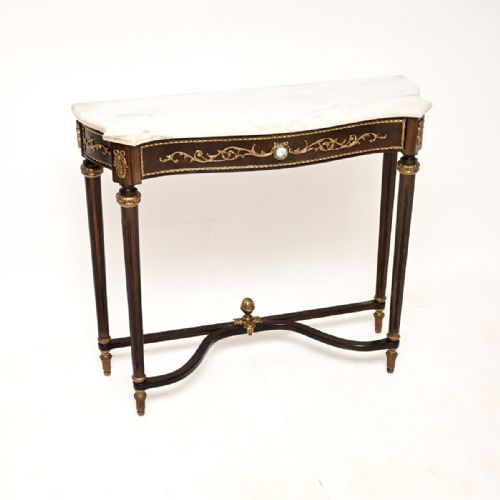
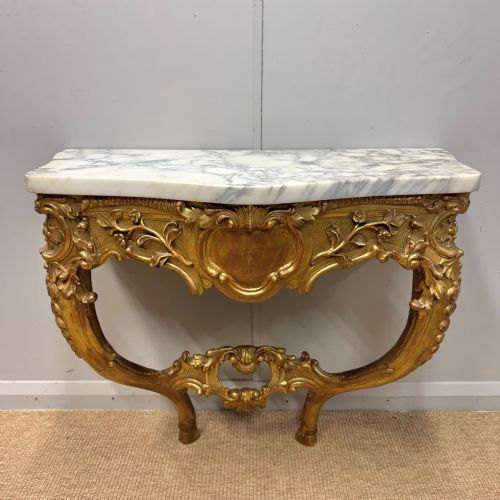
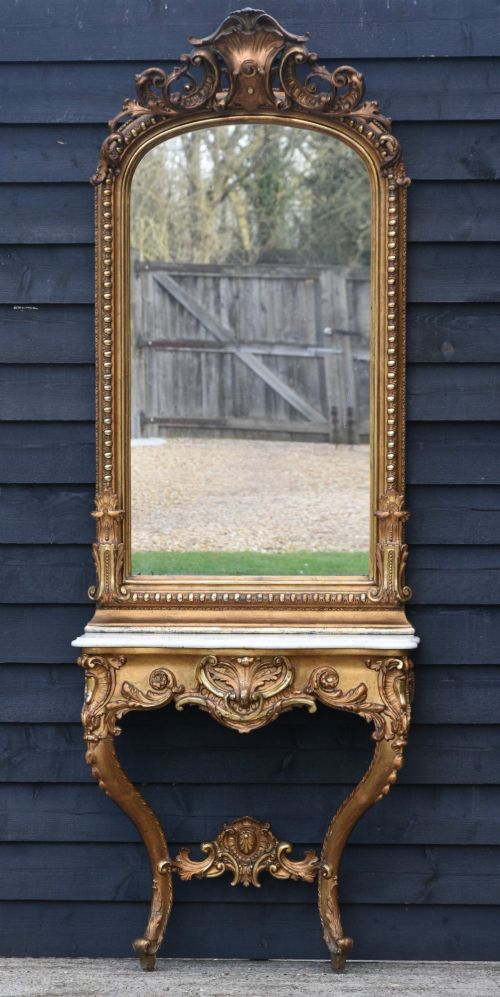
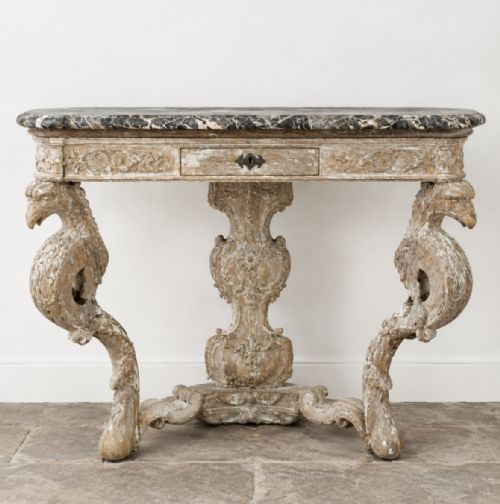
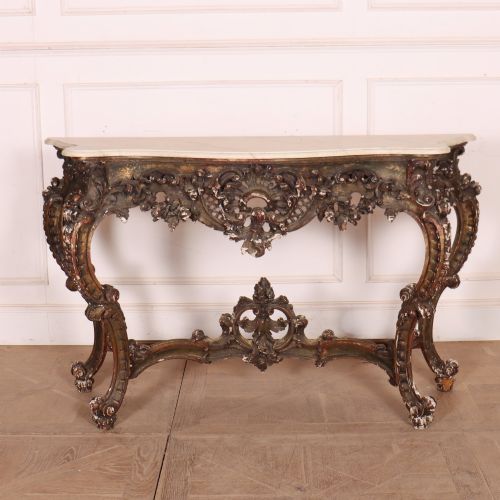
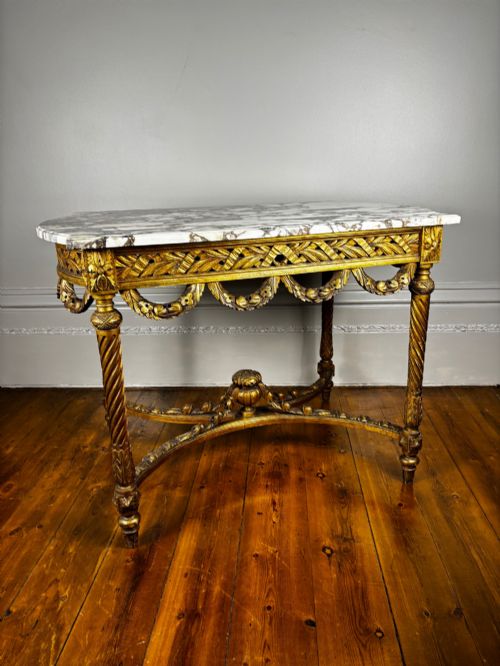
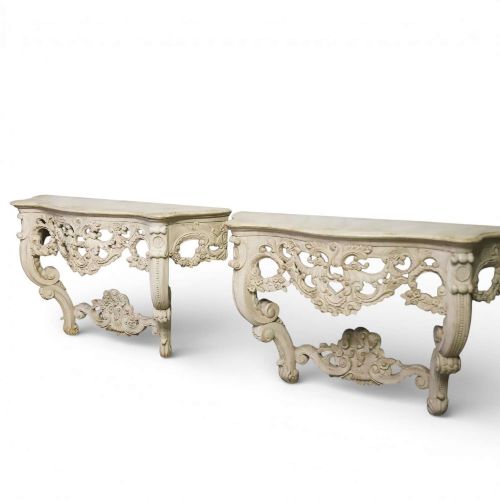
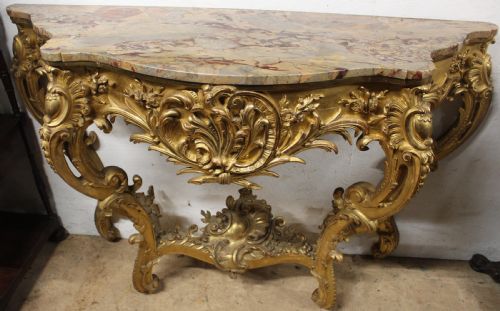
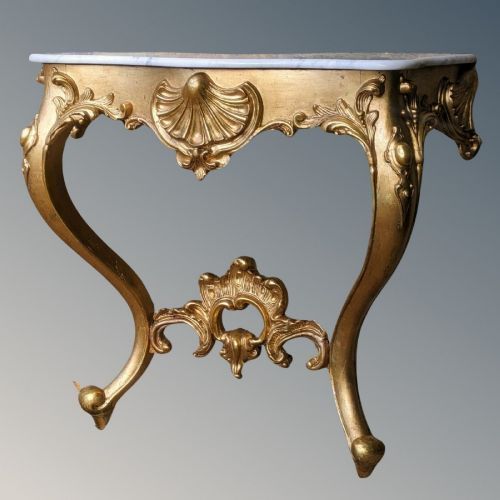
These french carved pier table pieces are stately console tables designed to sit against a wall, frequently paired with a mirror.
French Carved Pier Table
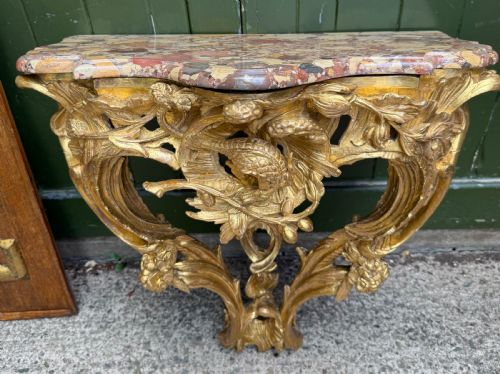
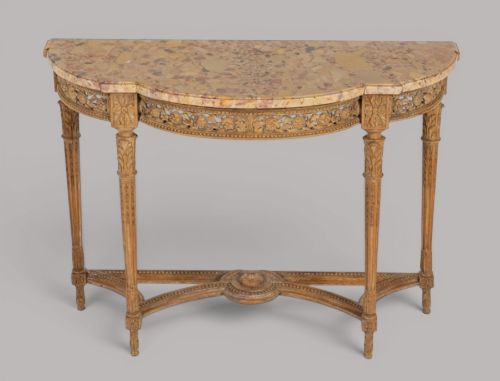
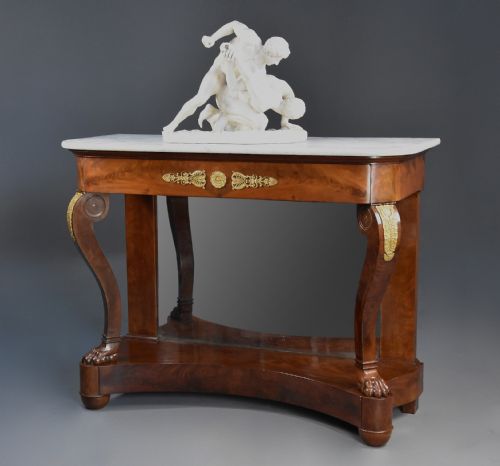
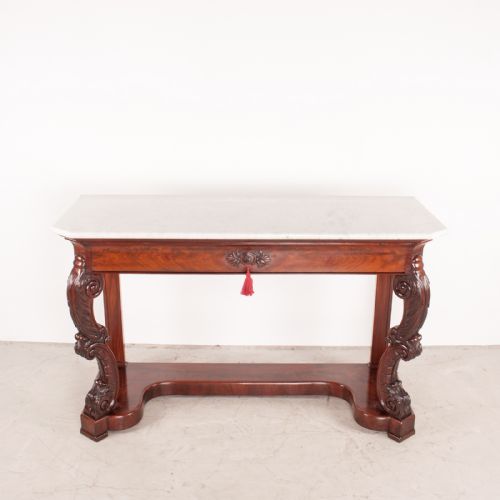
A french carved pier table is a foundational console or side table designed to anchor a room, often placed beneath a mirror or against a pier wall between windows. These pieces emerge primarily from the eighteenth and nineteenth centuries, spanning revivals of Louis styles through to later periods.
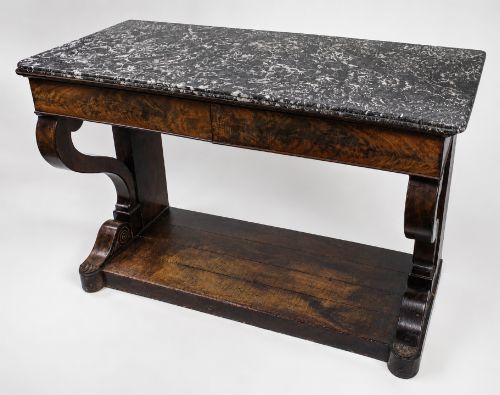
The most common forms on this page include console tables with shaped marble tops, serpentine fronts, and matching pier mirror sets. Walnut, mahogany, and oak appear alongside giltwood bases, reflecting diverse regional workshops and changing tastes across the nineteenth and early twentieth centuries.
Materials and Construction
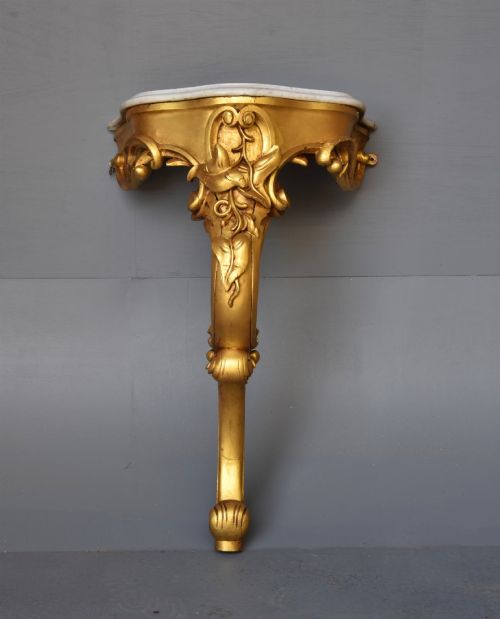
Makers shaped structural carcasses from solid woods like oak, mahogany, and walnut, often applying gesso and heavy gold leaf to create ornate giltwood surfaces. Marble tops, including varieties such as breche d’alep and rouge, were slabbed and polished to sit squarely upon the carved frames.
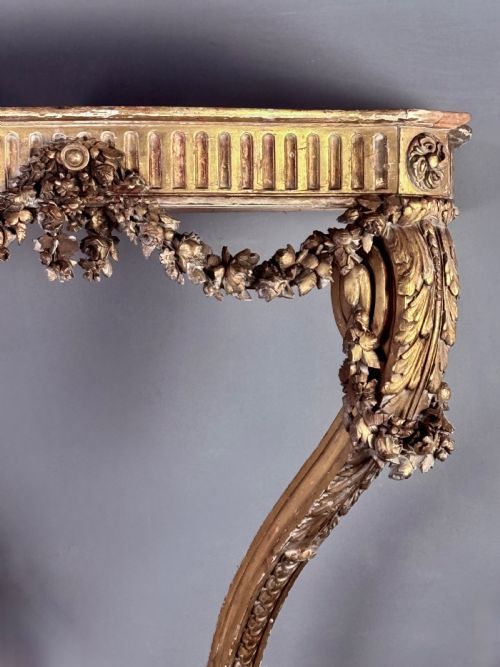
Carving was executed by hand, rendering intricate foliate motifs, scrolls, and neoclassical details directly into the timber or gesso layers. Wall-mounted variants relied on sturdy structural brackets and pegged joints to support the weight of heavy stone tops.
Judging Quality and Execution
Quality rests in the depth and crispness of the hand-carving, where sharper undercut foliage distinguishes superior workshops from mechanical production. The weight and figuring of the fitted marble top also signal the ambition of the original commission.
Integration between the table base and its companion mirror determines the cohesion of matched sets. Original gilding surfaces that retain their warmth without heavy overpainting hold greater integrity for collectors.
Felix-Alfred Ternisien·Jean Joseph Chapuis
The French Carved Pier Table Glossary
- Pier table
- A console table designed specifically to fit against the wall space between two windows. It traditionally supports a tall mirror hung directly above it.
- Giltwood
- Timber coated with fine gold leaf applied over a prepared gesso and bole ground. This finish provides a brilliant reflective surface characteristic of formal French seating and tables.
- Serpentine
- A furniture front or table edge curving outward at the centre and inward at the sides. This fluid line requires precise joinery and timber selection.
- Breche d’alep
- A decorative quarried marble characterised by a brecciated pattern of multi-coloured fragments cemented together in natural veins. It appears frequently on eighteenth and nineteenth-century French tables.
- Demi-lune
- Half-moon shaped furniture designed to sit flat against a wall. These semicircular tables often serve as pier or side furniture in reception rooms.
French Carved Pier Table: Frequently Asked Questions
What is a french carved pier table used for?
These tables served primarily as formal display surfaces in reception rooms and grand hallways, positioned against wall spaces between windows.
They often supported ornamental objects, clocks, or candelabra beneath matching wall mirrors to amplify light within a room.
How do I identify the period of a table?
Dating relies upon stylistic cues like Louis XV curves, Louis XVI symmetry, or later nineteenth-century revival interpretations.
Material choices, construction methods within the frame, and the character of the carved gesso provide further chronological markers.
Are marble tops original to these tables?
Most formal console and pier tables were designed specifically to receive heavy stone slabs, often fitted with moulded edges matching the frame contour.
Inspect the seating rebate beneath the tabletop to ensure the marble rests properly within the wooden or gilt chassis.
How do I style a pier table at home?
Position the piece flat against a principal wall, ideally in an entrance hall or living space where its proportions can command attention.
Pair it with a tall mirror or balanced decorative objects to echo its traditional architectural setting.