


French Cameo Glass
French cameo glass vases are layered glass vessels carved to reveal contrasting motifs, offering collectors the finest botanical and landscape designs of the Art Nouveau period.
Understanding French Cameo Glass
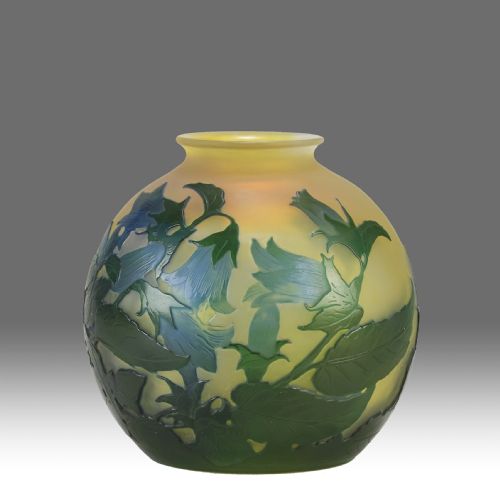
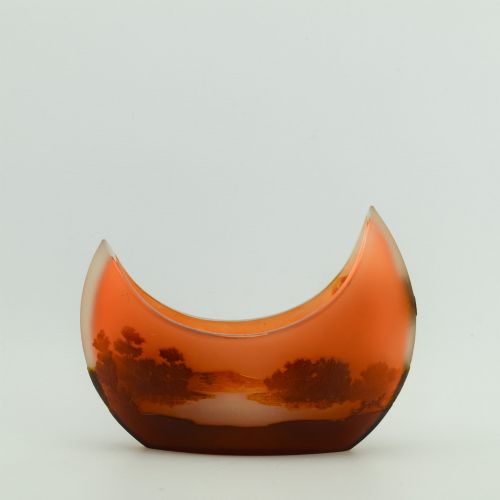
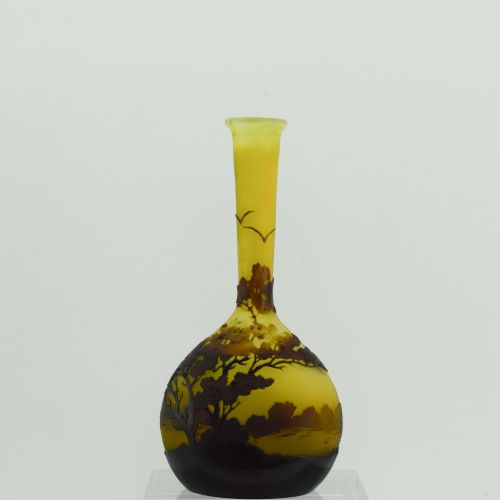
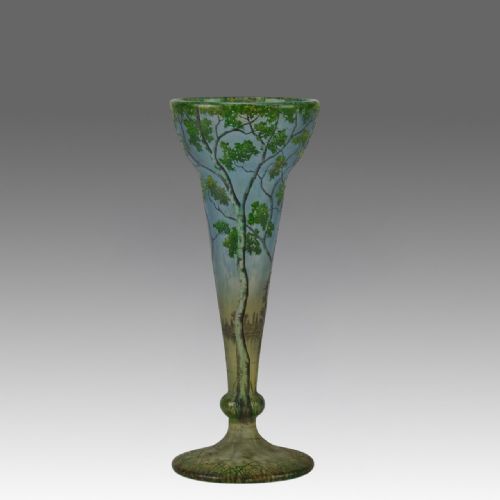
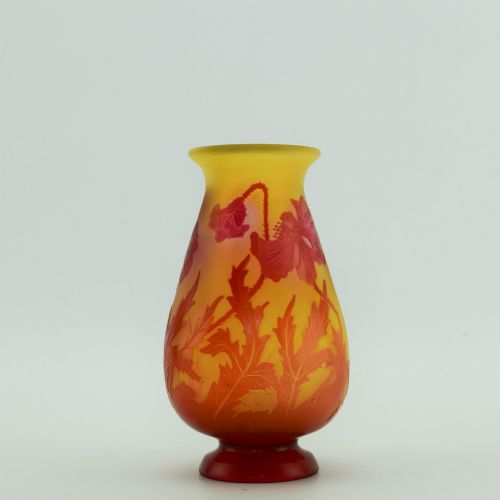
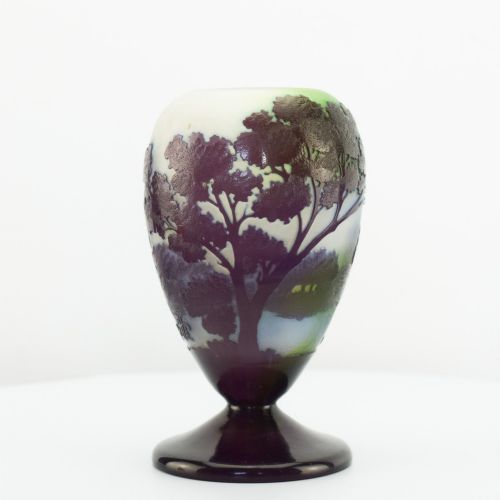
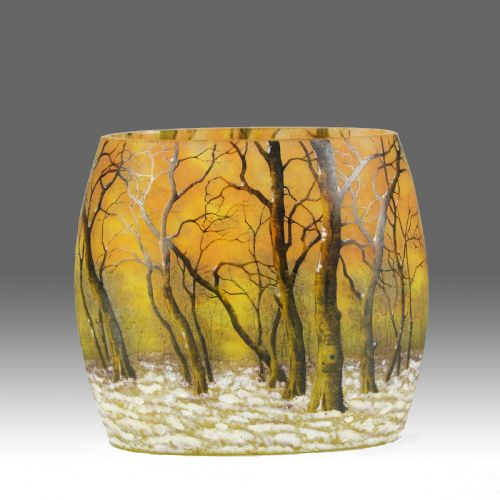
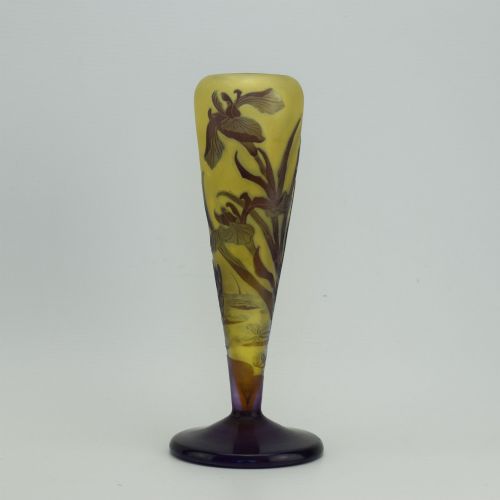
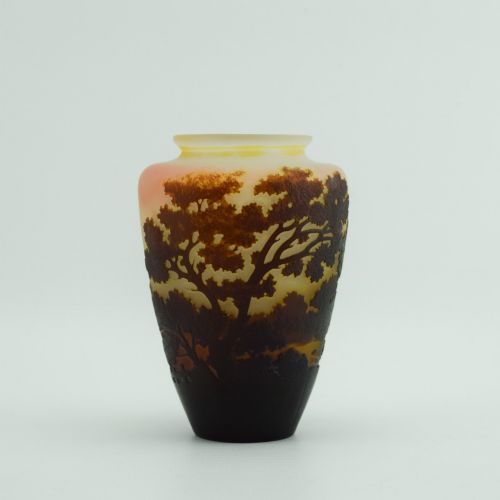
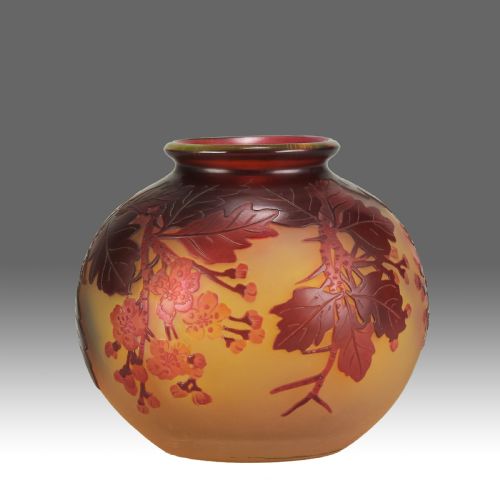
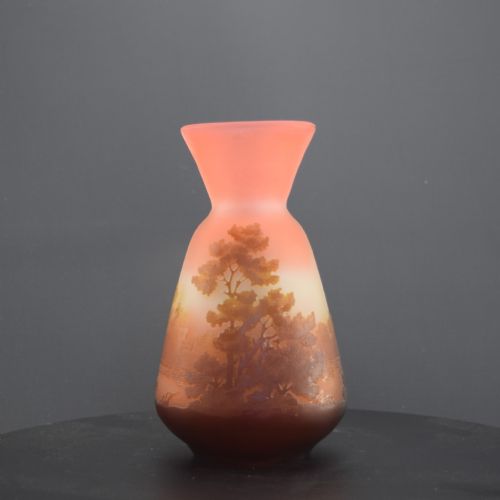
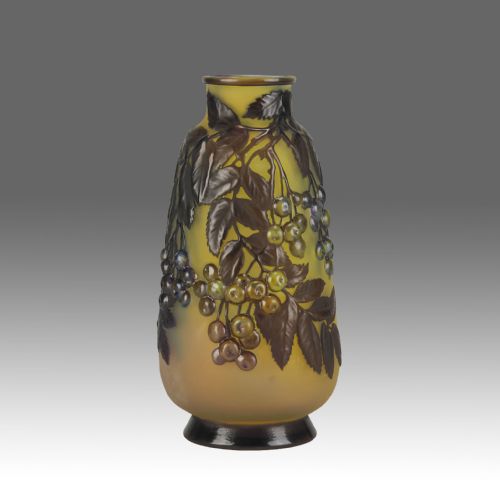
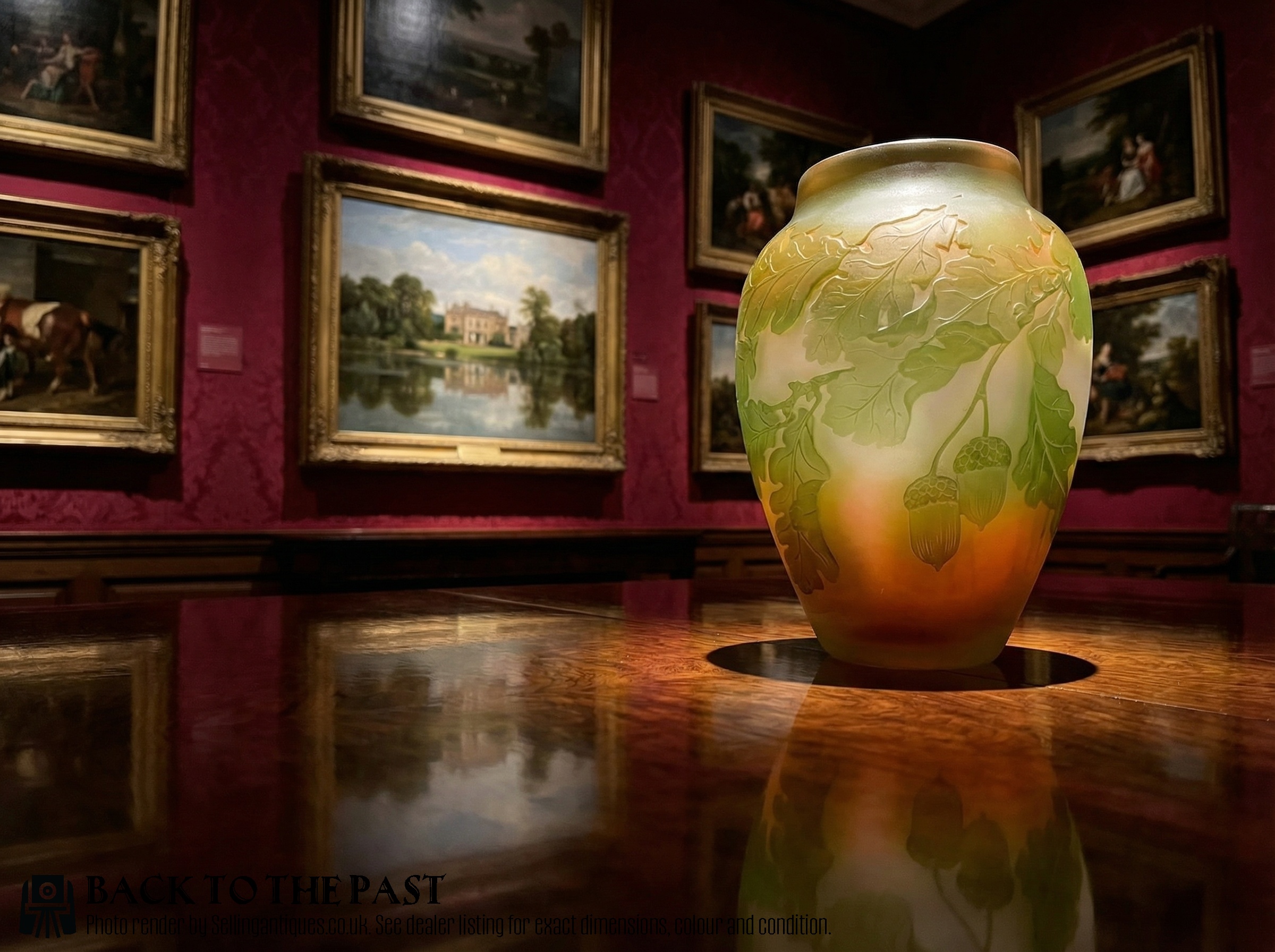
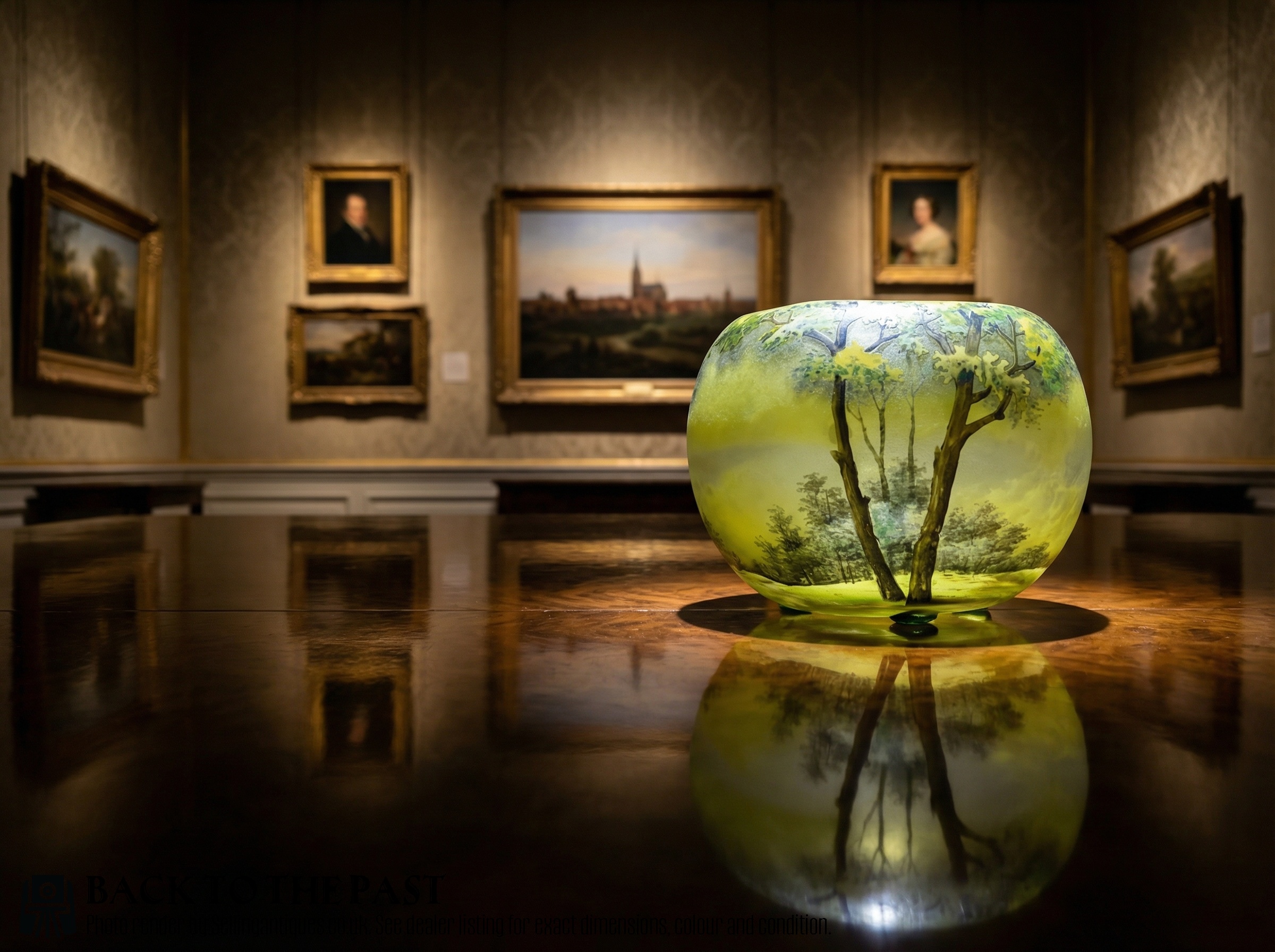
French cameo glass pieces are primarily vases shaped during the early twentieth century within the Art Nouveau style. Collectors searching for french cameo glass will encounter works featuring distinct floral or natural subjects such as apple blossoms, cornflowers, oak leaves, and landscape scenes.
The objects available on this page date from the 1900s through the 1920s, reflecting the height of French glassmaking creativity. Forms remain predominantly focused on vases, ranging from large floral compositions to detailed summer landscapes.

Materials and Technique
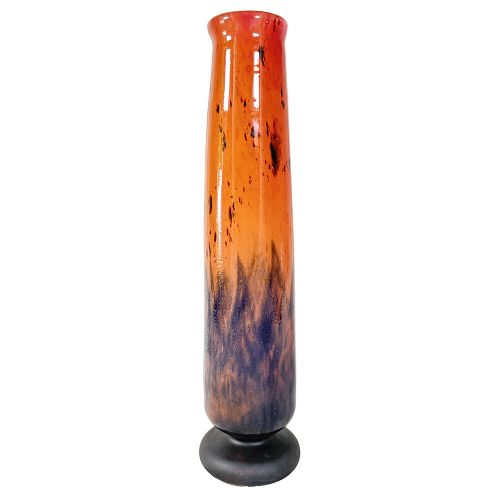
These pieces utilise cameo glass, acid-etched glass, frosted glass, etched glass, and enamel. Makers built up multiple layers of coloured glass before cutting or chemically eating away the outer strata to expose the design.
Acid-etching techniques allowed artisans to achieve precise depth and texture across the frosted or glossy surfaces. Enamel additions occasionally supplemented the carved glass to introduce finer polychrome details to the botanical scenes.
Retail Price Guide 2026
Typical UK retail prices for french cameo glass, calculated from the Sellingantiques database of over a million retail prices indexed since 2003. This retail price guide relies exclusively on Sellingantiques data; no external sources or auction records are used, so the figures do not describe the wider market.
Current listings and archive records for french cameo glass exclusively feature vases produced during the 1900, 1910, and 1920 periods.
Assessing Quality
Quality rests upon the crispness of the carving and the complexity of the glass layering. Pieces with deeper relief and multi-coloured glass strata demonstrate superior technical mastery over simpler single-layer etchings.
The sophistication of the artistic subject also defines the upper range. Detailed landscape and naturalistic compositions require greater skill in acid-etching and manual finishing than standard geometric patterns.
Galle·Emile Galle·Daum·CLIO
The French Cameo Glass Glossary
- Cameo Glass
- Glass formed with multiple distinct layers of different colours, where portions of the outer layer are removed to create a raised design. This technique draws inspiration from ancient carved gemstone carving.
- Acid-Etched Glass
- Glass treated with hydrofluoric acid to eat away exposed surfaces and create frosted textures or recessed designs. It allowed makers to produce intricate patterns with high consistency.
- Enamel
- Opaque or translucent glass paste applied to the surface and fired to fuse with the body. This material adds supplementary colour and detail to the carved glass motifs.
- Art Nouveau
- A decorative style prevalent in the early twentieth century characterised by flowing, organic lines inspired by natural forms. This aesthetic heavily influenced the floral and landscape designs of French glassmakers.
Frequently Asked Questions
What is french cameo glass?
French cameo glass consists of multi-layered glass vessels carved or acid-etched to reveal contrasting coloured designs. These pieces originate predominantly from the early twentieth century.
Artisans utilised techniques involving frosted glass and enamel to depict natural subjects like landscapes and botanical motifs within the Art Nouveau style.
How are these vases dated?
Dating relies on stylistic markers associated with the Art Nouveau movement and the active periods of specific glass workshops. Pieces on this page align with the 1900, 1910, and 1920 eras.
Signatures, motifs such as oak leaves or cornflowers, and manufacturing techniques help place the vases within these early twentieth-century decades.
How should I display a vase?
Display these vases in well-lit areas where light can pass through the layered glass to highlight the carved details. Placing them away from direct heat and heavy foot traffic protects the delicate frosted and enamelled surfaces.
Single-vase placement allows the complex landscape and floral patterns to be viewed clearly from all angles.
Are all pieces signed?
Signatures on these glass objects vary depending on the maker, workshop, and production period. Some pieces feature distinct signatures or applied lettering identifying the creator.
Not every item carries an explicit signature, meaning stylistic analysis of the glass layering and etching quality remains essential for identification.