





French Bronze Putti Candlesticks
French bronze putti candlesticks combine sculptural cherubic figures with metal casting, offering classical ornamentation for period interiors.
French Bronze Putti Candlesticks
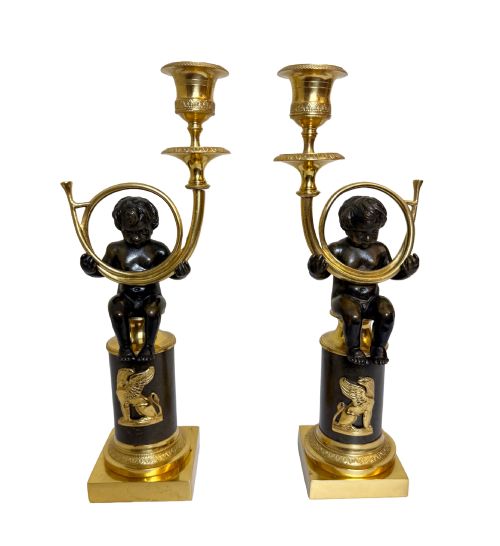
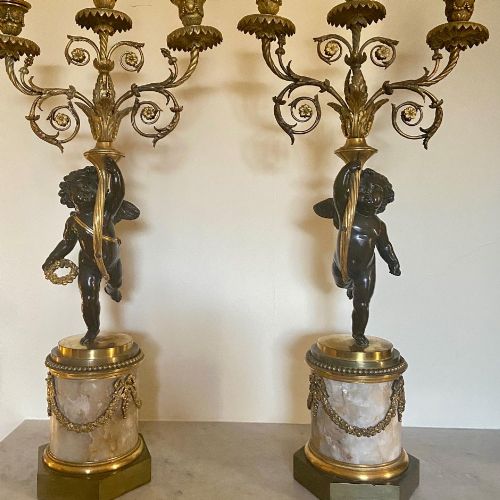
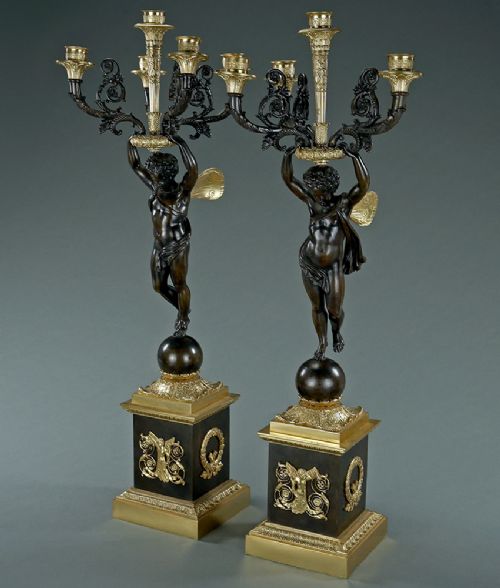
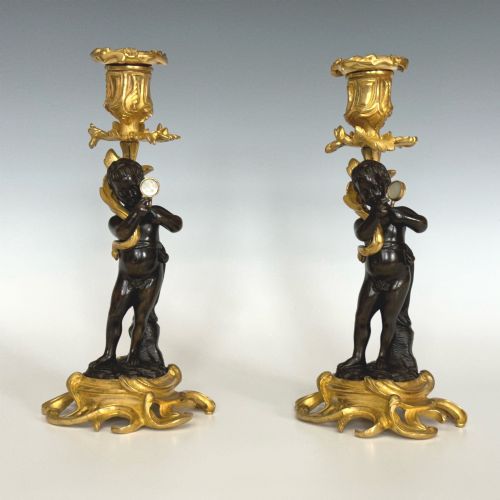
French bronze putti candlesticks present cast metal cherubs supporting candle holders, appearing across nineteenth-century styles including French Empire, Louis XVI, and Rococo Revival. These decorative objects emerge frequently as matched pairs, often combining patinated or gilt bronze with contrasting elements.
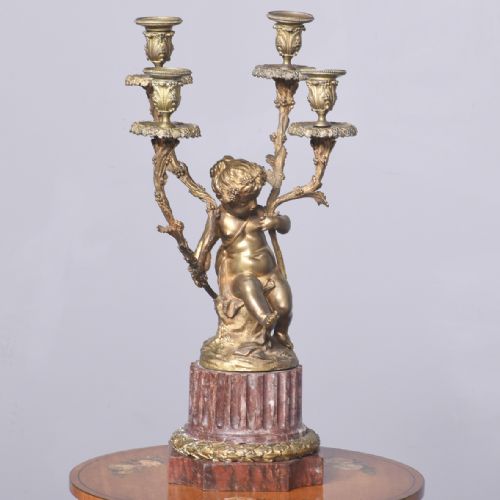
The inventory encompasses single candlesticks and multi-light candelabra, frequently elevated on marble bases or incorporating materials like fluorspar. Pieces span specific decades such as the eighteen-sixties and eighteen-eighties, alongside broader Victorian and Regency designations.
Materials and construction
Makers utilised bronze, brass, and spelter for the primary figures and structural elements, employing casting techniques to shape detailed putti and foliage. Ormolu and gilt finishes provided bright golden highlights, contrasting with dark patinated bronze surfaces.
Stonework such as marble formed substantial supportive bases for many figures, whilst occasional variants integrated carved fluorspar or added silk components for illumination fittings.
Listings demonstrate a strong concentration of nineteenth-century French Empire and Louis XVI revival styles utilising gilt bronze and marble.
Distinctions in quality
The sophistication of the metal chasing separates standard production from finer work, visible in the facial definition of the putti and the crispness of acanthus leaf ornament. Heavier cast components and dense marble or ormolu mounts indicate superior physical substance.
Coherence of the design across matched pairs, alongside the depth and durability of the original patination or gilding, establishes the standing of an individual piece.
Francois Redmond·Claude Clodion
The French Bronze Putti Candlesticks Glossary
- Putto
- A plump, naked male child figure, frequently winged, depicted in classical art and decorative metalwork. These cherubic motifs form the central sculptural element of the pieces.
- Ormolu
- Finely ground high-carat gold applied to bronze through a mercury gilding process. This technique yields a brilliant, lasting surface on metal mounts.
- Candelabra
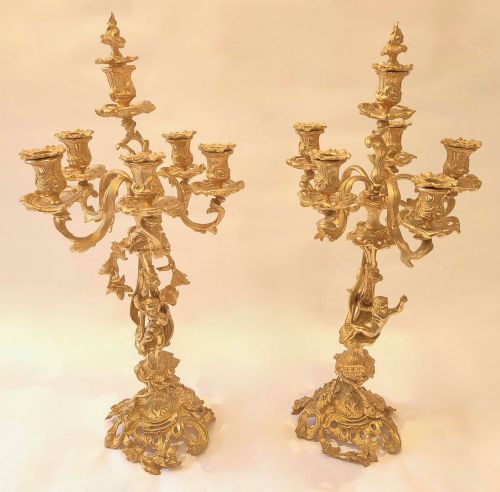
- A branched candlestick designed to hold multiple lights simultaneously. Many examples on this page feature two, three, or five branch configurations.
- Patinated bronze
- Metal treated chemically or naturally to produce a darkened surface layer on the bronze. This finish contrasts sharply against bright ormolu details.
- Fluorspar
- A colourful mineral occasionally incorporated into the bases or bodies of candelabra. It provides a striated, translucent textural contrast to the cast metal.
French Bronze Putti Candlesticks: Frequently Asked Questions
What periods do these pieces date from?
The listings span the eighteenth through the nineteenth centuries, incorporating specific decades like eighteen-fifty and eighteen-eighty alongside broader periods such as Regency and Victorian.
Stylistic influences draw heavily on French Empire, Louis XVI, and Rococo revivals, reflecting nineteenth-century revivals of earlier court aesthetics.
Are these items sold in pairs?
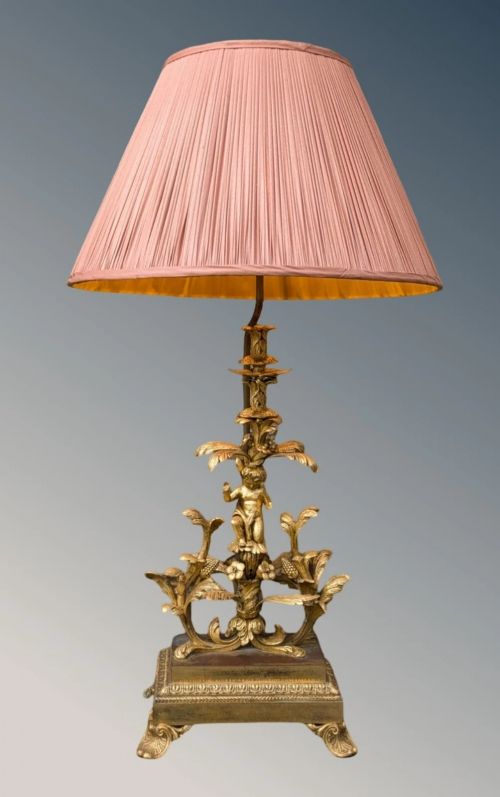
Many entries are described as pairs, offering symmetrical display options for mantelpieces, sideboards, or console tables. Single candlesticks and table lamps also appear within the selection.
Buyers should examine specific listings to determine whether lighting hardware remains intact or has been adapted for modern electricity.
What materials support the bronze figures?
Marble serves as the primary base material for numerous figures, providing a heavy, stable foundation beneath the metalwork. Fluorspar also appears as a secondary mineral component in specific candelabra.
These stone elements frequently feature shaped edges or classical proportions matching the overarching style.