


French Bronze Ormolu Chenets
French bronze ormolu chenets anchor the hearth with gilt splendour, uniting functional iron strength and decorative sculptural craft.
French Bronze Ormolu Chenets
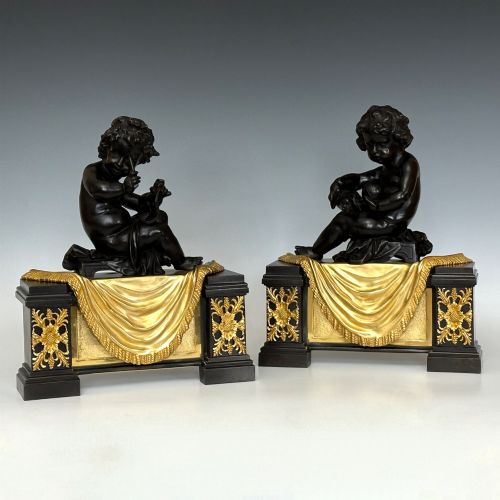
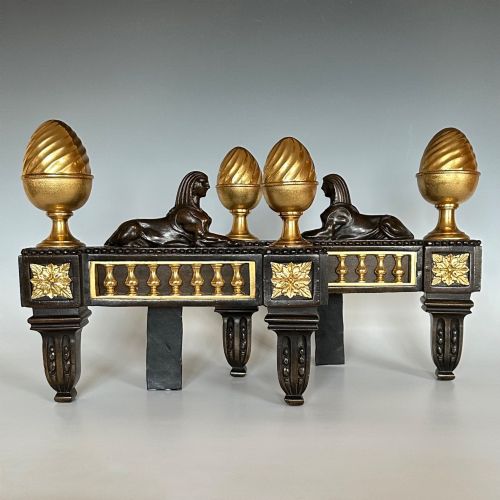
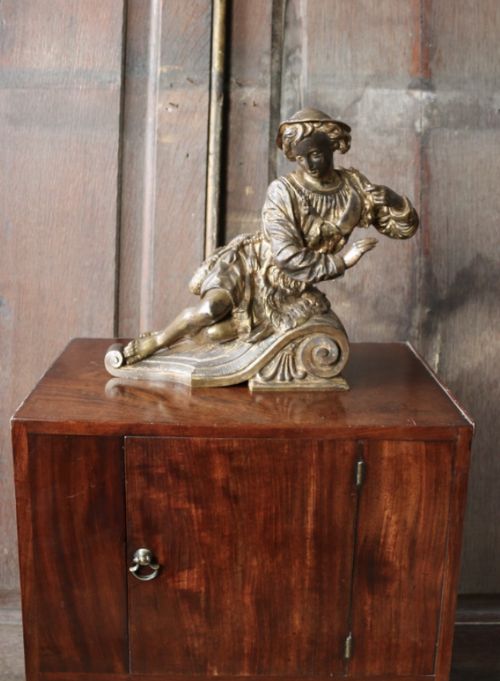
French bronze ormolu chenets are substantial fireplace accessories designed to support logs within an open hearth while presenting decorative figural or architectural fronts. Buyers seeking french bronze ormolu chenets encounter pairs shaped by distinct periods, ranging from eighteenth-century andirons to nineteenth-century revival styles.
The inventory on this page demonstrates a heavy representation of nineteenth-century pieces, including Regency examples and elaborate Louis XV and Louis XIV revival designs. These hearth furnishings appear as figural fire dogs, cherub fire grates, and adjustable fender forms decorated with parcel gilt surfaces.
The structural framework typically combines cast iron or bronze foundations with applied decorative mounts. Surviving pairs frequently showcase the sculptural ambition of French hearth furniture, adapting classical motifs and flamboyant scrollwork for domestic fireplaces.
How they were made
The manufacture of these fireplace ornaments relies upon the combined techniques of metal casting, chasing, and fire gilding or ormolu application. Artisans cast bronze and brass components before refining the details by hand with chisels and punches to sharpen the surface relief.
Gilding was achieved through mercury amalgamation, applying a gold-and-mercury mixture to the bronze base and heating it until the mercury vaporised, leaving a permanent golden layer. Iron components provide the utilitarian strength required for supporting burning fuel within the hearth.
Rampant lions cast in bronze frequently stand guard over hearths, turning basic fire irons into miniature menageries.
What varies in quality
The richness and intact state of the gilt ormolu surface further differentiate the standard of manufacture. Retaining a warm, deep lustre without extensive rubbing or modern replating indicates superior original materials and careful preservation over the centuries.
The French Bronze Ormolu Chenets Glossary
- Chenet
- An alternative term for an andiron, used to support logs in an open fireplace. These metal supports often feature decorative front pieces.
- Ormolu
- Gilt bronze produced by applying a mercury-gold amalgam to a bronze base and firing it. This technique imparts a durable, rich golden finish.
- Rococo
- A decorative style characterised by asymmetrical scrollwork, C-curves, and naturalistic plant motifs. It dominates many nineteenth-century French hearth designs.
- Patinated bronze
- Bronze that has been chemically treated to alter its surface colour, creating dark brown or greenish tones. It often contrasts with bright ormolu mounts.
- Andiron
- A horizontal iron bar supported on legs, with an upright decorative pillar at the front. Pairs sit inside the fireplace to hold firewood above the hearth floor.
French Bronze Ormolu Chenets: Frequently Asked Questions
What is the difference between a chenet and an andiron?
A chenet is simply the French term for an andiron, serving the same practical purpose of holding logs off the hearth floor.
In marketplace listings, pieces described as chenets frequently highlight French styling, elaborate ormolu mounts, and decorative figural fronts.
How do I clean gilt bronze chenets?
Gentle dusting with a soft, dry cloth is the safest method for maintaining nineteenth-century gilt surfaces.
Harsh metal polishes and chemical cleaners must be avoided because they strip away the historic mercury gilding permanently.
Can these chenets be used in a working fireplace?
The iron bars and bronze frames are built to withstand heat and support wood during a fire.
Heat exposure can accelerate wear on the delicate gilt ormolu surfaces, so many owners use them primarily for decorative hearth display.
How do I identify a Regency period chenet?
Regency pieces often incorporate neoclassical restraint, geometric symmetry, and ancient Greek or Roman motifs.
They generally avoid the flamboyant asymmetry seen in later Rococo revival models found on this page.