


Antique Ormolu Hearth Accessories
Antique ormolu hearth accessories bring French style and heavy gilt bronze into the drawing room, offering genuine period warmth and decorative weight.
Antique Ormolu Hearth Accessories
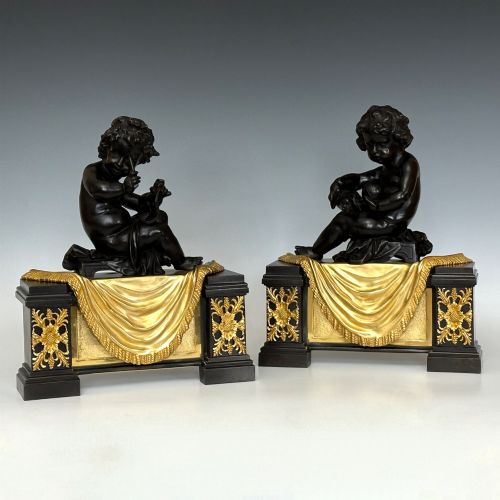
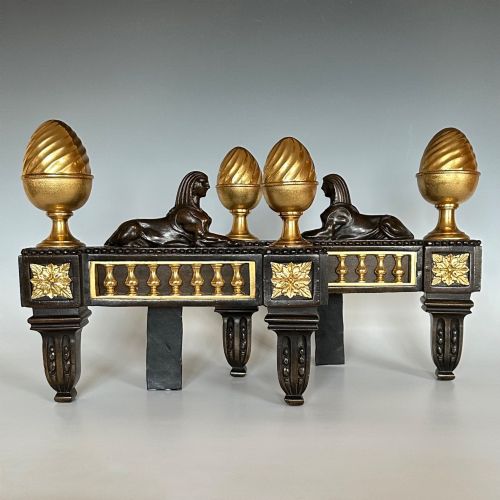
These antique ormolu hearth accessories consist principally of chenets, andirons, fire dogs, and fire screens originating from nineteenth-century France. Buyers searching for antique ormolu hearth accessories will frequently encounter pairs of chenets and decorative fire screens designed to sit before an active or decorative fireplace.
The objects span periods from the Regency era through the later nineteenth century, capturing distinct design phases including French Rococo, Louis XV, and Empire styles. Most examples combine robust structural metals with ornate surface gilding to create a striking focal point in a period interior.
Makers and designers drew heavily upon classical motifs, musical trophies, floral arrangements, and cherub figures to ornament these functional pieces of iron, brass, and bronze. Every item serves both a practical role in supporting logs or protecting rooms and a purely decorative function within the grand salon.
How they were made
Craftsmen utilised bronze, cast iron, and brass as the foundational materials for these hearth pieces, casting them into robust shapes capable of withstanding intense fireplace heat. Iron and heavy bronze provided the necessary structural integrity for fire dogs and chenet bars.
The signature golden finish relies on ormolu, a historic technique involving the application of finely ground mercury and gold amalgam to a bronze base, which was then fired to bond the metal. Many pieces also incorporate patinated bronze alongside parcel gilt details to create contrast between dark metal surfaces and bright metallic highlights.
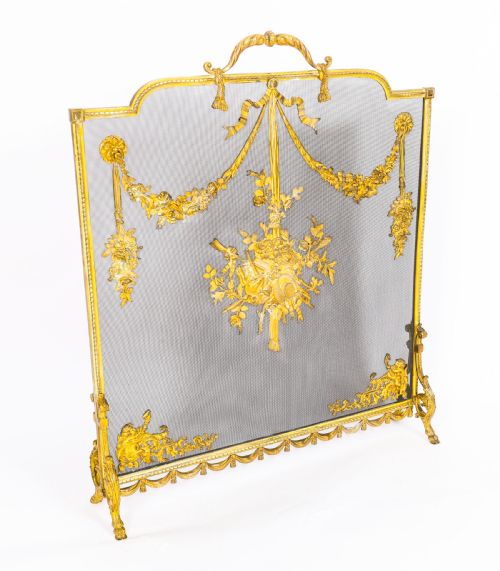
Wire mesh appears on functional fire screens, framed by elaborate gilt bronze mounts and cast metal structures that mirror the decorative curves of the associated chenets. Artisans chased and finished the cast metal components by hand, sharpening the details of floral motifs and sculptural figures.
What varies in quality
Quality rests significantly upon the crispness of the original metal casting and the depth of the subsequent hand-chasing applied to the bronze and ormolu surfaces. Finer examples display sharp relief in floral garlands, musical trophies, and sculptural cherubs, whereas lesser pieces exhibit softened details and blurred edges from worn moulds.
The preservation of the original mercury gilding dictates much of the visual appeal and historical integrity of an ormolu hearth piece. Uniform application and rich coloration indicate superior workshop standards, while extensive losses or crude re-gilding diminish the piece's aesthetic power.
The weight and gauge of the underlying bronze, brass, and iron components also separate standard production items from exceptional commissions. Substantial metal thickness ensures structural stability and longevity under the rigours of hearth use.
The Antique Ormolu Hearth Accessories Glossary
- Ormolu
- Finely ground gold and mercury amalgam applied to bronze and fired to create a durable golden finish. This historic technique produces a warm, rich lustre that distinguishes high-end French decorative metalwork.
- Chenet
- An ornamental metal support placed on the hearth, often synonymous with fire dogs or andirons. These pairs sit at the front of a fireplace to hold logs in place and frame the hearth.
- Patinated Bronze
- Bronze treated with chemicals or heat to alter its surface colour, usually resulting in rich brown or dark tones. This dark finish provides visual contrast against bright ormolu mounts.
- Fire Screen
- A freestanding barrier placed before a fireplace opening to block radiant heat when the fire dies down. In these listings, they feature decorative gilt bronze frames and wire mesh.
Antique Ormolu Hearth Accessories: Frequently Asked Questions
What is the difference between chenets and fire dogs?
Chenets and fire dogs essentially serve the same functional purpose of supporting logs within an open hearth, though chenets traditionally emphasise ornamental front mounts. The terms are often used interchangeably in nineteenth-century French fireplace furnishings.
In practice, pairs of chenets often coordinate directly with decorative fire screens to create a unified appearance across the hearth. Both items rely on sturdy iron or bronze construction to bear the weight and heat associated with daily fires.
How do I care for antique ormolu?
Antique ormolu requires gentle dusting with a soft, dry brush to prevent the accumulation of dirt within the intricate chased recesses of the bronze. Avoid harsh chemical cleaners, abrasive polishes, or commercial metal dips that can strip away the delicate historical surface.
Maintaining a stable room environment away from excessive moisture protects the underlying bronze and preserves the remaining gold leaf. Proper handling ensures the historic finish remains intact for future generations.
Were fire screens used for heat or decoration?
Fire screens served a practical purpose by shielding occupants from the intense, direct radiant heat of a large coal or wood fire. They also protected delicate interior furnishings and wallpaper from sudden temperature spikes.
During warmer months when the hearth sat unlit, ornate screens filled the dark opening with decorative bronze work and wire mesh. This dual functionality made them central pieces of furniture within the nineteenth-century French salon.
How can I identify Regency ormolu from later styles?
Regency ormolu pieces generally exhibit classical restraint, drawing inspiration from ancient Greek, Roman, and Egyptian motifs with clean lines and balanced proportions. They contrast sharply with the later, more exuberant curves and asymmetrical flourishes found in nineteenth-century Rococo Revival pieces.
Examining the structural assembly and the casting quality helps differentiate early nineteenth-century work from later Victorian interpretations. Period-specific design cues provide the clearest indicator of a piece's manufacturing decade.