



French Bronze Marble Candlestick
A french bronze marble candlestick brings together patinated metal and cold stone to hold a flame with architectural weight.
French Bronze Marble Candlestick
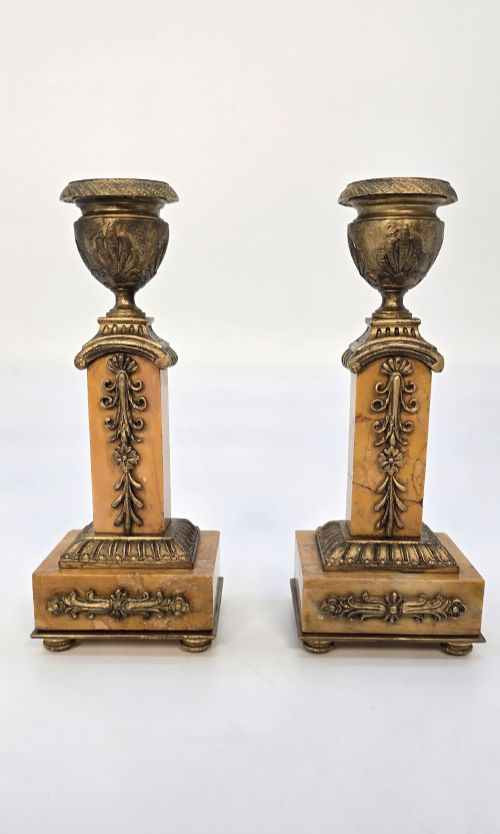
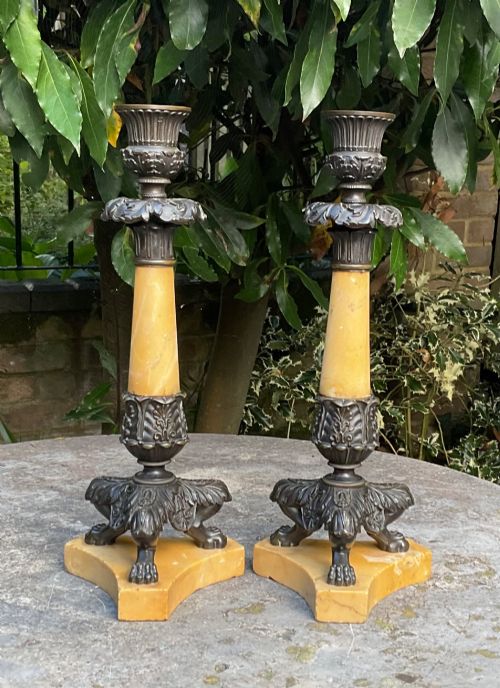
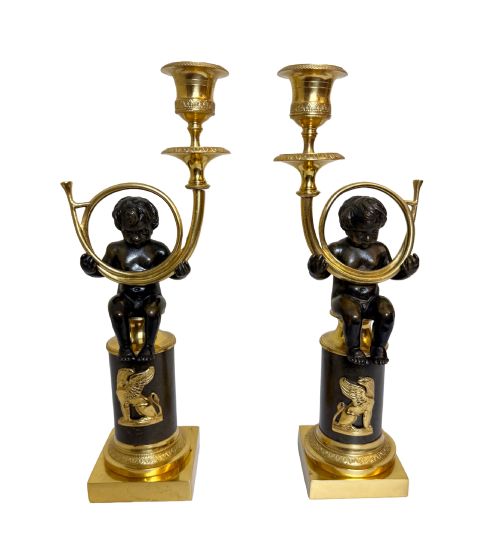
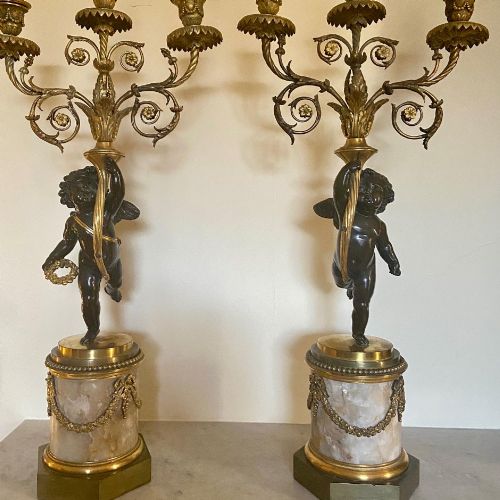
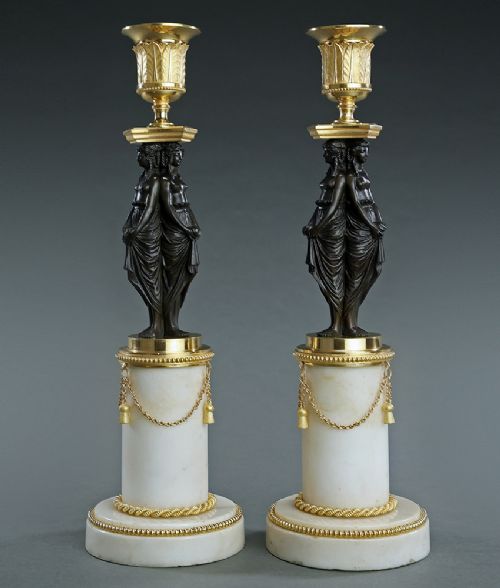
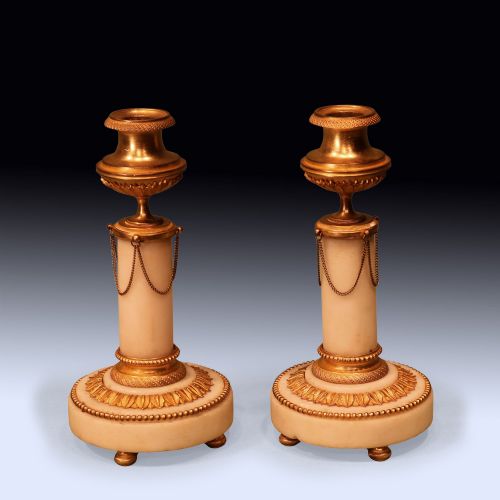
A french bronze marble candlestick combines cast metal figures with solid stone plinths to create domestic lighting. These pieces emerge from periods such as the nineteenth century, Regency, and Victorian eras, drawing upon Louis XVI and Empire styles.
Buyers meet pairs most frequently on this page, often featuring cast figures of cherubs, putti, caryatids, or mythical creatures mounted on bases. The forms range from single-light sticks to multi-branch candelabra and table lamps.
The origin traces to French ateliers and Grand Tour travels, incorporating classical motifs into domestic interiors. These objects function as mantel or table garniture, combining illumination with sculptural presence.
How They Were Made
Foundry work relied on bronze, patinated bronze, and brass cast in sections, then chased by hand to sharpen details on figures and foliage. Ormolu and gilt bronze treatments applied a gold layer over the base metal using mercury amalgamation or electrogilt methods.
Marble bases, including white and sienna varieties, were turned on lathes or sawn and polished by hand to support the heavy metalwork. Threaded rods and nuts secured the bronze components through the centre of the stone plinths.
French Bronze Marble Candlestick Retail Price Guide 2026
Typical asking prices for french bronze marble candlestick among the pieces listed under this phrase on Sellingantiques today, from the lower quarter to the upper quarter. They describe what is for sale here now, not the wider market.
Listings feature white and sienna marble alongside gilt bronze, patinated bronze, and ormolu across nineteenth-century styles.
What Varies in Quality
Stone selection and turning precision dictate the baseline of the object, where dense marble without natural fractures holds sharper arrises and a deeper polish. The rigidity of the assembly and the weight of the bronze components determine the structural integrity.
Francois Redmond·Dugourc·Claude Clodion·Thomas Hope
The French Bronze Marble Candlestick Glossary
- Ormolu
- Gilt bronze produced by applying a gold-mercury amalgam to a bronze object and heating it to vaporise the mercury. This technique leaves a durable golden surface on French decorative metalwork.
- Patinated bronze
- Metal treated with chemical solutions to darken the surface into brown, black, or green tones. This finish provides contrast against bright gilt mounts.
- Caryatid
- A sculpted female figure serving as an architectural support instead of a column. These figures appear frequently on classical shafts.
- Candelabra
- A multi-branched lighting device holding several candles or lights. Examples on this page often branch out from a central bronze figure.
- Plinth
- The heavy base block supporting a statue, column, or candlestick. These blocks utilise white or sienna marble.
French Bronze Marble Candlestick: Frequently Asked Questions
How do I clean bronze and marble?
Dust metal components gently with a soft dry brush to prevent accumulation in recessed chasing. Avoid liquid polishes that strip historic patination from bronze or ormolu surfaces.
Clean marble bases using a damp cloth wrung out in plain water, drying the stone immediately. Acidic household cleaners etch marble surfaces permanently.
Are these pieces wired for electricity?
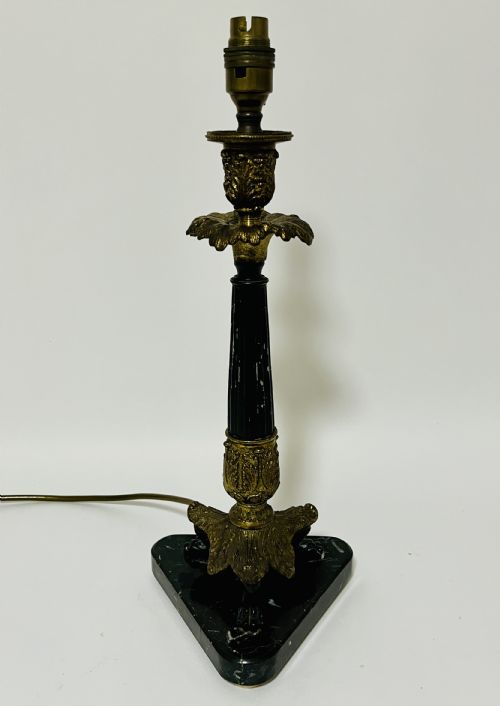
Many items listed include conversions to table lamps alongside traditional candlestick configurations. Such alterations adapt nineteenth-century metalwork for modern lighting needs.
Original sockets and wiring vary, and buyers often consult electricians to inspect internal components for safety.
How do I date an Empire candlestick?
Examine the casting quality and the style of classical ornamentation, such as military trophies, sphinxes, or winged figures. Empire pieces frequently draw on Napoleonic neoclassical design motifs.
Compare the assembly methods and patination against documented examples from the early nineteenth century.
Why do some candlesticks have marble bases?
Stone plinths added crucial weight and stability to tall bronze figures supporting heavy candle holders. Marble also introduced contrasting colour and texture to the metallic design.
Neoclassical and Empire aesthetics favored the combination of cold stone and warm gilt bronze.