
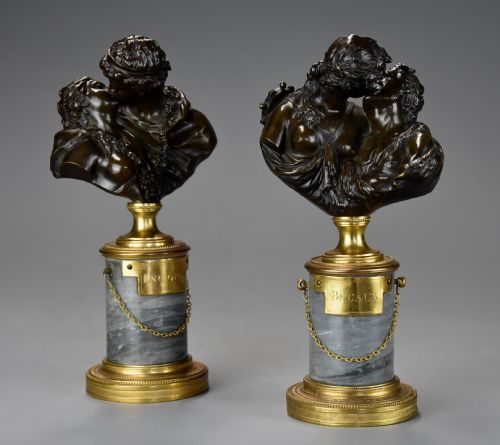

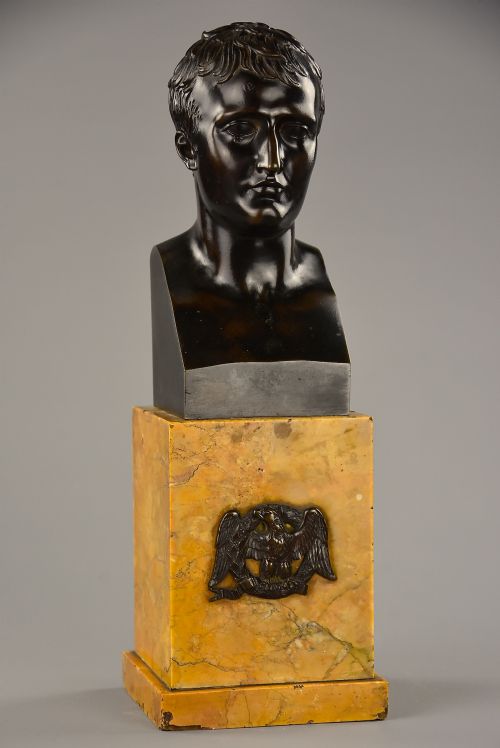


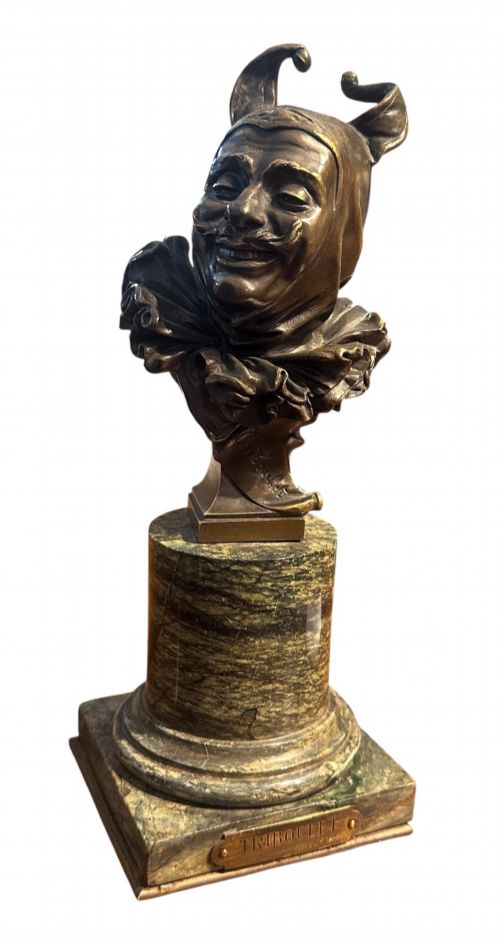


French Bronze Marble Bust
A french bronze marble bust brings classical weight and presence to a room, combining cast metal portraiture with solid stone plinths.
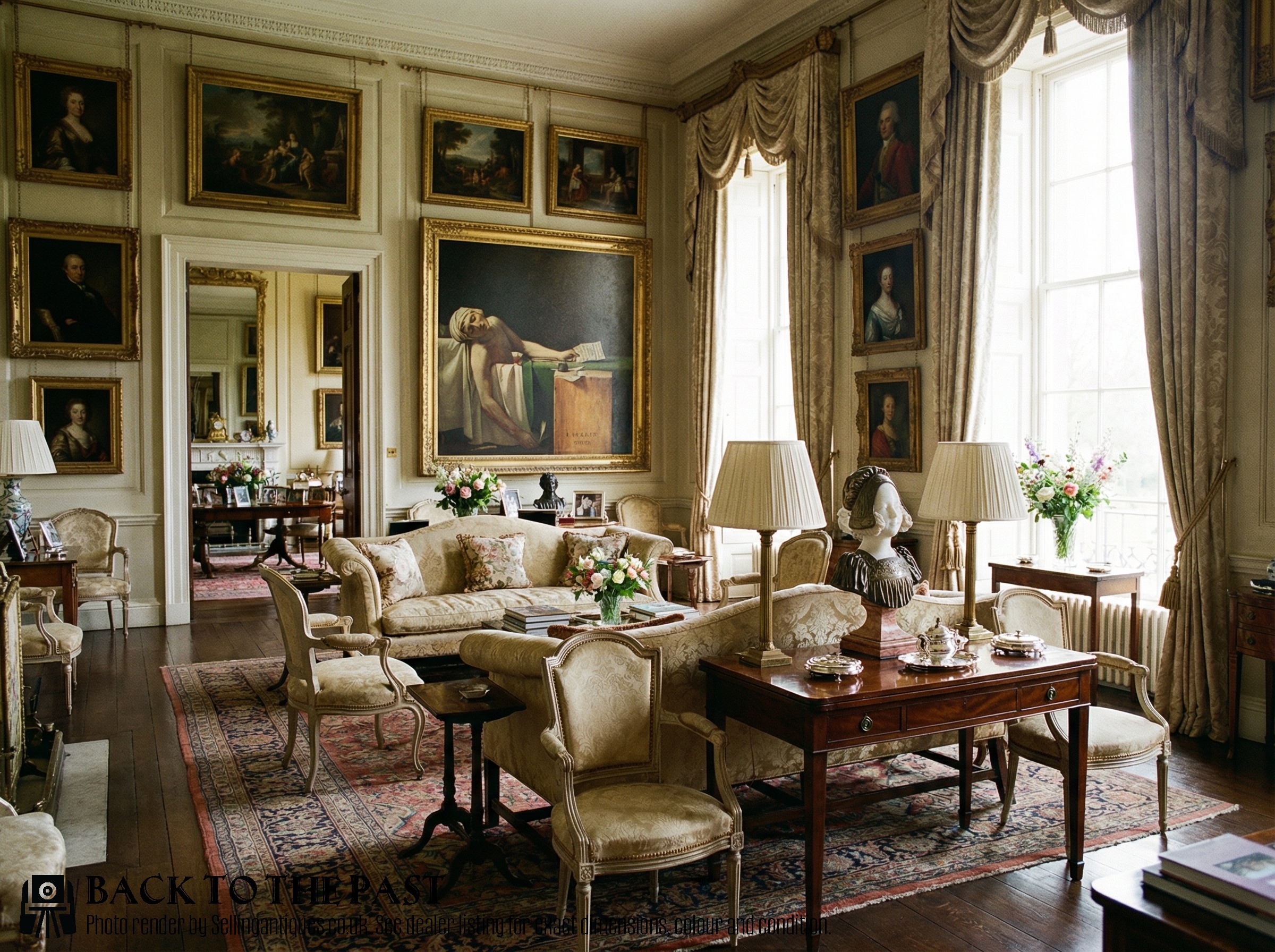
French Bronze Marble Bust
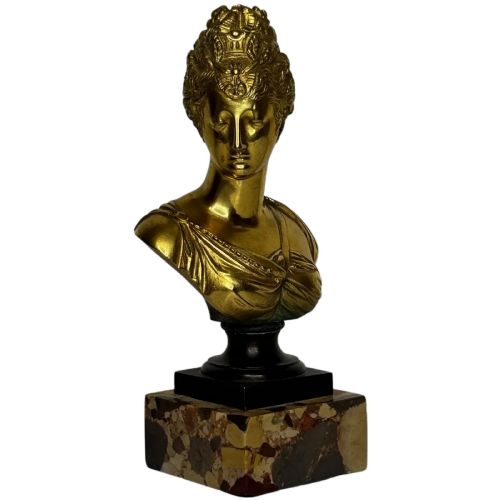
A french bronze marble bust sits at the intersection of portrait sculpture and architectural support, uniting cast metal figures with stone bases. These works frequently draw on historical figures, classical mythology, or allegorical subjects like Diana de Poitiers, Apollo, and literary characters.
The objects span from the early nineteenth century through the Edwardian period, encompassing Neoclassical, French Empire, and Art Nouveau styles. Alongside direct portrait busts, the selection includes related library items and decorative accessories such as inkwells and mantel clocks incorporating the same materials.
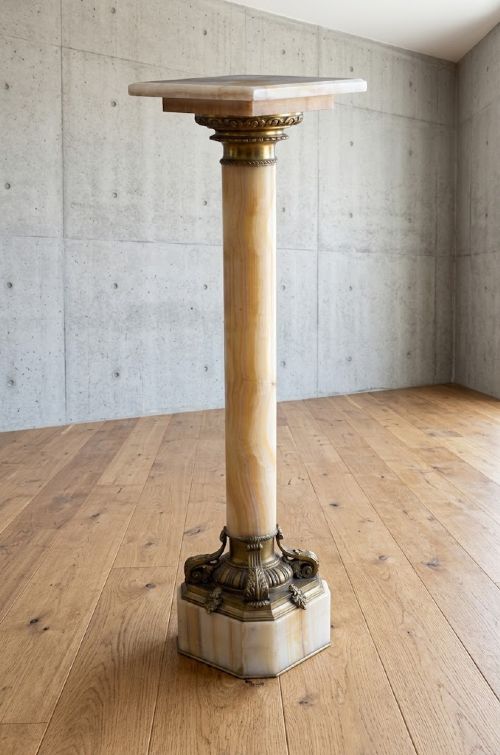
Buyers encounter pieces ranging from cabinet-sized portrait studies to more substantial sculptural works mounted on tiered marble or onyx columns. The integration of stone and cast metal provides a distinct visual contrast between the dark patination of bronze and the veining of marble.
Materials and Construction
Foundries utilised traditional lost-wax or sand-casting methods to produce the bronze and gilt bronze portions of each bust. These metal elements often received surface treatments including chemical patination or mercury gilding to achieve deep colouration and metallic lustre.
The stone components - principally marble, onyx, and alabaster - were turned on lathes or hand-carved to form circular columns, square plinths, and fitted bases. Ormolu mounts and brass collars were then pinned or screwed directly into the stone to secure the sculpture.
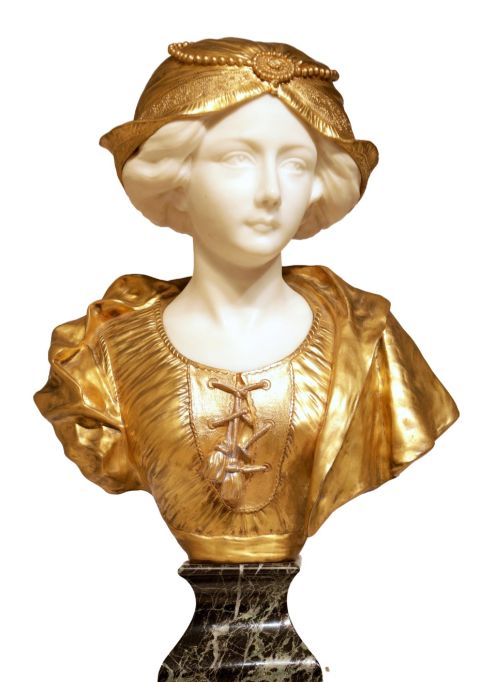
The listings combine nineteenth-century French bronze and marble portraiture with architectural onyx columns and decorative inkwells.
Distinctions in Quality
The selection and density of the stone base contribute significantly to the character of a piece. Heavier, finely figured marble or banded onyx with precise turned profiles and substantial ormolu mounts signal higher workmanship than simpler, unadorned mounts.
Affortunato Gory·Henri Godet·Georges-Charles Coudray·Emmanuel Villanis·E. Laurent·Eutrope Bouret·Georges Van Der Straeten
The French Bronze Marble Bust Glossary
- Ormolu
- Gilded bronze, where a layer of gold amalgam is applied to a bronze base and heated to drive off the mercury. This technique produces a durable, warm metallic finish common in French decorative arts.
- Spelter
- A zinc alloy used as an economical alternative to bronze, frequently painted or electroplated to imitate true bronze. It appears in several Art Nouveau pieces on this page.
- Patina
- The surface sheen and colour acquired by bronze over time through oxidation and handling. Makers also applied chemical patinas intentionally during production to achieve dark brown or green tones.
- Verdi green
- A rich green marble variety utilised for bases and pedestals, providing a contrasting dark backdrop to gilt metal mounts.
French Bronze Marble Bust: Frequently Asked Questions
Where should I display these pieces?
These busts and pedestals suit surfaces capable of supporting substantial weight, such as sideboards, mantelpieces, or dedicated stone columns. Placing them away from direct sunlight protects both the patination on the metal and the polished finish of the stone.
Ensure the display location offers stable humidity to prevent any loosening of metal mounts fixed into stone.
How do I distinguish bronze from spelter?
Bronze feels considerably heavier and cooler to the touch than spelter due to its copper and tin composition. Examining the underside or interior often reveals the dull grey metal of spelter where the surface finish has worn away.
True bronze also shows greater flexibility and resilience under fine detail work, whereas spelter is more brittle.
What defines the Art Nouveau style in these busts?
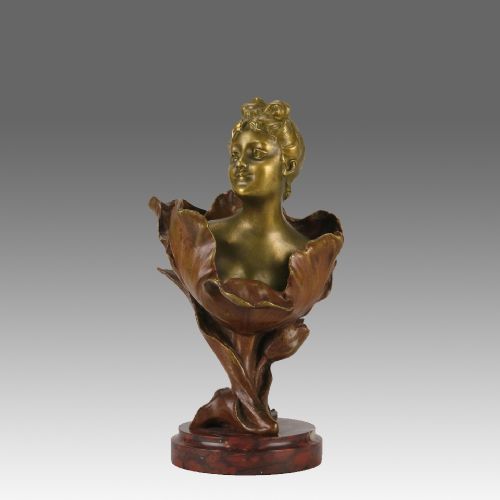
Art Nouveau works from the late nineteenth and early twentieth centuries feature flowing, organic lines inspired by natural forms. Hair and drapery often swirl dynamically around the subject's shoulders.
This aesthetic departs from strict classical symmetry, favouring asymmetrical motifs and stylized floral elements.