
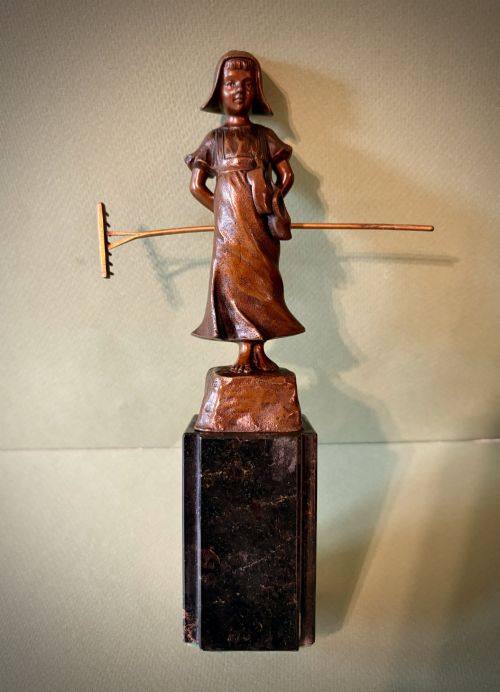
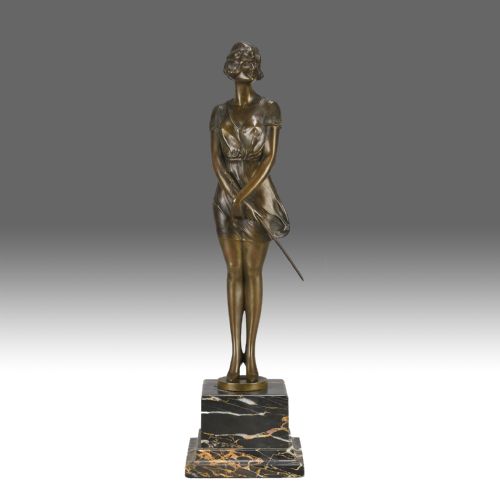
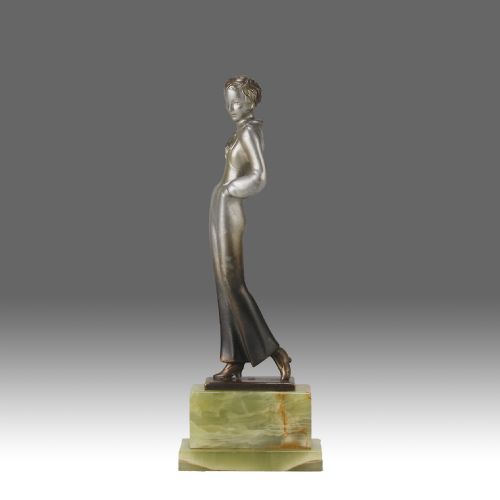
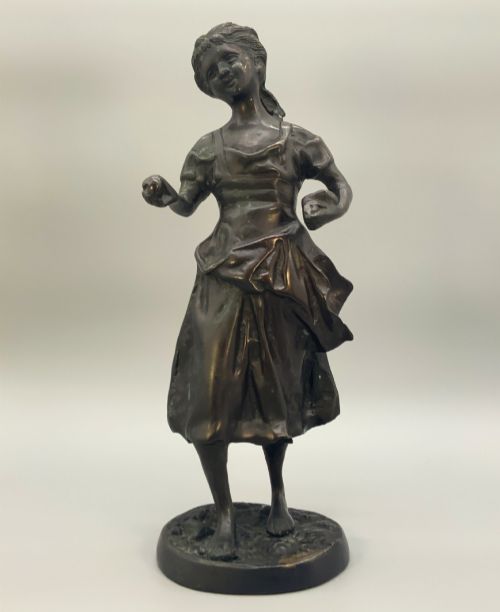
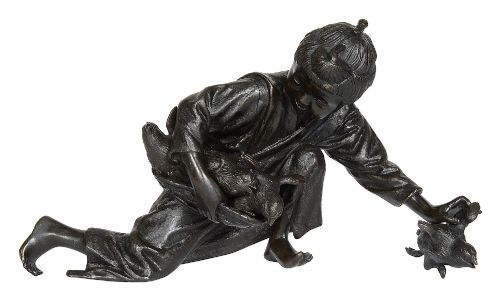
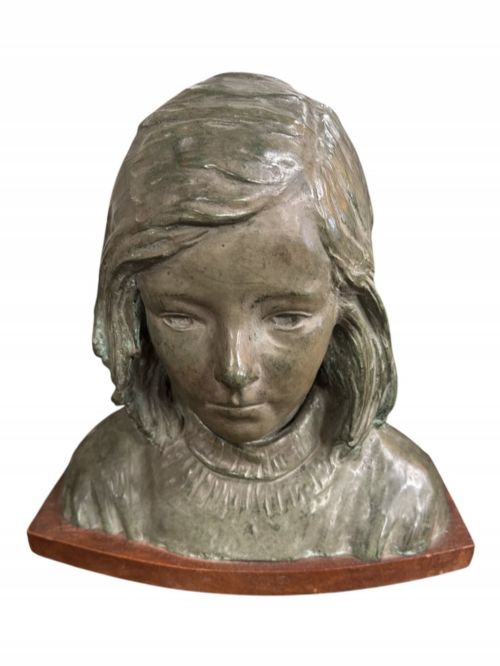


Bronze Girl Sculpture
These bronze girl sculpture pieces bring nineteenth-century romanticism and twentieth-century modernism into any room through metalwork figures.
Bronze Girl Sculpture
When looking for a bronze girl sculpture, a buyer encounters figures spanning the nineteenth century through the Art Deco era of the nineteen-twenties and nineteen-thirties. The selection includes young maidens, dancers, farm workers and literary subjects rendered in metal.
French and Austrian foundries produced many of the standing and dancing figures in this category, alongside Japanese Meiji period examples and pieces mounted on stone bases. These works take the form of full-length statuettes, small busts and figural groups.
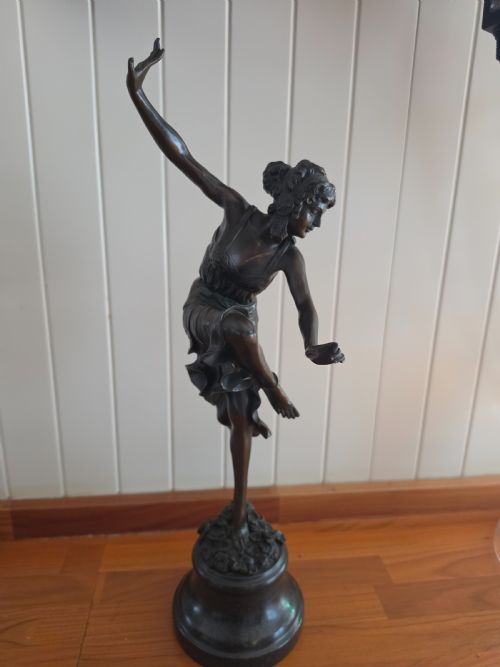
The version most commonly met on this page is the Art Deco dancer or running girl from the nineteen-twenties, often cast in patinated metal and paired with a marble or onyx base.
How they were made
Foundries utilised traditional casting methods to create these figures, applying patination, cold-painting or gilding to the metal surfaces once cooled. Bronze served as the primary medium, though makers also employed spelter, ormolu and bronzed metal.
Many figures from the early twentieth century sit upon heavy bases carved from marble or onyx, secured with threaded bolts running up through the stone. Details such as clothing folds, facial expressions and accompanying animals received hand-chasing after the cast emerged from the mould.
Several young girls share their bronze space with unexpected companions, including greyhounds, swans, chickens, sheep and teddy bears.
What varies in quality
The quality of the mounting materials also dictates overall standard, with dense, well-polished marble or onyx bases providing a stable foundation that complements the patinated metal figure above. Original patination intact without excessive cleaning or repainting maintains the integrity of the piece.
Bruno Zach·Josef Lorenzl·C J R Colinet·D H Chiparus·Emmanuel Villanis·Geo Maxim·Alexandre Kelety·Pierre Laurel·Math Moreau·Charles Octave Levy
The Bronze Girl Sculpture Glossary
- Patinated Bronze
- Bronze treated with chemical solutions to produce a coloured surface layer, ranging from deep brown to green. This treatment protects the metal and defines the contours of the figure.
- Cold-Painted Bronze
- Metal figures painted with oil or enamel paints after casting, without subsequent firing in a kiln. This technique was widely utilised by Austrian makers to add vivid colour to clothing and details.
- Spelter
- A zinc alloy commonly utilised as a less expensive alternative to bronze during the nineteenth and twentieth centuries. It takes patination well but possesses a lighter weight and softer texture than bronze.
- Ormolu
- Gilt bronze produced by applying a finely ground mercury and gold amalgam to the metal surface before heating. The process creates a rich golden finish seen on decorative mounts and busts.
- Meiji Period
- The era in Japanese history spanning from eighteen sixty-eight to nineteen twelve, known for fine metalwork and bronze casting exported to Western markets.
Bronze Girl Sculpture: Frequently Asked Questions
How do I clean a bronze sculpture?
Dust the surface regularly with a soft, dry brush to prevent dirt accumulation within the crevices of the metal.
Avoid using water, chemical cleaners or abrasive cloths, as these substances strip the original patination from the bronze.
What is the difference between bronze and spelter?
Bronze is a durable copper alloy that takes a deep patina and holds sharp cast details over centuries of handling.
Spelter is a softer zinc alloy that feels lighter and shows more wear around exposed edges and high points.
Are all Art Deco figures made of bronze?
Many figures from the nineteen-twenties and nineteen-thirties utilised bronze as the primary medium for dancers and athletes.
Foundries also cast similar models in spelter or patinated metal, mounting them on marble or onyx bases.
How can I tell an antique bronze from a modern reproduction?
Examine the underside of the piece for casting methods, patina depth, and the natural wear associated with age.
Older examples exhibit hand-chasing marks and patination that penetrates the alloy rather than sitting as a uniform modern paint layer.
Where were Vienna bronzes made?
These small, detailed figures originated in Austrian foundries during the late nineteenth and early twentieth centuries.
Craftsmen in Vienna specialised in cold-painted metal sculptures depicting human figures, animals and Orientalist subjects.