


French Bronze Mantel Candelabra
French bronze mantel candelabra pieces bring monumental dining rooms and grand drawing rooms to life with sculpted metal, marble, and candlelight.
French Bronze Mantel Candelabra
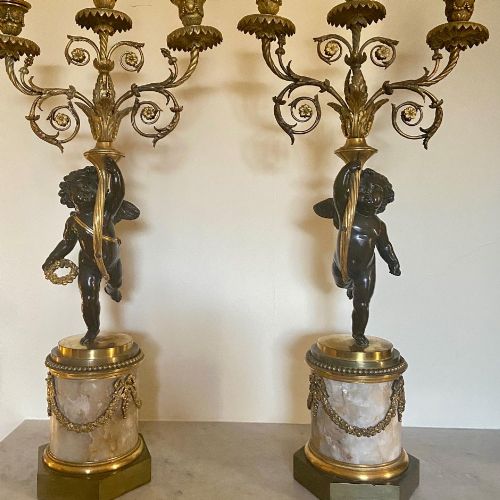
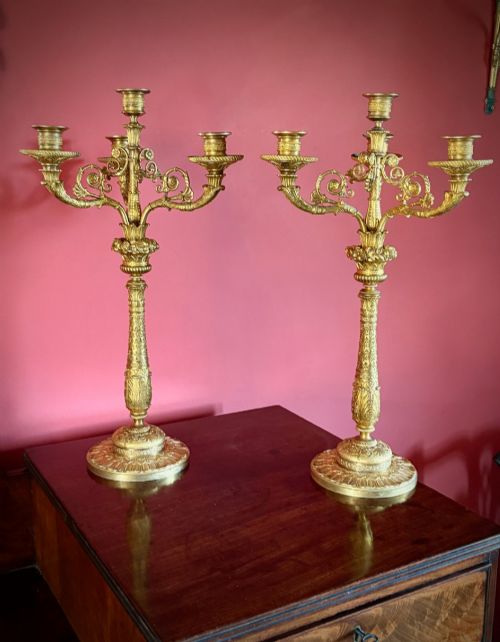
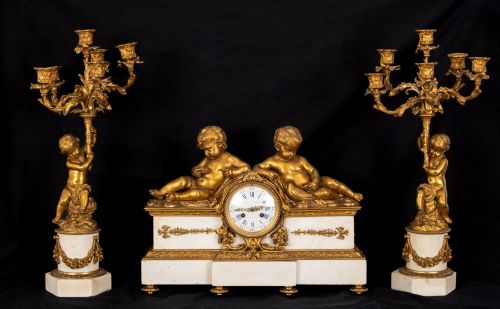
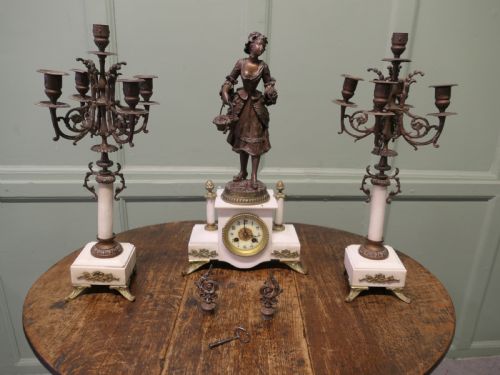
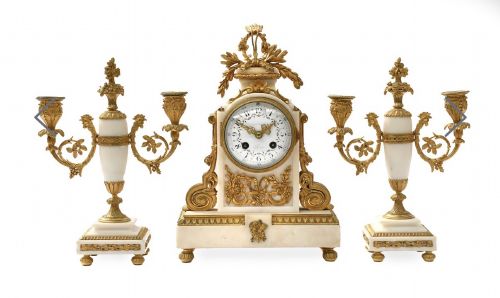
When you search for french bronze mantel candelabra, you look for sculptural lighting items designed to sit upon a fireplace mantel, often paired with matching clocks as part of a garniture set. The pieces you meet on this page range from multi-armed candelabras to smaller candle holders and candelabras, many originating in the nineteenth century during the height of historic revival movements.
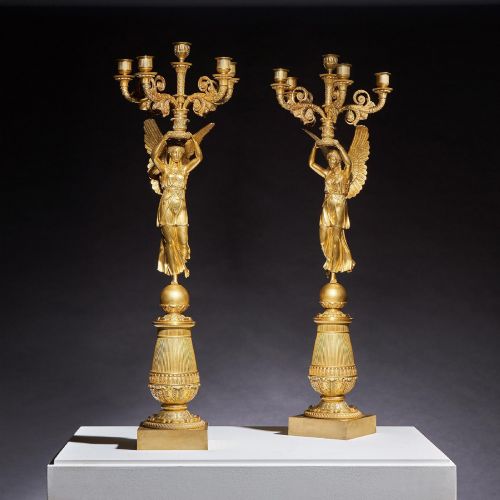
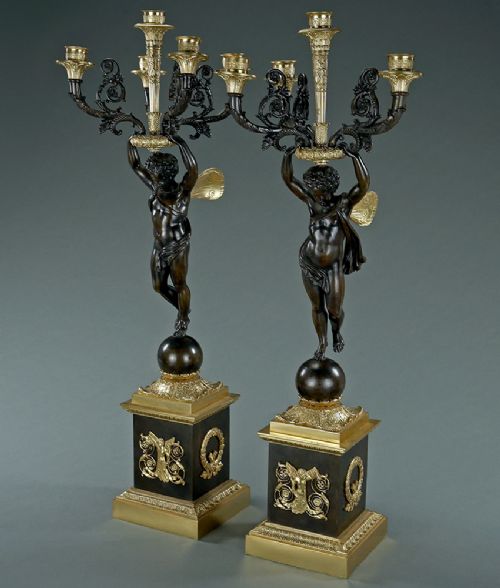
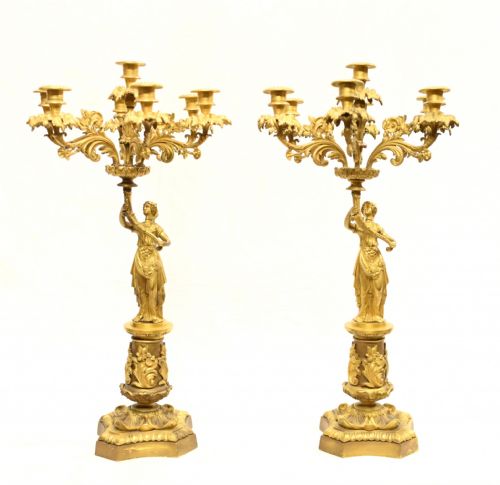
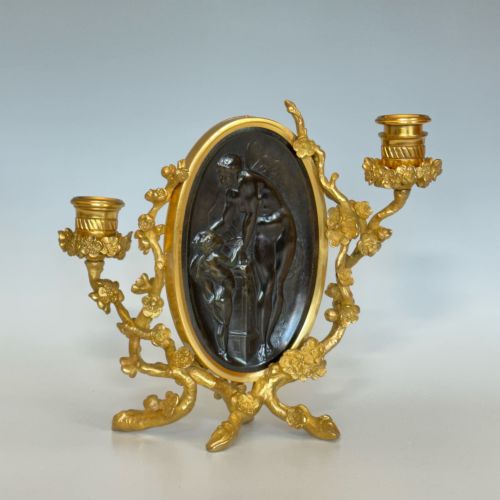
Makers and workshops cast these items in bronze, patinated bronze, or brass, frequently highlighting the metalwork with gilt or ormolu finishes. White marble, onyx, and slate frequently serve as heavy pedestals or bases for the metal figures.
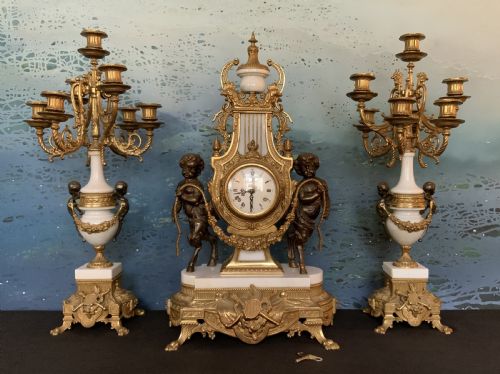
Design vocabulary draws heavily on French Rococo Revival, Louis XVI style, and French Empire aesthetics. Figures such as putti, cherubs, and classical maidens frequently support the candle branches or adorn the central shaft.
How They Were Made
Foundries produced these candelabras using traditional lost-wax or sand-casting methods to shape bronze and brass into intricate figural and botanical components. Artisans then chased the cooled metal surfaces by hand with chisels and punches to sharpen details like hair, drapery, and acanthus leaves.
Craftspeople applied mercury gilding or modern electroplating to impart a rich ormolu finish, contrasting bright gold surfaces with dark patinated bronze or cold-painted elements. Stonemasons cut and polished white marble, onyx, and slate to form heavy plinths, mounting the bronze sculptures onto these stone bases with threaded metal rods and nuts.
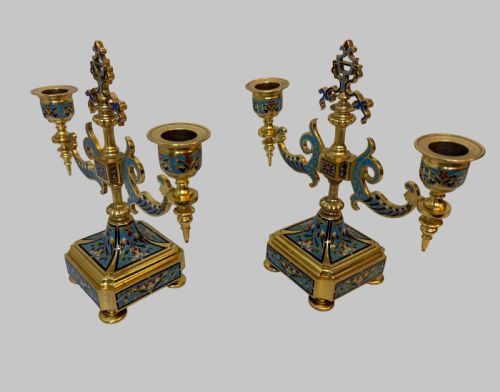
Listings feature items incorporating gilt bronze, ormolu, white marble, onyx, and champleve enamel across nineteenth-century revival styles.
What Varies in Quality
The integration of materials dictates overall visual weight and balance. Fine examples pair heavy, unblemished white marble or sculpted onyx with thick, fire-gilded ormolu that retains its original depth of colour rather than appearing flat or brassy.
Francois Redmond·Pierre Philippe Thomire·Thiebaut Freres·Henry Dasson·H Luppens Paris
The French Bronze Mantel Candelabra Glossary
- Ormolu
- Gilt bronze produced by applying a mixture of gold and mercury to a bronze base and heating it. This technique creates a durable, warm golden surface found on many nineteenth-century mantel items.
- Garniture
- A set of matched ornamental objects designed to display together on a mantelpiece or sideboard. These sets typically comprise a central clock flanked by two matching candelabras or urns.
- Champleve
- An enamelling technique where troughs or cells are sunk into the surface of a metal object and filled with vitreous enamel powder before firing. Pieces featuring this technique display vibrant coloured patterns alongside gilt bronze.
- Patinated bronze
- Bronze treated with chemical solutions to produce a specific surface colour, most commonly dark brown or green. This treatment protects the underlying metal and highlights sculptural contours.
- Putto
- A plump, naked male child figure used frequently in classical and revival decorative arts. In candelabra design, these figures often support candle branches or recline against marble bases.
French Bronze Mantel Candelabra: Frequently Asked Questions
What is a clock garniture?
A clock garniture is a matched decorative set designed for display on a mantelpiece, consisting of a central clock accompanied by matching side pieces such as candelabras or urns.
These sets created a balanced and harmonious focal point in nineteenth-century formal interiors, tying together the materials and artistic style of the room.
How do I clean bronze candelabras?
Cleaning requires only gentle dusting with a soft, dry brush to prevent accumulation in the recessed chasings of the metal. Avoid liquid cleaners, abrasive cloths, or metal polishes, which strip away original gilding and patination.
Are these candelabras wired for electricity?
Most antique mantel candelabras remain in their original candle-holding configuration designed for wax tapers. Converting them requires careful assessment by a specialist to ensure historic components suffer no permanent alteration.
How do I distinguish Louis XVI style from Rococo?
Louis XVI style pieces exhibit classical symmetry, straight lines, fluted columns, and restrained geometric motifs inspired by ancient Rome. Rococo items favour asymmetrical compositions, C-scrolls, naturalistic foliage, and flowing, theatrical curves.