




French Bronze Horse Statues
French bronze horse statues capture equine power through the sharp eye of the Animalier school and neoclassical tradition.
French Bronze Horse Statues
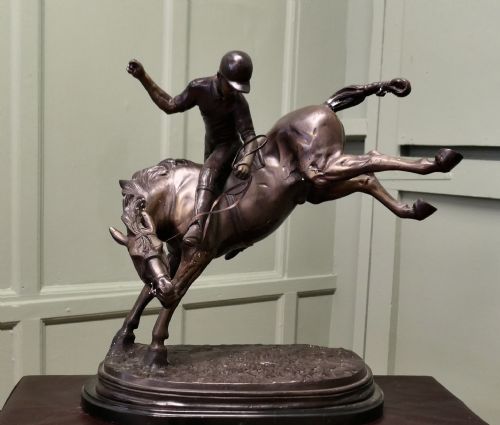
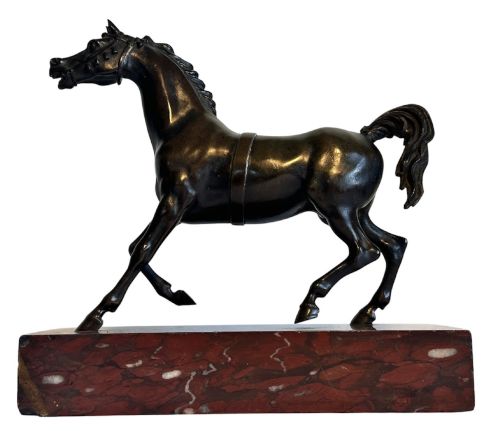
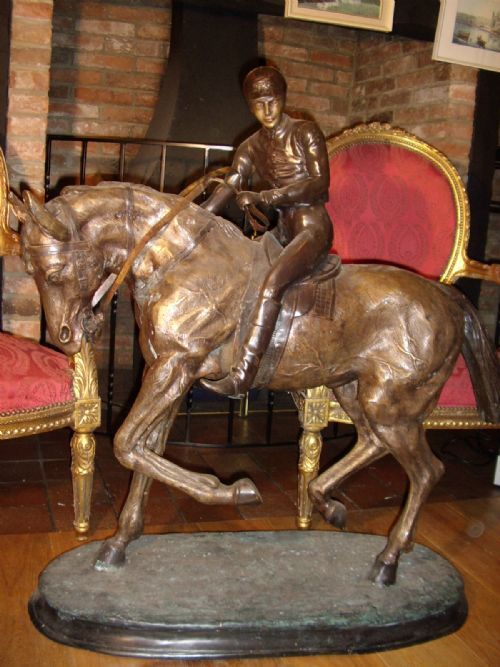
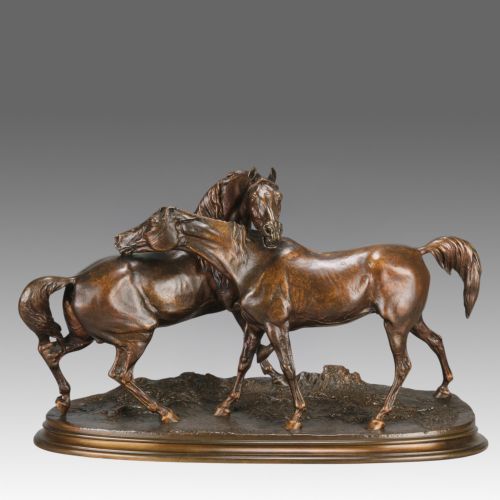
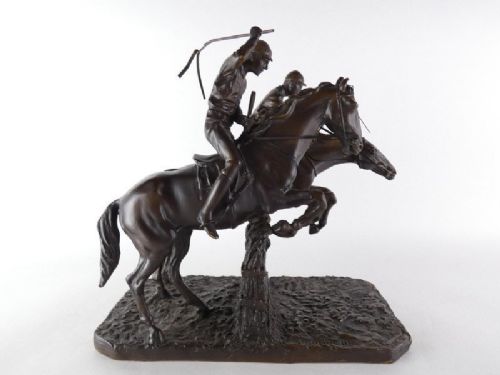
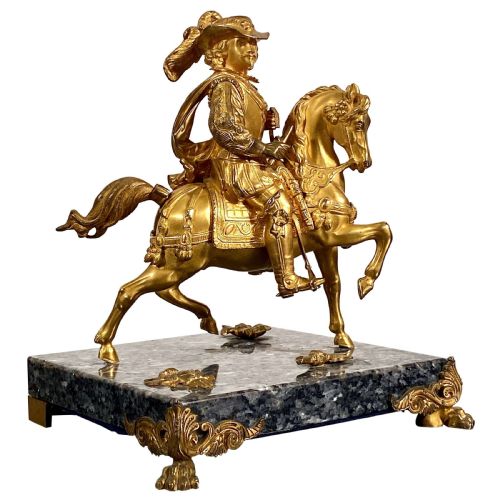
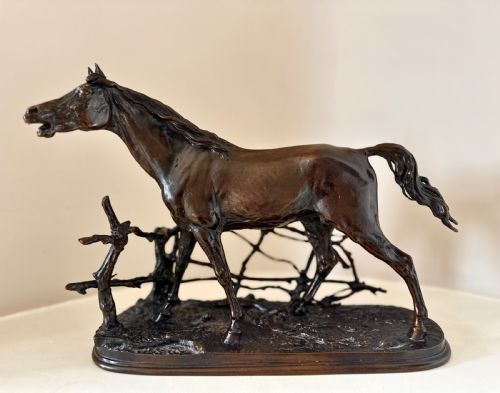
French bronze horse statues present energetic studies of stallions, racing thoroughbreds, and historical figures on horseback spanning the nineteenth and twentieth centuries. These works emerge predominantly in the Animalier style alongside French neoclassical and Empire traditions.
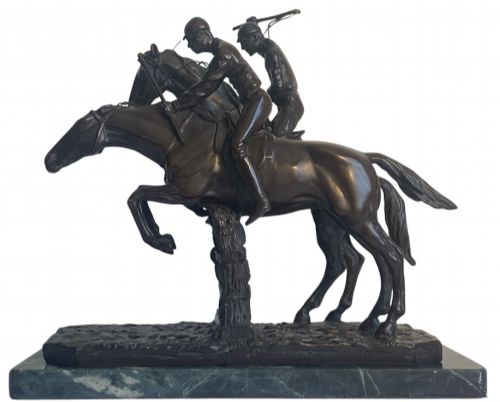
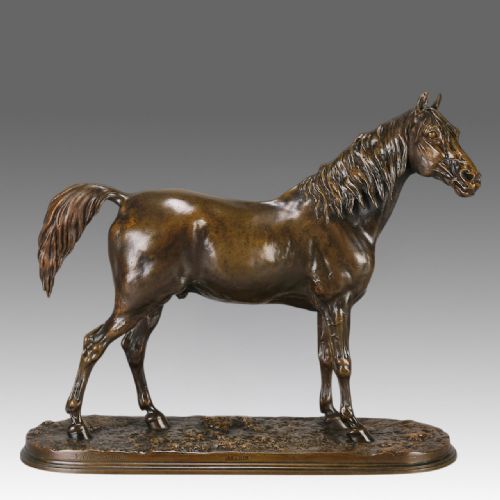
Collectors encounter diverse forms including standalone stallions, pairs of Marly horses, jockey groups, and sculptural mantel clocks. Materials frequently combine dark patinated bronze with sienna or green marble bases.
The objects originate primarily from nineteenth-century workshops, extending through to mid-twentieth-century castings. Pieces range from intimate cabinet statuettes to substantial architectural figures.
Materials and Casting Methods
Foundries utilised traditional lost-wax or sand-casting techniques to capture intricate muscular detail, manes, and tack. Molten bronze was poured into moulds to produce durable figures requiring meticulous hand-finishing.
Surface treatments relied on chemical patination to achieve deep brown or dark green tones, while certain works received gilt bronze or ormolu highlights. Statues were frequently mounted onto heavy marble plinths, including sienna and green varieties.
Quality and Execution
The integration between the bronze figure and its stone base marks a further distinction, where original marble plinths match the weight and period of the casting. Signed pieces bearing foundry marks or established artist inscriptions carry distinct documentary value.
Pierre Jules Mêne·Isidore Jules Bonheur·Charles Crozatier·Pierre Lenordez·Xavier Raphanel·Paul Joseph Gayrard
The French Bronze Horse Statues Glossary
- Animalier
- A nineteenth-century artistic movement focused on realistic depictions of animals, particularly horses and lions. Practitioners studied anatomy directly from life to create dynamic sculptures.
- Patinated Bronze
- Bronze treated with chemical solutions to produce a specific surface colour and finish. This layer protects the metal while enhancing visual depth.
- Ormolu
- Finely ground gold mercury-amalgam applied to a bronze object. The technique creates a bright golden finish popular in French decorative arts.
- Sienna Marble
- A decorative Italian marble displaying rich yellow, ochre, and dark veining. It provides a colourful contrasting base for bronze statuary.
French Bronze Horse Statues: Frequently Asked Questions
How do I identify an Animalier bronze horse?
Animalier bronzes focus on precise anatomical accuracy and natural movement rather than idealised forms. Look for realistic muscle tension, expressive stances, and detailed tack.
Many of these pieces bear the signature of the sculptor on the bronze base or plinth. Stylistic cues point towards nineteenth-century French foundry production.
What are Marly horses?
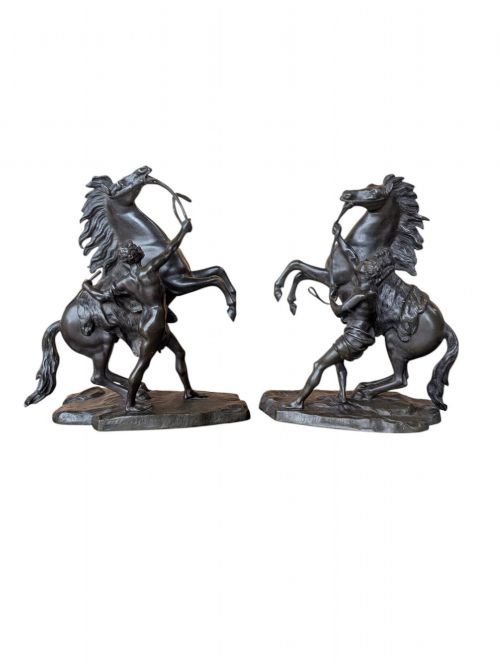
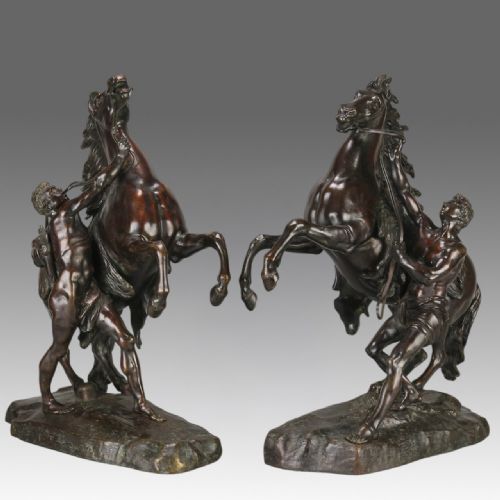
Marly horses depict rearing steeds restrained by handlers, originating from the monumental marble sculptures created by Guillaume Coustou for the Château de Marly. Nineteenth-century founders reproduced these dynamic compositions in various bronze sizes.
They frequently appear as symmetrical pairs designed for mantelpieces or entrance halls.
How should I display a bronze horse sculpture?
Bronze statues require stable placement on level surfaces capable of supporting their considerable weight, particularly pieces set on marble bases. Position them away from direct heat sources to protect the patination.
Dust gently with a dry, soft cloth without applying harsh polishes or chemical cleaners.
Are these statues marked with foundry or artist names?
Many nineteenth-century bronzes carry cast signatures of the sculptor along the edge of the base. Some pieces also include foundry stamps or numbers relating to production.
Signatures indicate the model's origin, though posthumous and later casts from the same moulds also exist.