
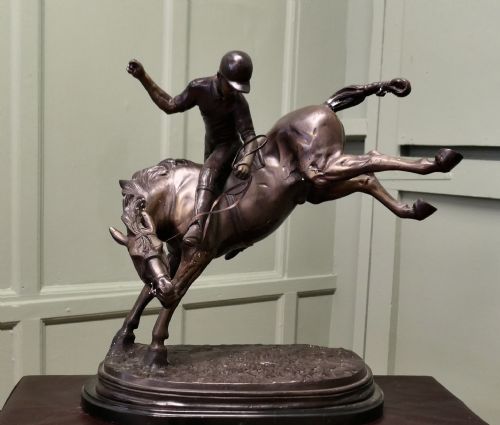
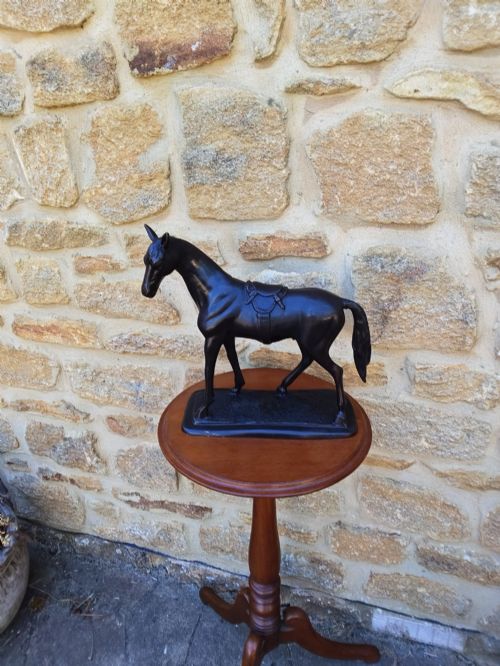
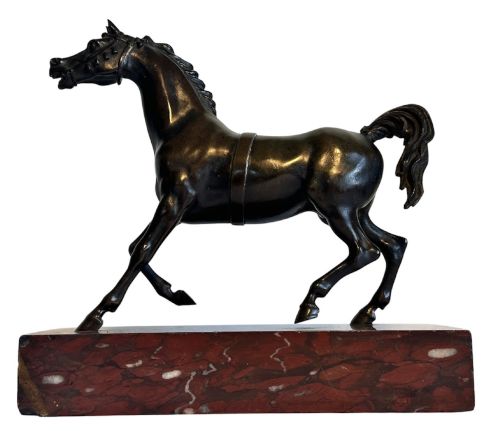
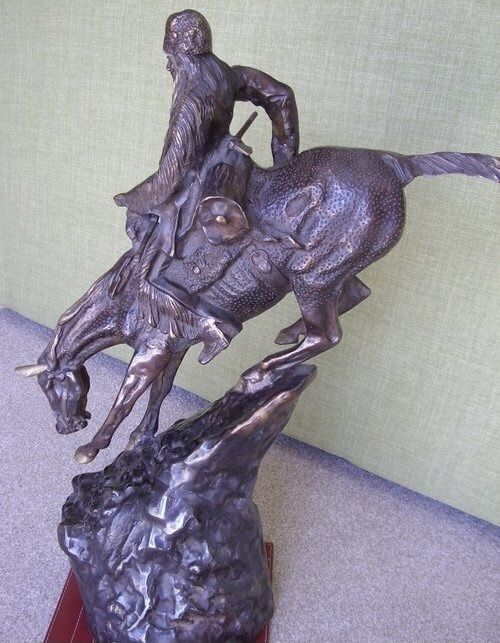
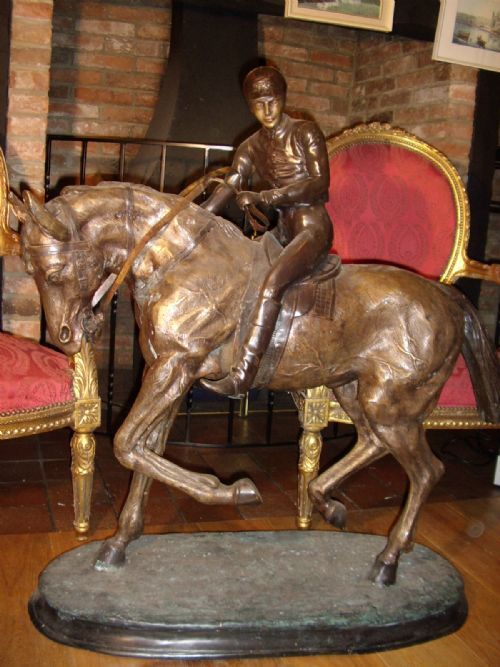
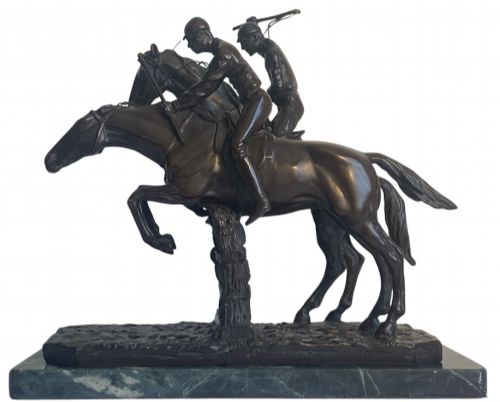
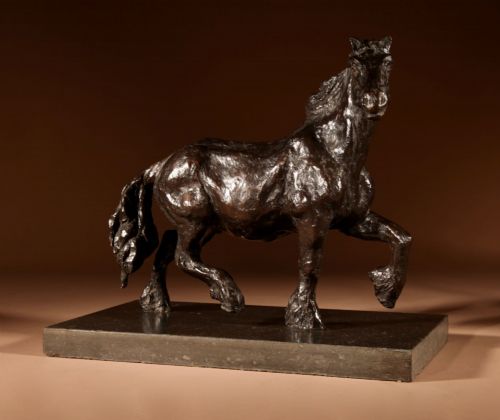
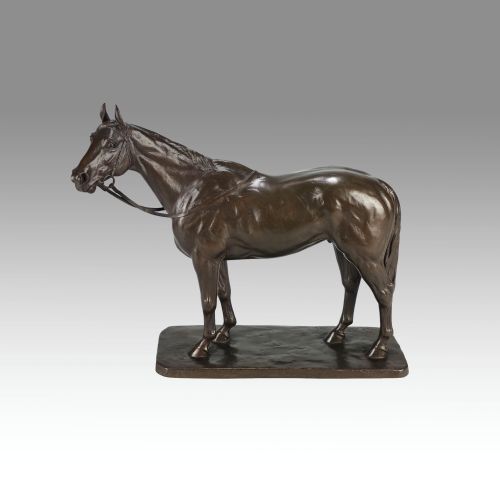


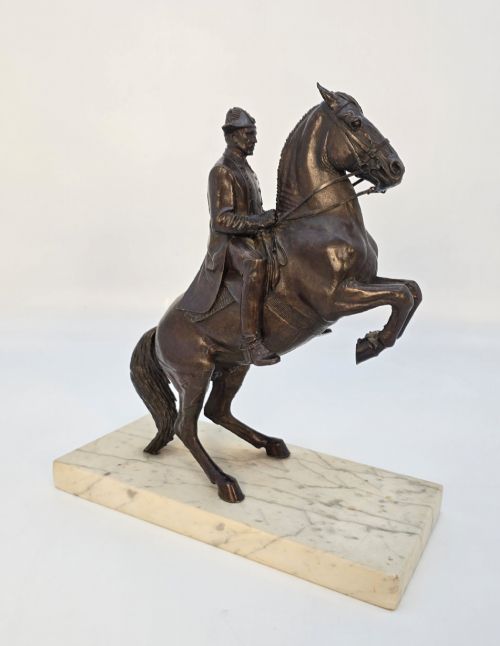
Dark Bronzed Horse Figurines
Dark bronzed horse figurines capture equine motion through deep patinated metal, offering collectors dynamic studies of anatomy and movement spanning multiple centuries.
Dark Bronzed Horse Figurines
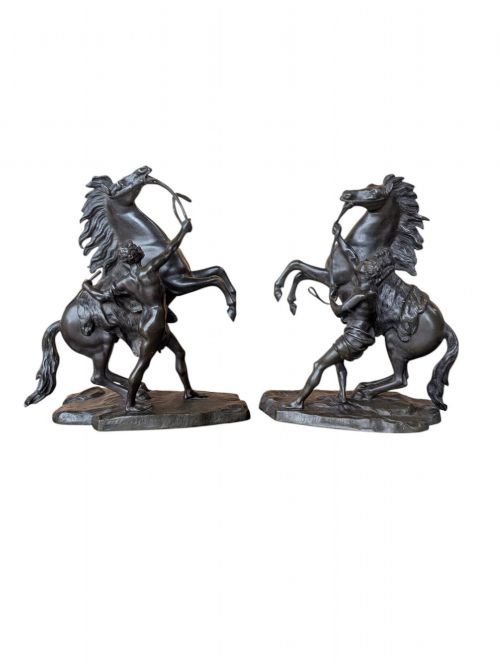
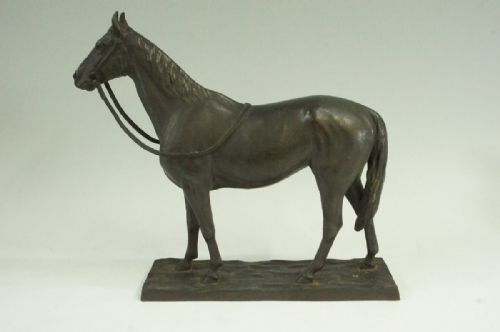
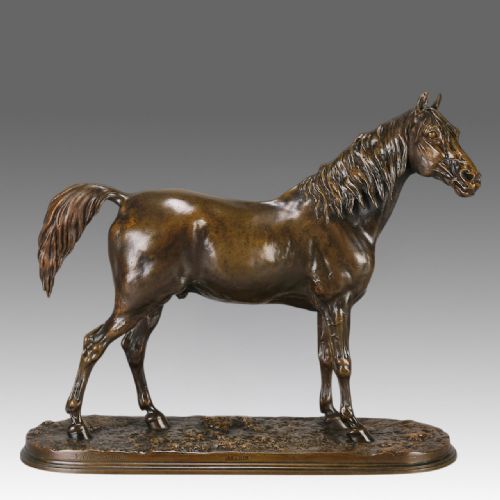
These dark bronzed horse figurines comprise sculptural representations of horses executed in metal, frequently accompanied by stone or marble bases. When searching for dark bronzed horse figurines, collectors encounter works ranging from mid nineteenth century French animalier studies to early twentieth century Japanese creations.
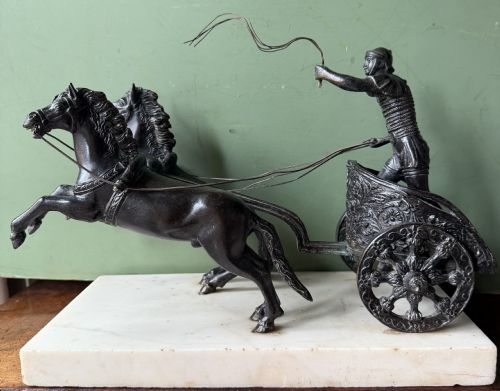
The selections on this page span several distinct eras, including the nineteenth century, the Edwardian period, and the mid twentieth century. Forms vary from single standing stallions and racing thoroughbreds to complex equestrian groups featuring jockeys, riders, and historical figures.
Makers and regional schools represented in the inventory include French animalier artists, Italian Grand Tour souvenirs, and Japanese Taisho period metalwork. Buyers find both realistic academic portrayals and modernist interpretations of the equine form.
Methods of construction and finishing
The pieces utilise cast bronze as the primary structural medium, shaped through traditional foundry methods that capture fine anatomical details of muscle and sinew. Many examples receive a dark patination treatment or cold-painted finishes to achieve the characteristic deep bronze coloration.
Foundations often incorporate natural materials such as marble, green marble, stone, and wood to support the heavier metallic compositions. Signatures, foundry marks, and artist ciphers are frequently chased or cast directly into the metal surfaces during production.
Listings feature works created using bronze, marble, stone, paint, and wood across periods from the seventeenth century to the mid twentieth century.
Distinctions in execution and detail
Quality separates through the precision of the metal chasing and the naturalism captured in the animal's musculature and tension. Superior examples display crisp definition in the mane, tail, and tack, whereas lesser pieces show softer contours and obscured casting seams.
The integration between the bronze figure and its stone or marble base demonstrates the maker's care, with premium works featuring bespoke fitted plinths. The depth and stability of the dark patina also indicate the grade of finish applied by the foundry.
Pierre Jules Mêne·Kunio Itô·John Willis Good·Franz Bergman·Nikolai Lieberich
The Dark Bronzed Horse Figurines Glossary
- Animalier
- A nineteenth century artistic movement focused on the realistic portrayal of animals. Sculptors in this tradition studied live subjects extensively to capture accurate movement.
- Patina
- The surface coloration and sheen developed naturally over time or applied chemically to bronze. This treatment protects the metal while giving dark bronzed horse figurines their rich visual depth.
- Grand Tour
- A traditional trip through Europe undertaken by upper class scholars during the eighteenth and nineteenth centuries. Travellers frequently purchased small bronze sculptures as souvenirs.
- Cold-painted bronze
- A technique where paint is applied to a cold metal object rather than fired in a kiln. This method allows for delicate polychrome details on equestrian figures.
- Cire perdue
- The lost wax casting method used to create detailed metal sculptures. A wax model is melted away to allow molten bronze to take its exact place in the mould.
Dark Bronzed Horse Figurines: Frequently Asked Questions
How do I identify the casting method?
Examine the surface for signs of chasing, filing marks, and the integration of the figure with its base. Finer casts exhibit sharp anatomical details and clean separation between rider and mount.
Signatures or foundry stamps embedded in the bronze provide further clues regarding the workshop origin. Heavy marble or stone plinths frequently accompany nineteenth century salon bronzes.
Where were these bronze horses made?
Origins span European workshops in France, Italy, and England alongside Japanese foundries from the Meiji and Taisho periods. French animalier schools produced many of the iconic racing and hunting groups.
Italian foundries specialised in Grand Tour souvenirs and classical equestrian monuments. Japanese artisans contributed distinctive bronze casting traditions focusing on natural observation.
How should I display dark bronzed horse figurines?
Position these sculptures on stable, level surfaces away from direct sunlight and excessive moisture fluctuations. Ensure the weight of the marble or bronze base is fully supported by the furniture.
Maintain the dark patinated surface by dusting gently with a soft, dry cloth without applying chemical polishes. Proper clearance allows the dynamic silhouettes of the horses to be viewed from multiple angles.