


19th Century Horse Sculptures
These 19th century horse sculptures bring the power and movement of the animal into interior spaces through varied bronze and wooden forms.
19th Century Horse Sculptures
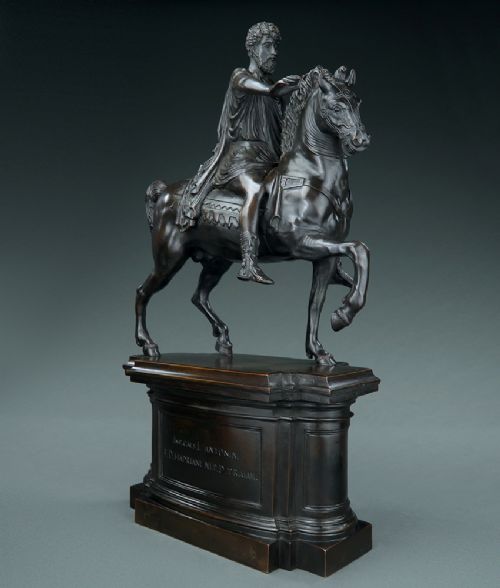
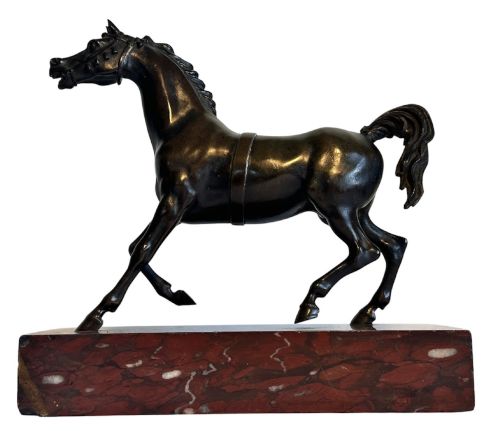
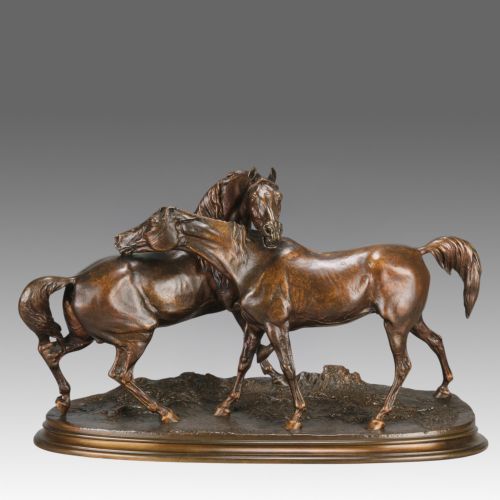
When searching for 19th century horse sculptures, buyers encounter a diverse range of figures capturing the animal in motion or repose. The most common manifestations on this page are French Animalier bronzes, grand tour reductions, and hand-carved wooden folk art pieces.
The selection spans decorative desktop statuettes, monumental racing groups, and child-sized items like rocking horses and pull-along toys. Origins stretch across England, France, Italy, Spain, and beyond, reflecting varied domestic and academic traditions of the period.
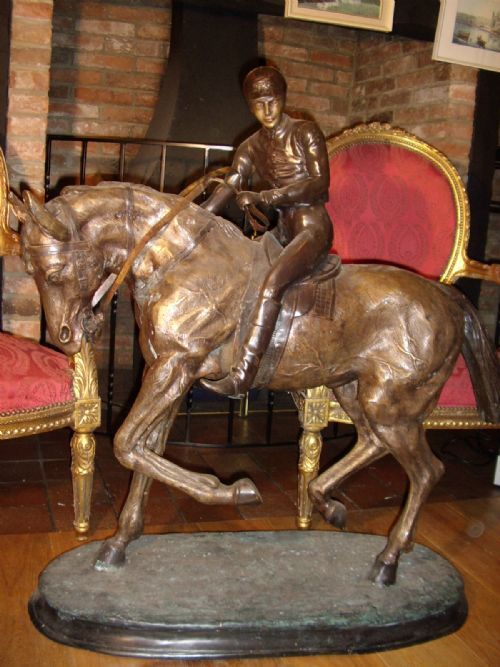
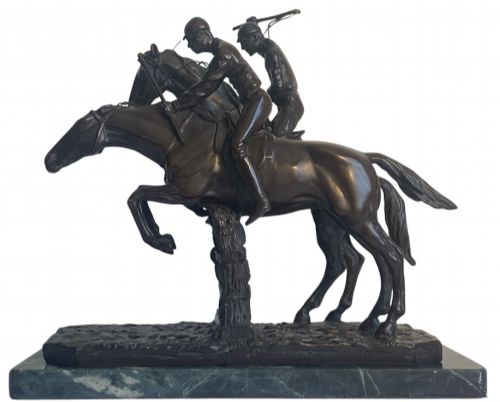
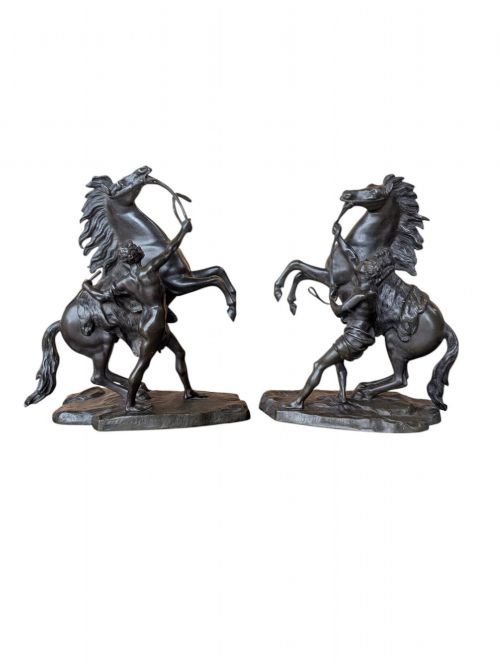
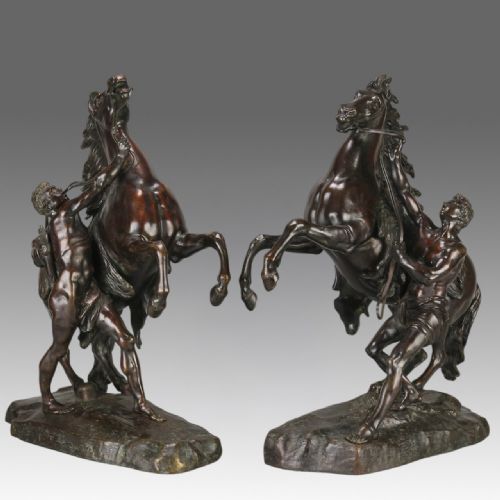
Subjects range from historical figures on horseback, such as Napoleon and Charles I, to depictions of thoroughbreds, jockeys, and mythologically inspired subjects like the Marly horses. Each piece records a distinct nineteenth-century approach to rendering equine anatomy and character.
Materials and construction methods
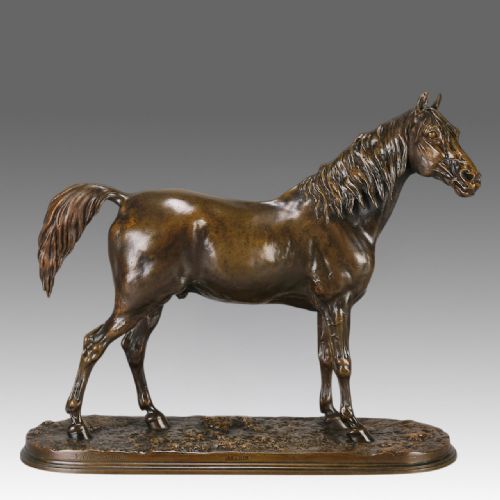
Bronze forms dominate the material record, frequently cast using the lost-wax method or sand casting to achieve fine detail in muscle and mane. These metal pieces often sit upon fitted marble or olive wood bases, sometimes finished with patination or parcel gilt ormolu.
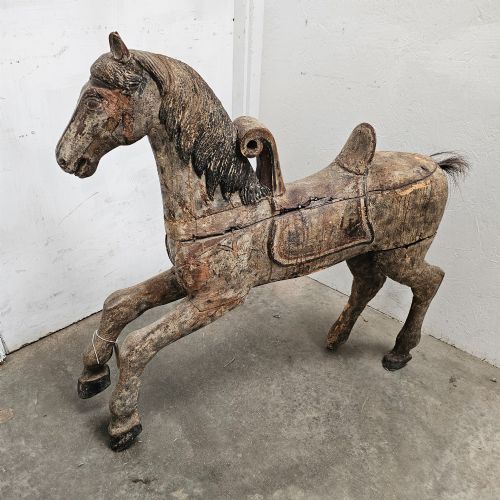
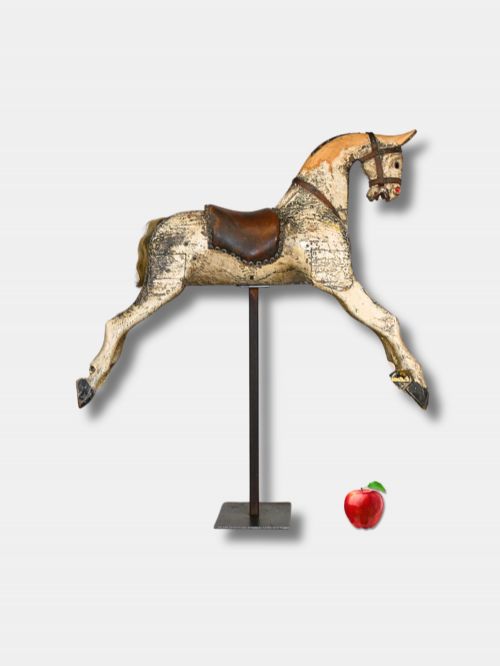
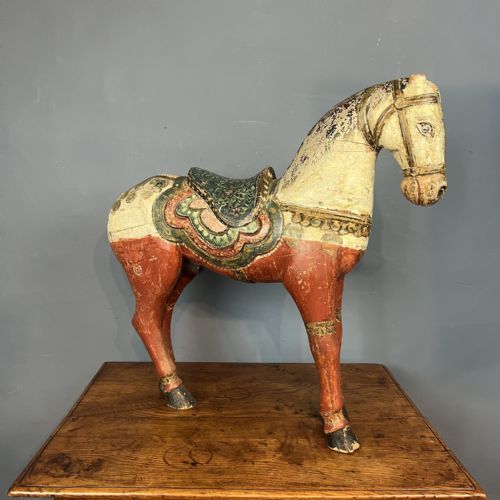
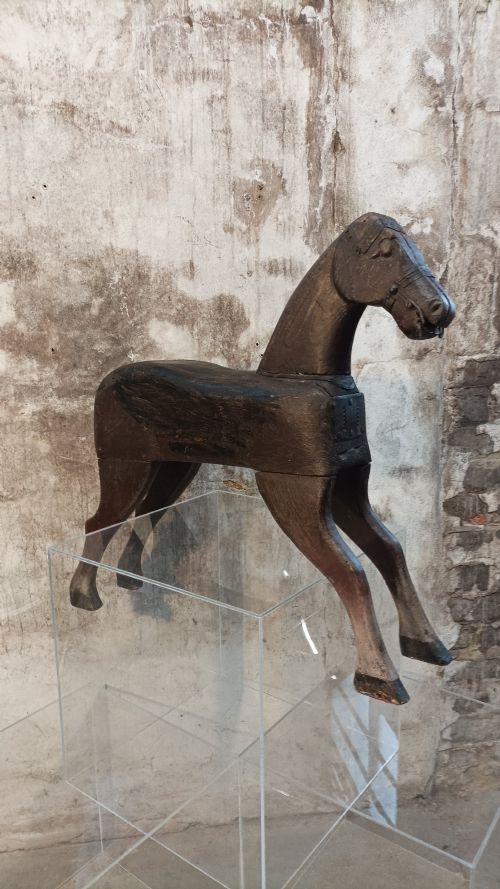
Wooden examples rely on traditional carpentry and carving techniques, utilising pine or hardwoods that receive layers of paint, horsehair additions, or leather tack. Folk art and utilitarian toys show direct hand-tool work, whilst grander decorative carvings exhibit careful shaping and jointing.
Listings feature works from 1850 to 1950, spanning bronze, carved wood, marble, and folk art mediums.
Separating standard works from master pieces
Quality in these sculptures rests upon the fidelity of the anatomical modelling and the crispness of the chase work on metal surfaces. Finer bronzes retain sharp muscle definition, realistic expression, and clear signatures or foundry marks, whereas weaker casts blur fine details.
In carved wooden and folk art examples, the vitality of the posture and the integrity of the original paint layer determine distinction. Works attributed to known sculptors or established makers command greater attention due to superior finishing and compositional balance.
Pierre Jules Meme·John Willis Good·Franz Bergman·Luigi Secchi·Charles Crozatier
The 19th Century Horse Sculptures Glossary
- Animalier
- A nineteenth-century artistic movement focusing on the realistic depiction of animals, particularly in motion. Sculptors in this genre studied live subjects closely at zoological gardens.
- Patinated Bronze
- Bronze treated with chemical solutions to produce a specific surface colour or tone, ranging from deep brown to greenish hues. This treatment protects the metal and defines sculptural contours.
- Ormolu
- Gilded bronze ornamentation applied to decorative objects and furniture mounts, popular in French neoclassical and empire designs. The technique involves fusing gold-mercury amalgam to a bronze base.
- Grand Tour
- A traditional trip through Europe undertaken by upper-class young men in the eighteenth and nineteenth centuries to study classical art. Travellers often returned with small-scale bronze copies of famous monuments and sculptures.
- Folk Art
- Artistic work created within a traditional culture by self-taught or untrained makers, often utilising local materials. These pieces prioritize utilitarian or expressive function over academic proportion.
19th Century Horse Sculptures: Frequently Asked Questions
How do I identify a French Animalier bronze?
French Animalier bronzes typically display naturalistic poses of animals captured with anatomical precision and emotional intensity. They often feature signatures on the naturalistic base and bear rich dark patination.
These sculptures were produced in large numbers during the nineteenth century to satisfy middle-class demand for cabinet bronzes. Examining the underside often reveals the casting seams and construction methods typical of Parisian foundries of the era.
What are the Marly horses?
The Marly horses are monumental marble sculptures originally commissioned by Louis XV for the Palace of Marly, depicting unrestrained horses restrained by grooms. Nineteenth-century artists frequently cast smaller bronze reductions of these famous compositions.
These reduced versions served as popular decorative ornaments for studies and grand interiors throughout the Victorian period. They are easily recognised by the rearing posture of the horse alongside a struggling attendant.
How should I care for a painted wooden rocking horse?
Painted wooden rocking horses require stable indoor humidity and protection from direct sunlight to preserve the original paint surfaces and horsehair mane. Gentle dusting with a dry microfibre cloth keeps the finish clean without introducing moisture.
Avoid using harsh cleaning products or oils on antique painted wood, as these can strip historical pigments. Checking the structural joints periodically ensures the horse remains stable on its stand.
What distinguishes Grand Tour bronzes?
Grand Tour bronzes are small-scale replicas of classical or Renaissance sculptures purchased by travellers visiting European cultural sites during the nineteenth century. They are typically cast in bronze and mounted on marble or stone plinths.
These pieces serve as tangible records of nineteenth-century travel and education. Their quality varies depending on whether they were produced by established Roman or Florentine workshops or local commercial foundries.