
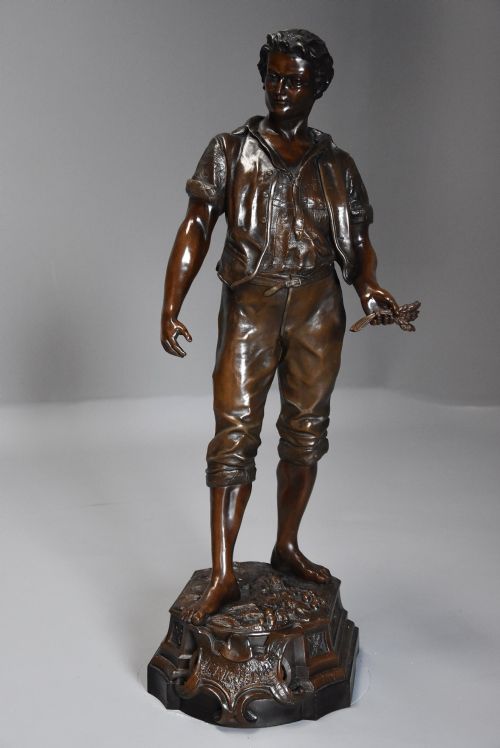
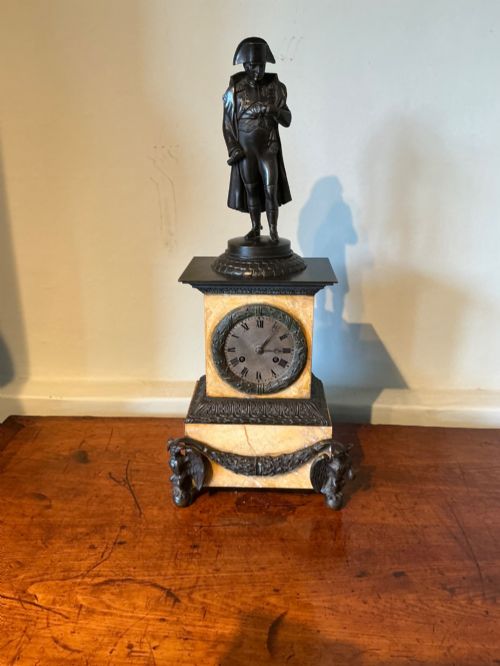
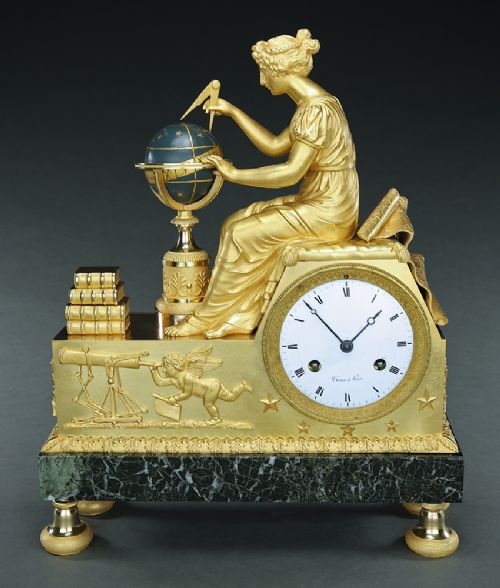
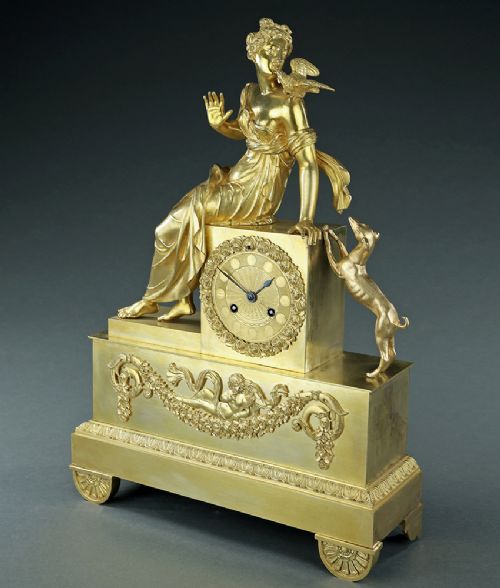




French Bronze Figure Clock
A french bronze figure clock combines sculptural presence with precision horology, anchoring a room with nineteenth-century narrative weight.
French Bronze Figure Clock
When a buyer hunts for a french bronze figure clock, they encounter sculptural horology anchored primarily in the nineteenth century, including Victorian, Regency, and Second Empire periods. These objects merge functional timekeeping with figurative art, frequently depicting historical personages, mythological deities, or allegorical figures mounted directly above or beside the dial.
The prevailing format on this page is the mantel clock, often accompanied by matching garniture sets featuring side vases or candelabra. Styles lean heavily towards French Empire, Louis XVI Revival, and Rococo Revival, showing how nineteenth-century makers reinterpreted earlier neoclassical and baroque aesthetics.
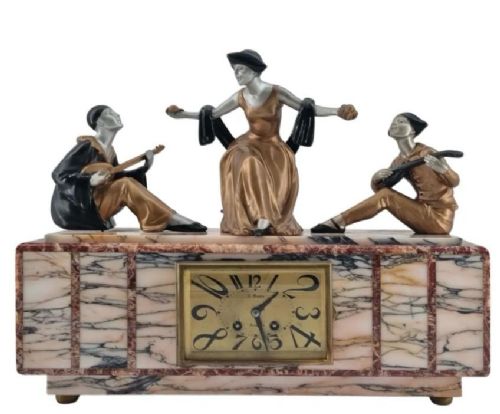
Beyond standard mantel pieces, the evidence records occasional wall clocks, longcase clocks, and table clocks incorporating bronze figures. Subjects range from Napoleon and Diana the hunter to literary and theatrical characters like Pierrot and Columbine, reflecting the diverse cultural interests of the era.
Materials and construction
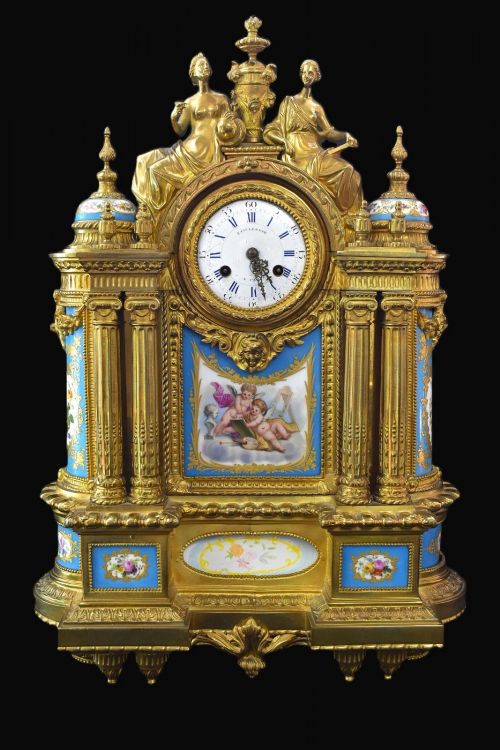
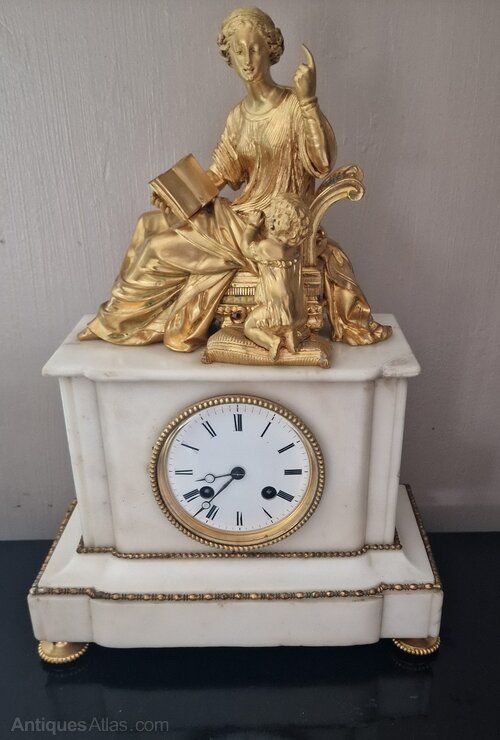
Maker workshops built these objects by combining cast bronze figures with architectural cases formed from marble, ormolu, and patinated bronze. Enamel dials and brass movements provided the mechanical heart, while mercury gilding or electroplating delivered the bright ormolu surface finish.
Sculptural components often required lost-wax casting or sand casting before undergoing extensive hand-chiselling and chemical patination. The bronze figures were then secured to marble or gilded metal bases alongside eight-day striking movements supplied by prominent Parisian factories.
Materials recorded across the site include patinated bronze, Sevres porcelain, enamel, glass, and rouge marble.
Assessing quality
The integration of materials also defines the grade of the piece, distinguishing heavy natural marble and fire-gilded ormolu from simpler brass and lighter alloy alternatives. Signed movements by notable makers elevate the horological standing of the clock.
F.Milliot·Reiche·Sega·Etienne Lenoir·Remond·Charpentier Paris·Lemerle Charpentier·Phillipe H. Mourey·Deniere Et Fils·Japy Freres
The French Bronze Figure Clock Glossary
- Ormolu
- Gilded bronze produced by applying a gold amalgam to a bronze base and heating it. This technique creates a durable, luminous golden finish characteristic of luxury French clocks.
- Garniture
- A set of matching decorative ornaments designed to be displayed together on a mantelpiece. Typically, a central clock is flanked by two matching vases or candelabra.
- Fusee
- A conical pulley used in clock movements to maintain even tension on the gear train as the mainspring unwinds. It ensures consistent timekeeping accuracy across the power reserve.
- Patinated bronze
- Bronze treated with chemical solutions to produce a specific surface colour such as dark brown or green. This finish accentuates the sculptural contours of the figure.
- Cartel clock
- A wall-mounted clock housed within an ornate frame made of metal or wood. The French examples frequently utilise scrolling rococo bronze mounts.
French Bronze Figure Clock: Frequently Asked Questions
What is a garniture clock set?
A garniture clock set consists of a central mantel clock accompanied by matching decorative side pieces, such as urns or candelabra. These sets were designed to create a balanced, symmetrical display across a fireplace mantel.
The matching elements typically share the same materials, such as marble, bronze, and ormolu, repeating the stylistic motifs of the central timekeeper.
How do I wind an antique French clock?
Antique French clocks generally use an eight-day movement wound via a dedicated key inserted into winding holes on the enamel dial. Care must be taken not to overwind the mainspring.
Most movements strike the hours and half-hours on a bell or gong using a rack strike system, requiring the striking sequence to run its course without manual interruption.
What materials are used in these clocks?
These clocks primarily utilise cast bronze figures mounted upon architectural cases constructed from rouge marble, white marble, or gilded brass. Ormolu provides the bright golden highlights.
Dials are typically white enamel with painted Roman or Arabic numerals, protected behind bevelled glass within a hinged bezel.
How do I identify Empire style clocks?
Empire style clocks reflect the neoclassical taste of early nineteenth-century France, drawing inspiration from ancient Roman and Greek motifs. They frequently feature military trophies, laurel wreaths, and classical deities.
The bronze figures on these clocks often portray historical figures like Napoleon or mythological heroes associated with strength and order.
Where were these clocks made?
The vast majority of these clocks were manufactured in Parisian workshops by skilled bronze-founders, horologists, and cabinet makers. Paris was the global centre for luxury clockmaking during the nineteenth century.
Many pieces bear signatures or foundry stamps on the movement plates or bronze bases, linking them to documented makers of the period.