



Classical Bronze Table Clock
A classical bronze table clock brings together sculptural metalwork and precise timekeeping, anchoring a room with nineteenth-century presence.
Classical Bronze Table Clock
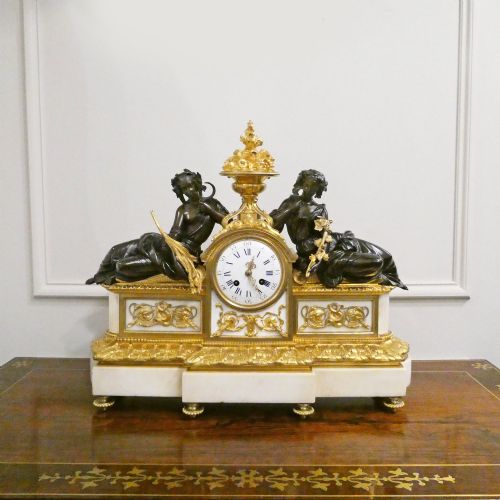
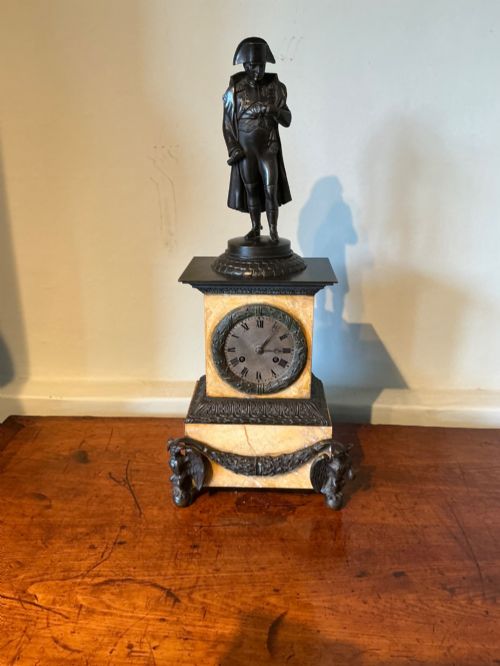
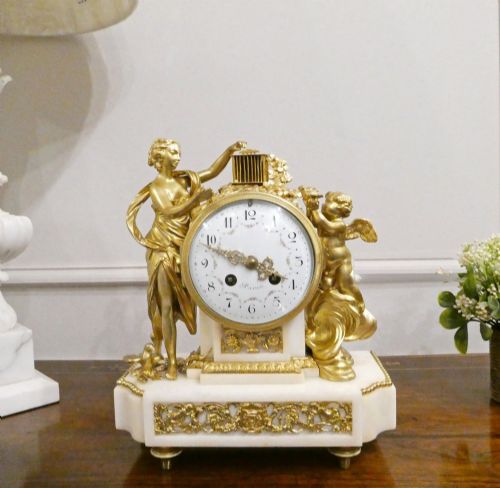
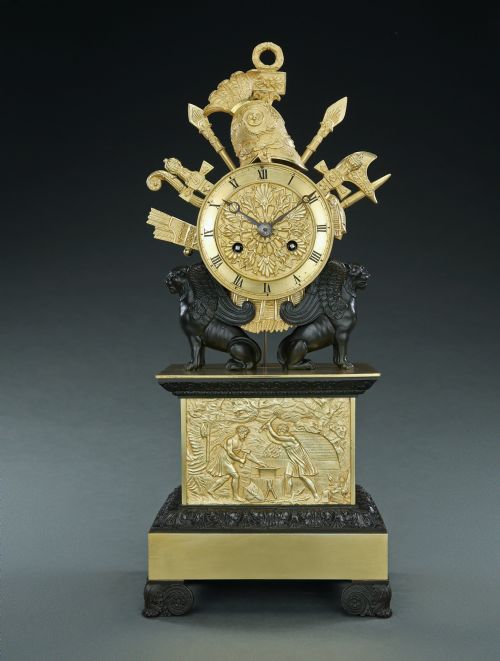
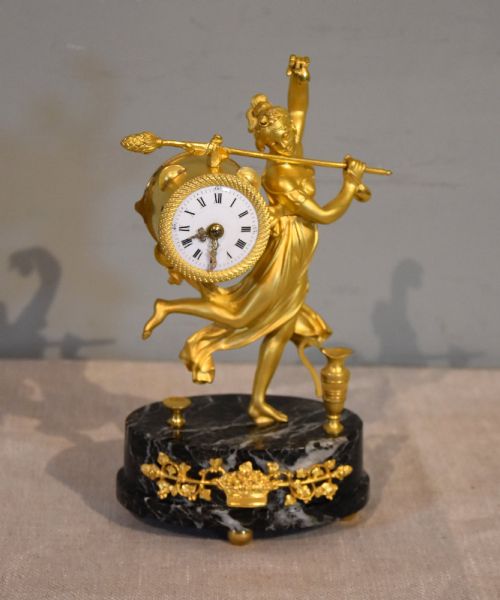
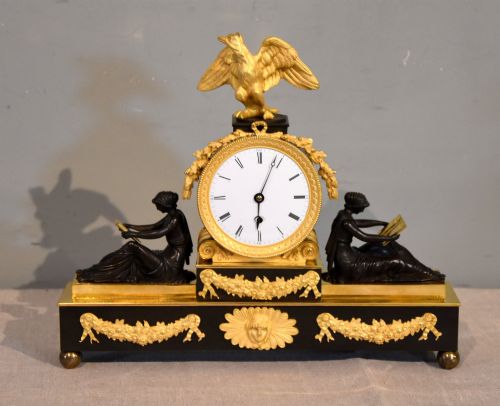
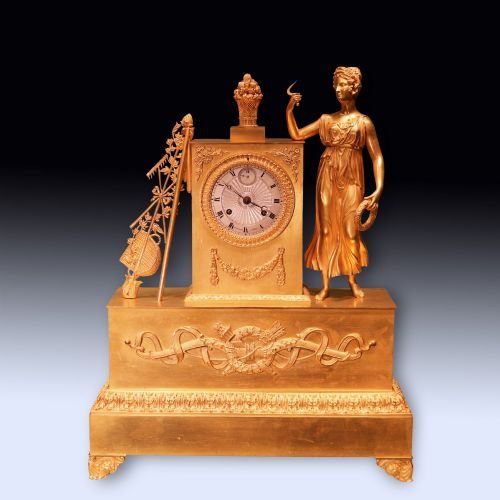
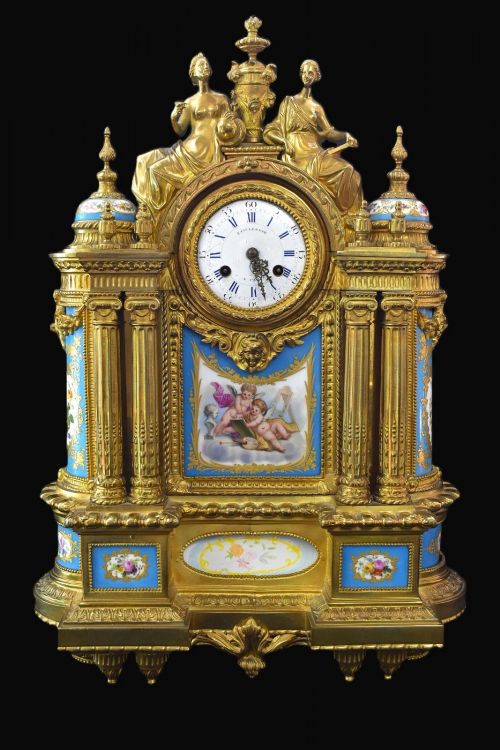
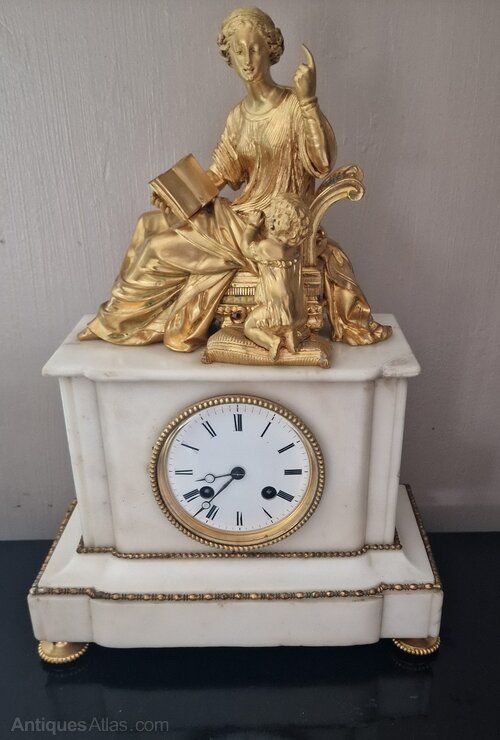
A classical bronze table clock is a mantel timepiece or striking clock housed in patinated or gilt bronze, frequently paired with marble bases and porcelain elements. These pieces originate predominantly in nineteenth-century French workshops, spanning the Regency, Empire, Napoleon III, and Louis XVI revival styles.
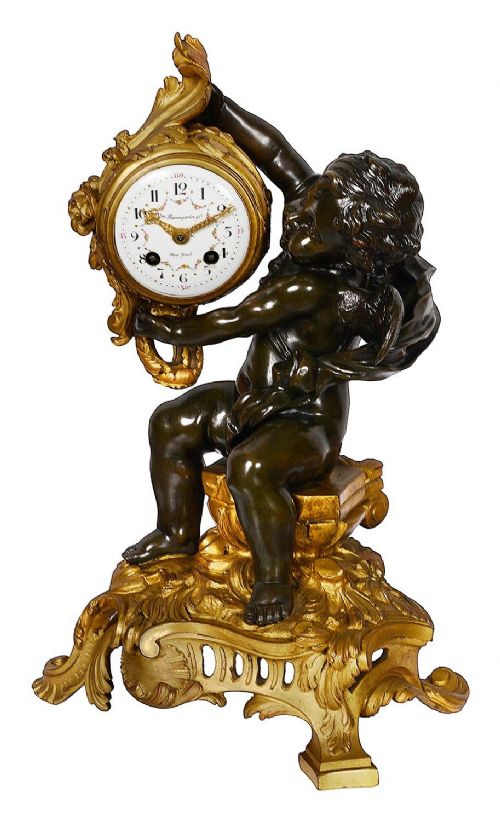
The most common form encountered here is the French mantel clock, often accompanied by garnitures or sculptural figures depicting classical themes, cherubs, and historical motifs. Makers such as Vincenti, Japy Freres, and Etienne Lenoir produced these domestic timepieces during the Victorian era and earlier decades.
Materials and construction
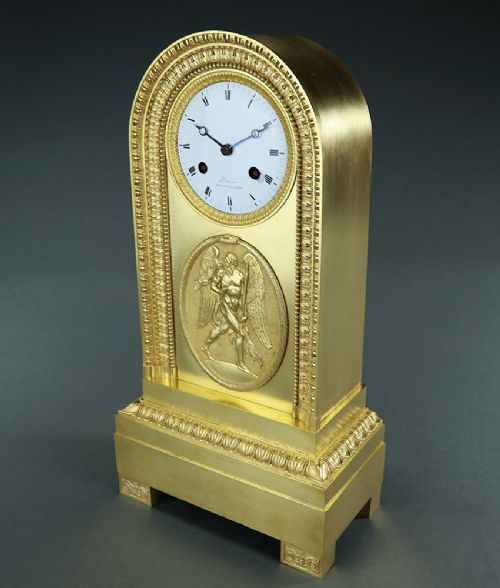
Cases combine cast bronze, patinated bronze, and ormolu with contrasting materials like rouge, sienna, and green marble, alongside glass and enamel dials. Ormolu involves the application of finely ground gold to a bronze base, creating a durable golden surface that defines many classical designs.
Clockmakers utilised brass movements, including eight-day striking mechanisms and fusee systems, housed within heavy stone and metal enclosures. Dial faces frequently feature painted enamel numerals, protected behind bevelled glass panes within drum heads or portico frames.
Listings feature nineteenth-century French and English pieces, incorporating materials such as ormolu, patinated bronze, marble, and enamel.
Distinctions in craftsmanship
Quality rests in the crispness of the bronze casting and the depth of the ormolu fire-gilding, where finer examples display sharp relief and subtle hand-chasing. Superior pieces integrate the marble and metal components seamlessly, avoiding crude joints or mismatched stone bases.
The sophistication of the internal movement also dictates the tier of the piece, with complex eight-day striking mechanisms and signed maker plates representing higher standards of period horology.
Vincenti·Etienne Lenoir·Japy Freres·Philippes Paris·A.D Mougin·Pons De Paul
The Classical Bronze Table Clock Glossary
- Ormolu
- Finely ground gold applied to a bronze base using a mercury amalgamation technique, popular in nineteenth-century French clock making. This surface treatment gives a bright golden finish that resists tarnishing.
- Patinated bronze
- Bronze treated with chemical solutions to produce a darkened, weathered surface colour. This finish contrasts sharply with bright ormolu mounts on classical clock cases.
- Portico clock
- A mantel clock designed with architectural columns supporting the movement housing. This neoclassical style often incorporates cut crystal or marble elements.
- Garniture
- A set consisting of a central clock flanked by matching decorative objects such as vases or candelabra. These sets were designed to sit harmoniously on a mantelpiece.
- Fusee movement
- A conical pulley mechanism that equalises the pull of the mainspring as it winds down, ensuring even timekeeping. It is a hallmark of better quality English and French clocks.
Classical Bronze Table Clock: Frequently Asked Questions
How do I wind an antique clock?
Use the designated key on the dial face to wind the springs gently until resistance is felt.
Avoid overwinding the movement, as this can damage the internal components and disrupt the striking mechanism.
What is a portico clock?
A portico clock is a style featuring two architectural columns supporting the central clock housing. This design draws on classical architecture and often uses marble or crystal.
These pieces emerged during the nineteenth century and offer a striking architectural silhouette on a table or mantel.
How do I tell Empire style from Louis XVI style?
Empire style reflects the early nineteenth century with military trophies, classical figures, and heavy gilt bronze. Louis XVI style references earlier eighteenth-century aesthetics with lighter neoclassical symmetry, ribbons, and urns.
Revival pieces from the Victorian era frequently combined these vocabularies, making material analysis essential for dating.
Where should I place a heavy marble clock?
Position the clock on a sturdy, level surface capable of supporting considerable weight, such as a strong sideboard or a reinforced mantelpiece.
Ensure the surface is completely flat so the pendulum hangs evenly and the movement keeps accurate time.