
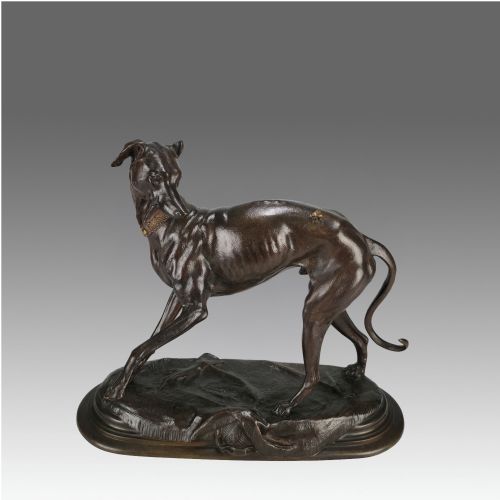
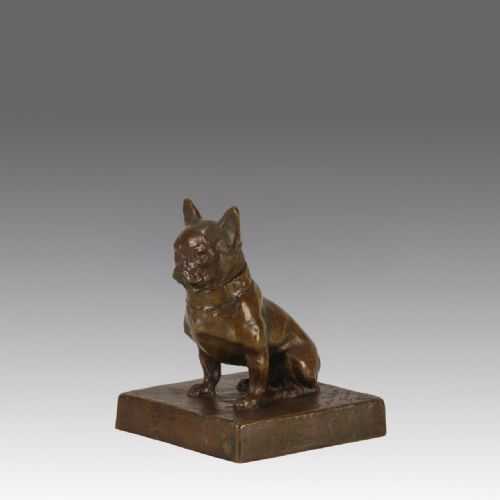


French Bronze Dog Ornament
These french bronze dog ornament pieces capture canine character with realism, offering a solid addition to a desk, mantelpiece or hearth.

French Bronze Dog Ornament
A french bronze dog ornament captures domestic and sporting dogs in realistic poses, ranging from seated poodles and bulldogs to hounds and setters in pursuit. These sculptures appear as individual figures, paperweights, part of figural groups, or as functional hearth accessories such as chenets and fire dogs.
Most examples originate from the nineteenth century into the early twentieth century, reflecting the strong European tradition of animalier sculpture. Buyers encounter both cold-painted finishes and gilt or patinated surfaces mounted on stone bases like marble and onyx.
Materials and Casting Techniques
Many sculptures incorporate heavy natural bases of marble, onyx or cast iron to anchor the dynamic postures of sporting dogs and hunting hounds.
Listings feature materials such as bronze, marble, gilt bronze, patinated bronze, spelter and onyx across nineteenth-century and Art Deco periods.
Distinguishing Quality in Bronze Dogs
The precision of the metal chase work dictates the tactile quality of the piece, separating crisp musculature and detailed fur from soft, indistinct casting. Superior examples show careful attention to the dog's anatomy, expression and posture, whether at rest or in motion.
The depth and application of the patina or cold-painted finish also define the standard, alongside the quality of the associated marble or onyx base.
Alfred Barye·Dora Heber·Pierre Jules Mene·Jules Moigniez·Louis Riche·Arthur Waagen·Joseph Francois Victor Chemin·Alfred Barye·Barbedienne
The French Bronze Dog Ornament Glossary
- Animalier
- A nineteenth-century artistic movement dedicated to the realistic depiction of animals, particularly in bronze. Sculptors in this tradition focused heavily on anatomical accuracy and dynamic movement.
- Chenets
- Decorative metal fire dogs placed on either side of a hearth to support logs. In French interiors, these often take the form of sculpted dogs or figural animals.
- Patinated Bronze
- Bronze treated with chemical solutions to produce a specific surface colour or dark finish. This process highlights the sculptural details and protects the metal.
- Cold Painted
- A finishing technique where paint is applied to cold metal rather than fired in a kiln. This method allows for delicate, polychrome details on small bronze figures.
- Spelter
- A zinc-based alloy frequently used as a cost-effective alternative to bronze in decorative figures. It is softer and lighter than genuine bronze.
French Bronze Dog Ornament: Frequently Asked Questions
How do I identify animalier bronze dogs?
Animalier bronzes display a strong focus on anatomical realism, capturing dogs in natural movements or characteristic resting poses. Look for signature engravings on the bronze base alongside foundry marks that indicate the casting origin.
The surface finish, whether dark patina, cold-painted colours or fire gilding, helps date the piece to periods such as the nineteenth century or the Art Deco era.
Were these dogs used as fire accessories?
Certain larger bronze and brass figures function specifically as chenets or fire dogs to support firewood within a hearth. These matched pairs often feature hunting hounds or French Rococo styling designed to ornament the fireplace.
Smaller pieces served purely as decorative sculptures, desk ornaments or heavy paperweights for the study.
How should I display my bronze dog?
Place your sculpture on a stable surface such as a wooden mantelpiece, desk or bookcase where the details of the casting can be appreciated up close. Ensure the piece sits away from direct moisture to protect the patina or cold-painted finish.
Dust the bronze gently with a soft, dry cloth without applying harsh chemical polishes that might strip the historic surface.