


Bronze Greyhound Figurine
A bronze greyhound figurine captures the sleek line and intense energy of the breed, built to sit on a desk or mantel.

Bronze Greyhound Figurine
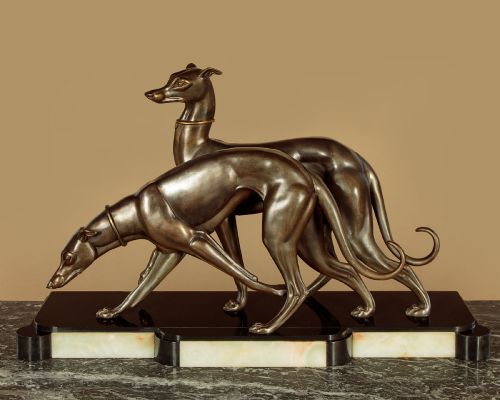
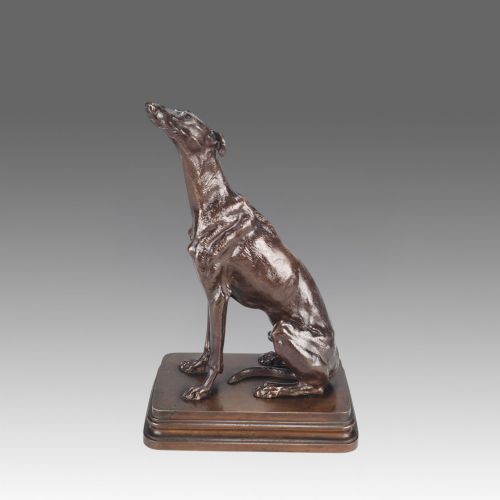
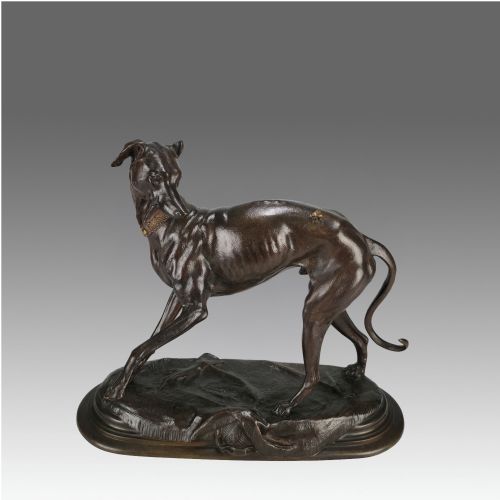
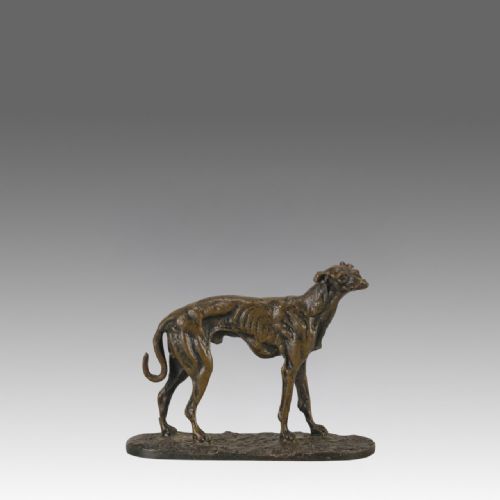
A bronze greyhound figurine represents the slender silhouette and taut muscle of the animal, rendered across the nineteenth century and into the art deco era. These pieces appear as standalone sculptures, paperweights, night lights, and dishes, often mounted on heavy bases of marble or stone.
French animalier works dominate the earlier periods, focusing closely on the natural anatomy of the resting or sitting hound. Later twentieth-century examples embrace the stylised geometry of art deco, sometimes pairing the hound with figures or placing it atop lamps.
Materials and construction
Foundries cast these figures primarily in bronze or spelter, often finishing the metal with a dark patina or cold-painted colours. Silvered bronze also occurs in twentieth-century modernist pieces.
Sculptors mounted many of these metal figures onto solid bases of marble, stone, or wood to provide weight and stability.
Materials span traditional patinated bronze and silvered bronze alongside spelter, supported by bases of marble, stone, and wood.
Judging quality in bronze greyhound figurine examples
The quality of the base matters greatly, with dense veined marble or heavy turned wood elevating the overall presence of the sculpture compared to simple plain stone mounts.
Alfred Dubucand·Alfred Barye·P J Mêne·Karl Hagenaur·Geo Maxim·Joseph Francois Victor Chemin·Christophe Fratin
The Bronze Greyhound Figurine Glossary
- Animalier
- A nineteenth-century artistic movement dedicated to the realistic portrayal of animals, particularly predators and hounds. Sculptors in this tradition focused on accurate anatomy and observed movement.
- Patina
- The surface coloration and sheen developed naturally over time or applied chemically by the foundry. It protects the metal and defines the shadows of the casting.
- Spelter
- A zinc alloy commonly utilised as a less expensive alternative to bronze during the nineteenth and early twentieth centuries. It takes a metallic finish well but weighs less than true bronze.
- Cold Painted
- A technique where paint is applied to a bronze object without being fired in a kiln. Vienna bronze workshops frequently employed this method for small decorative items.
Bronze Greyhound Figurine: Frequently Asked Questions
Are these figures solid bronze?
Most of the traditional animalier pieces are cast in solid bronze, though some later or alternative examples utilise spelter.
Heavier pieces usually indicate solid metal casting rather than hollow construction.
What is an animalier bronze?
Animalier refers to nineteenth-century sculptures that focus specifically on realistic depictions of animals in natural poses.
These works were popular across France and Austria for domestic display.
Why do some have marble bases?
Foundries mounted metal sculptures onto stone or marble to add structural weight and create a finished display piece.
This practice was common for both nineteenth-century models and art deco designs.
How do I care for cold painted bronze?
Cold painted surfaces require gentle dusting with a dry cloth and protection from direct sunlight and moisture.
Avoid using liquid cleaners or polishes that can lift the delicate painted finish.