


French Bronze Cherub Figurine
A french bronze cherub figurine brings the playful spirit of classical mythology into a room through finely cast metal work.
French Bronze Cherub Figurine
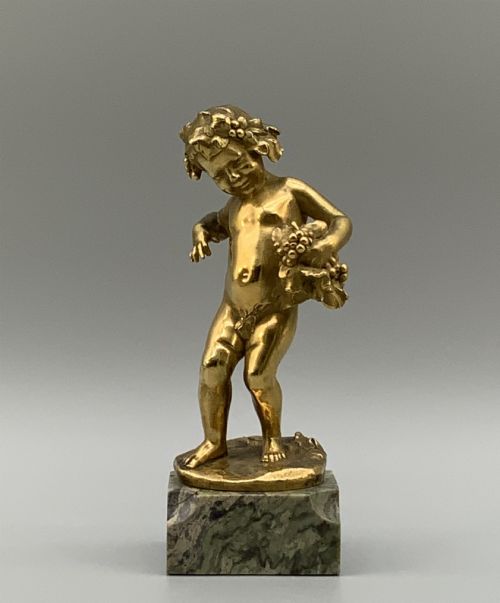
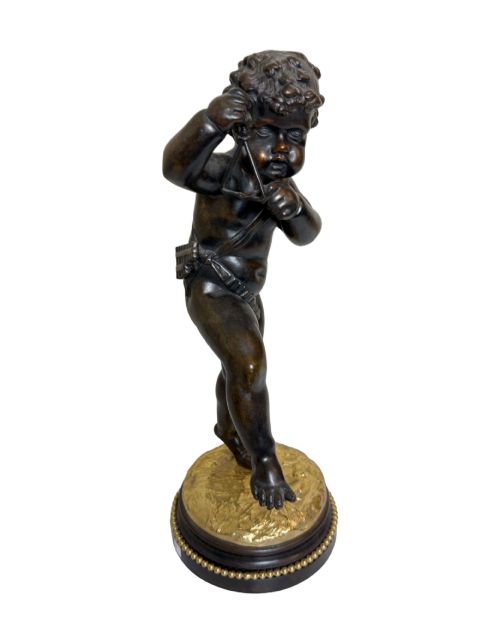
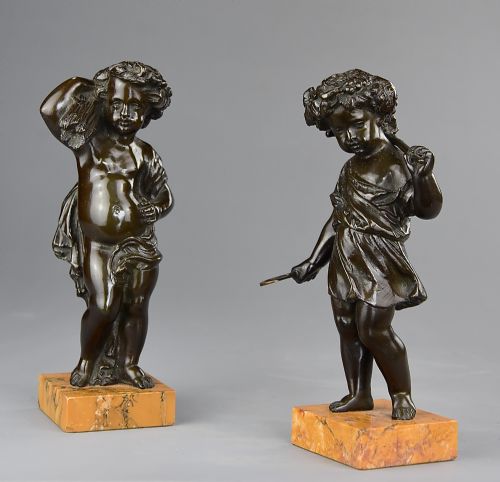
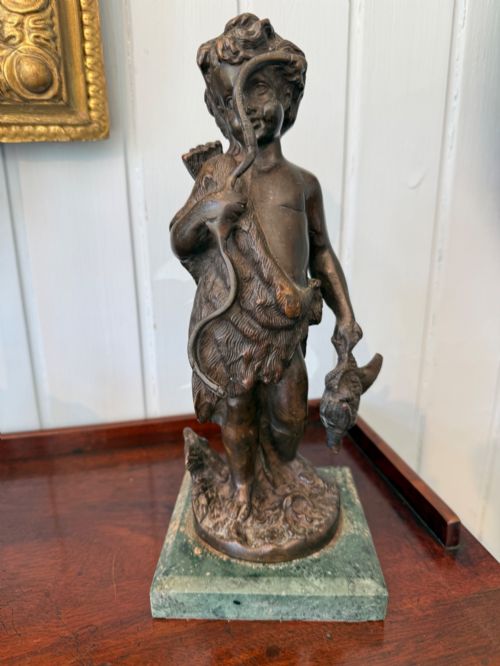
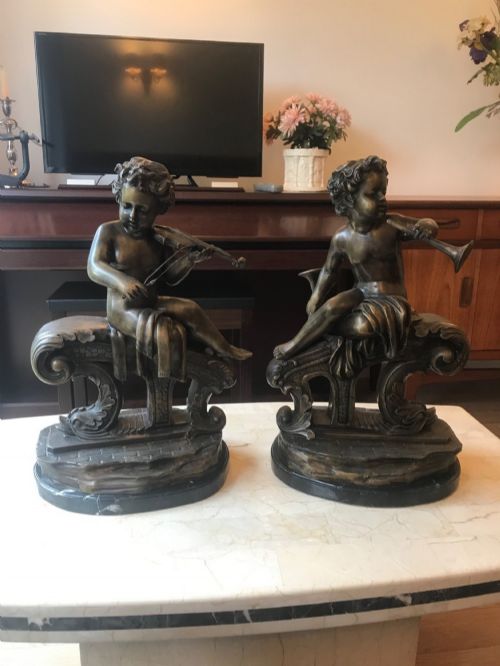
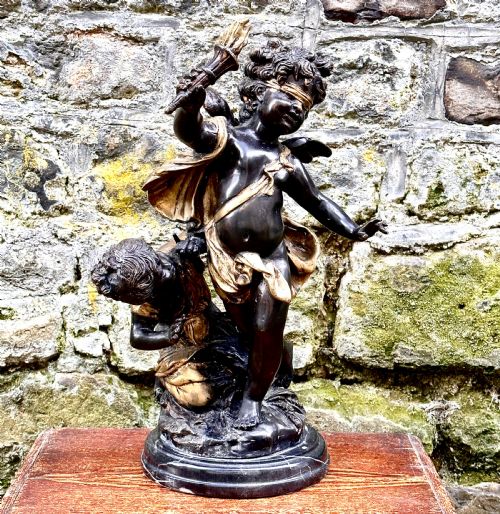
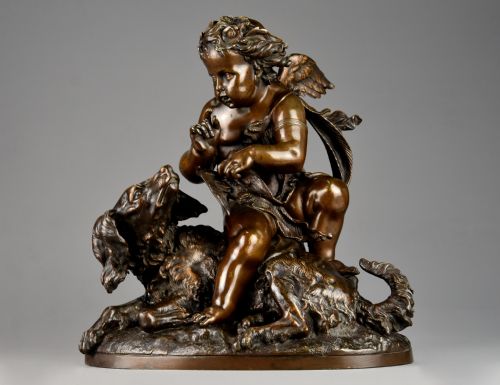
A french bronze cherub figurine embodies the classical motifs popular across the nineteenth century, depicting winged putti, infant bacchus figures, and allegorical children engaged in music, harvest, or play. These sculptures range from standalone figures holding bows, triangles, or wheat sheaves to decorative groups mounted on marble or inlaid wood bases.
Many examples function as functional objects as well as pure sculpture, appearing integrated into mantel clocks with ormolu mounts, or adapted into table lamps alongside porcelain and enamel elements. The forms draw heavily on neoclassical and rococo revival styles, channeling the sculptural traditions associated with classical antiquity.
Buyers seeking this phrase encounter works cast during the eighteen hundreds and early nineteen hundreds, often reflecting the aesthetic tastes of the Victorian period and grand tour collecting. Pairs depicting harvest putti or musical cherubs surface frequently alongside single figures of cupid and eros.
Materials and Technique
The primary material is bronze, handled with varying patinations from deep dark tones to bright gilt finishes and ormolu. Founders utilised sophisticated casting methods to render the soft contours of chubby infant limbs, feathered wings, and detailed attributes like musical instruments and bows.
Many figures are paired with contrasting materials such as white or variegated marble bases, wood plinths, and porcelain or enamel components found on clock faces and lamp bodies. This combination of cast bronze and stone provides stability and visual weight to the compositions.
One sleepy cherub rests entirely on a shell, proving even mythical infants needed a quiet moment.
Distinguishing Quality
The integration of the sculpture with its base or functional mount also dictates merit, as finer pieces utilise substantial variegated marble or inlaid wood that complements the bronze work rather than serving as a basic support.
Charles Louis Malric·Susse Frères·Claude Michael Clodion·Louis Auguste Moreau·Achille Brocot·Delettrez
The French Bronze Cherub Figurine Glossary
- Putto
- A plump, naked male child, often winged, derived from classical art and frequently termed a cherub or amorino in later sculpture.
- Ormolu
- Gilt bronze, produced by applying finely ground gold mercury amalgam to a bronze base, creating a brilliant golden surface.
- Patina
- The surface coloration and sheen developed on bronze over time or through chemical treatment by the founder.
- Neoclassical
- A style reviving the forms and motifs of ancient Greece and Rome, emphasising restraint, symmetry, and classical figures.
- Grand Tour
- The nineteenth-century practice of young elites travelling through Europe collecting classical art and classical-style bronze souvenirs.
French Bronze Cherub Figurine: Frequently Asked Questions
What is the difference between a putto and a cherub?
In artistic tradition, both terms describe the winged infant figures seen in these bronzes, though putto originates from classical motifs while cherub carries slightly more religious connotations.
On these pieces, both words describe the same chubby child figures playing music, hunting, or gathering grapes.
Were these figures always part of clocks or lamps?
Many sculptures were cast as standalone figures on marble or wood bases intended purely for decorative display.
Others were deliberately incorporated into mantel clocks with ormolu mounts or later converted into table lamps during domestic updates.
How can I tell the period of a bronze cherub?
Dating relies on stylistic clues like the depth of the casting, the nature of the patina, and the material of the base.
Nineteenth-century examples often feature heavy bronze with distinct patination and are frequently mounted on natural marble or wood.
What do the grape and harvest motifs signify?
Figures holding grapes, wheat sheaves, or baskets reference classical bacchic themes and seasonal harvest allegories.
These subjects reflect the nineteenth-century fascination with antiquity and pastoral abundance popular in French decorative arts.