
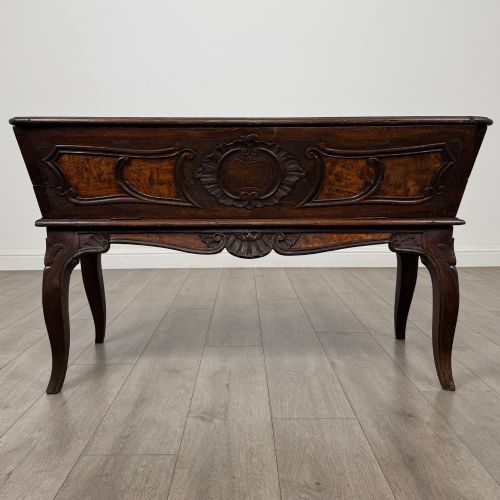
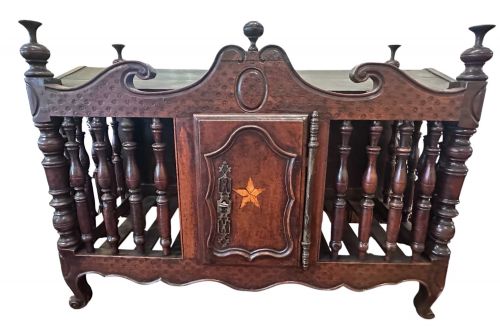


French Bread Cupboard
A French bread cupboard brings provincial utility and carved walnut or fruitwood into a room, offering authentic storage grounded in rural history.
French Bread Cupboard
When you search for a french bread cupboard, you are looking at specialised provincial storage designed to protect loaves from pests while allowing air to circulate.
The versions you are most likely to meet on this page span the eighteenth century and nineteenth century, taking the form of traditional panetieres, dough bins, and food safes.
These pieces originate from rural French workshops, utilising regional timbers like walnut, fruitwood, and oak to build practical furniture for domestic life.
How they were made
Cabinet makers utilised solid walnut, fruitwood, oak, chestnut, and pine, working by hand to shape panels, doors, and structural frames.
Ventilation was achieved through turned spindles or open slats rather than solid wood panels, keeping baked goods fresh in provincial kitchens.
Joinery techniques relied on pegged mortise and tenon joints, while decorative elements featured carved details and turned finials.
What varies in quality
The standard of carving and turning distinguishes simpler utilitarian cupboards from finer examples featuring serpentine fronts and intricate spindle work.
Timber selection dictates the finish and presence, with dense walnut and aged fruitwood displaying greater depth than utility pine.
Original hardware and structural integrity separate pieces that retain their provincial character from those altered over centuries of use.
The French Bread Cupboard Glossary
- Panetiere
- A traditional wooden bread cage or wall cabinet featuring spindle sides for ventilation. These were principal display pieces in prosperous French provincial homes.
- Dough Bin
- A wooden trough with a lid used for mixing and proving bread dough. Many examples double as cupboards with storage space beneath the trough.
- Serpentine Front
- A curved furniture front shaped in a gentle wave line. This contour appears on finer eighteenth-century walnut cabinets.
- Turned Finials
- Decorative terminal ornaments shaped on a lathe. They sit atop the corners of traditional bread cupboards.
- Fruitwood
- Timber harvested from fruit-bearing trees such as cherry or pear. It offers a warm tone and fine grain favoured by provincial cabinet makers.
French Bread Cupboard: Frequently Asked Questions
What is a panetiere?
A panetiere is a traditional French bread cabinet designed to store and protect loaves of bread. These structures utilise spindle sides to maintain airflow around the baked goods.
They originated in the rural regions of France as essential items of provincial kitchen furniture. Today they are prized as wall-mounted or freestanding decorative storage.
How do I date an antique bread cupboard?
Dating relies on examining the timber species, construction methods, and regional style characteristics. Eighteenth-century pieces frequently feature hand-carved walnut and fruitwood with pegged joinery.
Later nineteenth-century examples often incorporate simpler construction or different secondary woods. Comparing the turning style and hardware helps narrow down the period of manufacture.
Where should I place a bread cupboard at home?
These cabinets work well in kitchens, dining rooms, or hallways where their provincial character can be appreciated. Wall-mounted panetieres require secure fixing to support the weight of solid timber.
Freestanding dough bins and food cupboards suit alcoves or corners. They provide practical surface space alongside enclosed storage.
Did these cupboards actually store bread?
Yes, rural households used these specialised cabinets to store daily bread away from mice and insects. The ventilated sides allowed fresh loaves to cool without gathering moisture.
Bread was baked in large quantities once a week or fortnightly, making proper storage vital. The cupboard kept the crust dry and the crumb edible over days.