





French Boulle Cupboard
A French boulle cupboard brings dramatic contrast into a room, pairing dark ebonised wood with intricate metallic inlay.
French Boulle Cupboard
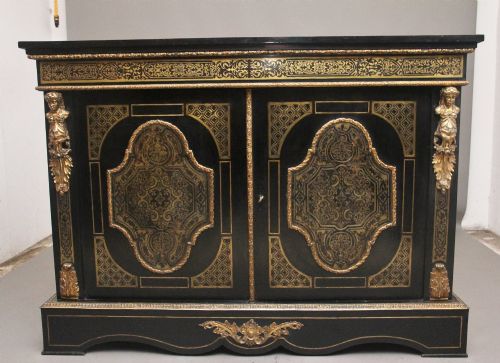
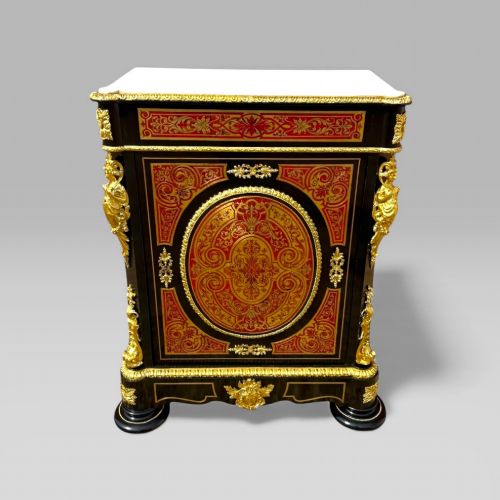
A French boulle cupboard is a decorative storage piece defined by its striking inlay of brass and tortoiseshell set into dark timber. These cabinets appear primarily in nineteenth-century interpretations, including Victorian Boulle Revival, Napoleon III, and Louis XVI styles.
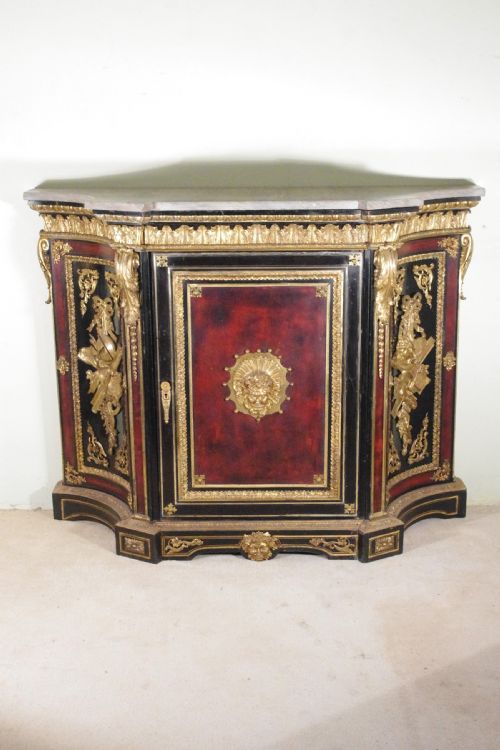
The most common forms on this page are pier cabinets, side cabinets, and display cabinets. Many examples feature serpentine fronts or topped surfaces of marble.
These items originate predominantly from the nineteenth century, specifically spanning the decades around eighteen-fifty to eighteen-eighty. Buyers encounter single pieces as well as matched pairs designed for grand interiors.
Materials and construction methods
Cabinet makers constructed these pieces using ebonised wood or walnut as the foundational carcass. Surfaces received elaborate marquetry inlay utilising sheets of brass and tortoiseshell, executed through precise cutting techniques.
Finished items incorporate cast or gilt bronze and ormolu mounts to highlight corners, panels, and borders. Glass and marble elements appear frequently, forming polished tops and glazed display doors.
French Boulle Cupboard Retail Price Guide 2026
Typical asking prices for french boulle cupboard among the pieces listed under this phrase on Sellingantiques today, from the lower quarter to the upper quarter. They describe what is for sale here now, not the wider market.
Materials recorded across these cabinets include ebonised wood, walnut, brass, tortoiseshell, ormolu, gilt bronze, glass, and marble.
Distinctions in quality
Quality rests in the crispness of the brass and tortoiseshell inlay and the precision of the marquetry patterns. Superior examples display seamless integration between the wooden carcass and the metallic embellishments.
The execution of the gilt bronze or ormolu mounts provides another measure of standard. Finer cabinets possess deeply chased metalwork and heavy marble tops with well-finished edges.
The French Boulle Cupboard Glossary
- Boulle
- A style of marquetry using brass and tortoiseshell developed during the reign of Louis XIV. This decorative technique defines the visual character of these cabinets.
- Ormolu
- Gilt bronze mounts applied to furniture for decorative accent. These metal elements frame doors and highlight corners on nineteenth-century pieces.
- Pier Cabinet
- A narrow cabinet designed to stand against a wall pier between windows. These upright forms often feature glass doors or open shelving.
- Ebonised Wood
- Timber treated to resemble ebony through a staining or painting process. This dark finish provides high contrast against metallic inlay.
French Boulle Cupboard: Frequently Asked Questions
What is a french boulle cupboard?
A french boulle cupboard is a nineteenth-century storage piece decorated with brass and tortoiseshell marquetry. These cabinets typically feature ebonised wood surfaces and gilt metal mounts.
They appear in forms such as pier cabinets and side cabinets, often topped with marble. The style draws on earlier French court aesthetics reinterpreted during the Victorian and Napoleon III periods.
How do I date a boulle cabinet?
Dating relies on stylistic markers associated with the nineteenth century, including Victorian Boulle Revival and Napoleon III design traits. Construction methods and materials like ebonised wood and machine-rolled brass offer further chronological clues.
Specific decades appear through comparative analysis of the ormolu mounts and marquetry density. Most examples on this record date between eighteen-fifty and eighteen-eighty.
How do I live with a boulle cabinet?
Place these cabinets away from direct sunlight and sudden temperature shifts to protect the delicate tortoiseshell and wood joints. Stable indoor environments prevent the inlay materials from expanding or contracting.
Style them as statement focal points in living spaces or hallways against neutral walls. Their dark finishes and reflective brass require gentle dusting with soft, dry cloths.