





French Boulle Cabinet
These french boulle cabinet pieces bring dramatic contrast and reflective warmth to a room through intricate brass and tortoiseshell marquetry.
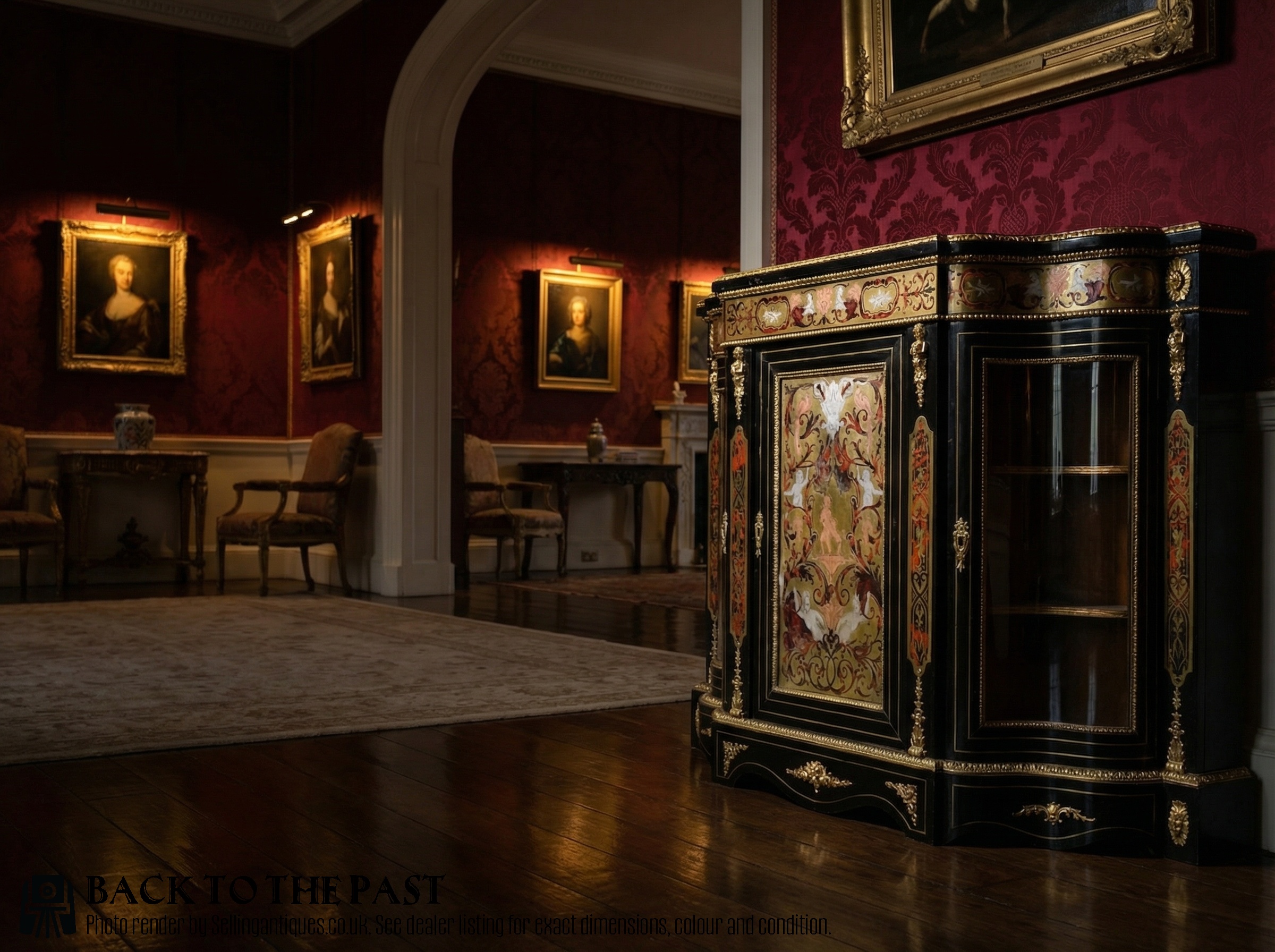
French Boulle Cabinet
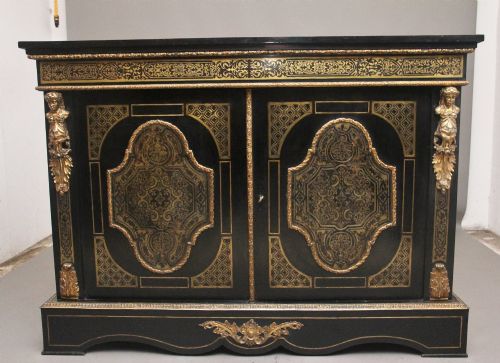
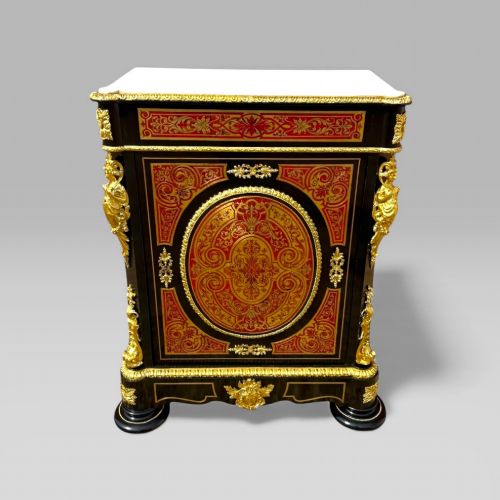
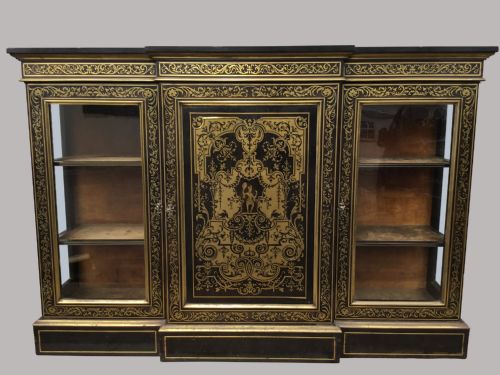
A french boulle cabinet is a statement piece originating primarily in the nineteenth century, encompassing forms such as pier cabinets, credenzas, side cabinets, and display cabinets. Buyers searching this phrase meet nineteenth-century examples executed in Napoleon III, Victorian, and Louis XVI styles.
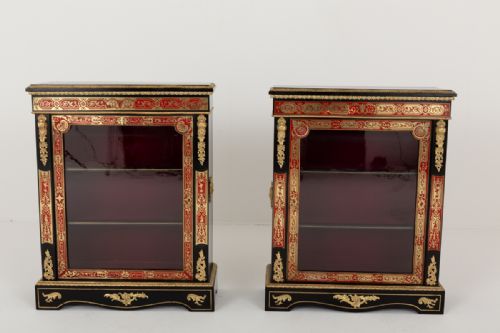
The evidence shows these cabinets appear frequently as pairs, alongside writing desks and bookcases. They serve as focal points in reception rooms, designed to display objects or provide enclosed storage.

Distinctions in Quality
Quality rests in the crispness of the brass and tortoiseshell inlay and the depth of the ebonised finish. Superior pieces exhibit tight joints, refined engraving within the metalwork, and substantial ormlou mounts rather than light castings.
The balance of the proportions and the integration of glass and marble distinguish standard production from exceptional examples. Cabinet work that maintains smooth door alignment and intact marquetry commands greater interest.
French Boulle Cabinet Retail Price Guide 2026
Typical asking prices for french boulle cabinet among the pieces listed under this phrase on Sellingantiques today, from the lower quarter to the upper quarter. They describe what is for sale here now, not the wider market.
Napoleon III and Victorian styles dominate the aesthetic range of these cabinets, alongside occasional Louis XVI revival pieces.
Mathieu Befort
The French Boulle Cabinet Glossary
- Boulle
- A marquetry technique using brass and tortoiseshell, named after the royal cabinetmaker André-Charles Boulle. It creates a rich, mirrored pattern of metallic gleam against dark shell.
- Ormolu
- Gilded bronze used for mounts and decorative trims on furniture. It protects the metal beneath and adds bright highlights to the dark cabinet body.
- Pier cabinet
- A low cabinet designed specifically to fit the wall space between windows. These pieces often feature glass doors for display.
- Credenza
- A long, low side cabinet used for storage and display, frequently fitted with marble tops and multiple doors. In nineteenth-century examples, the serpentine front shape often appears.
- Marquetry
- Decorative veneer work created by fitting together pieces of wood, metal, and shell. It forms elaborate floral or geometric patterns across flat surfaces.
French Boulle Cabinet: Frequently Asked Questions
What is a french boulle cabinet?
A french boulle cabinet is a nineteenth-century storage or display piece decorated with brass and tortoiseshell marquetry. These cabinets often feature ebonised wood frames and ormolu mounts.
They reflect revival styles such as Napoleon III and Louis XVI, serving as prominent decorative furniture in period interiors.
How do I place one in a room?
These cabinets suit reception rooms, drawing rooms, or hallways where their reflective surfaces catch the light. Pier cabinets fit narrow wall spaces, while credenzas anchor longer walls.
Pair them with neutral backgrounds so the brass and tortoiseshell patterns remain the visual focus.
How do I tell periods apart?
Nineteenth-century pieces often align with Napoleon III or Victorian revival aesthetics, utilising ebonised wood and heavy ormolu casting. Louis XVI style pieces show straighter neoclassical lines.
Checking the carcass construction and mount quality helps distinguish original nineteenth-century work from later reproductions.
What maintenance do they require?
Keep the wood and tortoiseshell clean with a soft, dry cloth and avoid harsh chemical polishes. Maintain stable room humidity to protect the delicate veneer and metal inlay.
Protect marble tops from acidic spills and handle ormolu mounts with care during routine cleaning.