

French Bombe Chest
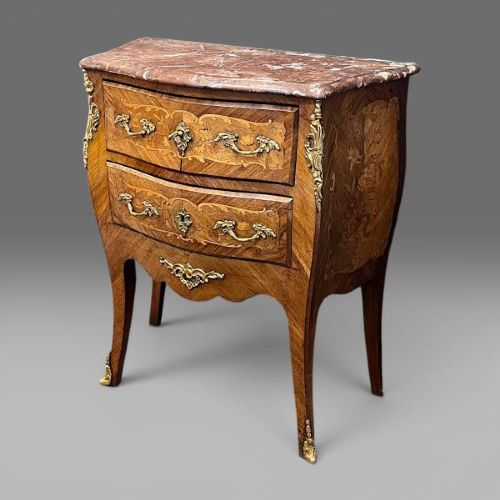
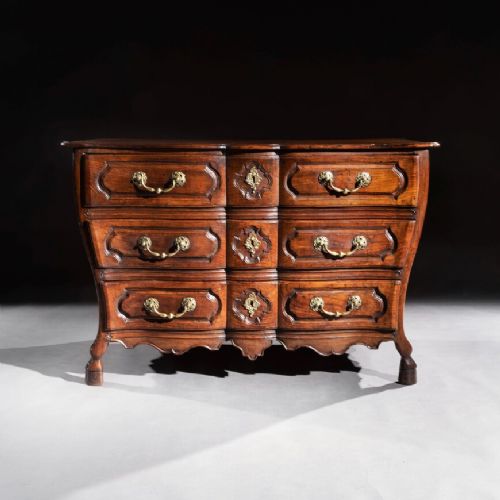
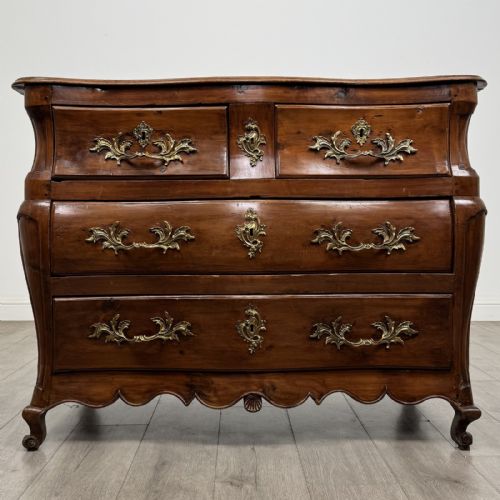
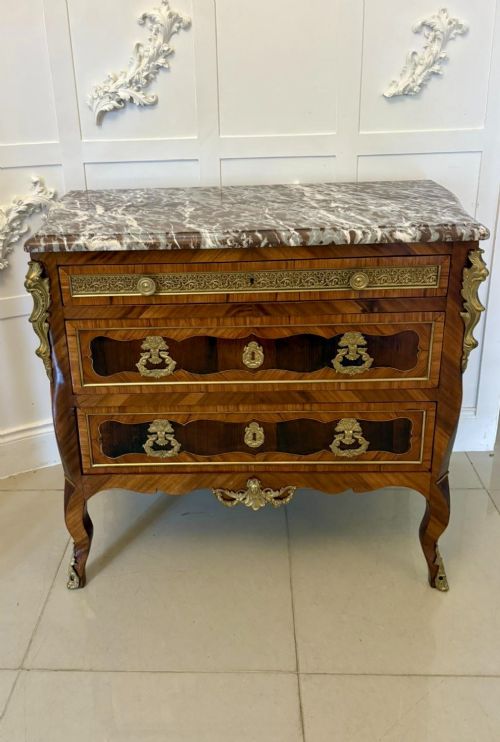
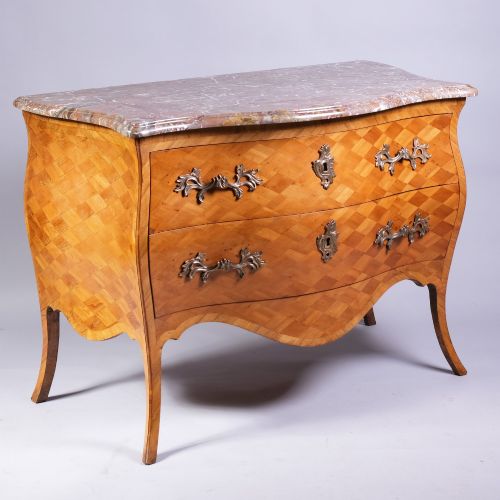
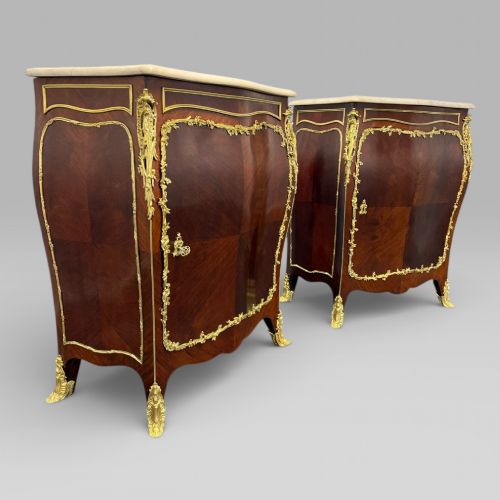
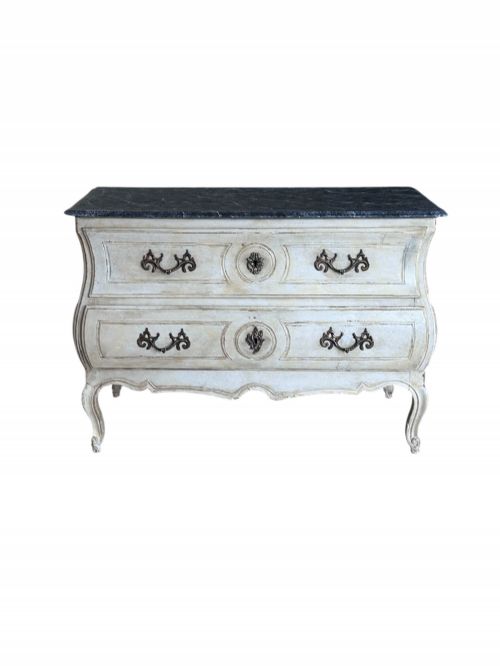
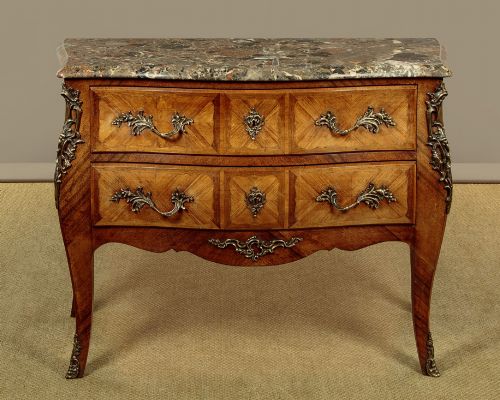
A french bombe chest brings sculptural presence and rich cabinet timbers to a room, defined by its swelling sides.
French Bombe Chest
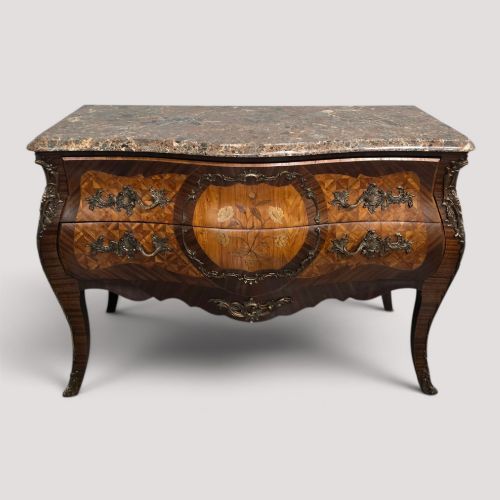
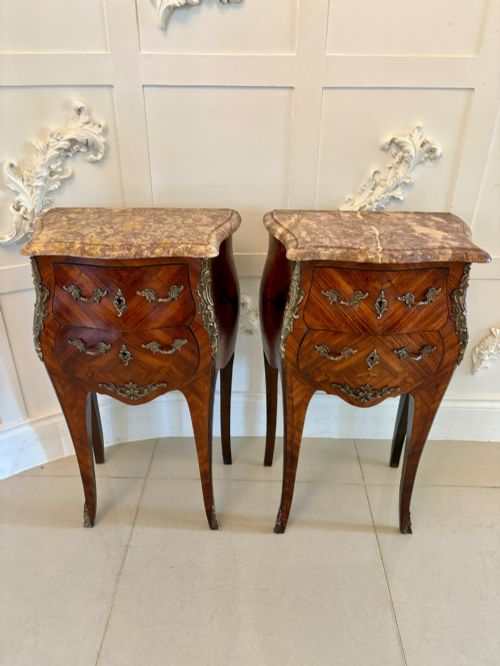
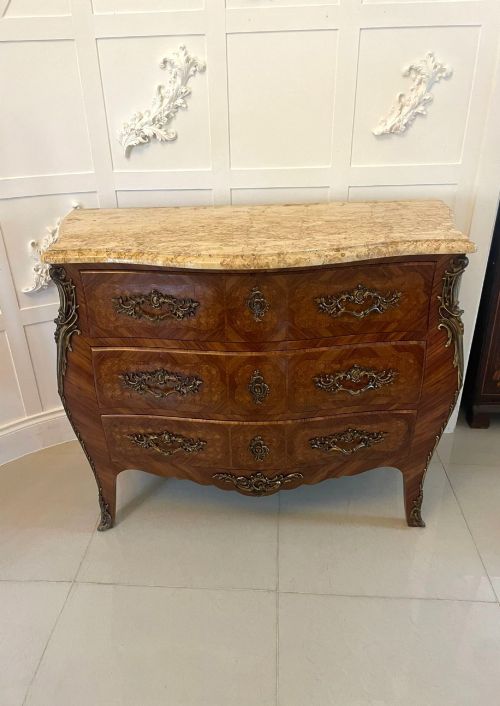
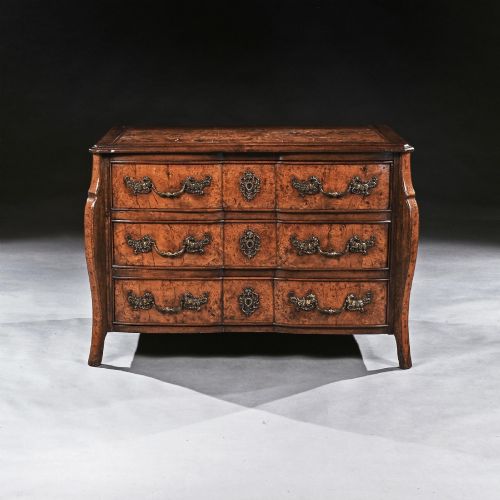
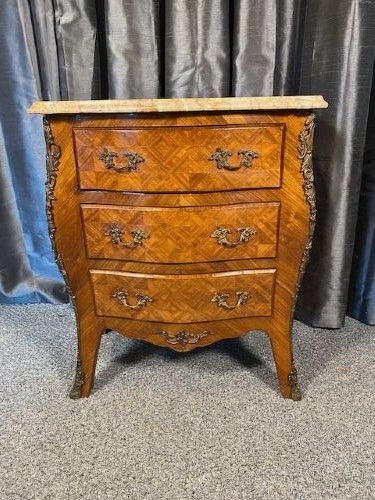
A french bombe chest is a distinctively swelling storage piece, most commonly seen as a commode with drawers or a smaller bedside cabinet. These items span from the eighteenth century through later revival periods, adopting curving profiles and prominent shoulders.
The regional provincial pieces offer simpler wood grains and solid timbers like chestnut or cherry, whilst metropolitan examples showcase intricate veneers and gilt metal mounts. Buyers encounter numerous commodes alongside pairs of matching bedside cabinets.
Origins stretch across French workshops, with occasional Dutch examples appearing, maintaining the characteristic outward sweep of the carcass. The form prioritises dramatic silhouette over straight lines, creating a strong focal point in a bedroom or reception space.
How they were made
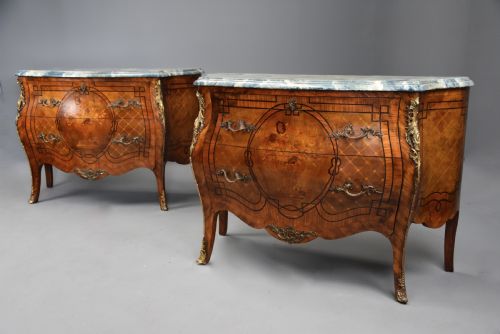
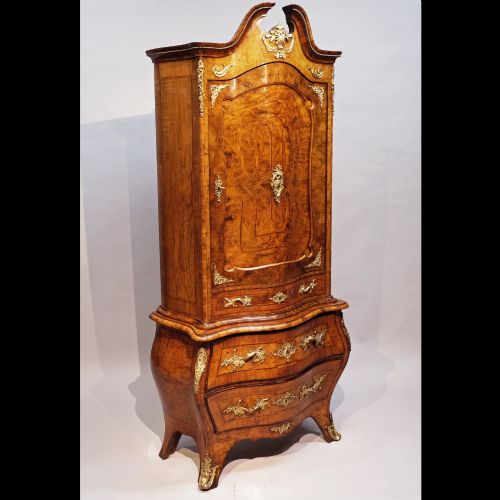
Carcases employ solid foundational woods such as oak or pine, shaped to create the characteristic outward curve before receiving decorative veneers. Cabinetmakers applied kingwood, walnut, and burr elm in precise geometric patterns or floral marquetry.
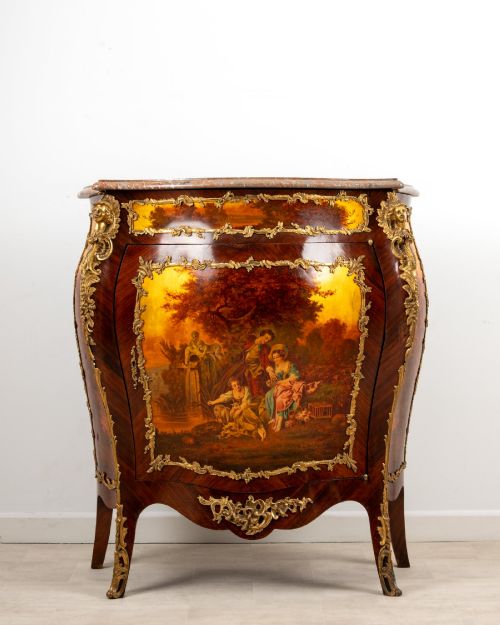
Surface ornamentation relies heavily on cast ormolu and gilt bronze mounts, fitted to corners, handles, and apron centres to accent the swelling contours. Heavy marble slabs, cut to follow the serpentine profile, finish the top surface of many examples.
Vernis Martin finishes and japanned lacquer introduce painted scenes in imitation of oriental lacquer, sealed with multiple layers of clear varnish. Parquetry adds visual texture through small, precisely cut tile arrangements across the drawer fronts.
French Bombe Chest Retail Price Guide 2026
Typical asking prices for french bombe chest among the pieces listed under this phrase on Sellingantiques today, from the lower quarter to the upper quarter. They describe what is for sale here now, not the wider market.
Some provincial makers hid tiny secret compartments behind the serpentine curves, built purely to baffle visiting guests.
What varies in quality
The fineness of the bronze or ormolu mounts dictates much of the visual standard, with superior examples showing crisp chasing and secure original fixings. Substandard pieces often feature cast metalwork that sits loosely or lacks defined detail in the scrolling foliage.
Veneer selection separates standard production from exceptional work, particularly where burr walnut or kingwood grain matches symmetrically across the drawer fronts. Plain timber surfaces rely entirely on the integrity of the cabinetmaking and the crispness of the serpentine shaping.
Internal construction reveals the maker's hand through hand-cut dovetails on drawer linings and the weight of the timber used for secondary woods. The thickness and polish of the fitted marble top also signal the grade of the commission.
E. Kahn
The French Bombe Chest Glossary
- Bombe
- A swelling, outward-curving profile found on the sides and front of eighteenth-century and revival case furniture. This undulating shape requires advanced woodworking skill to maintain structural stability.
- Ormolu
- Gilt bronze mounts applied to furniture edges, feet, and drawer fronts for decorative accent. The alloy is cast and then hand-chiseled to achieve sharp architectural definition.
- Marquetry
- Inlay work using various coloured woods to form pictorial or geometric designs across the surface. Artisans cut thin veneers precisely to fit together within a background panel.
- Parquetry
- Geometric wood patterns created by arranging small rectangular or triangular veneers in repeating grids. This technique provides texture to the drawer fronts and top surfaces.
- Vernis Martin
- A simulated lacquer finish developed in France to mimic Asian export lacquer using resin varnishes. It allowed cabinetmakers to apply colourful painted scenes directly to the wooden carcase.
French Bombe Chest: Frequently Asked Questions
How do I spot a true eighteenth century piece?
Examine the internal construction methods, looking for hand-sawn timber, irregular dovetails, and signs of period wear on the secondary woods. The patination of the wood grain offers clues that match the traditional techniques of the period.
Compare the carcass shape and mount style against documented examples from the same region. Provincial pieces often display simpler execution than court commissions while retaining the same structural silhouette.
What is the difference between Louis XV and Louis XVI styles?
Louis XV furniture relies on asymmetrical curves, cabriole legs, and flowing rococo mounts that emphasise the swelling bombe shape. The overall aesthetic is organic and fluid without straight lines.
Louis XVI pieces introduce a return to classical symmetry, straight tapering legs, and rectilinear framing alongside the curved carcass. The ornamentation shifts towards urns, swags, and geometric classical motifs.
Where should I place a bombe chest at home?
These pieces function well in entrance halls or bedrooms where their sculptural silhouette can be viewed from multiple angles. The fitted marble top provides a durable surface for lamps or decorative objects.
Keep them away from direct heat sources and strong sunlight to protect delicate veneers and polished timber surfaces. Allow sufficient clearance around the swelling sides so the profile remains unobstructed.
Are bedside cabinets matching the main commodes common?
Matching pairs of bedside cabinets occasionally appear alongside larger commodes, sharing identical timber veneers and mount designs. These smaller units repeat the curved profile in miniature form.
Such matching suites usually indicate a later revival period commission rather than an eighteenth-century origin. They provide complementary storage while echoing the primary furniture style.