
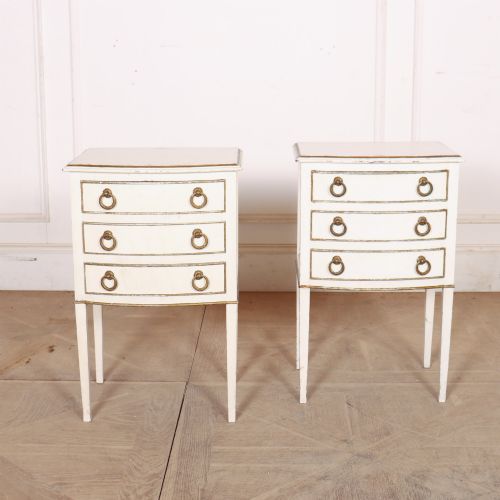
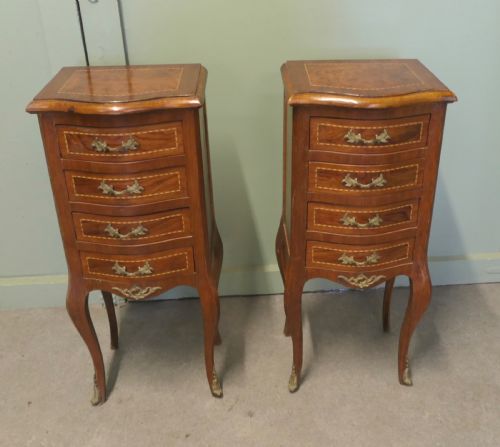
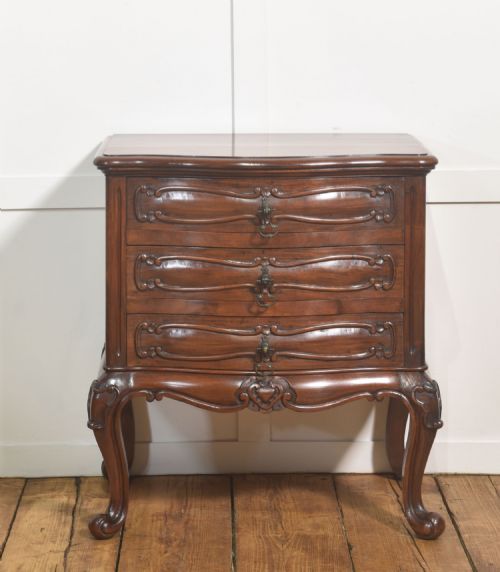
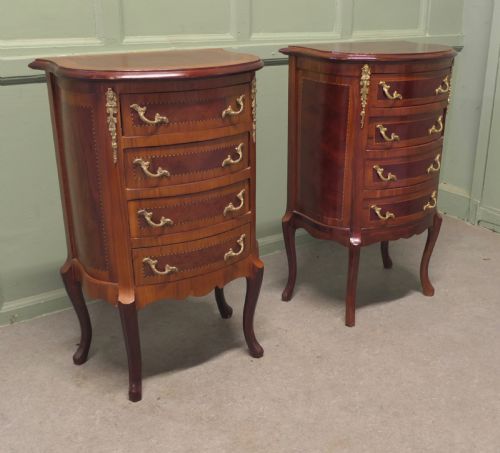
French Bedside Commode
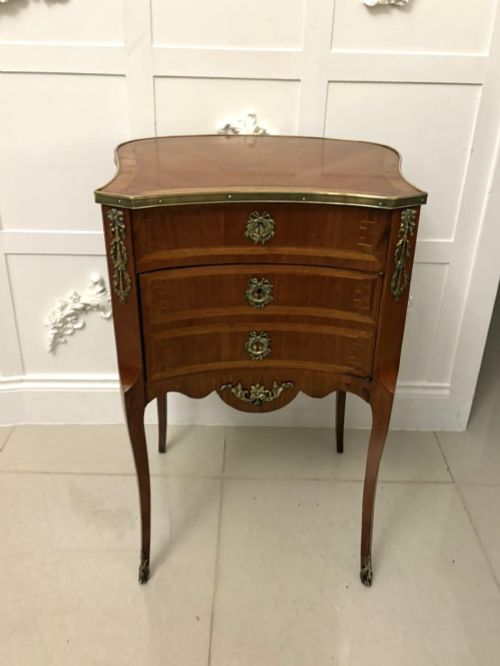
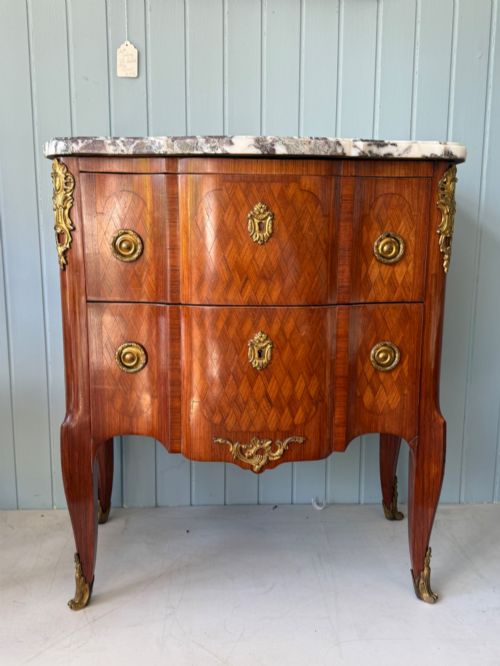
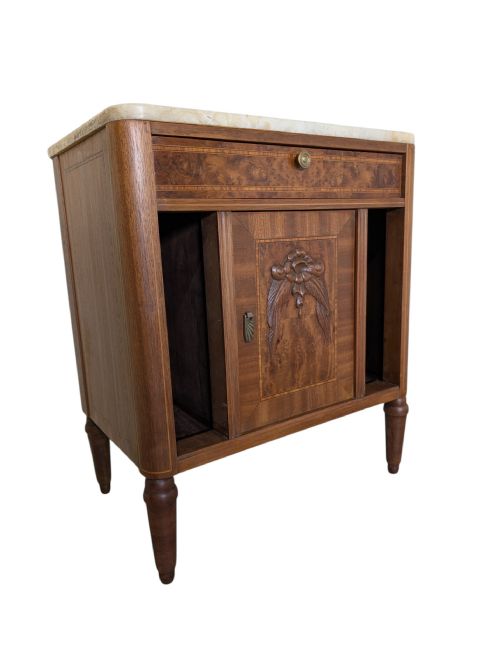
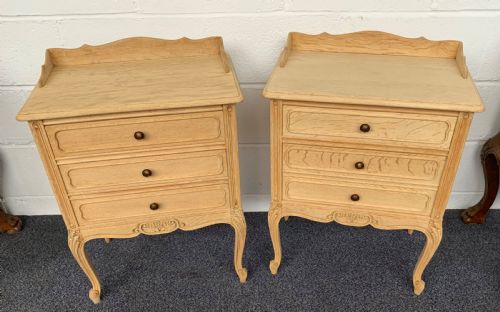
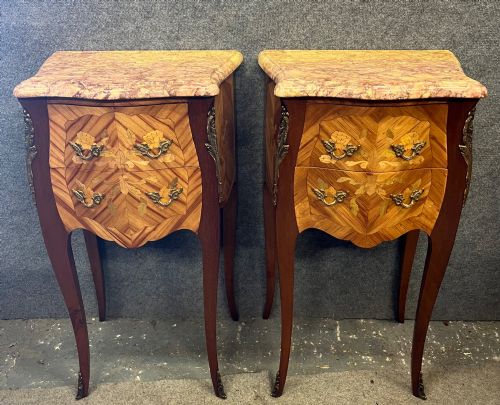
A french bedside commode brings continental proportion and storage to a bedroom, combining marble and walnut in compact forms.
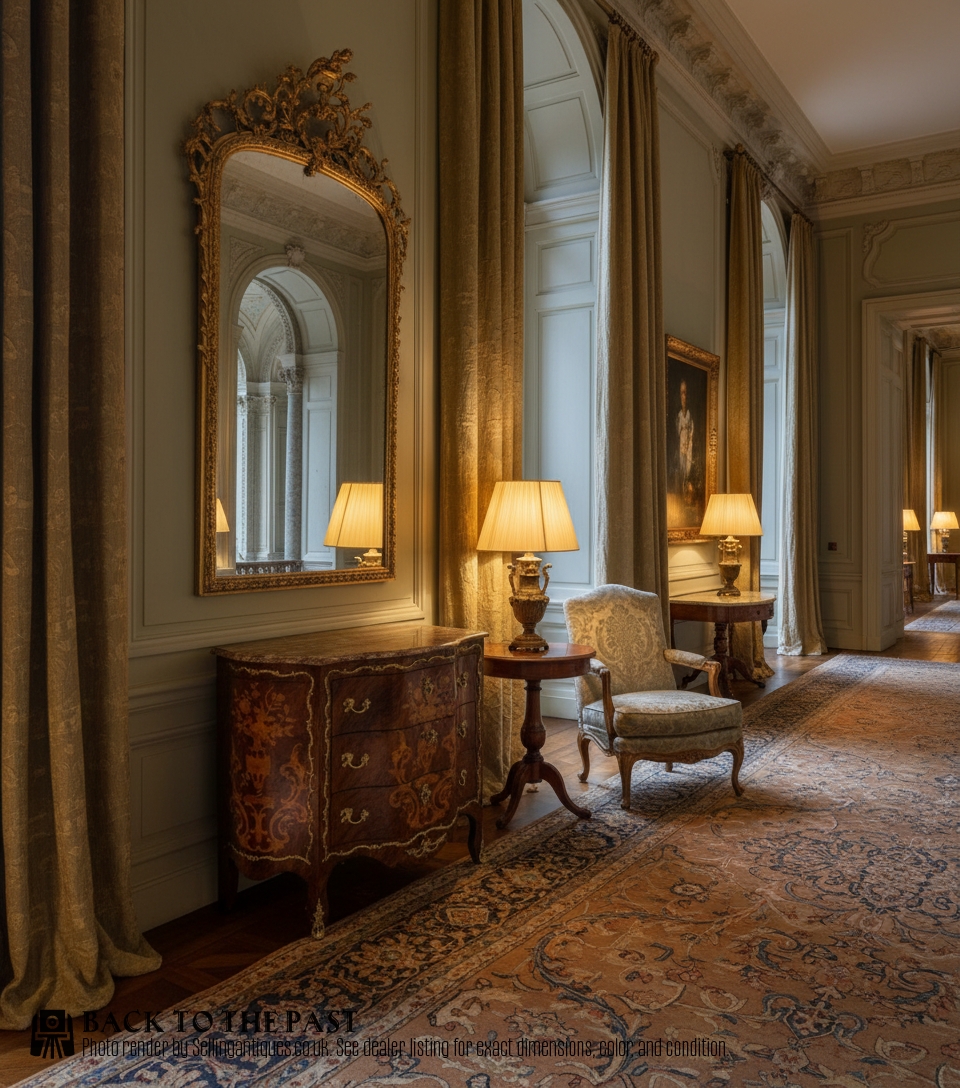
French Bedside Commode
A french bedside commode functions as a compact storage chest or side cabinet designed to sit beside a bed. When buyers search this phrase, they meet low cabinets, chests of drawers, and small side tables originating from the nineteenth and early twentieth centuries.
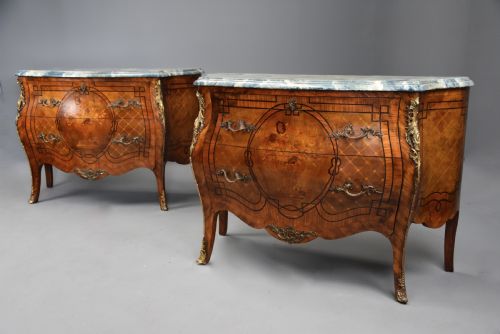
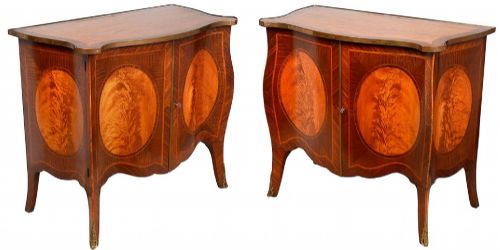
The pieces appearing most frequently on this page adopt the Louis XV style or later revivals, displaying serpentine fronts and bombe profiles. They serve as practical bedside storage while introducing decorative marquetry and polished stone surfaces to a room.
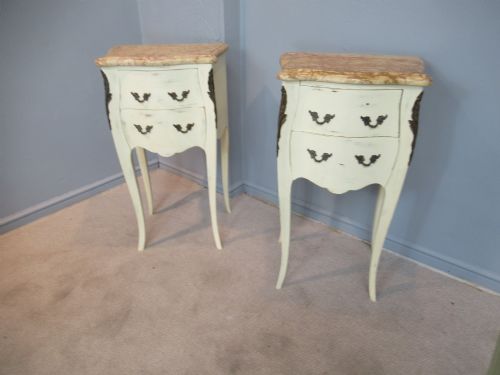
Origins span provincial workshops to urban studios, encompassing walnut and kingwood carcases fitted with marble tops. Buyers encounter single items as well as matched pairs suited for flanking a bed.
How they were made
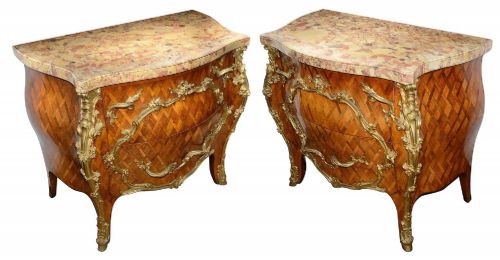
Cabinet makers constructed the carcases using native and exotic timbers such as walnut, mahogany, and kingwood, often applying delicate marquetry and parquetry veneers across the drawer fronts and sides. Carpenters shaped curved bombe profiles by steaming and layering timber over solid pine or oak frames.
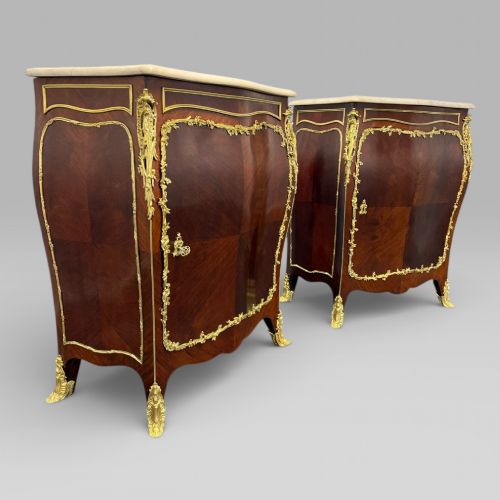
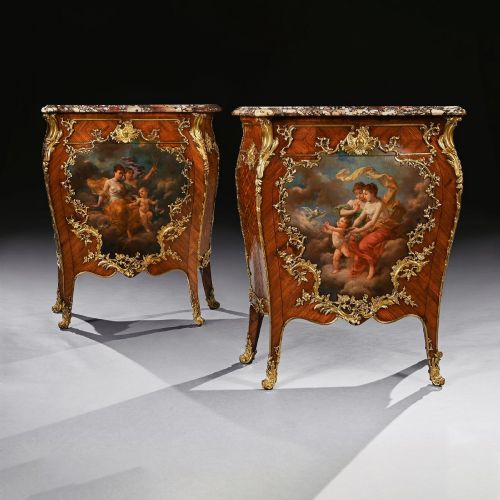
Working surfaces typically feature fitted slabs of marble, secured to the top to provide a durable and water-resistant finish. Mounts in ormolu, gilt bronze, and brass accent the corners, handles, and feet, cast and chased to highlight the rococo contours.
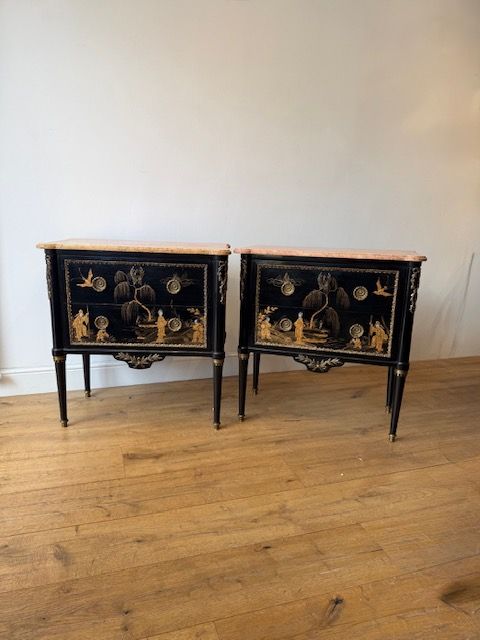
Specialist lacquer techniques such as Vernis Martin and chinoiserie decoration appear on selected cabinets, building up translucent layers of colour and gilt motifs upon the timber substrate.
Listings feature woods including walnut, kingwood, mahogany, rosewood, and satinwood, paired with marble and gilt bronze.
What varies in quality
The standard of a french bedside commode rests upon the precision of the veneer work and the integration of its decorative mounts. Superior examples display continuous, balanced grain patterns across curved drawer fronts without lifting or shrinkage in the marquetry.
Heavier, finely chased gilt bronze or ormolu mounts indicate superior workshop output compared to stamped or thinly plated brass replacements. The weight and selection of the marble top, along with how snugly it follows the serpentine moulding of the carcase, separates standard production from finer commissions.
E. Kahn·Sormani
The French Bedside Commode Glossary
- Bombe
- A bulging, outward-curved commode profile swelling on the front and sides. This exuberant shape characterises much of the eighteenth-century revival furniture.
- Ormolu
- Gilt bronze mounts applied to furniture edges and corners. The technique involves creating an amalgam of gold and mercury fired onto bronze.
- Marquetry
- Inlaid wood veneers arranged to form pictorial or geometric designs. Craftsmen cut contrasting timbers together to ensure tight joints.
- Vernis Martin
- A simulated Japanese lacquer finish developed in France. It uses multiple resin coats to achieve a polished, translucent surface.
- Parquetry
- Geometric patterns formed by small pieces of wood veneer. Squares, triangles, and lozenges create regular tessellations across cabinet surfaces.
French Bedside Commode: Frequently Asked Questions
What is a french bedside commode used for?
These small cabinets provide enclosed bedside storage behind cupboard doors or within stacked drawers, keeping night-time necessities out of sight.
Their flat stone or timber surfaces also accommodate lamps, books, and decorative objects next to the bed.
How do I identify a Louis XV style commode?
Louis XV pieces display sweeping cabriole legs, asymmetrical curves, and prominent serpentine or bombe shaping. Ormolu mounts typically accent the corners and aprons.
Floral marquetry and continuous flowing lines distinguish this aesthetic from later, more rigid classical revivals.
Are marble tops original to these cabinets?
Original marble tops feature heavily in nineteenth-century and revival pieces, shaped exactly to follow the moulded contours of the wooden carcase beneath.
Slight variations in the stone's veining and edge bevelling help confirm period authenticity.
Can I use these commodes as lamp tables?
Their compact height and stable surface make them suitable for use as lamp tables in living rooms and hallways as well as bedrooms.
The marble top provides a practical, heat-resistant base for lighting.