


French Bedroom Armoire
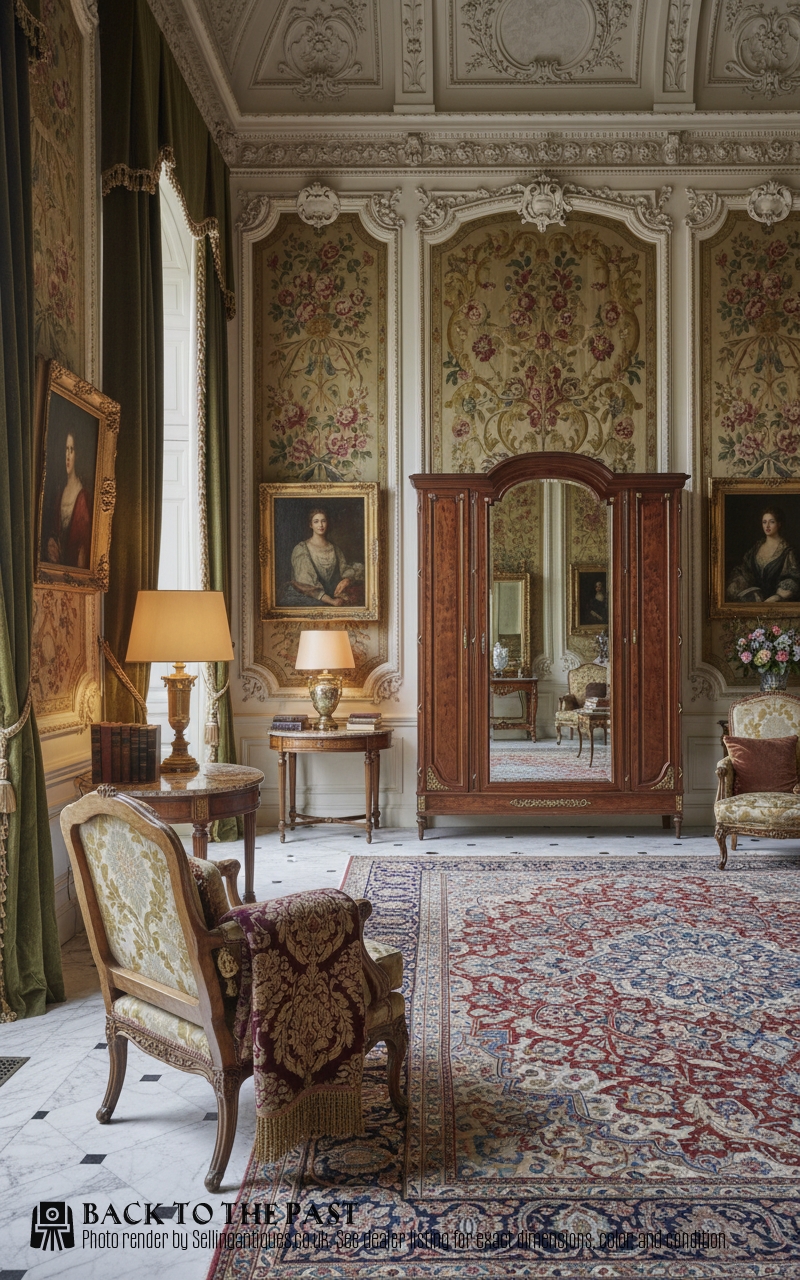
These french bedroom armoire pieces bring generous timber storage and classic continental presence to a sleeping chamber.
French Bedroom Armoire
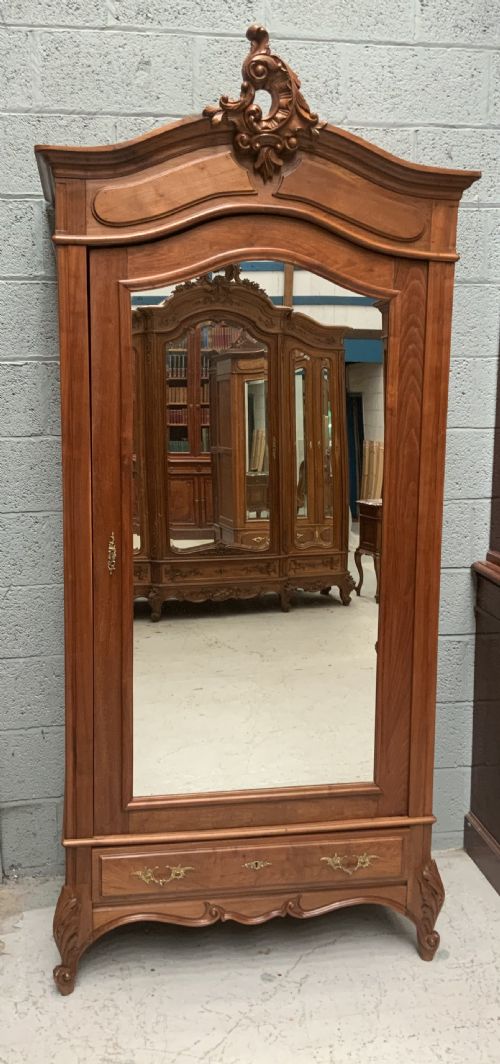
A french bedroom armoire is a large freestanding storage cupboard or wardrobe designed for clothing and linens. You will frequently find these pieces in walnut, mahogany, oak, and painted wood, often spanning the nineteenth century up through the nineteen-thirties.
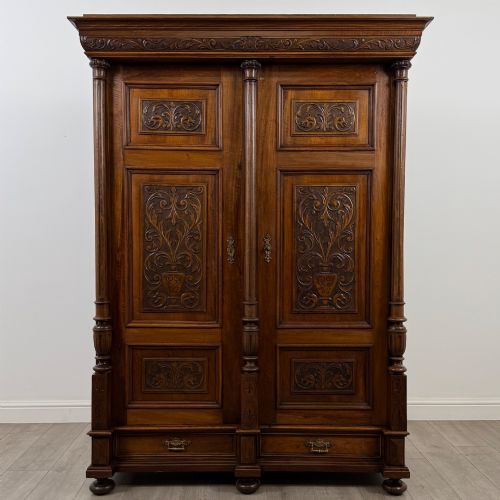
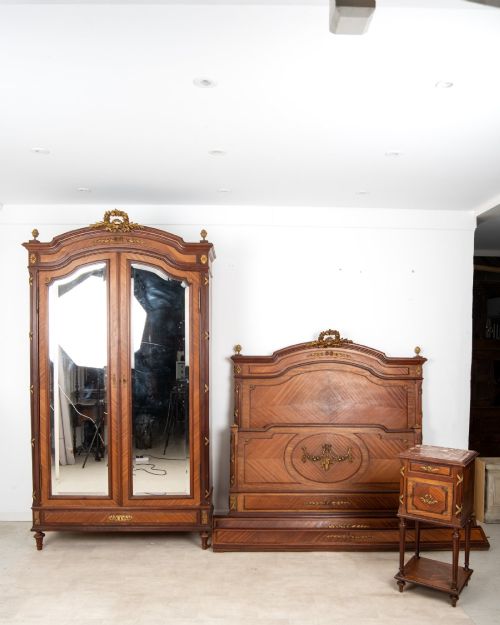
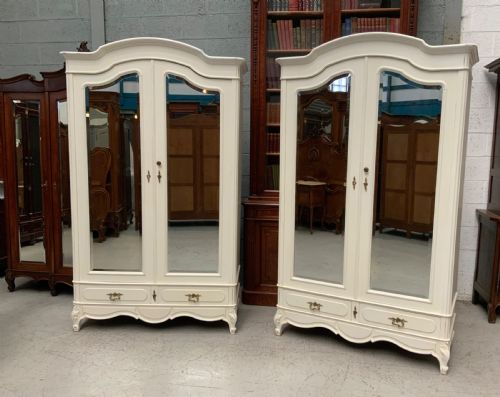
The selection here includes both single and double door formats, sometimes appearing alongside matching beds, dressing tables, and bedside cabinets as part of complete bedroom suites. Forms range from rustic carved oak examples to refined revival pieces with glazed or mirrored doors.
Makers and designers drew on historical vocabularies, producing works in Louis XVI revival, Empire, Louis XV, and provincial country house styles. These substantial wooden cabinets served as the principal clothes storage in European homes before fitted bedroom furniture became common.
Materials and Construction
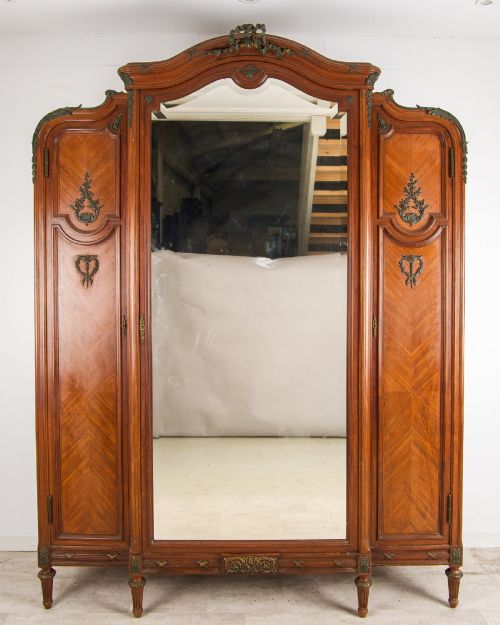
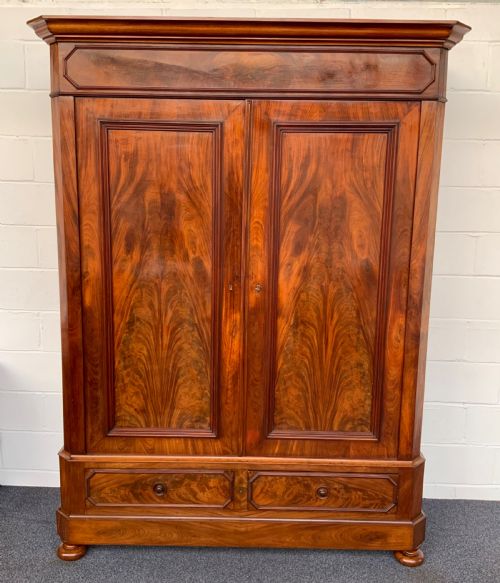
Cabinet makers utilised dense hardwoods including walnut, burr walnut, mahogany, flame mahogany, maple, and oak for the primary carcases and panelled doors. Many examples feature decorative wood veneers arranged in symmetrical patterns or parquetry.
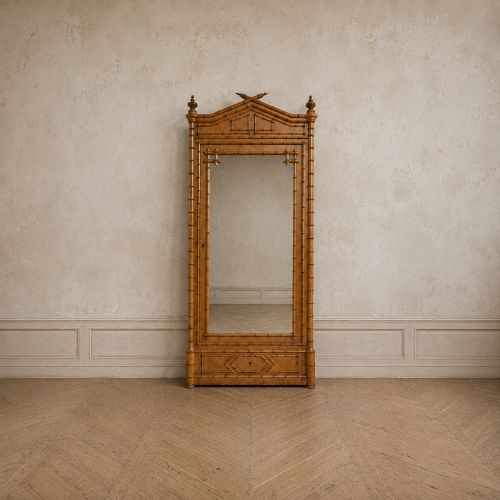
Ornate cast metal elements such as brass and gilt bronze ormolu mounts enhance the doors, cornices, and key escutcheons on revival pieces. Glass mirrors are frequently set into the door panels, while some country house variants utilise painted surfaces or faux bamboo moulding in bird's eye maple.
Periods represented span from the eighteenth century through the Victorian era and the Art Deco period of the nineteen-twenties.
Judging Quality
The distinction between standard pieces and the finest examples lies in the selection of timber veneers and the crispness of the hand-carved ornamentation. Superior armoires display carefully matched grain patterns, such as flame mahogany or burr walnut, alongside finely chased gilt bronze ormolu mounts rather than plain cast hardware.
Structural integrity also separates grades, with top tier pieces exhibiting robust joinery, heavy panelled doors that hang true on their original brass hinges, and well-executed parquetry or marquetry inlay. The integration of high-grade mirrored glass and the presence of signed maker plaques indicate superior workshop production.
JEAN FAURE·Mercier
The French Bedroom Armoire Glossary
- Ormolu
- Gilded bronze mounts applied to furniture for decorative effect. This technique was widely utilised on nineteenth century French revival pieces.
- Armoire
- A large upright cupboard or wardrobe used for storing garments. They typically feature panelled doors enclosing hanging space or shelving.
- Parquetry
- Geometric wood mosaic work used for decorative veneer surfaces on furniture panels. Master craftsmen arranged contrasting timber tones to create patterns.
- Linen Press
- A tall storage cupboard historically used for holding household linen. Interior configurations often combine sliding trays with lower drawers.
- Faux Bamboo
- Wood turned and carved to resemble natural bamboo stalks. This decorative finish appeared on late nineteenth and early twentieth century bedroom furnishings.
French Bedroom Armoire: Frequently Asked Questions
What is a french bedroom armoire?
A french bedroom armoire is a large wooden wardrobe or storage cupboard originating from continental Europe. These freestanding cabinets provide enclosed hanging space and shelving for garments.
They serve as the main clothes storage furniture in traditional bedrooms, often featuring mirrored doors and decorative wood veneers.
How do I choose the right size?
Consider both your available floor space and ceiling height before selecting an armoire, as these pieces are typically tall and heavy. Measure doorways and stairwells to ensure clearance for delivery.
Single door models suit tighter spaces, while grand double door armoires and multi-piece bedroom suites require substantial wall space.
Are these wardrobes easy to dismantle?
Many antique armoires were constructed with knock-down frame systems using wooden pegs or internal bolts so they could be moved between rooms. Historic assembly methods vary by period and workshop.
It is advisable to check how each specific cabinet is joined together before attempting relocation.
How do I care for the wood?
Maintain the timber by keeping the armoire away from direct heat sources and strong sunlight, which can dry out veneer and polish. Dust regularly with a dry cloth.
Occasional applications of appropriate furniture wax help preserve polished mahogany, walnut, and oak surfaces without building up residue.