


French Vintage Clothes Cupboard
These French vintage clothes cupboard pieces are robust timber wardrobes and armoires built to store apparel with character and utility.
French Vintage Clothes Cupboard
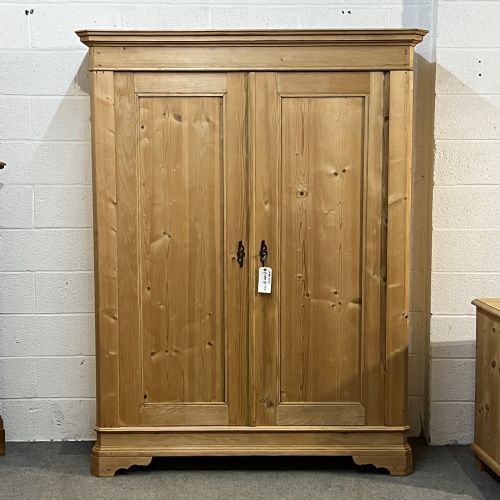
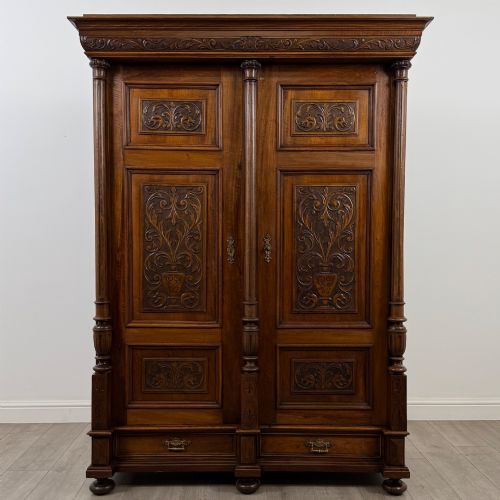
When you search for a french vintage clothes cupboard, you are looking at substantial storage furniture originating from continental workshops during the nineteenth and early twentieth centuries. These pieces take the form of tall armoires and wardrobes designed to house garments securely behind large doors.
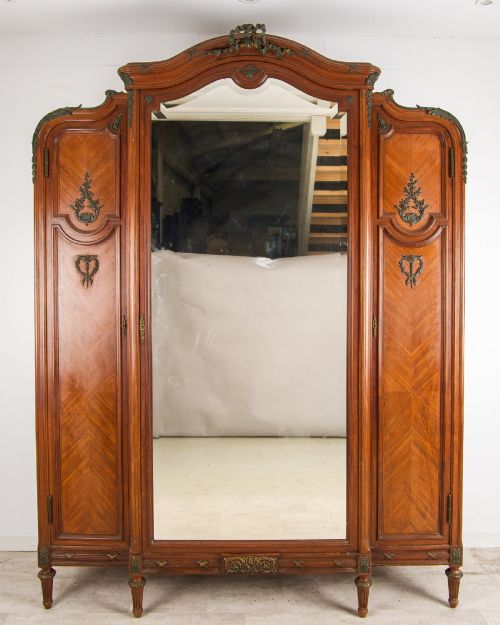
The versions you are most likely to meet on this page span several decades from the eighteen-hundreds up to nineteen-twenty. They arrive in regional country styles as well as more formal Louis XVI designs, offering sturdy timber construction for daily domestic use.
How they were made
Cabinet makers constructed these wardrobes primarily using solid timbers such as oak, pine, walnut, and mahogany. These woods were chosen for their structural strength and capability to be hand-carved into panelled doors and decorative cornices.
Metal components played a practical and ornamental role in the assembly, incorporating brass, iron, and gilt bronze ormolu mounts. Glass and mirror glass were frequently integrated into door panels, while some functional examples utilised flat pack designs for simpler transport.
Materials documented across the available inventory include oak, pine, walnut, mahogany, brass, iron, and mirror glass.
What varies in quality
The distinction between standard examples and superior pieces rests largely on the depth of hand-carving and the choice of primary timber. Heavier hardwoods like mahogany and walnut, paired with gilt bronze ormolu mounts, mark out the more ambitious workshops.
Construction methods also separate the grades, from simple country pine builds to complex breakfront oak frames and mirrored doors. The refinement of the proportion and the crispness of the original painted finishes or carved mouldings determine the standing of each piece.
The French Vintage Clothes Cupboard Glossary
- Armoire
- A tall wardrobe or cupboard used for hanging clothes or storing garments. They typically feature large single or double doors enclosing shelving or hanging space.
- Ormolu
- Gilt bronze mounts applied to furniture for decorative effect. This technique was favoured in formal French cabinet making during the nineteenth century.
- Breakfront
- A piece of furniture having a central section that projects forward from the side sections. This architectural feature adds visual depth to large timber wardrobes.
- Flat Pack
- Furniture designed to be dismantled into sections for ease of transport. Several early examples utilised this practical method before modern mass production.
French Vintage Clothes Cupboard: Frequently Asked Questions
What is an armoire?
An armoire is a large freestanding cupboard traditionally used for storing garments and linens. These timber pieces provide deep internal space behind panelled doors.
In period interiors they served as the primary wardrobe before fitted closets became standard. Today they function as statement storage units in bedrooms and hallways.
How do I date these wardrobes?
Dating relies on observing the timber species, construction joints, and stylistic details such as carved motifs. Nineteenth century pieces often display hand-cut joinery and heavy regional carving.
Later items from the nineteen-tens and twenties introduce simpler breakfront lines or bleached finishes. Comparing the brass hardware and mirror glass bevels helps narrow the production era.
Are these cupboards easy to move?
Many of these large wooden pieces were originally constructed to be dismantled for transport. Some historical examples even featured flat pack designs to navigate narrow stairs.
Checking the internal assembly reveals whether the panels separate using traditional peg or slot systems. Professional removal is recommended for solid hardwood versions.
Where should I place an armoire?
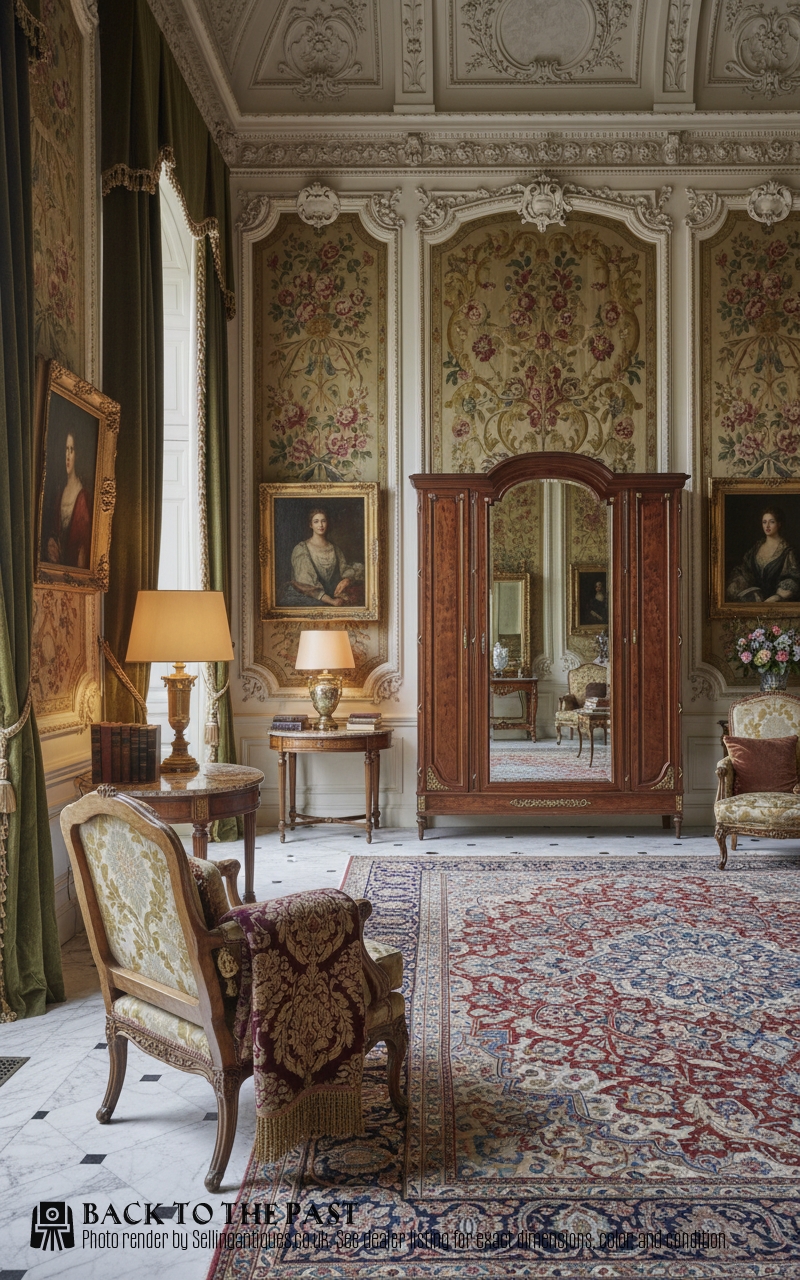
These tall cupboards require adequate wall space and sufficient ceiling clearance to accommodate their grand cornices. Bedrooms and large dressing rooms offer the most practical setting for daily clothing storage.
Placed in a hallway or landing, they provide a striking focal point while swallowing coats and bulky items. Ensure the doors can swing open fully without obstruction from nearby furniture.