



French Art Deco Seating
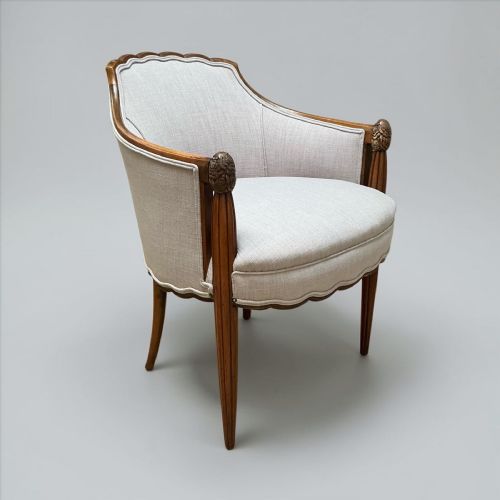
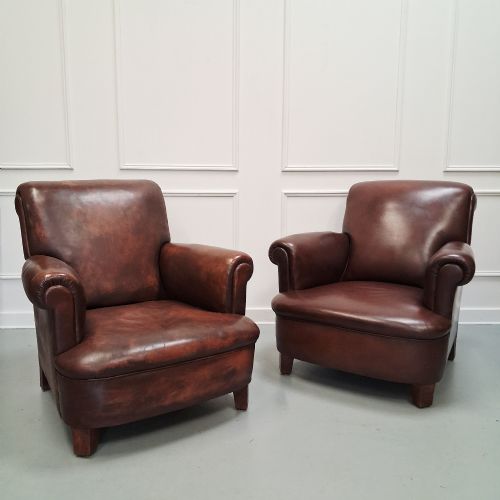
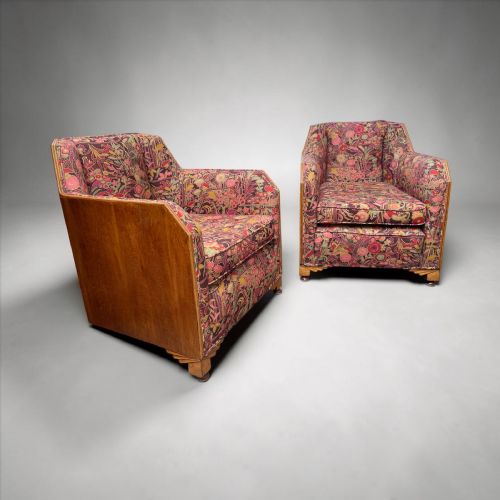
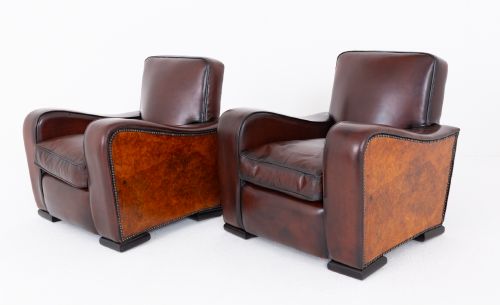
French art deco seating brings substantial leather club chairs and armchairs into a room, offering deep, low-slung comfort rooted in the 1920s and 1930s.
French Art Deco Seating
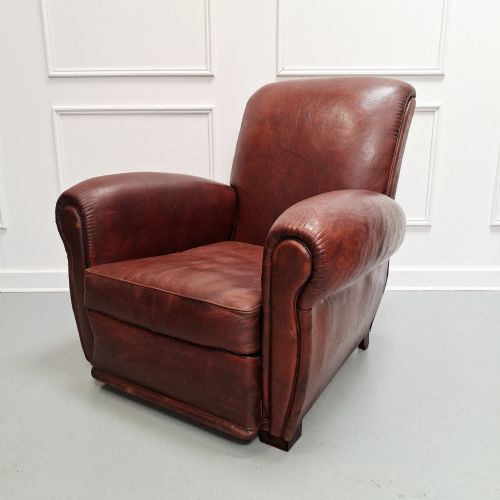
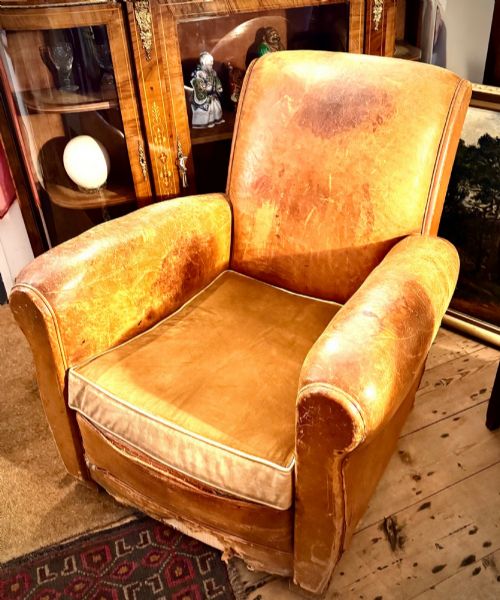
French art deco seating primarily encompasses club armchairs upholstered in leather, frequently appearing in pairs. These pieces define an era of robust lounge furniture designed for domestic relaxation during the 1920s and 1930s.
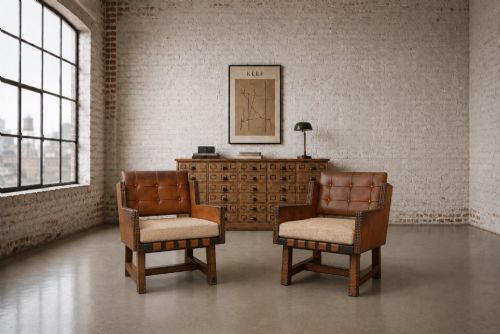
The selection centres heavily on armchairs rather than sofas or dining chairs. Many examples feature button-back detailing or sheep's hide upholstery, reflecting the distinctive aesthetic of the period.
Materials and construction
Makers constructed these frames from timber, hardwood, and walnut to provide sturdy internal skeletons capable of supporting heavy upholstery. Brass components occasionally appear as decorative accents on these substantial chairs.
Leather and fabric dominate the exterior surfaces, with sheep's hide and velvet used to create tactile, inviting textures. Traditional button-back techniques secure the upholstery firmly to the internal padding.
A flapper in her nuisette once watched over the room from an oil canvas while the leather club chairs held court.
Distinctions in quality
The choice of covering material dictates much of the visual character, ranging from smooth cigar brown leather to textured sheep's hide and soft velvet. Walnut and other hardwoods provide varying degrees of warmth and grain definition in the exposed woodwork.
Proportions shift between standard armchairs and larger club chairs, altering the physical presence of the seating within a space. The integration of button-back detailing and brass fittings introduces subtle variations in craftsmanship.
Berthe Savigny
The French Art Deco Seating Glossary
- Club chair
- A deep, upholstered armchair designed for lounging. These chairs typically feature low backs and broad arms.
- Button-back
- An upholstery technique where buttons are pulled tight through the padding and secured to the frame. This creates a diamond pattern and keeps the filling evenly distributed.
- Sheep's hide
- A natural leather finish retained on pelts. It offers a softer, more textured hand than standard treated leathers.
- Walnut
- A dense, dark timber utilised for exposed frames. It provides rich grain patterns characteristic of quality period furniture.
- Hardwood
- Dense lumber sourced from broad-leaved trees. It forms the robust internal structure necessary for heavy armchairs.
French Art Deco Seating: Frequently Asked Questions
What defines French art deco seating?
These pieces are characterised by sturdy wooden frames, deep leather upholstery, and low-slung proportions designed for comfort. They emerge primarily from the 1920s and 1930s.
The aesthetic favours clean lines and substantial volumes over ornate carving, making them practical centrepieces for modern interiors.
Are these chairs comfortable for daily use?
The generous proportions and deep padding make them exceptionally well-suited for relaxed daily seating. Their robust construction supports extended periods of lounging.
Most examples use durable leather or fabric coverings that handle regular sitting well when properly maintained.
How do I care for leather club chairs?
Leather surfaces require regular conditioning to prevent drying and cracking over time. Keeping them away from direct heat sources preserves the hide.
Gentle cleaning with appropriate leather balms maintains the suppleness and deep brown tones characteristic of period club chairs.
How do I date these armchairs?
Dating relies on examining the construction methods, framing timbers, and styling cues associated with the 1920s and 1930s. Walnut frames and specific leather finishes align closely with this era.
Comparing the proportions and upholstery techniques against documented pieces from the period helps confirm the decade of manufacture.