




French Art Deco Glassware
French art deco glassware captures the bold geometry and tactile surfaces of the interwar years through moulded, frosted, and opalescent vessels.
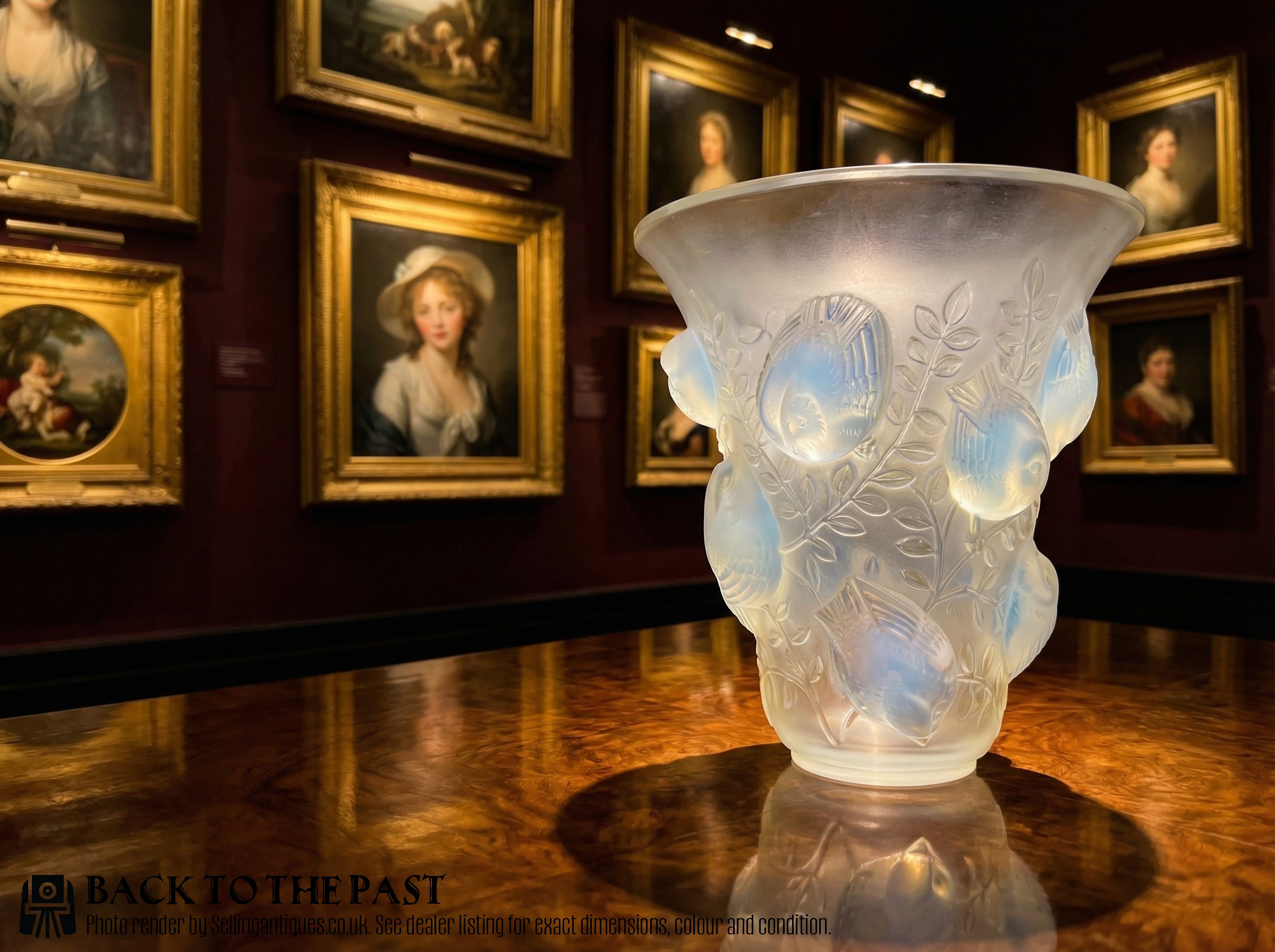
French Art Deco Glassware
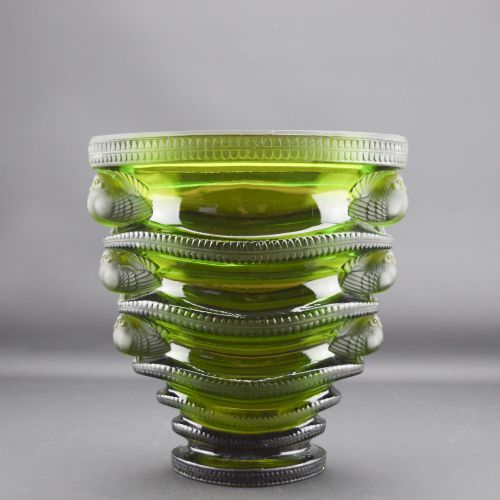
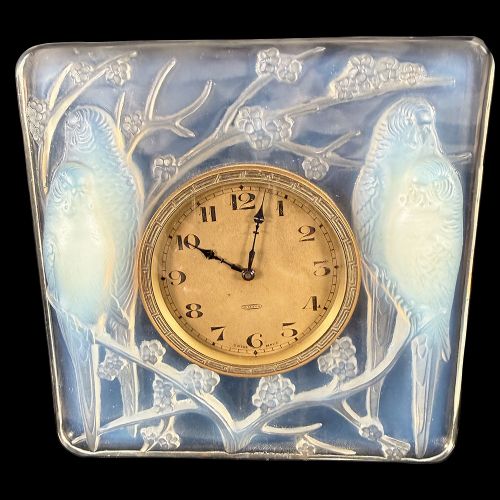
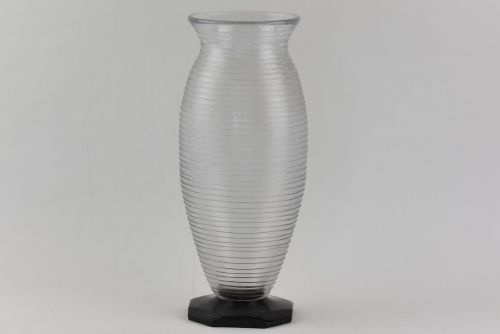
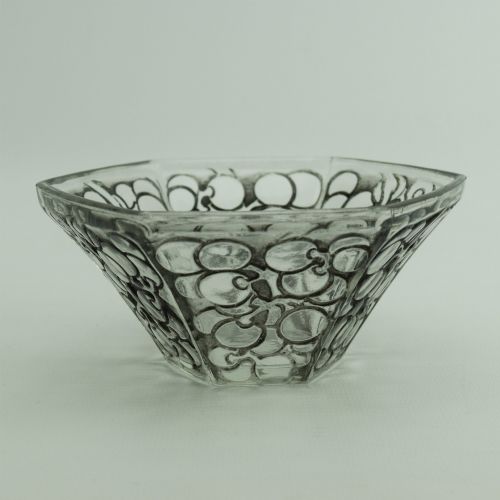
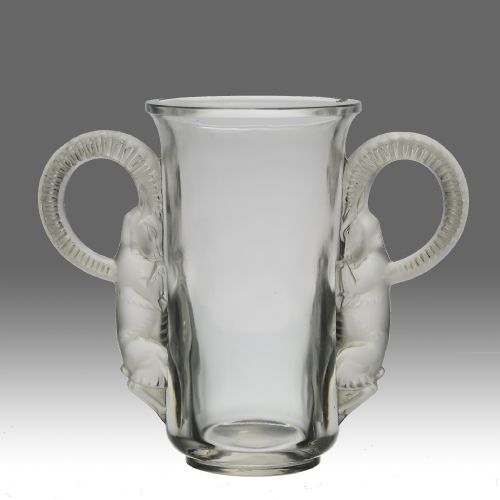
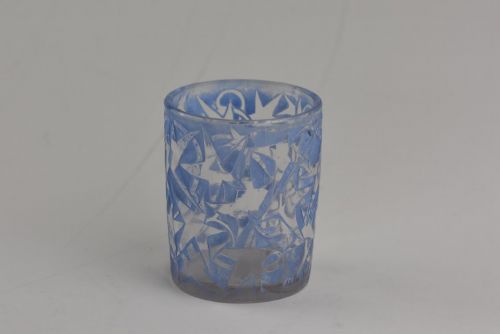
French art deco glassware encompasses vases, bowls, plates, clocks, and drinking vessels produced during the 1920s and 1930s. These pieces bridge utilitarian function and sculptural ornament, often displaying stylised natural motifs such as birds, flowers, and foliage.
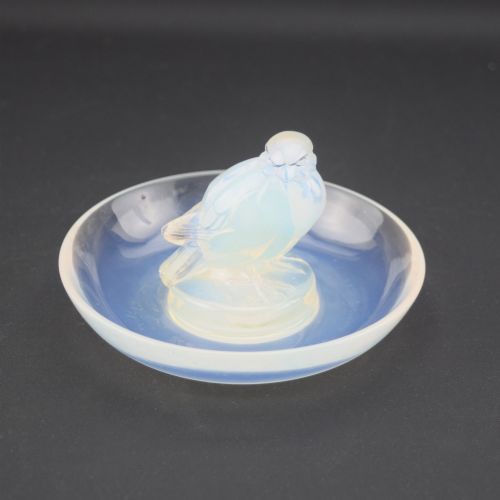
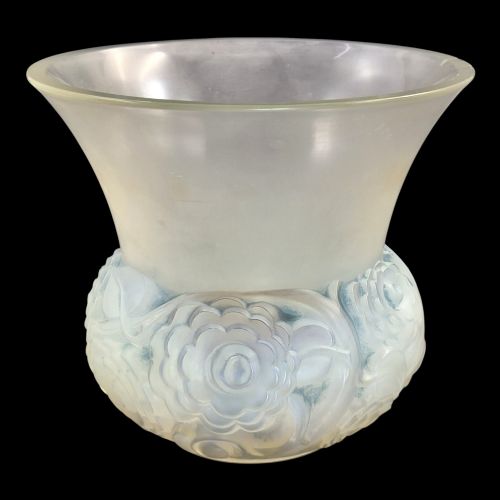
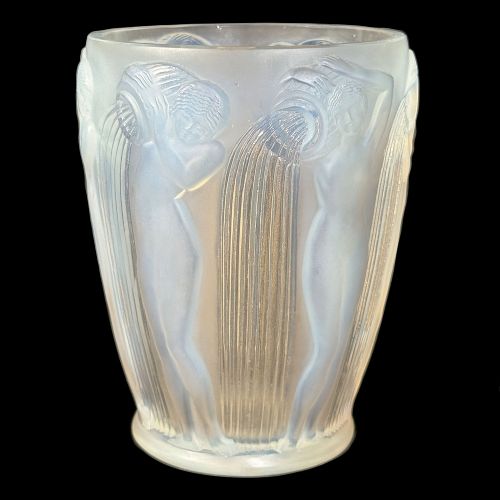
The objects on this page centre heavily on moulded and pressed production techniques. Buyers frequently encounter opalescent glass that catches milk-blue light alongside clear and frosted surfaces enriched with staining.
How they were made
Makers utilised press-moulding and blow-moulding techniques to achieve deep relief and substantial weight. Molten material was forced into metal or multi-part moulds to shape complex motifs like water carriers, love birds, and trailing vines.
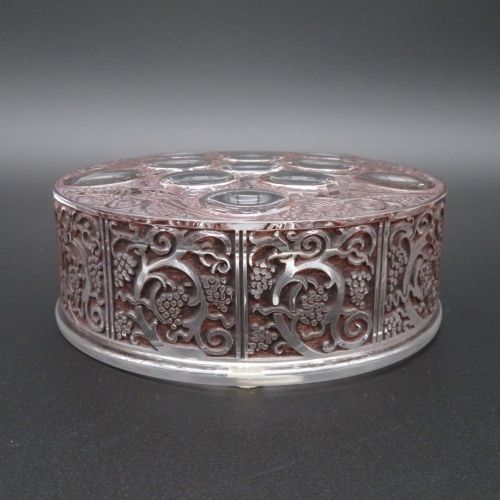
Post-moulding enrichment involved acid-etching, cameo layering, engraving, and the application of sepia, blue, or green stains into recessed details. Wrought iron mounts were occasionally integrated to frame the glass bodies.
French Art Deco Glassware Retail Price Guide 2026
Typical asking prices for french art deco glassware among the pieces listed under this phrase on Sellingantiques today, from the lower quarter to the upper quarter. They describe what is for sale here now, not the wider market.
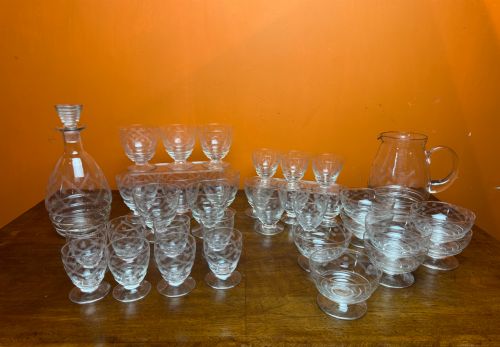
Forms range from drinking glasses and decanters to perfume bottles, cigarette holders, and ashtrays.
What varies in quality
Quality rests upon the crispness of the moulded relief and the subtlety of the chemical staining. Superior examples maintain sharp articulation in fine details like feathers and petals without losing structural integrity.
The interplay of light within the opalescent or frosted material dictates visual success. Pieces that diffuse light evenly and retain well-applied surface patination stand apart from flat or muddy castings.
Rene Lalique·Schneider·Daum·Etling·Le Verre Francais
The French Art Deco Glassware Glossary
- Opalescent glass
- Glass containing agents that cause it to milky-blue in transmitted light and warm amber in reflected light. This optical property defines many interwar decorative vessels.
- Frosted glass
- A matte surface finish achieved through acid-etching or sandblasting. It softens the silhouette and accentuates high-relief moulded designs.
- Cameo glass
- Glass formed by fusing multiple layers of different colours and carving away the exterior layer to reveal the design. This technique creates high-contrast pictorial decoration.
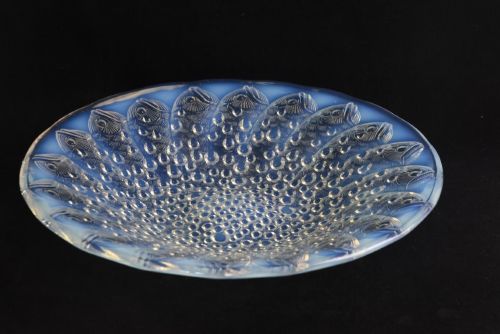
- Coupe ouverte
- An open bowl or shallow vessel form. These pieces often feature wide rims decorated with repeating botanical or animal motifs.
- Pressed glass
- Molten glass shaped by a mechanical plunger pressed into a metal mould. It allowed for rapid mass production of deeply patterned tableware.
French Art Deco Glassware: Frequently Asked Questions
What is opalescent glass?
Opalescent glass contains chemical additives that scatter light, creating a milky blue or white appearance across raised surfaces while glowing warm amber against direct light. This dual-tone effect was heavily utilised during the interwar period to give flat moulded glass a sense of depth and movement.
In practical terms, pieces with strong opalescence change character depending on the room lighting and background colours. It remains one of the most identifiable signatures of period French tablewares and decorative objects.
How were coloured stains applied?
Colours such as blue, sepia, or green were hand-painted into the recessed etched lines and textured backgrounds of frosted or clear vessels. Excess pigment was then wiped away, leaving the stain trapped only in the low points to define the motif.
This staining highlights intricate details like feathers, leaves, and geometric borders against the pale glass body. Over decades of handling, original staining often softens or requires careful preservation during cleaning.
Are these pieces functional?
Many items were designed for daily utility, including decanters, drinking glasses, powder boxes, and plates. Others served purely decorative roles as mantel clocks, sculptural vases, and cabinet bowls.
While robustly made from thick pressed crystal or glass, functional pieces require gentle hand washing to protect delicate surface staining and frosted finishes. Modern dishwashers can permanently damage the soft acid-etched textures.
How do I spot a pressed piece?
Pressed pieces often exhibit thick walls, heavy weights, and thick seam lines where multi-part metal moulds met during production. The interior contours frequently mirror the exterior relief rather than remaining smooth.
This technique permitted makers to achieve complex high-relief sculptures at scale. Examining the underside or interior helps reveal the moulding marks left by the interwar manufacturing process.