




French Academic Art
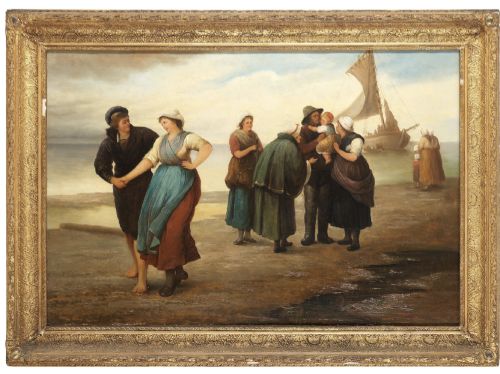
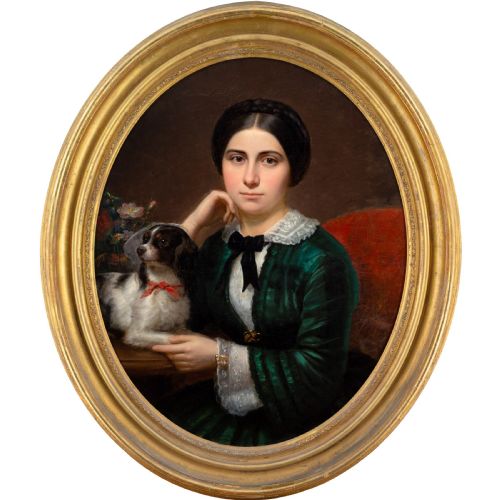
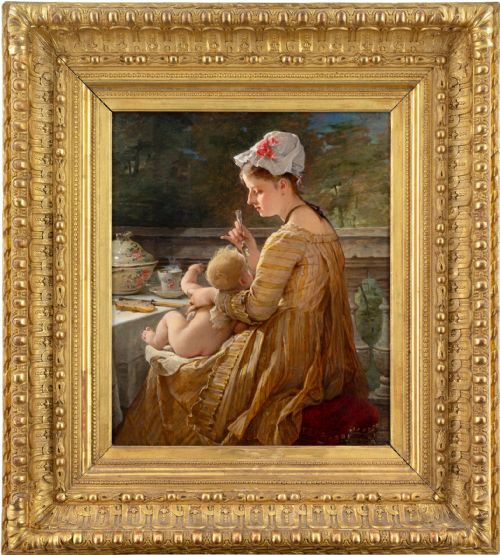
French academic art brings formal rigour and mythological drama into interiors through structured oils, detailed drawings and patinated bronzes.
French Academic Art
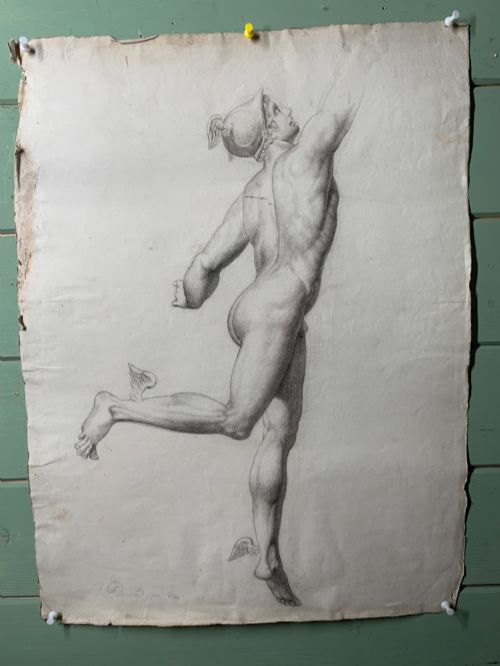
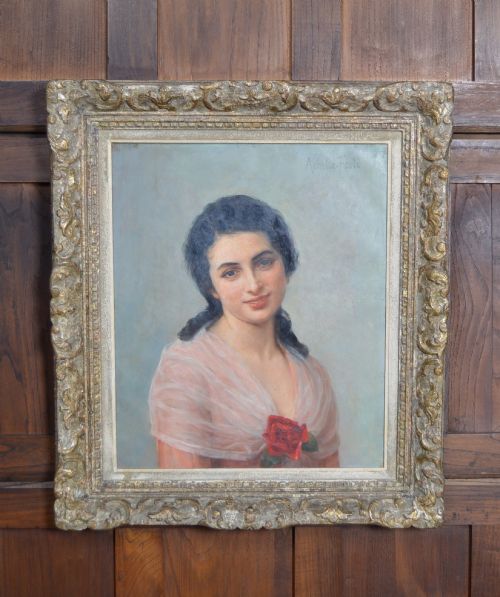
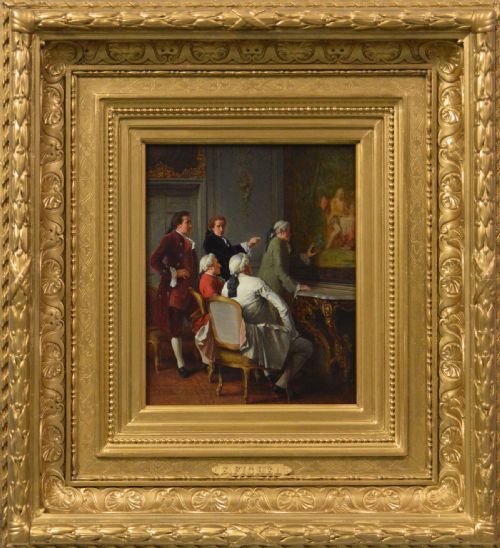
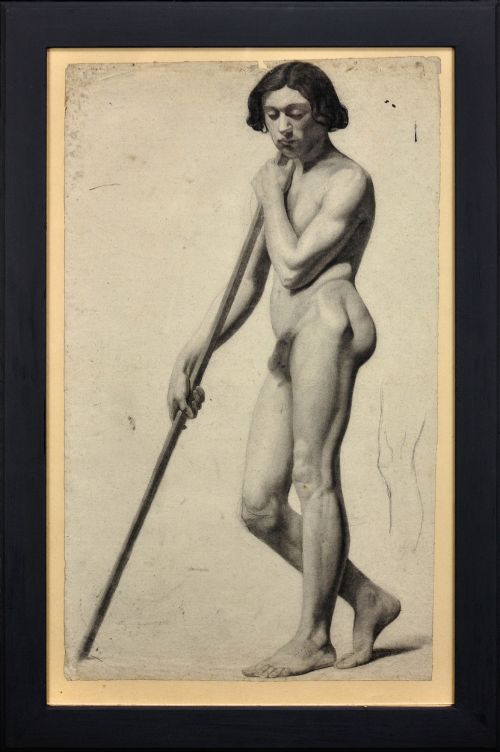
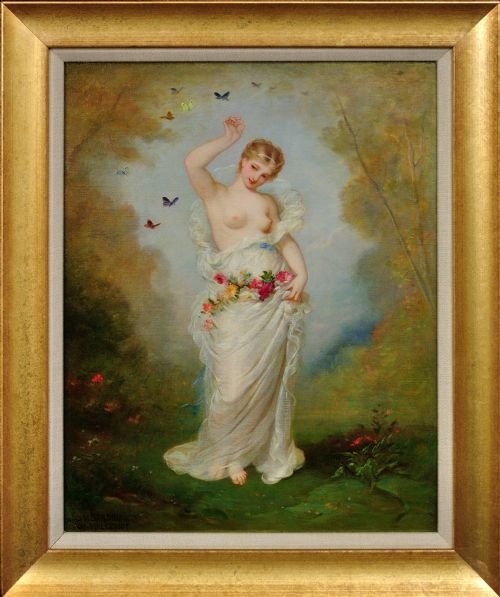
Most pieces date from the mid-to-late nineteenth century, spanning historical genre scenes, meticulous life studies of the nude, and portraits rendered in Neoclassical or Academic Realist styles.
Forms range from grand framed canvases down to intimate table lamps incorporating bronze figures, reflecting the diverse applications of academic training in fine and decorative arts.
Materials and production methods
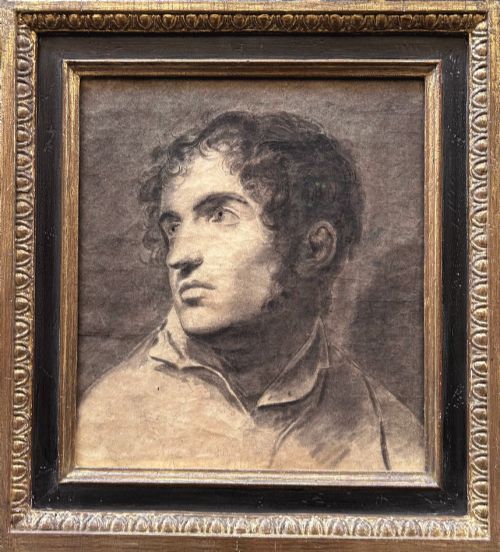
Painters utilised oil on canvas or panel, building compositions through careful preliminary charcoal and graphite drawings that established precise anatomical proportions and perspective.
Sculptors worked primarily in bronze, employing the lost-wax casting technique to capture fine musculature and drapery before finishing the metal with rich patination or mounting it alongside giltwood elements.
French Academic Art Retail Price Guide 2026
Typical asking prices for french academic art among the pieces listed under this phrase on Sellingantiques today, from the lower quarter to the upper quarter. They describe what is for sale here now, not the wider market.
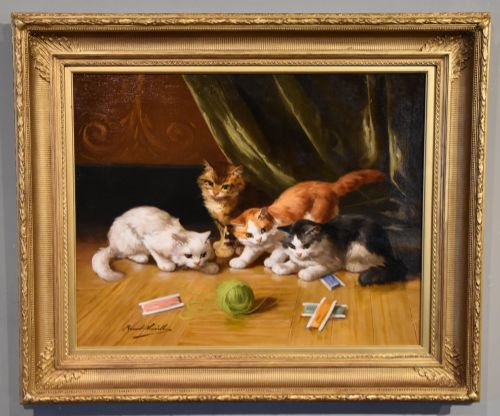
Several artists turned their rigorous academic training toward painting surprisingly fluffy kittens at play.
Distinctions in quality
Quality rests upon anatomical precision, compositional ambition and the handling of light and texture. Masterpieces demonstrate complete command over human form and narrative expression, whereas lesser works rely on formulaic repetition without psychological depth.
In bronzes, the crispness of the chase work and the subtlety of the surface patination divide standard foundry output from exceptional sculptural achievements.
Adelaïde Salles-Wagner·Alfred Arthur Brunel de Neuville·Julien Lorieux·Benjamin Eugene Fichel·Henry Arthur Roberts·Charles Zacharie Landelle·André Charles Voillemot·Ferdinand Victor Leon Roybet·Pierre-Paul Prud'hon·Thomas Couture·Fernand Jean Barbier·Charles Arthur Bourgeois·Antonin Mercié·Paul Leon Jazet·Théophile Emmanuel Duverger·Paul Viry·Pierre Louis Joseph De Coninck·Houdebine Paris·Marcel Brunery·Edmund Alphonse Andre·Pauline Delacroix Garnier·James Bertrand·Adolphe Alexandre Lesrel·Jules Girardet·Adrien Gaudez
The French Academic Art Glossary
- Academic Realism
- A style combining meticulous realistic rendering with the elevated subject matter and compositional rules taught by official art academies. It prioritises smooth finishes over visible brushwork.
- Grand Prix de Rome
- A prestigious French scholarship that enabled winning artists to study in Rome at the Académie de France. Submissions for this prize often display rigorous academic life studies.
- Lost-wax casting
- A metal casting method where a molten alloy is poured into a mould created by replacing a wax model. This technique allows for intricate detail in bronze sculptures.
- Patinated bronze
- Bronze treated with chemical solutions to produce a specific surface colour or tone. This finish protects the metal and accentuates sculptural contours.
French Academic Art: Frequently Asked Questions
What is french academic art?
It encompasses paintings, drawings and sculptures created under the strict technical standards of nineteenth-century European art academies. These works typically favour classical history, mythology and realistic portraiture.
Subjects are rendered with precise attention to anatomy, perspective and finish, reflecting the formal training required for exhibition in official salons.
How do I identify a life study?
Academic life studies usually feature a single nude figure, often male, posed against a neutral background to demonstrate the artist's grasp of human anatomy and shadow.
These pieces frequently appear as framed charcoal or graphite drawings or as smaller oil sketches produced during studio sessions.
Where should I hang an oil painting?
Select a wall with stable humidity away from direct sunlight to protect the canvas and traditional giltwood frame from fading and warping. Adequate lighting enhances the deep tones characteristic of nineteenth-century palettes.
Allow sufficient clearance around the frame so the historical subject matter commands the wall space properly.
How do I care for bronze sculptures?
Dust the surface regularly with a soft, dry cloth to prevent particulate buildup on the patinated finish. Avoid using chemical cleaners or polishes that strip the protective coating.
Maintain stable indoor temperatures to protect any mounted wooden elements or stone bases attached to the metalwork.