

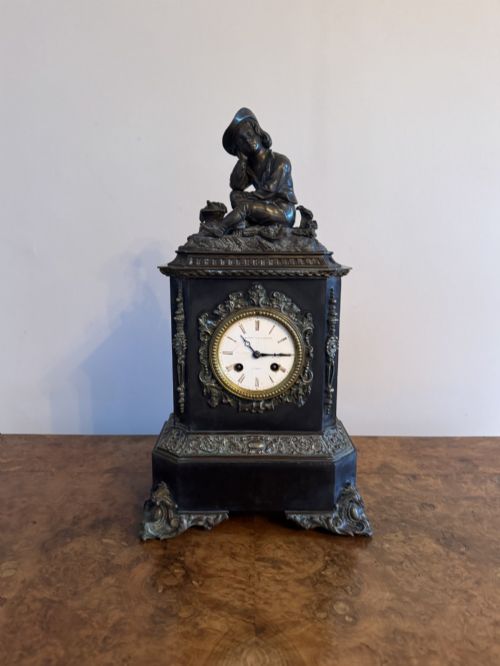
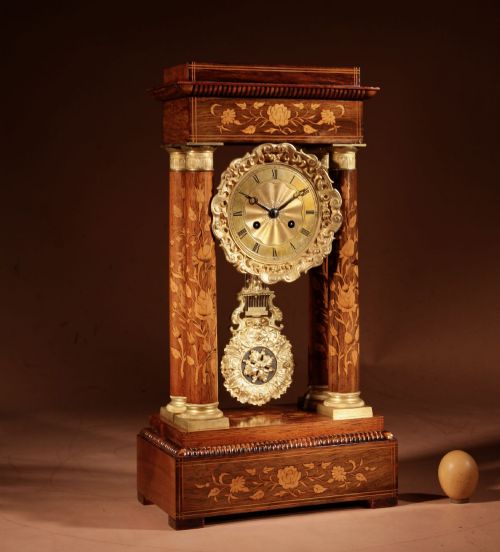
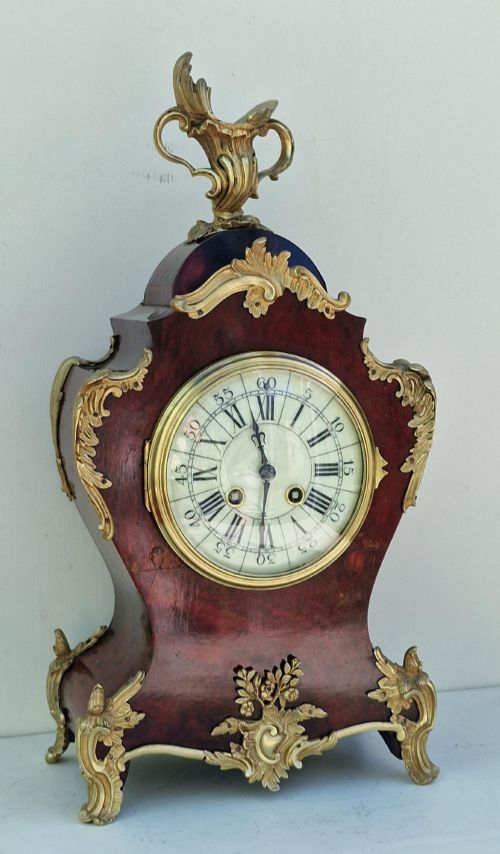
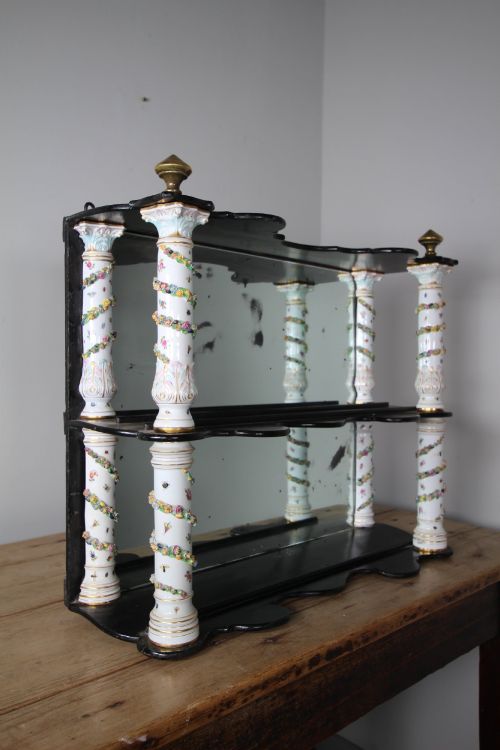
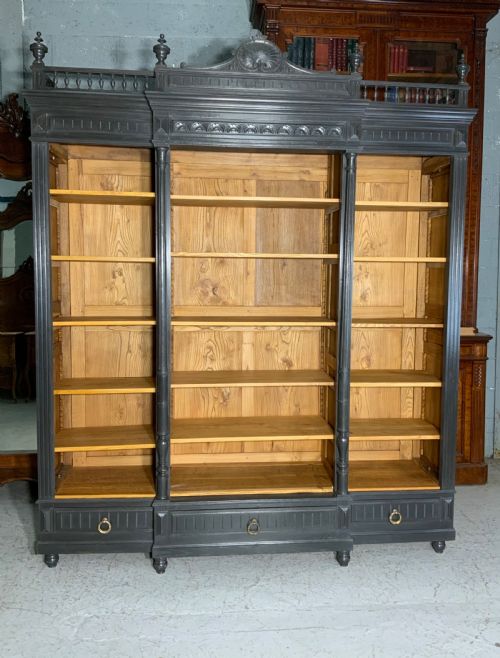
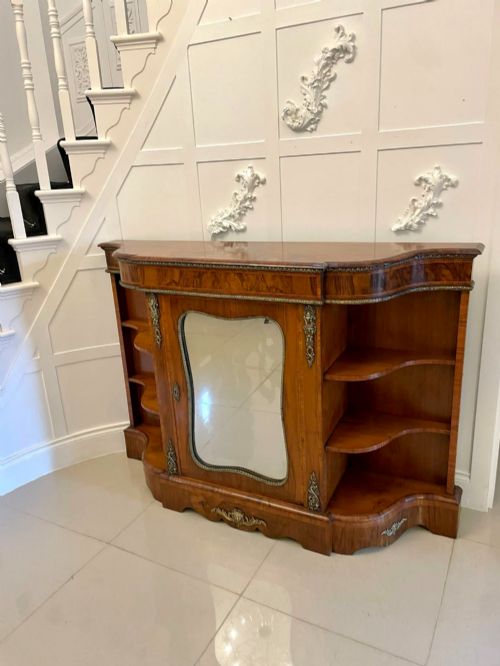


French 19th Century Shelves
These french 19th century shelves unite decorative flair with practical display, bringing Continental elegance and warmth to any interior.
French 19th Century Shelves
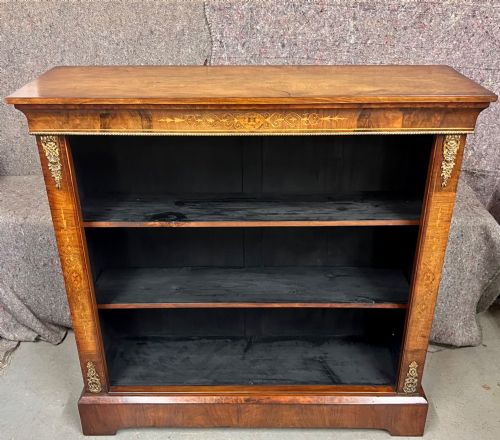
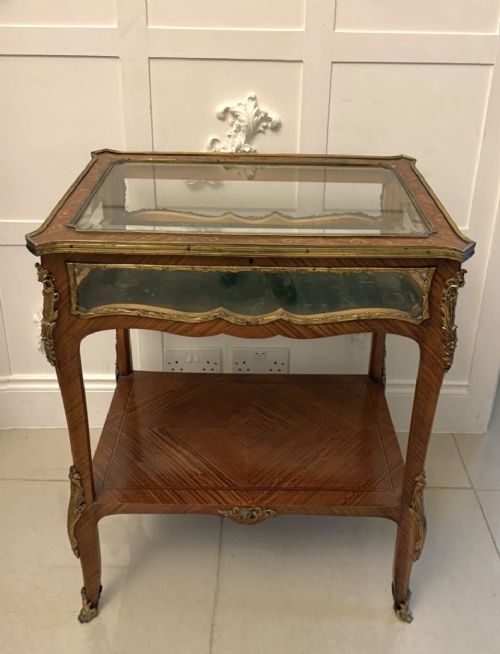
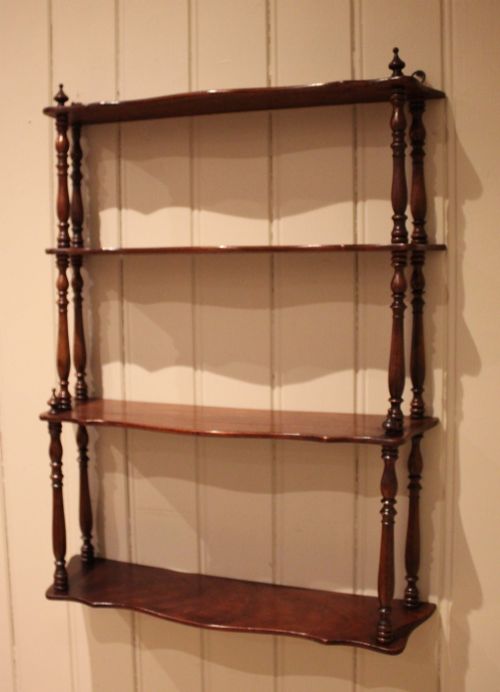
When seeking french 19th century shelves, buyers encounter a diverse selection of wall brackets, etageres, bookcases, and display units originating from France during the 1800s. These pieces reflect specific periods such as the Victorian era and Louis Philippe reigns, alongside styles like Rococo Revival, Neoclassical, and French Empire.
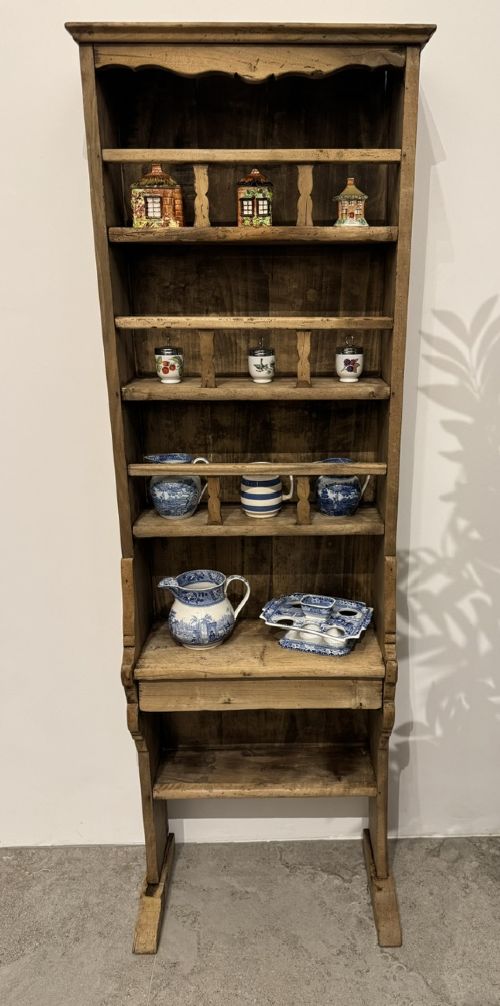
The assortment on this page ranges from compact carved giltwood wall brackets and bobbin shelves to larger walnut whatnots and pine alcove cupboards. Each item serves to display decorative objects or store books while adding period character to a room.
Materials and Technique
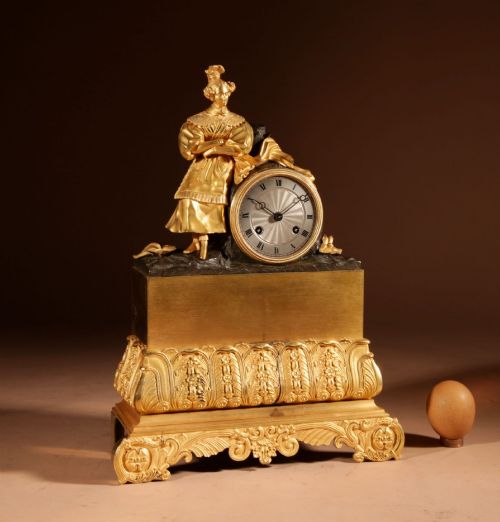
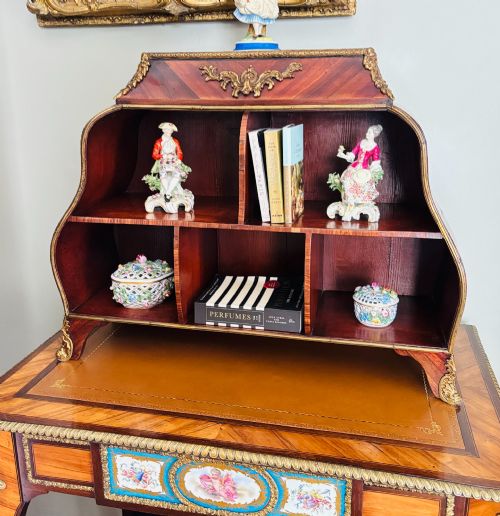
Maker workshops employed a variety of timbers including walnut, mahogany, satinwood, oak, and pine, frequently enhanced with intricate carving, turnings, and decorative inlays of rosewood. Metal accents in gilt bronze, ormolu, brass, and gilt metal appear regularly, providing structural highlights and ornamental mounts.
Surface treatments and secondary materials include giltwood finishes, porcelain plaques, marble tops, and painted details. Construction techniques span from solid wood joinery to specialised framing seen in mirrored wall brackets and folding furniture.
French 19th Century Shelves Retail Price Guide 2026
Typical asking prices for french 19th century shelves among the pieces listed under this phrase on Sellingantiques today, from the lower quarter to the upper quarter. They describe what is for sale here now, not the wider market.
Design styles span Rococo Revival, Neoclassical, and French Empire, reflecting the diverse taste of nineteenth-century French cabinet makers.
The Measure of Craft
Quality in these pieces rests upon the crispness of the woodcarving, the weight and finish of the bronze or ormolu mounts, and the integrity of the timber selection. Superior examples display harmonious proportions and refined detailing that elevate them above standard utility items.
The refinement of secondary elements, such as bevel-cut glass, champleve enamel work, or hand-painted porcelain components, distinguishes finer workshop productions from simpler vernacular furniture.
Jean-Baptiste Delettrez·Gabriel Viardot·Charles à Orléans·Henry Marc·Maison Giroux
The French 19th Century Shelves Glossary
- Etagere
- An open piece of furniture consisting of a series of shelves for displaying small objects or ornaments. These tiered stands were popular in 19th-century French interiors for organising porcelain and bric-a-brac.
- Ormolu
- Gilded bronze applied as a decorative mount to furniture and clocks. This technique involves fusing a mixture of gold and mercury onto a bronze base.
- Whatnot
- A multi-shelved piece of standing furniture used for holding books, ornaments, or display items. The style gained popularity during the Victorian period for parlor and drawing-room use.
- Giltwood
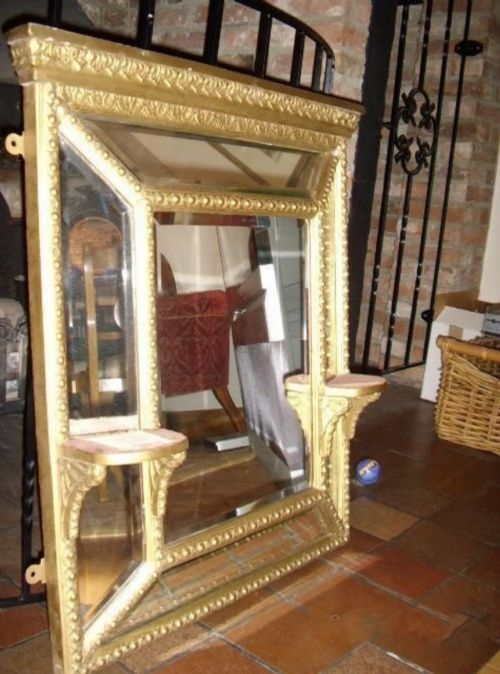
- Wood that has been treated with a thin layer of gold leaf or gold paint. Artisans applied this finish to decorative wall brackets and mirror frames to create a luminous metallic appearance.
French 19th Century Shelves: Frequently Asked Questions
Where should I hang a wall bracket?
Wall brackets suit prominent spaces in a hallway, drawing room, or above a fireplace mantel where they can safely display small sculptures, clocks, or porcelain pieces.
Ensure the wall construction supports the weight of the timber and any mounted objects before installation.
How do I care for giltwood shelves?
Dust giltwood gently using a soft, dry brush to avoid damaging the delicate metallic leaf finish applied to the carved surfaces.
Keep these items away from direct sunlight and damp environments to preserve the integrity of the wood and the gilding.
What is an etagere used for?
An etagere functions as a tiered shelving unit designed to showcase collections of decorative objects, books, or small art pieces.
Its open construction allows items to be viewed from multiple angles within a room.
How do I identify French Empire style?
French Empire pieces typically feature classical architectural motifs, symmetrical designs, and rich mounts in gilt bronze or ormolu.
The aesthetic draws inspiration from ancient Roman and Greek forms, emphasising clean lines and formal dignity.