

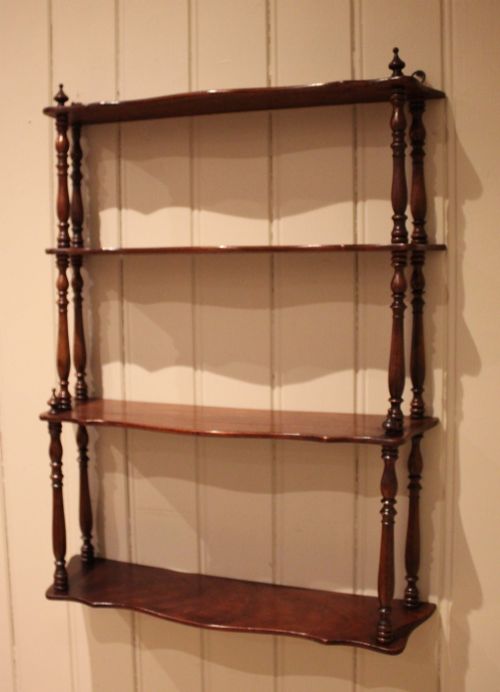
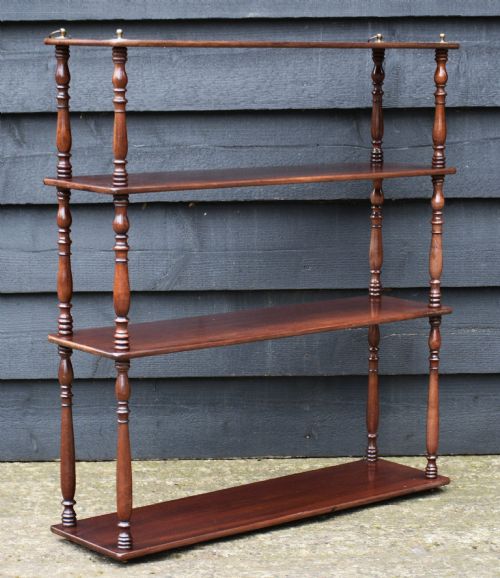
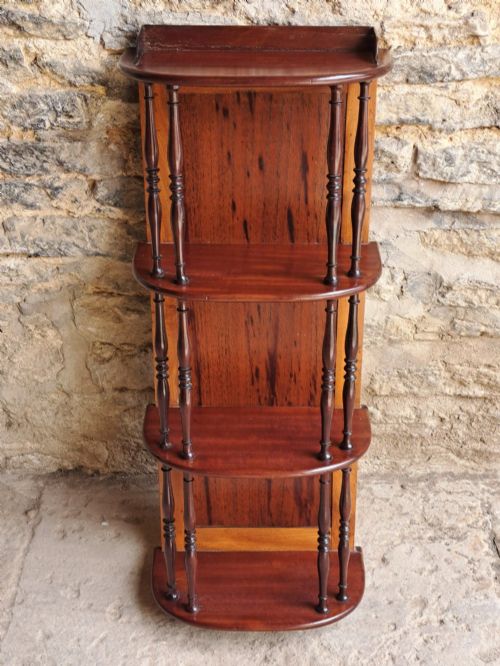
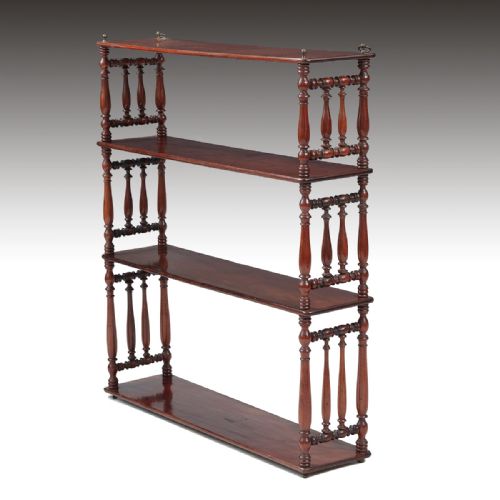




Mahogany Hanging Bookshelf
A mahogany hanging bookshelf brings timeless timber and practical wall storage to a room, offering both charm and utility.
Mahogany Hanging Bookshelf
When you search for a mahogany hanging bookshelf, you are looking at wall-mounted tier systems designed to hold books, plates, and small collectibles. These pieces range from simple functional shelves to decorative wall bookcases and mounted whatnots.
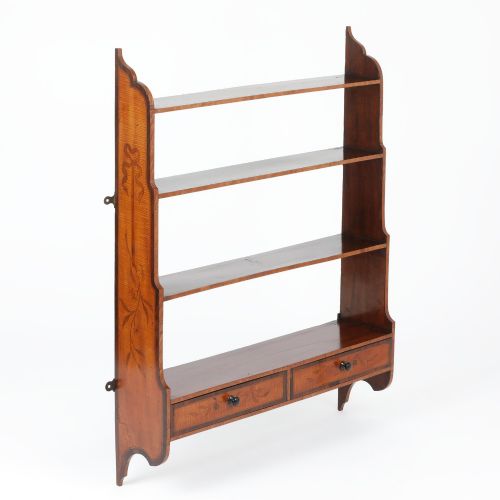
You are most likely to meet 19th-century and Victorian examples on this page, alongside earlier Georgian and Regency pieces. Forms vary from tiered waterfall bookshelves to wall racks with enclosed sections or side supports.
Originating predominantly from British cabinet-making traditions, these items utilise rich timber grains to add warmth to domestic interiors. They suit studies, hallways, and living spaces where floor area is at a premium.
Materials and Construction
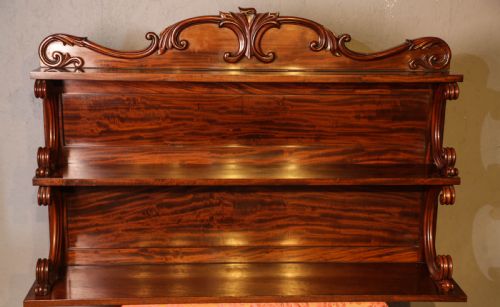
Cabinet makers utilised solid mahogany and flame mahogany veneer to construct these wall units, frequently incorporating contrasting timbers such as satinwood for decorative inlay and detail. Brass fixtures, brackets, and hanging hardware provide both structural support and visual contrast against the dark wood.
Construction techniques involve traditional joinery suited to weight-bearing wall furniture, with tiered shelves secured to shaped vertical sides or backboards. Veneering methods allowed craftsmen to display dramatic wood grain patterns across the primary surfaces.
Mahogany Hanging Bookshelf Retail Price Guide 2026
Typical asking prices for mahogany hanging bookshelf among the pieces listed under this phrase on Sellingantiques today, from the lower quarter to the upper quarter. They describe what is for sale here now, not the wider market.
Assessing Quality
Quality in these pieces rests upon the selection of timber and the sophistication of the joinery rather than mere age. Pieces featuring figured flame mahogany or thoughtful satinwood stringing sit at the top of the range, showing greater care from the maker.
Proportion and structural integrity distinguish finer examples from plain utility items. Refined shaping to the shelf edges, balanced tiers, and original brass hanging fittings indicate superior workshop production.
The Mahogany Hanging Bookshelf Glossary
- Waterfall bookshelves
- A tiered set of shelves where each level steps back from the one below, creating a cascading profile popular in the Georgian and Regency periods.
- Flame mahogany
- A veneer cut from the fork of the mahogany tree, prized by cabinet makers for its fiery, swirling grain pattern.
- Satinwood
- A durable, yellowish timber often utilised for contrasting stringing and inlay work on fine cabinet furniture.
- Whatnot
- An open, multi-tiered piece of furniture designed for displaying ornaments and books, which can be mounted directly to a wall.
- George III
- The period spanning the reign of George III, associated with refined proportions and classical cabinet-making styles.
Mahogany Hanging Bookshelf: Frequently Asked Questions
How were hanging bookshelves used historically?
These units served to keep frequently read volumes, reference books, and decorative ceramics close at hand without taking up valuable floor space in smaller rooms. They were common in studies, libraries, and parlours.
In many households, they also functioned as plate racks or display shelves for prized ornaments, combining everyday utility with formal presentation.
How do I tell a Regency shelf from a Victorian one?
Regency pieces often display restrained classical lines, sometimes incorporating delicate satinwood details or lighter proportions reflecting neoclassical tastes. They date from the early part of the nineteenth century.
Victorian examples tend to be sturdier, occasionally featuring bolder mouldings, bobbin turnings, or darker finishes that reflect the tastes of the later nineteenth century.
How should I care for mahogany wall furniture?
Keep the timber away from direct sources of heat and strong sunlight to prevent the mahogany veneer from drying out or fading over time. Dust gently with a dry, soft cloth.
Apply a traditional beeswax polish occasionally to nourish the wood and maintain the natural lustre of the surface without building up excessive residue.