




Freestanding Swinging Mirror
A freestanding swinging mirror offers a pivoting plate to check your attire, bringing practical elegance and period character to any room.
Freestanding Swinging Mirror
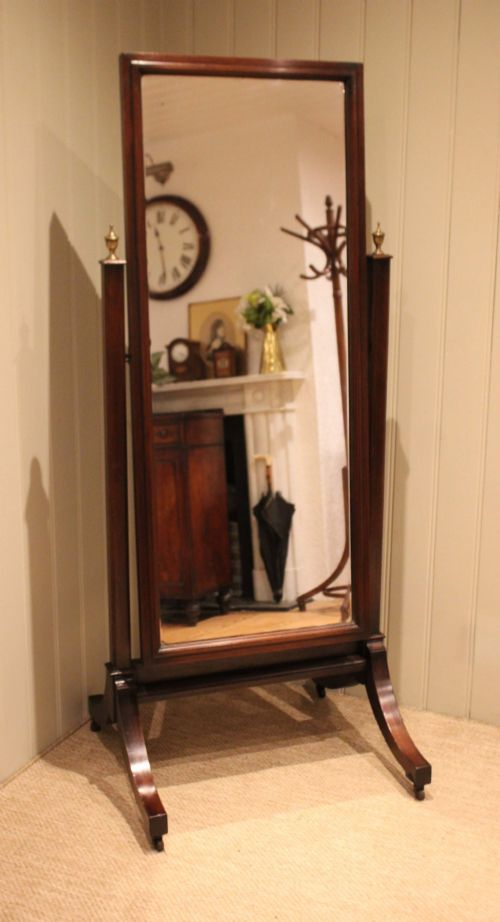
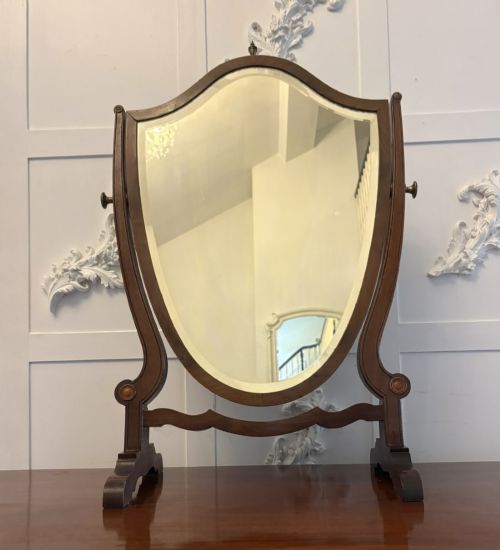
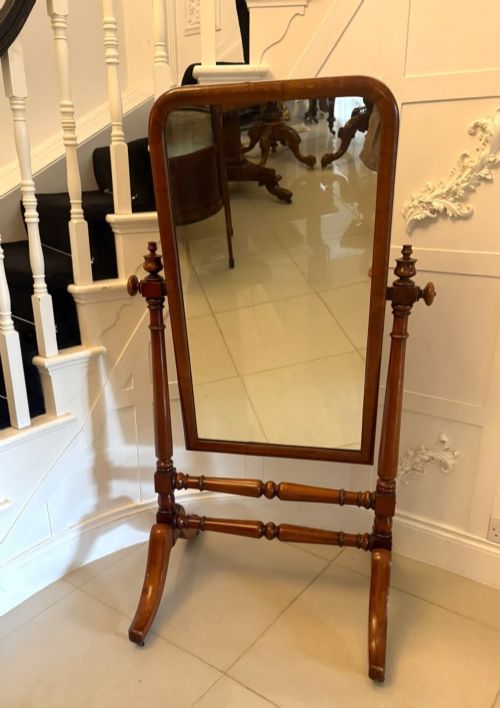
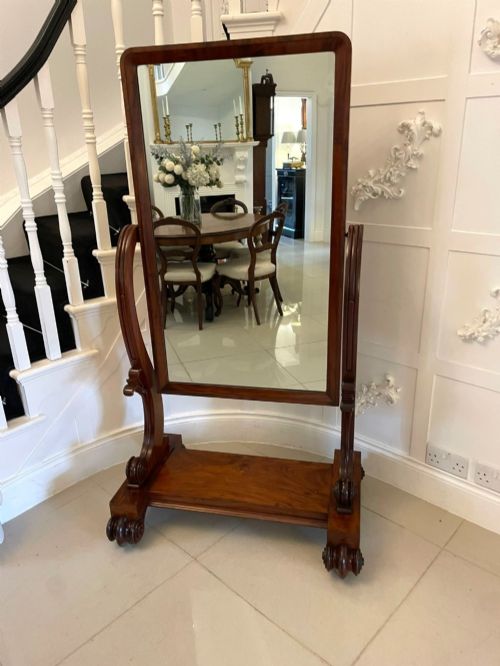
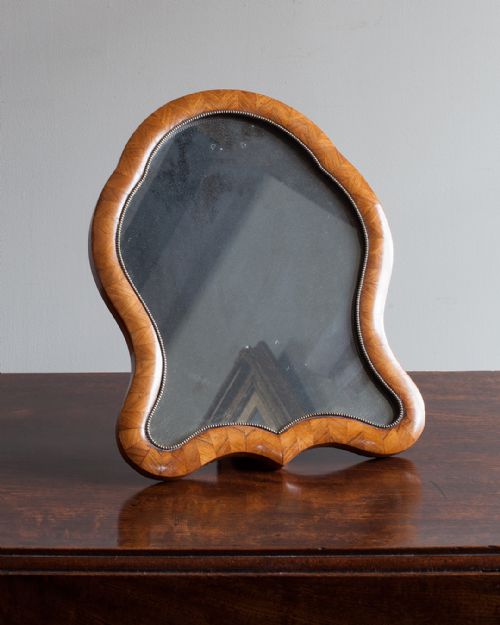
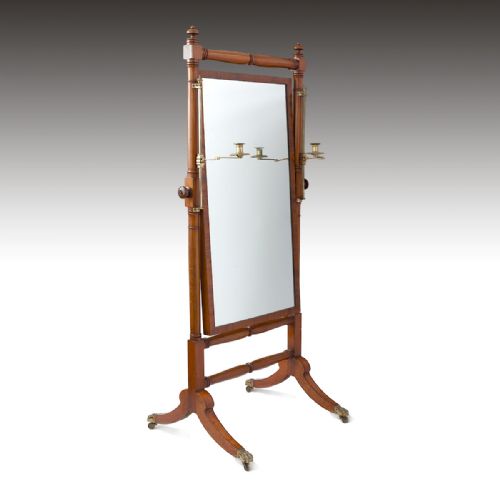
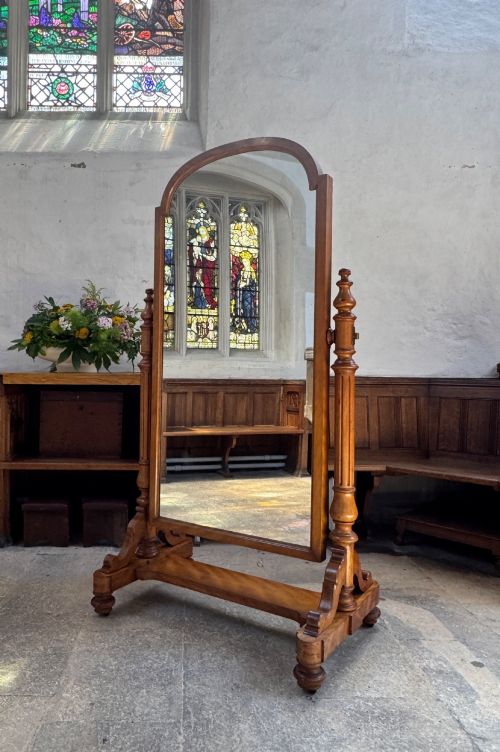
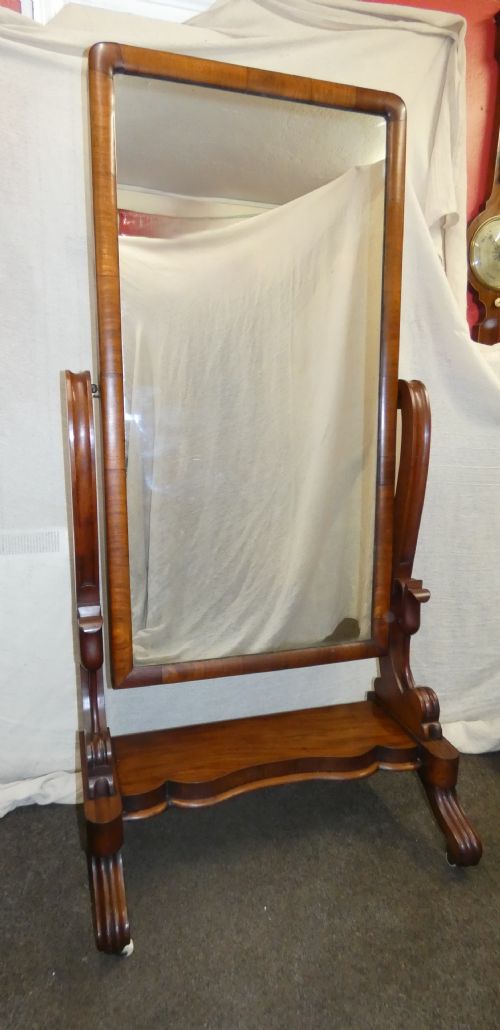
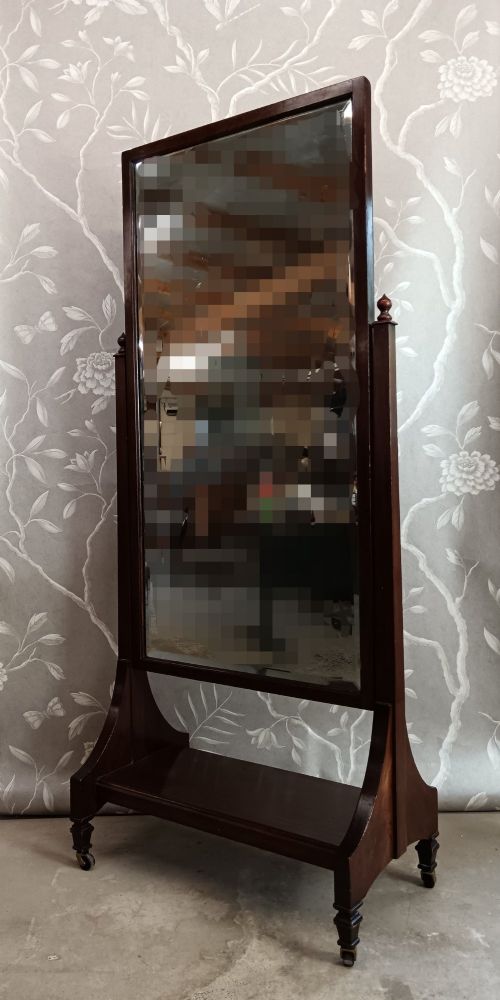
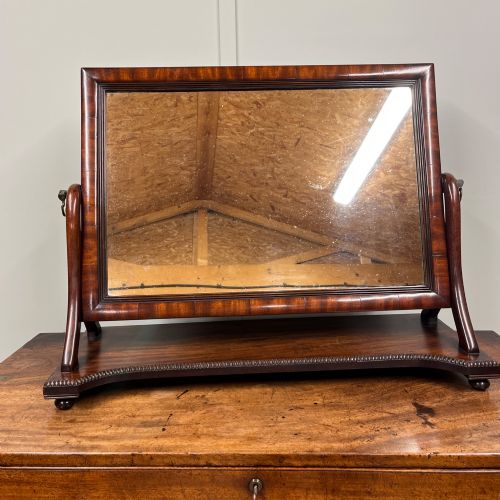
A freestanding swinging mirror is primarily encountered in forms such as large cheval mirrors designed for full-length viewing and smaller toilet or dressing table mirrors intended for table placement. These pieces span the Victorian, Regency, and Edwardian periods, utilising robust timber frames that pivot between upright supports.
The selection ranges from grand country house cheval mirrors in mahogany to compact walnut, oak, and satin birch table mirrors. Makers applied various styles including French Rococo Revival, Arts and Crafts, and George III influences to these pivoting designs.
Buyers seeking a freestanding swinging mirror will find formats varying from tall floor-standing frames with brass candle holders to modest box mirrors and vanity glasses. The core mechanics rely on side pivots allowing the glass plate to tilt securely to the preferred angle.
Assessing quality and craftsmanship
Quality in a pivoting mirror rests on the structural integrity of the frame joints and the stability of the upright standards supporting the weight of the glass. Superior examples exhibit dense, well-figured timbers like flame mahogany or kingwood, paired with substantial brass pivot hardware that holds the swing angle without sagging.
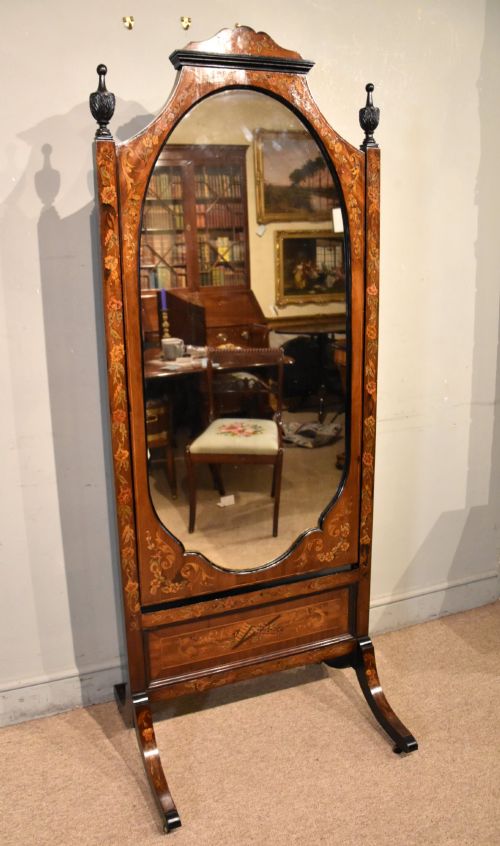
Refinement in carving, crisp marquetry inlay, and the retention of the original mirror plate distinguish finer periods and maker interpretations from utilitarian workshop pieces. The proportion between the swinging glass and its supporting base dictates both visual balance and physical steadiness.
Freestanding Swinging Mirror Retail Price Guide 2026
Typical asking prices for freestanding swinging mirror among the pieces listed under this phrase on Sellingantiques today, from the lower quarter to the upper quarter. They describe what is for sale here now, not the wider market.
Boot maker's mirrors occasionally appear, originally built low to the floor so cobblers could inspect the rear finish of their footwear.
The Freestanding Swinging Mirror Glossary
- Cheval mirror
- A large floor-standing swinging mirror designed for full-length reflection, typically supported by four legs or a trestle base.
- Toilet mirror
- A smaller swinging mirror designed to sit upon a dressing table or chest of drawers.
- Plate
- The sheet of glass that forms the reflective surface of the mirror.
- Pivot
- The metal pin or screw mechanism set into the sides of the frame allowing the mirror to swing.
- Marquetry
- Decorative veneer work arranged in geometric or floral patterns across the timber surfaces.
Freestanding Swinging Mirror: Frequently Asked Questions
Where should I place a cheval mirror?
A floor-standing cheval mirror functions best in a bedroom or dressing room where its full-length pivoting plate provides practical utility for checking attire.
Position the piece near a light source to brighten the room while ensuring the frame remains stable on a level floor.
How do the pivot mechanisms work?
The swinging mirror hangs between two upright standards using lateral pins or screws that act as a central axis.
Adjusting the tension on these side fixings allows the glass plate to tilt smoothly and hold its chosen angle during use.
What is the difference between a cheval and a toilet mirror?
A cheval mirror is a tall, floor-standing piece built for full-length viewing, whereas a toilet mirror is much smaller and intended to rest upon a table surface.
Both utilise a swinging frame design, but their scale and placement requirements differ entirely within a room.
Are these mirrors suitable for modern interiors?
The warm tones of period timbers such as mahogany, walnut, and oak allow these pivoting mirrors to blend effortlessly into contemporary decorative schemes.
Their classic proportions and functional tilting design offer both historic character and everyday usefulness in modern homes.