
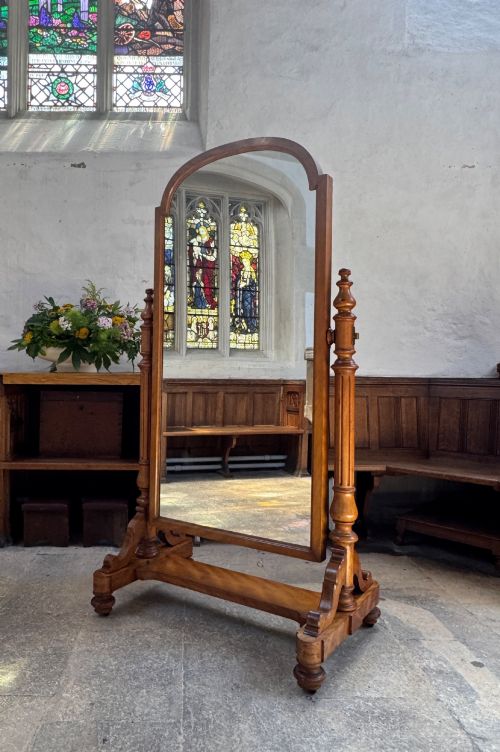
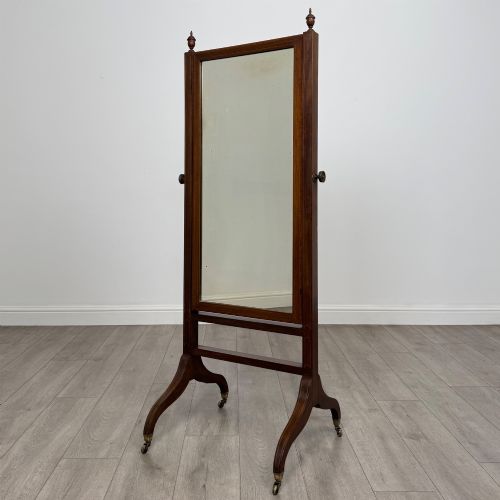
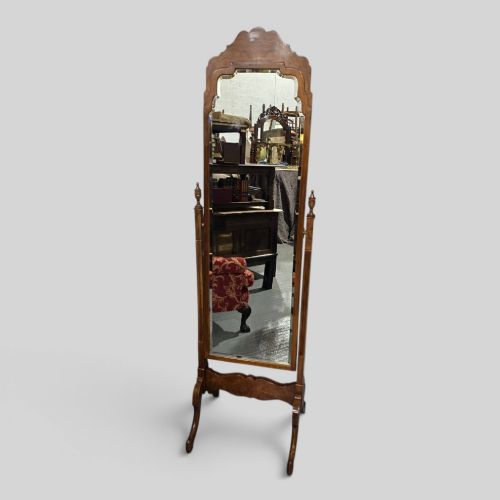
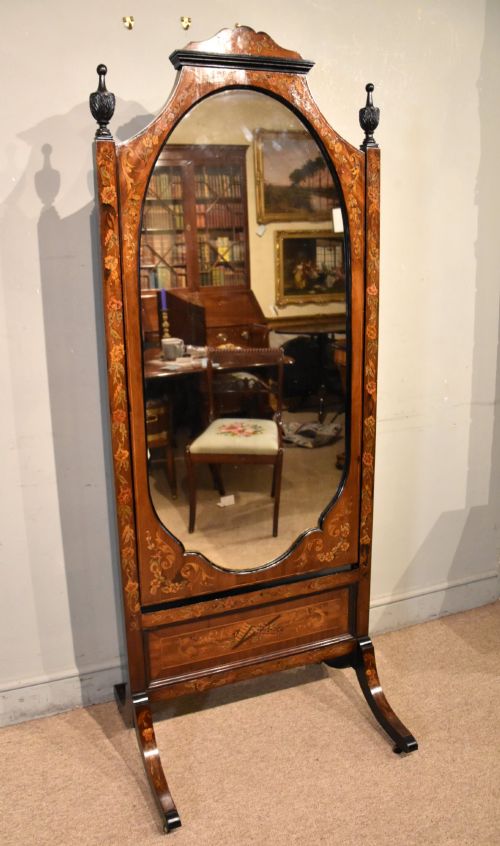
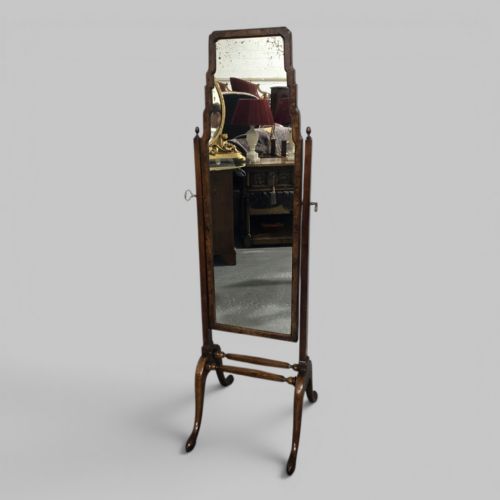
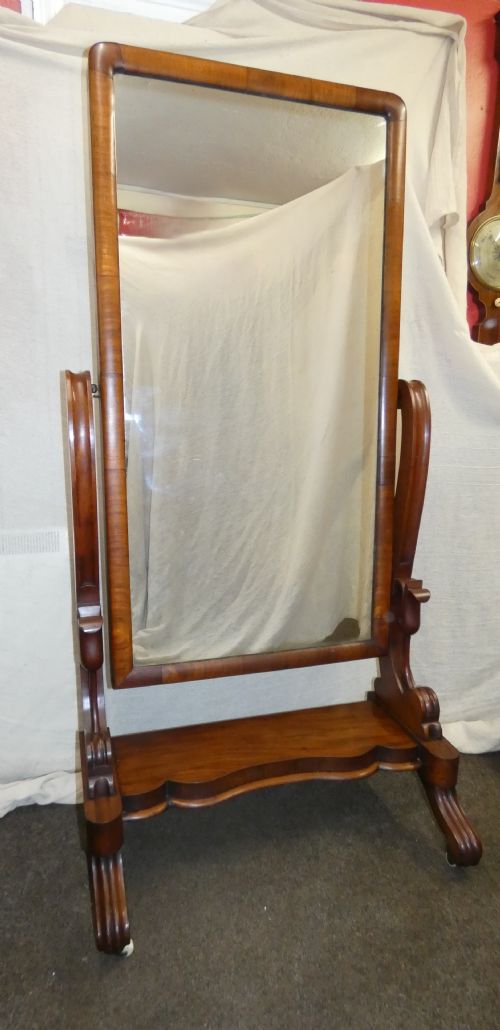
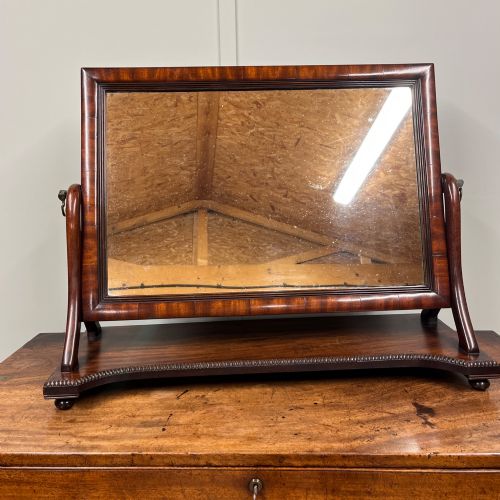
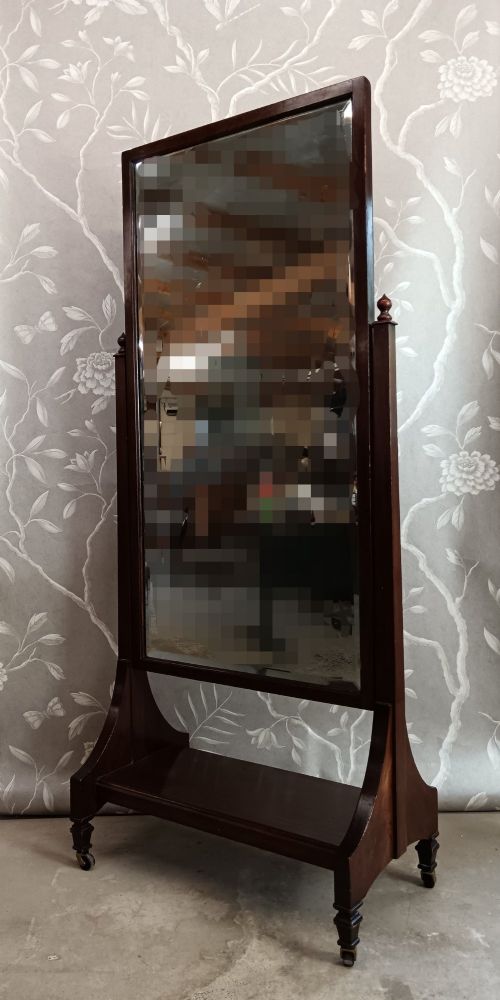


Freestanding Cheval Mirror
A freestanding cheval mirror is a tall, adjustable glass on a floor-standing frame, designed for full-length reflection in a bedroom or dressing room.
Freestanding Cheval Mirror
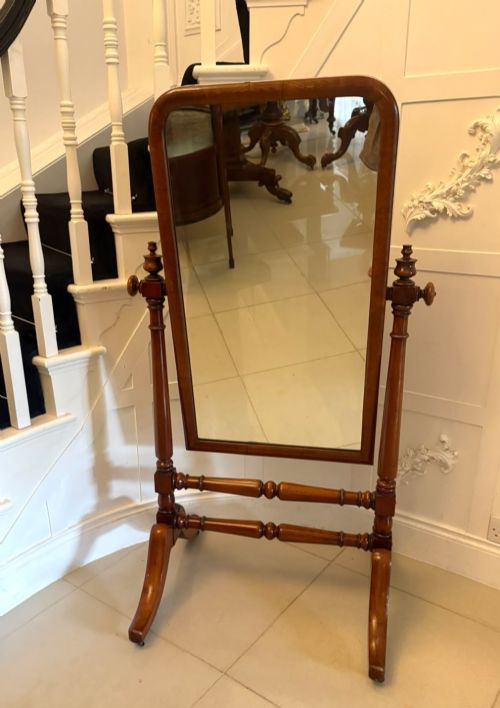
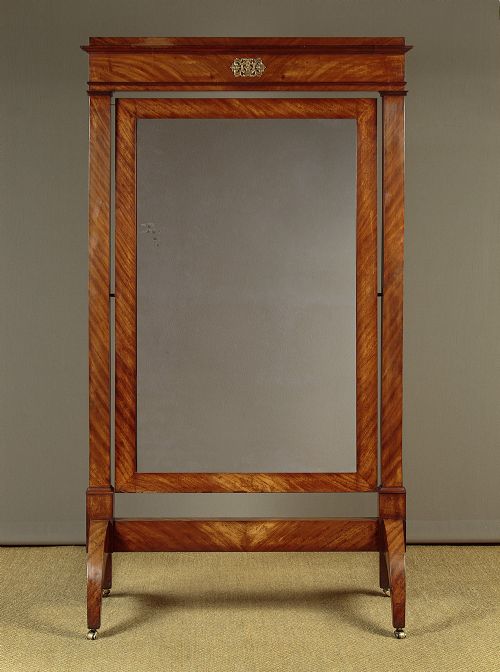
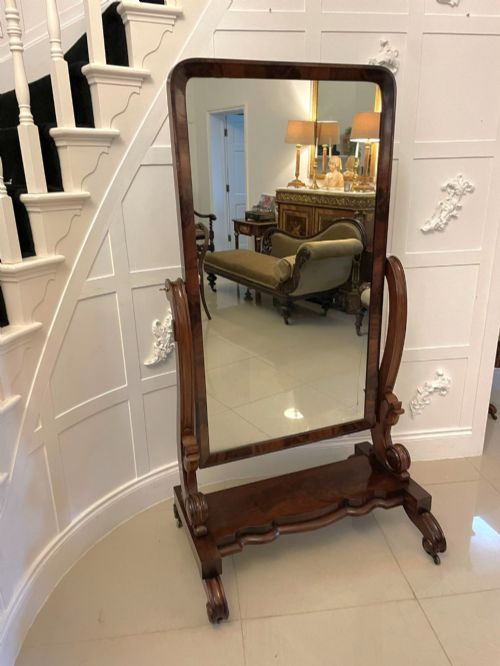
A freestanding cheval mirror provides a full-length view for dressing and grooming, mounted on a vertical frame that tilts on pivots. When you search for a freestanding cheval mirror, you encounter forms ranging from simple Regency frames to elaborate Victorian designs.
The pieces on this page span the nineteenth century, the Edwardian era, and the Regency period, with many examples constructed from mahogany. Alongside full-length standing mirrors, the selection includes dressing table mirrors and toilet mirrors that sit on furniture tops.
Makers and designers influenced various regional interpretations, from country house pieces to satin birch and burr walnut variations. The overarching purpose remains consistent across these periods: an independent glass that moves on pivots to adjust the angle of reflection.
How they were made
Makers built these frames primarily in mahogany, walnut, and burr walnut, occasionally employing satin birch, oak, and giltwood for decorative effect. Timber sections were joined to support the weight of the heavy glass plate while allowing the pivot mechanism to function smoothly.
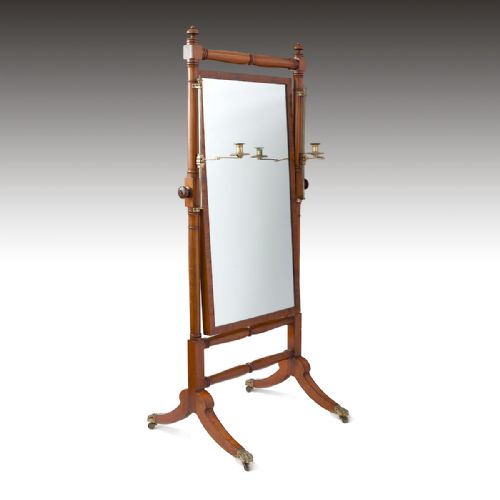
Metal components such as brass sabots, castors, and articulated candle holders were incorporated into frames from the Regency and Victorian periods to aid mobility and lighting. Mirror glass was set into standing frames, sometimes supported by sabre legs or carved uprights.
Listings span the 19th Century, Regency, Victorian, Edwardian, and 1920 periods, utilising glass, brass, mahogany, walnut, burr walnut, and giltwood.
What varies in quality
Quality in these pieces rests upon the selection of timber and the execution of the frame joints. Dense mahogany, well-figured burr walnut, and crisp carving on the uprights separate standard examples from finer workshops.
The integrity of the pivoting mechanism and the quality of the original mirror glass dictate the functional success of the mirror. Well-balanced frames tilt securely without slipping, maintaining their position through metal pins or screw caps.
Gillow·Waring and Gillow
The Freestanding Cheval Mirror Glossary
- Cheval mirror
- A full-length looking glass hung in a frame that stands upon the floor. The glass swings on vertical pivots, allowing the user to tilt it to various angles.
- Toilet mirror
- A smaller glass designed to sit upon a dressing table or chest of drawers. These often share the pivoting swing mechanism of larger cheval mirrors.
- Sabre leg
- A curved, tapered leg spreading outwards, commonly found on Regency furniture bases. This form provides stable floor support for heavy standing frames.
- Brass sabot
- A metal shoe fitted to the foot of a wooden furniture leg. It protects the base from wear and often houses a castor underneath.
- Giltwood
- Wood that has been coated with a thin layer of gold leaf or gesso paint. It appears on decorative frames from the nineteenth century.
Freestanding Cheval Mirror: Frequently Asked Questions
How do I adjust the mirror tilt?
Most freestanding cheval mirrors use lateral thumbscrews or metal pivot pins set into the upright supports. Turning these screws allows you to tighten or loosen the grip on the frame.
Once the desired viewing angle is reached, tightening the hardware holds the glass in place without slipping forward or backward.
Where should I place a cheval mirror?
These tall mirrors require stable floor space in a bedroom, dressing room, or hallway where full-length reflection is needed. Because they are freestanding, positioning them away from heavy foot traffic prevents accidental bumps.
Placing the piece near a natural light source helps illuminate the reflection while highlighting the wood grain of the frame.
How do I date a Victorian mirror?
Victorian pieces often feature deep mahogany or walnut timbers, sometimes enhanced with inlaid details or heavy carved scrollwork. The construction techniques and hardware styles help narrow down the decade of manufacture.
Comparing the turning on the uprights and the style of the base feet to documented nineteenth-century examples provides a reliable guide to age.
Are these mirrors heavy to move?
Many nineteenth-century examples incorporate solid mahogany or walnut frames holding thick glass plates, which adds substantial weight to the overall structure. Some versions include original brass castors on the feet to assist with repositioning.
When moving the piece across a room, it is best to support both the base and the uprights rather than pulling on the swinging glass frame.