
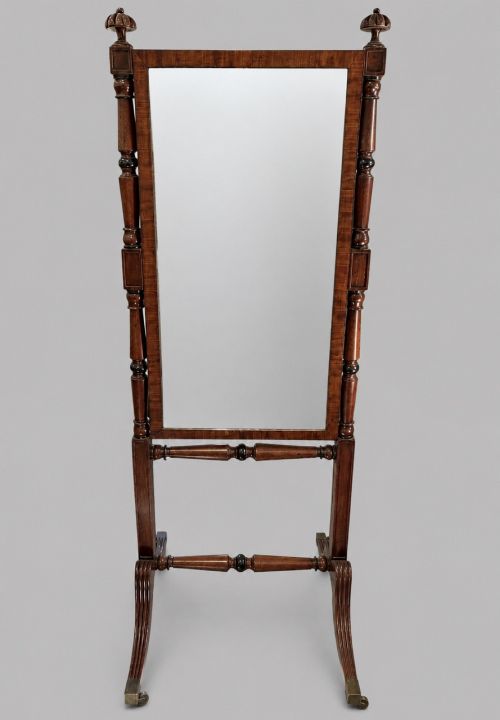


Regency Floor Standing Mirror
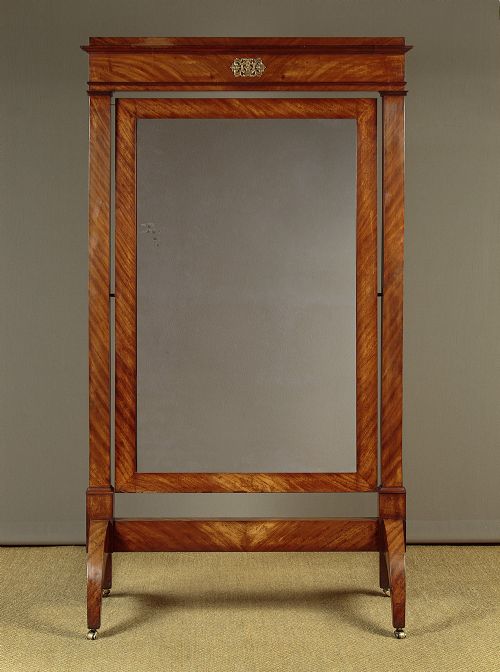
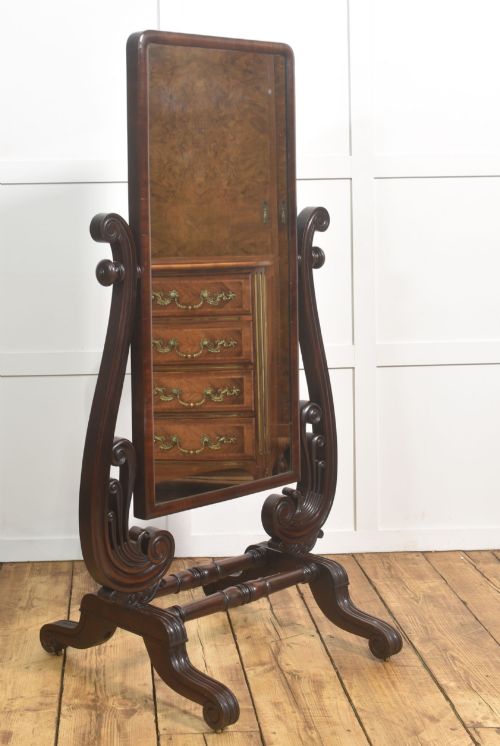
A regency floor standing mirror brings undeniable presence to a room, offering a pivoting glass frame designed for full-length reflection.
Regency Floor Standing Mirror
When you search for a regency floor standing mirror, you are looking at substantial dressing and cheval glasses designed to stand independently on the floor. The examples you meet on this page span the Regency, Georgian, William IV, and Victorian periods, with many bearing the classic proportions of the early nineteenth century.
What separates the finest examples
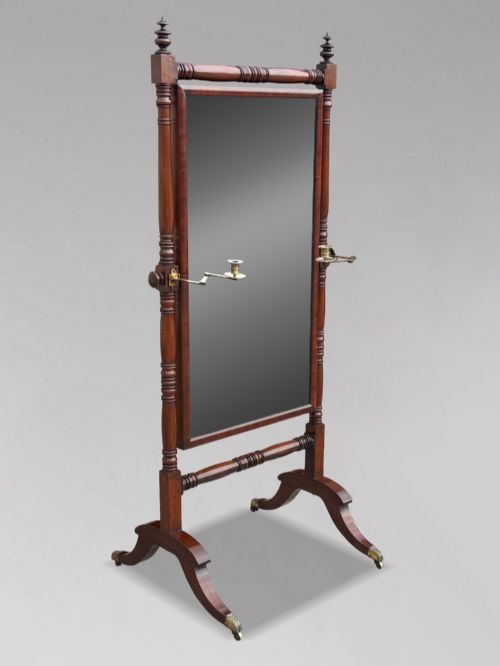
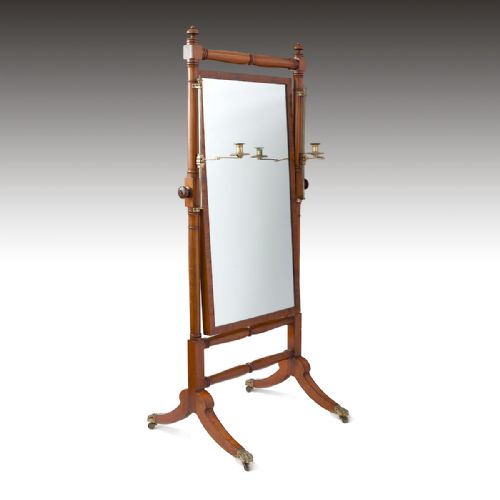
Quality in these floor standing glasses is determined by the crispness of the timber selection, the elegance of the frame proportions, and the integration of original metalwork. Finer pieces display refined turning, subtle inlay, and well-executed sabots on the supporting legs.
The sophistication of the pivoting mechanism and the presence of specialist additions, such as brass candle arms, distinguish superior workshop production from more utilitarian examples.
The listings on this page span the Georgian, Regency, William IV, and Victorian periods, showcasing mahogany, giltwood, and brass.
Gillows
The Regency Floor Standing Mirror Glossary
- Cheval mirror
- A large floor-standing dressing mirror mounted on a swinging frame. This allows the glass to tilt to various angles for full-length viewing.
- Sabot
- A metal sleeve or mount fitted to the foot of a furniture leg. They frequently appear in brass on Regency standing mirrors to protect the timber base.
- Giltwood
- Wood that has been coated with gold leaf or a gold-coloured finish. This material is typically found on the grandest decorative frames.
- Gesso
- A plaster-like mixture applied to wood surfaces as a base for gilding. It allows craftsmen to carve intricate relief decoration around the mirror frame.
- Castor
- A small wheel fitted to the base of a leg to aid mobility. On these heavy standing mirrors, they allow the entire frame to be repositioned easily across a floor.
Regency Floor Standing Mirror: Frequently Asked Questions
Where were these mirrors placed in a house?
These tall floor-standing glasses were traditionally positioned in bedrooms, dressing rooms, or grand hallways where occupants could check their full attire before heading out.
Their substantial height and pivoting design made them practical additions to domestic spaces throughout the nineteenth century.
How do I distinguish a Regency piece from a later copy?
Examining the timber growth, the method of frame construction, and the type of mirror glass used will help indicate the true age of the piece.
Earlier frames often show hand-cut joinery and subtle signs of wear around the pivoting pins that differ from later revival manufacturing techniques.
Can the mirror angle be adjusted?
The hanging plate is designed to pivot freely between two upright pillars using side screws or metal pins.
This tilting mechanism allows the user to alter the reflection angle to suit different heights and viewing positions.
What woods were commonly used?
Mahogany is by far the most prevalent timber found across these standing frames, prized for its deep grain and structural strength.
Occasional examples incorporate walnut or finish with giltwood and gesso layers for a more decorative appearance.