


Fred Lawson Watercolour
A fred lawson watercolour captures northern landscapes and historic Yorkshire towns through observational skill and direct washes.
The Fred Lawson Watercolour
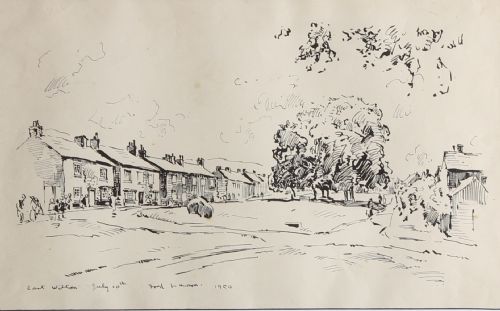
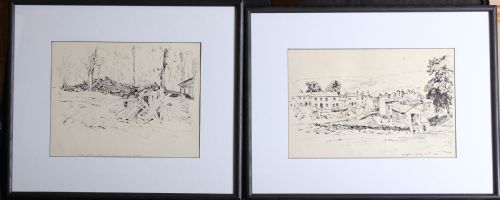
A fred lawson watercolour is a British work on paper recording the rural scenes, villages, and market towns of the Yorkshire Dales alongside travels further afield. Buyers encounter landscape views of Wensleydale alongside townscapes of Lincoln and Scottish settings.
The compositions span the early to mid-twentieth century, placing the work firmly within British Impressionism and Modern British traditions. Architectural studies of bridges, castles, and old buildings appear regularly beside agricultural scenes.
Subjects range from winter snow scenes and quarry studies to domestic views like washing day and back gardens. Works frequently document specific locations such as Redmire, Grinton Bridge, and Castle Bolton.
Materials and Technique
These pieces rely on watercolour paint and pigment applied to paper surfaces, sometimes supported by pencil underdrawing or ink linework. Certain examples employ buff paper to alter the tone of the overall composition.
The technique uses fluid washes to build atmosphere and light, capturing snow, winter trees, and stone architecture directly. Pigment is handled with a swift sensibility that defines the British Modernist approach.
Retail Price Guide 2026
Typical UK retail prices for fred lawson watercolour, calculated from the Sellingantiques database of over a million retail prices indexed since 2003. This retail price guide relies exclusively on Sellingantiques data; no external sources or auction records are used, so the figures do not describe the wider market.
Listings feature works created across the 1920s, 1930s, and 1940s, executed in watercolour, pencil, and ink on paper.
Judging Quality
Quality rests upon the strength of the composition and the confidence of the brushwork rather than subject matter alone. Works that manage light effectively and render structural elements with clarity stand apart from routine topographical sketches.
The integration of pencil or ink lines with watercolour washes dictates the visual depth of a piece. Stronger examples display a decisive hand that captures the distinct character of northern terrain or historic masonry without hesitation.
Fred Lawson·Muriel Metcalfe
The Fred Lawson Watercolour Glossary
- Watercolour paint
- A water-soluble medium composed of pigment and binder that creates transparent colour washes when diluted.
- Buff paper
- A pale brownish-yellow paper stock used as a mid-tone background for pigment and ink.
- Townscape
- A painting or drawing depicting urban architecture, streets, or bridges rather than open countryside.
- British Impressionism
- An artistic movement focusing on light, atmosphere, and everyday subject matter through visible brushstrokes.
- Wash
- A thin, fluid layer of diluted watercolour pigment spread across paper to create skies, water, or shadows.
Frequently Asked Questions
Where did Fred Lawson paint?
Fred Lawson worked primarily across the Yorkshire Dales, recording locations such as Wensleydale, Castle Bolton, and Redmire. His output also includes townscapes from Lincoln, Stirling, and France.
Rural scenes feature farms, stonebreakers, and local characters, while architectural studies capture bridges, old houses, and market fairs.
What periods do these paintings cover?
The available evidence spans from the early twentieth century through the middle decades of that era. Pieces date from the nineteen-tens and nineteen-twenties onward into the nineteen-sixties.
This timeline situates the works within British Modernist and Impressionist developments of the period.
How should I frame a watercolour?
Watercolours require conservation framing behind glass to protect the paper and pigment from ultraviolet light and atmospheric moisture. Acid-free mounts prevent chemical damage to the paper edges.
Keeping the painting out of direct sunlight preserves the original tones of the pigments.
What is the difference between landscape and townscape works?
Landscape works focus on natural topography, including hills, valleys, woodland, and agricultural labour like haymaking or woodcutting. Townscapes concentrate on built environments such as castle walls, bridges, and street scenes.
Both categories utilise similar watercolour and ink techniques across paper surfaces.