
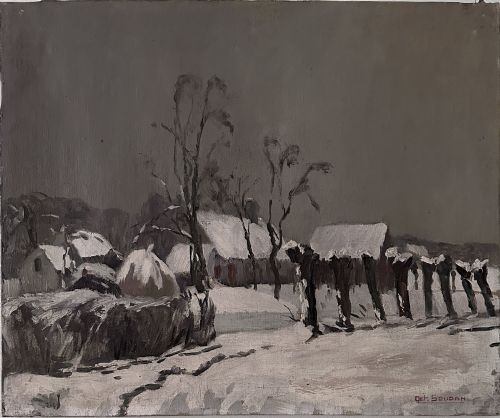
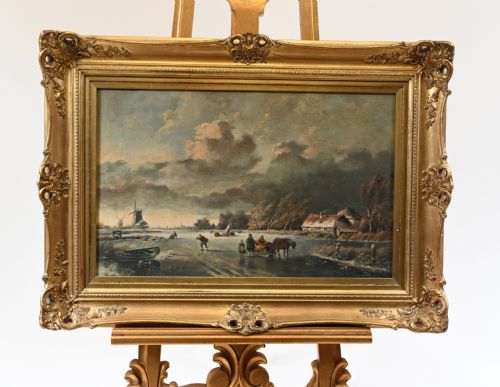


Framed Winter Landscape Painting
A framed winter landscape painting brings the stillness of snow and frost indoors, whether captured in the broad strokes of a Dutch school canvas or a delicate watercolour.
Framed Winter Landscape Painting
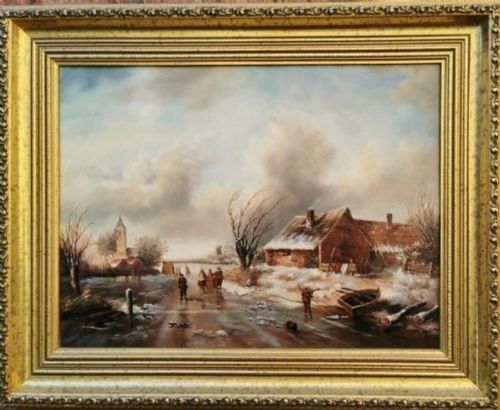
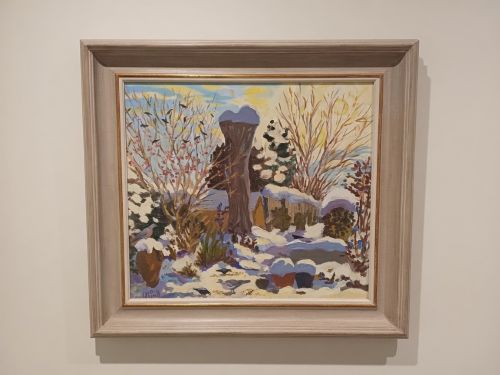
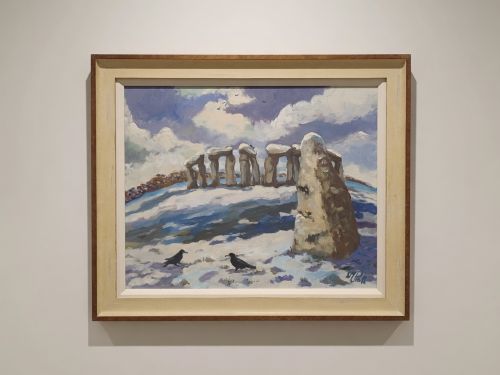
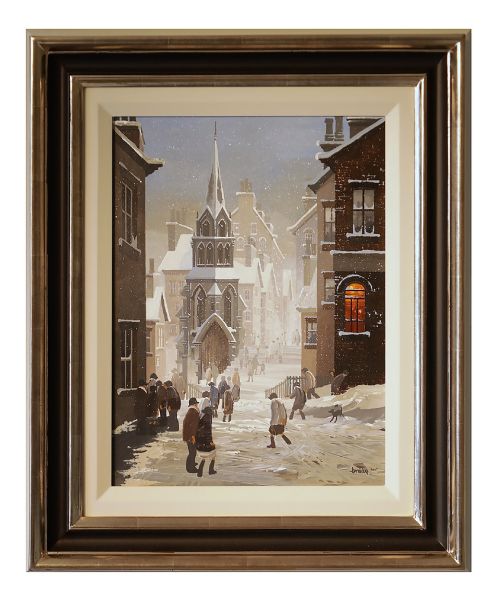
A framed winter landscape painting captures scenes of snow, ice and frost across various periods from the nineteenth century through the mid twentieth century. Buyers seeking this subject matter encounter works executed in oil paint, watercolour and gouache, housed in period wood and gilt frames behind glass where appropriate.
The selection on this page spans regional British views in Yorkshire and Scotland alongside continental scenes from Dutch, French and German hands. These works range from intimate village and park scenes to expansive coaching and pastoral compositions.
The most common formats present rural and village settings under snow, often featuring figures on frozen lakes, livestock in winter pastures or solitary cottages. Such pieces record seasonal rural life and atmospheric winter light through distinct regional painting traditions.
Materials and construction
These works rely on traditional supports of stretched canvas, wooden panel or heavy paper for watercolours, upon which oil paint or water-based pigments are applied. Oil paintings utilise heavy impasto to build up tactile layers of snow, whilst watercolours rely on paper texture to convey frosted light.
Works are contained within wooden frames, frequently finished with gilt detailing, protecting the painted surface alongside glass panels utilised specifically for watercolours and gouache. The framing materials reflect the period of production, from heavy nineteenth century gilt mouldings to simpler mid century profiles.
Listings feature works spanning the nineteenth century through the 1960s, executed in oil paint, watercolour, gouache, canvas and wood.
Distinctions in execution
Quality rests upon the artist's command of light, atmosphere and pigment handling, particularly the subtle rendering of cold shadow and bright snow. Superior works demonstrate confident brushwork and accurate tonal balance that convey the chill of the season convincingly.
The integrity of the physical medium, from the stability of the canvas or panel to the preservation of watercolour pigment against fading, separates accomplished examples from weaker pieces. Original period frames that complement the painting without compromising its historic character further elevate the standing of the work.
Lucy Pratt·Brian Shields Braaq·Gaston Cornil·Fred Lawson·John Hobson Nicholson·Ernest Uden·John Smith Atherton·Herbert Royle·Charles Jones·John Charles Maggs·William Tatton Winter·A Winter Shaw·Sydney Kendrick·Pieter Cornelis Steenhouwer·Alexis De Leeuw·George Graham·Ernest Higgins Rigg·John Ritchie·William Greaves
The Framed Winter Landscape Painting Glossary
- Canvas
- A heavy woven fabric stretched across a wooden frame to serve as a support for oil paint. It provides a flexible yet resilient surface favoured by painters from the nineteenth century onwards.
- Gouache
- An opaque water-based paint that produces a heavier, more matte finish than traditional transparent watercolour. Artists utilise it to build solid highlights of white snow and winter sky.
- Impasto
- Paint applied thickly to a canvas or panel so that it stands proud of the surface. This technique allows artists to build tangible texture in depictions of drifted snow and frost.
- Gilt
- A thin layer of gold leaf or gold-coloured finish applied to wood framing. It provides a decorative border designed to catch and reflect ambient light around the artwork.
Framed Winter Landscape Painting: Frequently Asked Questions
How should I hang a winter landscape painting?
Position the painting at eye level on a wall with balanced ambient light, away from direct sunlight that could fade pigments or discolour oils over time. Ensure the weight of the framed artwork is supported by appropriate fixings suited to your wall type.
Allow the seasonal subject to complement neutral interior spaces where the cool tones of snow and ice can stand out. Pairing the work with traditional wood furniture enhances the historic character of period pieces.
How can I tell a nineteenth century painting from a mid century one?
Examine the stretcher bars on the reverse of canvas works, as older pieces often feature hand-planed wedges and oxidized wood. Nineteenth-century styles tend toward detailed narrative realism or romanticism, whilst later twentieth-century works frequently employ looser, more expressive brushwork.
The framing style provides further clues, with earlier works carrying ornate moulded plaster-on-wood gilt frames, and mid-century examples favouring simpler, cleaner wooden profiles.
What subjects typically appear in these winter scenes?
Common subjects include rural Yorkshire and Scottish dales, Dutch frozen waterways with figures skating, and snowy coaching scenes featuring stagecoaches caught in winter weather. Artists also captured quiet village streets, farmyards with livestock, and familiar landmarks blanketed in snow.
These compositions focus on recording the changing rural landscape under seasonal conditions, capturing specific geographic locations through regional painting traditions.