




Traditional Winter Scene Artwork
Traditional winter scene artwork captures the quiet stillness of snow-covered landscapes and frozen lakes through oil paint on canvas and wood.
Traditional Winter Scene Artwork
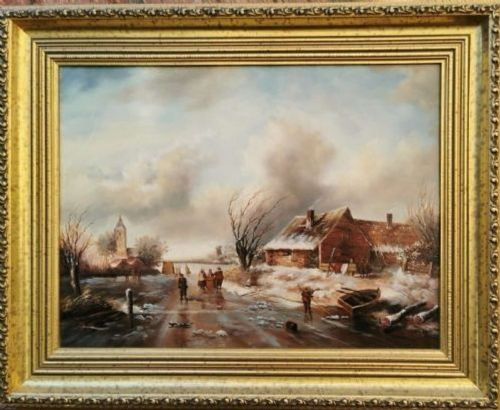
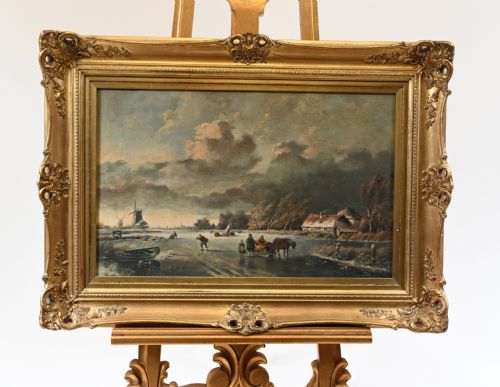
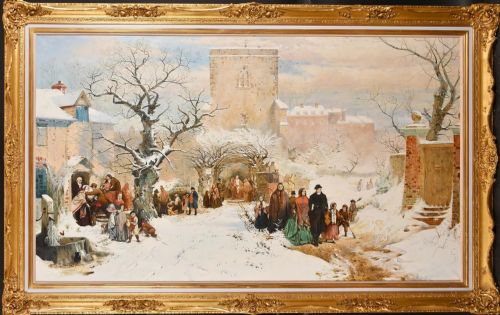
Traditional winter scene artwork encompasses oil paintings and scroll paintings depicting snowy landscapes, frozen rivers, and seasonal rural life. These pieces capture seasonal pastimes like skating on Dutch lakes, stagecoaches navigating snow, and sheep-droving in pastoral settings.
The selections span from the nineteenth century through the mid-twentieth century, offering various interpretations of cold-weather subjects. Buyers encounter Victorian canvases alongside works influenced by the Dutch School and British Impressionism.
Works range from intimate small-scale studies to larger landscape compositions framed in gilt and gilded wood. Each piece documents historical winter conditions and regional landscape traditions through traditional painting techniques.
How these pieces were made
Painters applied oil paint to prepared canvas surfaces and wooden panels to build up textured layers of snow, ice, and atmospheric winter light. Artists utilised brushwork and palette knife techniques to render the crisp texture of frost and deep snowdrifts.
Many of these works are housed in decorative frames made of gilt and gilded wood, which complement the tonal palettes of the paintings. Pigments were chosen to capture the subdued grey and white hues of overcast winter days against dark woodlands and frozen waters.
What varies in quality
Quality rests in the artist's handling of light and atmospheric perspective, distinguishing atmospheric depth from flat, unconvincing snowscapes. Skilled painters capture the specific cold luminosity of winter daylight and the subtle reflections on ice.
The preservation of the original paint layer and canvas tension affects the visual integrity of the artwork over time. Superior framing in period giltwood also enhances the overall presentation and historical context of the piece.
T. Bergman·Arthur Winter Shaw·John Charles Maggs·Pieter Cornelis Steenhouwer·John Ritchie·Herbert Royle·John Richard Worsdale·Louis Smets
The Traditional Winter Scene Artwork Glossary
- Oil paint
- A slow-drying paint made from pigment particles suspended in a drying oil, typically linseed oil. This medium allows artists to blend tones smoothly and build rich surface textures.
- Giltwood
- Wood carved and covered with a thin layer of gold leaf or gold paint. This material is frequently found on the decorative frames enclosing traditional paintings.
- Dutch School
- A stylistic tradition originating in the Netherlands, known for meticulous observation of landscape, light, and everyday rural activities. Many winter paintings draw directly upon this heritage.
- Impressionism
- An art movement focusing on the visual impression of the moment, particularly the shifting effects of light and colour. British and continental artists applied these principles to seasonal outdoor scenes.
Traditional Winter Scene Artwork: Frequently Asked Questions
How do I date a winter oil painting?
Dating relies on stylistic clues, framing materials, and canvas preparation methods visible on the reverse of the work. Signatures and documented artist lifespans also provide precise chronological markers.
Comparison with documented regional schools helps narrow down the decade of production when a direct signature is absent.
Where were these winter scenes displayed?
These artworks traditionally hung in domestic parlours and drawing rooms to bring pastoral warmth and seasonal decoration indoors during colder months. Larger landscape formats often occupied prominent positions above mantelpieces.
Smaller panels suited more intimate spaces within nineteenth- and twentieth-century homes.
How should I care for oil paintings on canvas?
Keep paintings away from direct sunlight and dramatic fluctuations in room temperature and humidity to prevent canvas warping and paint cracking. Gentle dusting with a soft, dry brush maintains the surface without introducing moisture.
Avoid using liquid cleaners or chemical solvents on the delicate paint or gilt frames.
What distinguishes Dutch School winter landscapes?
Dutch School winter landscapes typically feature low horizons, frozen canals with figures skating, and muted grey skies that emphasise atmospheric chill. These compositions reflect a long-standing European tradition of celebrating winter genre scenes.
Artists working in this mode prioritized naturalistic lighting and detailed narrative elements over idealized scenery.