



Cottage Landscape Oil Artwork
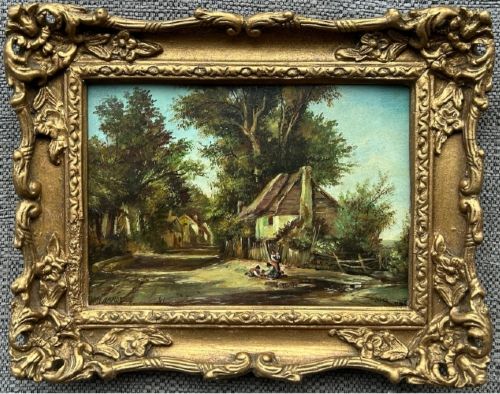
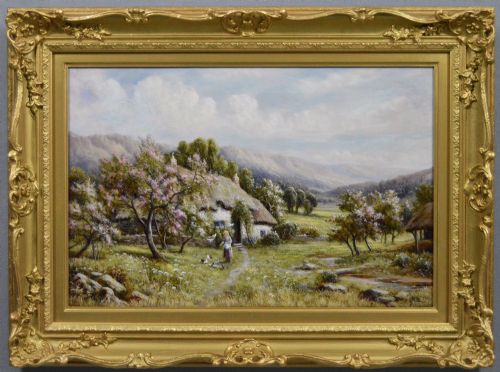
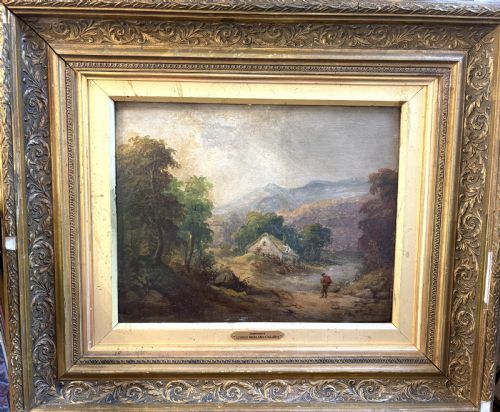
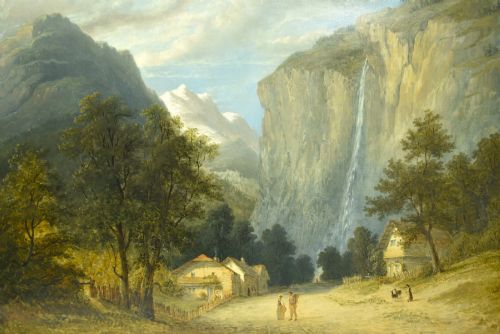
Cottage landscape oil artwork captures rural dwellings and pastoral scenes through pigment and canvas, offering collectors a tangible window into bygone country life.
Cottage Landscape Oil Artwork
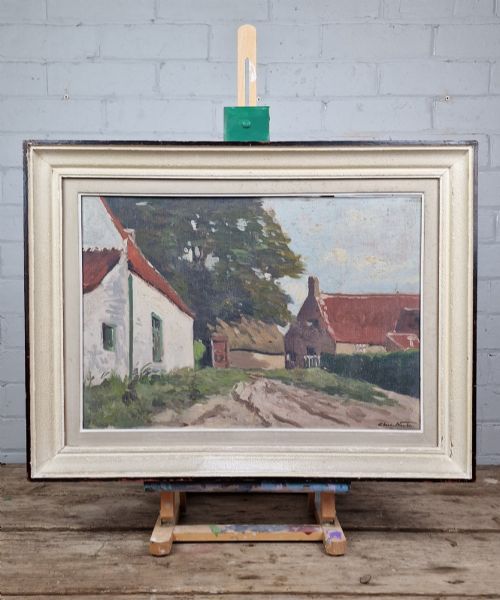
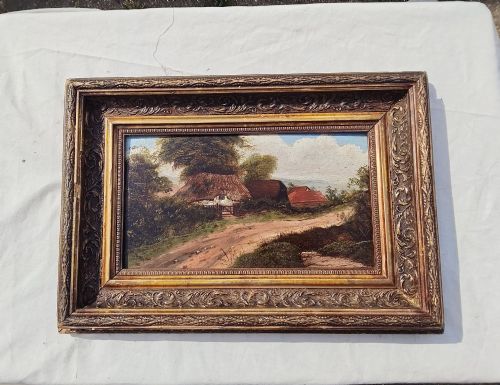
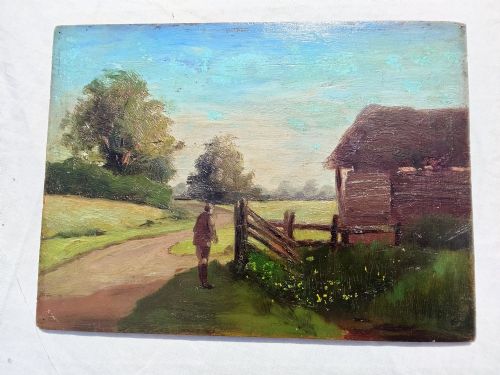
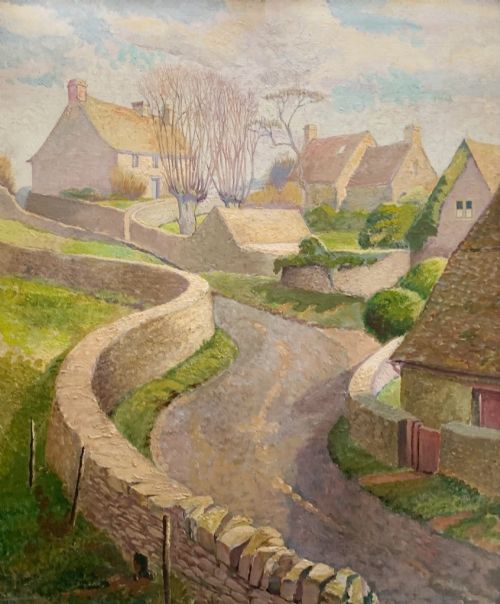
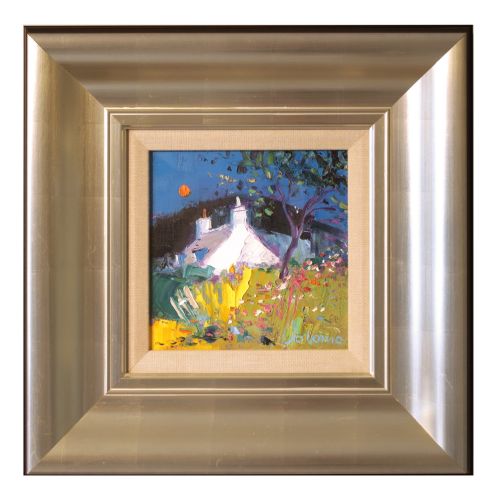
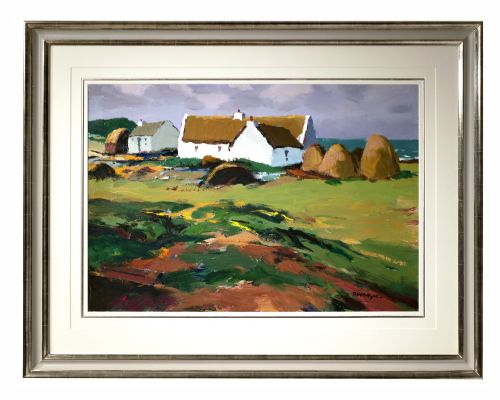
A cottage landscape oil artwork brings rural scenes, farmsteads, and thatched dwellings into domestic spaces through painted canvas, panel, and board. When searching for a cottage landscape oil artwork, collectors encounter nineteenth-century interpretations alongside twentieth-century impressions.
The selections span English schools, Scottish impressionism, and continental European traditions, often depicting figures outside rustic homes or rivers winding past pastoral cottages. These pieces reflect shifting artistic approaches to the countryside from the Victorian era through the mid-twentieth century.
Materials and construction
Artists painted these works primarily with oil paint applied to prepared canvas, wooden board, card, or panel. Many pieces incorporate supportive frames constructed from wood and gesso, frequently finished with gilt layers.
Techniques range from detailed academic brushwork to looser post-impressionist applications. Pigments were manipulated to capture natural light upon rural walls, foliage, and water.
Listings feature works executed on canvas, wood, board, and card across the nineteenth and twentieth centuries.
Distinctions in quality
The success of a composition depends on how skilfully the painter handles light, shadow, and atmospheric depth within a rural setting. Stronger examples demonstrate confident brushwork and a balanced palette that brings vitality to the rustic subject matter.
Condition of the pigment layer and the originality of the mounting also influence the standing of a piece. Works retaining their early or period framing carry greater contextual integrity.
Charles Houben·John Lowrie Morrison·Donald McIntyre·George Morland·John Horace Hooper·Mario Pinetti·Reginald Grange Brundrit·Frederick James Knowles·William Greaves·Charles Vickers·Robert Finley McIntyre·Ernest Higgins Rigg·Kershaw Schofield·Lorenzo Headley·Helmut Reuter·John Falconar Slater·Robert Gemmell Hutchinson·Abraham Hulk Junior·Pierre Emmanuel Eugene Damoye·Harry Pennell
The Cottage Landscape Oil Artwork Glossary
- Oil on Canvas
- Pigment mixed with drying oil applied to stretched fabric. This ground provides a textured surface favoured by traditional landscape painters.
- Post-Impressionism
- An artistic movement following impressionism that explores emotional and structural responses to subject matter. Artists working in this manner often employed bolder colours and visible brushstrokes.
- Gesso
- A plaster-like mixture applied to wood panels or frames to prepare a smooth surface for painting or gilding. It gives structural rigidity to backing boards.
- English School
- A designation applied to works created by artists trained or working within England whose individual identities may be unrecorded or secondary to regional style. These paintings document local topographical traditions.
Cottage Landscape Oil Artwork: Frequently Asked Questions
What periods do these paintings date from?
The available selection spans from the nineteenth century through the mid-twentieth century, encompassing Victorian, Edwardian, and later modernist interpretations.
Specific dates within titles point toward eras such as the 1900s, 1920s, and 1960s, reflecting changing regional schools.
What surfaces were used for these artworks?
Painters utilised stretched canvas, wooden boards, card, and rigid panels as supports for their oil pigments.
Each surface imparts a distinct texture to the finished rural scene.
How do I identify different regional schools?
Regional characteristics often emerge through the handling of light and topography, such as Scottish impressionist palettes or English rustic subject matter.
Inscriptions on reverse panels or framing details frequently provide clues to the originating school.
How should I care for an antique oil painting?
Display the artwork away from direct sunlight and dramatic fluctuations in room temperature to protect the canvas and oil medium.
Dust the surface gently with a soft, dry implement without applying liquid cleaners to the pigment.