


Framed Winter Landscape Art
Framed winter landscape art brings the cold quiet of snow and frost indoors through centuries of paint and paper.
Framed Winter Landscape Art
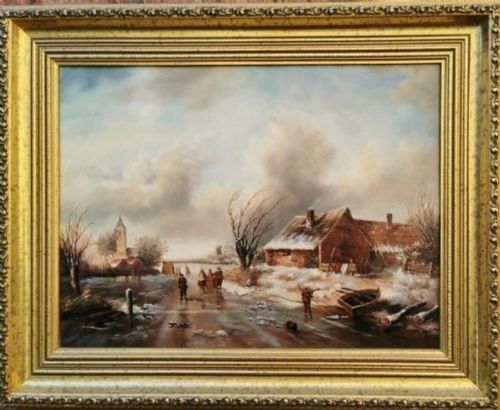
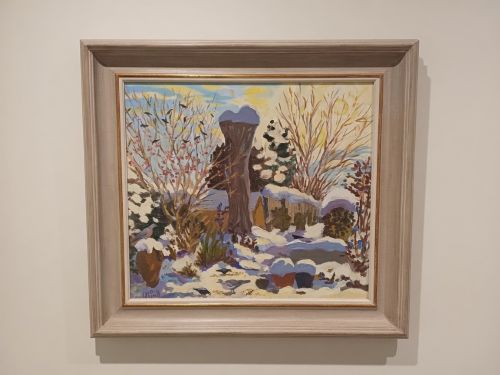
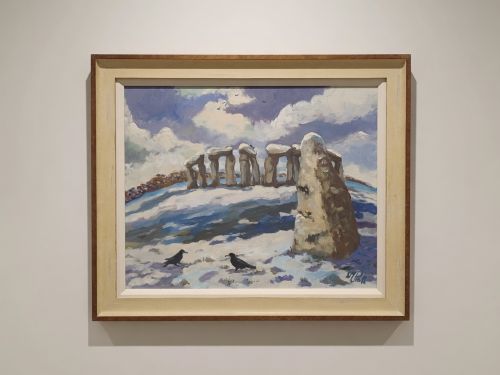
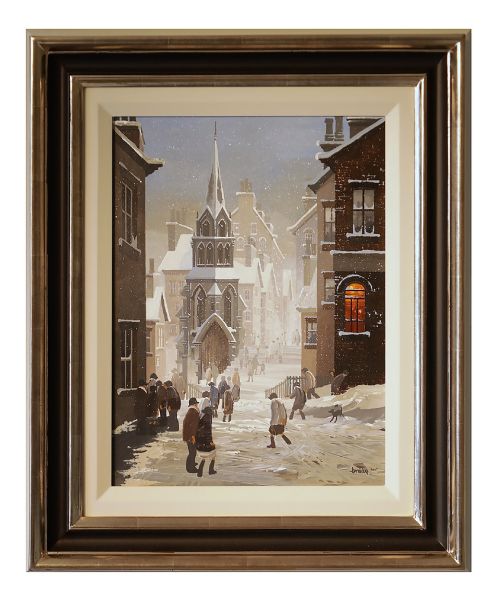
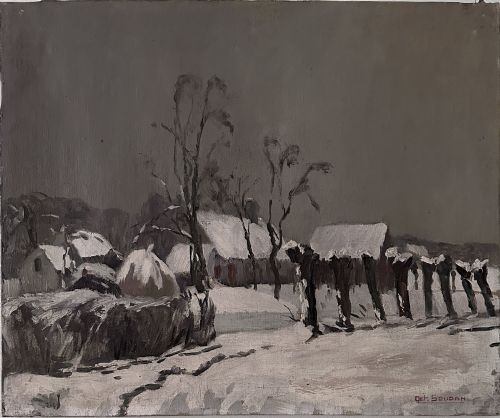
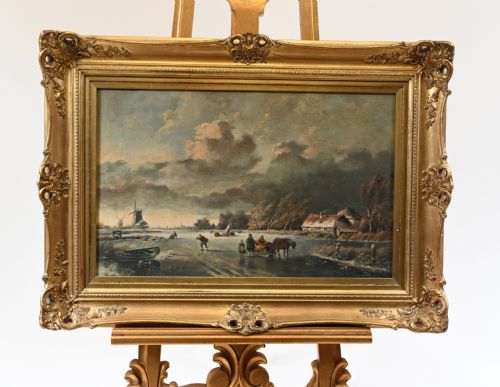
Framed winter landscape art captures frozen fields, snowy villages, and ice-bound waterways across periods ranging from the nineteenth century into the mid-twentieth century.
These works appear primarily as oil paintings on canvas or board, alongside watercolours and gouache on paper, housed within period wooden and gilt frames.
The selection spans British Impressionism, Dutch School influences, and Modern British expressions, recording rural scenes, coaching days, and livestock in the snow.
Materials and Construction
Artists relied on oil paint applied to canvas, board, or paper, building up layers to render heavy snow, grey skies, and reflective ice.
Watercolour and gouache on paper capture lighter, more immediate atmospheric effects, often supported by protective glass within wooden frames.
Gilt and wood frames enclose the works, providing structural support and defining the visual boundary of each winter scene.
Listings feature canvas, wood, paper, and glass across oil and watercolour mediums from the nineteenth century onward.
Distinctions in Quality
Quality rests in the handling of light and atmosphere, where skilled brushwork distinguishes a convincing frost from a flat white wash.
The integrity of the original frame and the preservation of the paint surface dictate the standing of a piece.
Lucy Pratt·Brian Shields Braaq·Gaston Cornil·Fred Lawson·John Hobson Nicholson·Ernest Uden·Fannie Moody·John Smith Atherton·Herbert Royle·Charles Jones·John Charles Maggs·W. Tatton Winter·A. Winter Shaw·Sydney Kendrick·Pieter Cornelis Steenhouwer·Alexis De Leeuw·George Graham·Ernest Higgins Rigg·John Ritchie·William Greaves
The Framed Winter Landscape Art Glossary
- Gouache
- An opaque water-based medium used on paper to achieve solid blocks of colour and crisp highlights in snowy scenes.
- Oil on Canvas
- Pigment suspended in drying oil applied to stretched fabric, allowing rich texture and depth in landscape depictions.
- Watercolour
- Translucent washes of pigment applied to paper, favoured for delicate atmospheric light in winter watercolours.
- Gilt
- A thin layer of gold leaf applied to wood frames, enhancing the presentation of nineteenth and twentieth-century paintings.
Framed Winter Landscape Art: Frequently Asked Questions
What periods do these paintings come from?
The selections date from the nineteenth century through the 1960s, encompassing Edwardian and mid-century modern movements.
Victorian and early twentieth-century works predominate, reflecting historical shifts in landscape painting traditions.
How were these watercolours protected?
Works on paper typically sit behind glass within wooden frames to shield the delicate pigments from moisture and dust.
This framing preserves the integrity of watercolours and gouache over decades of display.
What subjects appear in these scenes?
Common motifs include frozen lakes, snow-covered Yorkshire dales, coaching inns during blizzards, and rural villages.
Artists also recorded livestock in winter pastures and figures gathering fuel in the cold.
How do I identify oil on board?
Oil on board uses a rigid wooden or composition panel as a painting surface rather than woven fabric.
These pieces offer a firm support that often dates from the early to mid-twentieth century.