



Winter Landscape Drawing
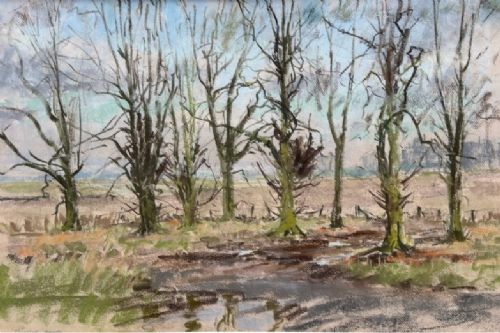
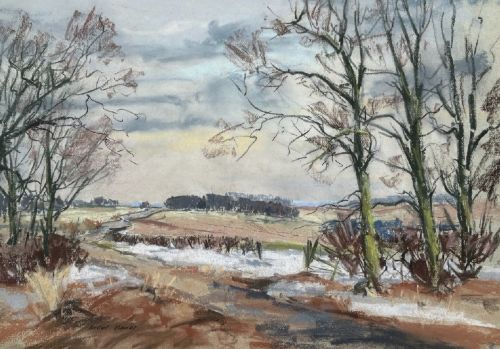
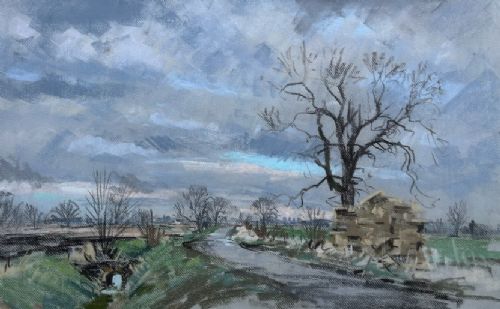
A winter landscape drawing captures cold light and seasonal quiet through the direct touch of pastel, chalk, or charcoal on paper.
Winter Landscape Drawing
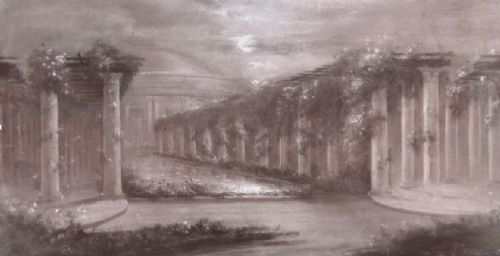
A winter landscape drawing brings together pastoral scenes, coastal views, and urban snow scenes executed in media that emphasise line and tone over heavy pigment. The examples found here span the nineteenth century, the Edwardian era, and the mid-twentieth century, showing how artists across different decades captured the chill of snow and frost.
The pieces on this page lean heavily toward British and French subjects, taking in Yorkshire dales, Isle of Man vistas, and Norman harbours. Works range from intimate pastel sketches pulled directly from artist studios to larger framed compositions on paper and canvas stretchers.
Buyers seeking a winter landscape drawing will encounter both finished cabinet pieces and spontaneous preparatory works. These items bridge traditional topographical observation and the atmospheric concerns of tonalism and post-impressionism.
Materials and execution
The core technique relies on the direct application of pastel, charcoal, or chalk onto prepared paper surfaces. Artists working in these dry media build up tone through swift hatching and blending, allowing the texture of the paper to provide the grit of snow and frozen ground.
Several works combine pastel with watercolour or mount paper directly onto canvas stretchers to add stability and depth. Framing under glass protects the friable surface of charcoal and soft pastel from smudging while preserving the original vibrancy of the pigment.
Winter Landscape Drawing Retail Price Guide 2026
Typical asking prices for winter landscape drawing among the pieces listed under this phrase on Sellingantiques today, from the lower quarter to the upper quarter. They describe what is for sale here now, not the wider market.
Several pastels escaped the studio via Yorkshire sheep tracks and stagecoaches bogged down in nineteenth-century snowdrifts.
Assessing quality
Quality rests upon the sureness of the hand and the artist's ability to suggest atmosphere with minimal strokes. A successful sheet captures the peculiar flat light of a snowstorm or winter twilight without relying on excessive detail.
Condition plays a central role, particularly the preservation of the dry medium beneath glass and the absence of foxing or damp staining on the paper. The strength of the composition and the fidelity of the framing further separate routine topographical records from compelling artistic statements.
Angus Rands·John Hobson Nicholson·John Charles Maggs·John Richard Worsdale·Matthew Hale
The Winter Landscape Drawing Glossary
- Pastel
- A dry painting medium consisting of powdered pigment and a binder. It allows for rapid blending of tones and immediate colour application.
- Charcoal
- A form of dry carbonised wood used for drawing. It yields deep blacks and delicate greys suited to stark winter contrasts.
- Tonalism
- An artistic style that emerged in the late nineteenth century where mood and shadow predominate over sharp outlines. Works in this vein use a subdued palette to evoke quiet or melancholy.
- Canvas stretcher
- A wooden framework upon which paper or canvas is stretched taut. Older pieces sometimes mount delicate paper drawings onto these frames for added support.
Winter Landscape Drawing: Frequently Asked Questions
How should I frame a pastel drawing?
Pastel drawings require framing under glass with a mount or spacer that prevents the glass from touching the fragile surface of the pigment. This safeguards the loose particles from transferring.
Keep these works out of direct sunlight to prevent the subtle chalks and pigments from fading over time.
What periods do these drawings cover?
The selections span from the nineteenth century through the Edwardian era into the mid-twentieth century. You will find Victorian coaching scenes alongside post-impressionist continental views and mid-century British regional studies.
Each period brings distinct working methods, shifting from tight traditional observation toward more expressive tonal mark-making.
Are charcoal drawings stable over time?
Charcoal adheres well to paper provided the sheet is kept dry and undisturbed within its frame. The medium has been used for centuries to achieve velvety dark tones without binder yellowing.
Avoid hanging these works in areas prone to high humidity or rapid temperature changes to protect the paper support.
How do I distinguish pastel from watercolour?
Pastel sits as an opaque, powdery layer on top of the paper, showing individual strokes of chalk or pigment. Watercolour uses translucent washes that soak directly into the fibres of the paper.
Many period pieces combine both media, using a watercolour wash as an underpainting with pastel worked over the top for texture.